National Institutes of Health/National Institute of General Medical Sciences (NIH/NIGMS)
R01GM139034
United States
National Institutes of Health/National Institute of General Medical Sciences (NIH/NIGMS)
R35GM158090
United States
Citation
Journal: PLoS Pathog / Year: 2026 Title: Neutralization of SARS-CoV-2 by IgM-14 via engagement of two distinct spike epitopes. Authors: Yan Wang / Yanping Hu / Zhiqiang Ku / Jason Yeung / Jing Zou / Michael Woodson / Nikolai S Prokhorov / Ekaterina S Knyazhanskaya / Haiqing Zhao / Michael B Sherman / Zhiqiang An / Stephen F ...Authors: Yan Wang / Yanping Hu / Zhiqiang Ku / Jason Yeung / Jing Zou / Michael Woodson / Nikolai S Prokhorov / Ekaterina S Knyazhanskaya / Haiqing Zhao / Michael B Sherman / Zhiqiang An / Stephen F Carroll / Pei-Yong Shi / Petr G Leiman / Xuping Xie / Abstract: Engineered immunoglobulin M (IgM) antibodies typically exhibit superior neutralization potency and avidity compared to their parental IgG counterparts, primarily due to multivalent binding to ...Engineered immunoglobulin M (IgM) antibodies typically exhibit superior neutralization potency and avidity compared to their parental IgG counterparts, primarily due to multivalent binding to repeated epitopes on a targeting antigen. In this study, we characterize the neutralization breadth and mechanism of action of IgM-14, a previously reported intranasally deliverable antibody targeting SARS-CoV-2. IgM-14 demonstrates remarkably potent antiviral activity against all pre-Omicron variants but significantly reduced efficacy against Omicron BA.1, and complete loss of activity against the later subvariant JN.1. Resistance selection identified two key mutations in the receptor-binding domain (RBD), G476D and F486P, which disrupt IgM-14 binding and confer strong resistance. Cryo-electron microscopy analysis uncovered two distinct Fab-RBD interfaces: a primary interface overlapping the angiotensin-converting enzyme 2 (ACE2)-binding region, and a unique secondary interface formed only when the RBD adopts the ACE2-inaccessible "down" conformation, involving a neighboring spike protomer. Site-directed mutagenesis and structural modeling revealed a critical role of this secondary site in IgM-14-mediated neutralization. Unlike IgG-14, structural modeling suggested that IgM-14 can simultaneously engage both interfaces in diverse modes, indicating a noncanonical avidity mechanism. Collectively, these findings highlight the structural and functional uniqueness of IgM-14 and offer valuable insights into the rational design of next-generation spike-targeted antibody therapeutics with enhanced breadth and potency.
In the structure databanks used in Yorodumi, some data are registered as the other names, "COVID-19 virus" and "2019-nCoV". Here are the details of the virus and the list of structure data.
Jan 31, 2019. EMDB accession codes are about to change! (news from PDBe EMDB page)
EMDB accession codes are about to change! (news from PDBe EMDB page)
The allocation of 4 digits for EMDB accession codes will soon come to an end. Whilst these codes will remain in use, new EMDB accession codes will include an additional digit and will expand incrementally as the available range of codes is exhausted. The current 4-digit format prefixed with “EMD-” (i.e. EMD-XXXX) will advance to a 5-digit format (i.e. EMD-XXXXX), and so on. It is currently estimated that the 4-digit codes will be depleted around Spring 2019, at which point the 5-digit format will come into force.
The EM Navigator/Yorodumi systems omit the EMD- prefix.
Related info.:Q: What is EMD? / ID/Accession-code notation in Yorodumi/EM Navigator
Yorodumi is a browser for structure data from EMDB, PDB, SASBDB, etc.
This page is also the successor to EM Navigator detail page, and also detail information page/front-end page for Omokage search.
The word "yorodu" (or yorozu) is an old Japanese word meaning "ten thousand". "mi" (miru) is to see.
Related info.:EMDB / PDB / SASBDB / Comparison of 3 databanks / Yorodumi Search / Aug 31, 2016. New EM Navigator & Yorodumi / Yorodumi Papers / Jmol/JSmol / Function and homology information / Changes in new EM Navigator and Yorodumi
 Movie
Movie Controller


 Open data
 Basic information
 Map data
 Sample
 Keywords
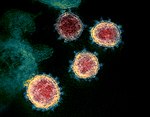 Severe acute respiratory syndrome coronavirus 2
 Authors
 United States, 2 items
  Citation
 Structure visualization
 Downloads & links
 EMDB map data format
 emd_73244.png
 https://data.pdbj.org/pub/emdb/structures/EMD-73244


 Z (Sec.)
 Y (Row.)
 X (Col.)




 Sample components
 Processing
 Electron microscopy
 FIELD EMISSION GUN

