National Institutes of Health/National Institute of General Medical Sciences (NIH/NIGMS)
United States
Citation
Journal: Elife / Year: 2026 Title: Characterization and modulation of human insulin degrading enzyme conformational dynamics to control enzyme activity. Authors: Jordan M Mancl / Wenguang G Liang / Nicholas L Bayhi / Hui Wei / William C Budell / Joshua H Mendez / Tobin R Sosnick / Bridget Carragher / Clinton S Potter / Wei-Jen Tang / Abstract: Insulin degrading enzyme (IDE) is a dimeric M16A zinc metalloprotease that degrades amyloidogenic peptides diverse in shape and sequence, including insulin and amyloid-β, to prevent toxic amyloid ...Insulin degrading enzyme (IDE) is a dimeric M16A zinc metalloprotease that degrades amyloidogenic peptides diverse in shape and sequence, including insulin and amyloid-β, to prevent toxic amyloid fibril formation. IDE has a hollow catalytic chamber formed by two ~55 kDa N- and C- domains (IDE-N and IDE-C, respectively), in which peptides bind, unfold, and are repositioned for proteolysis. IDE is known to transition between a closed state, poised for catalysis, and an open state, able to release cleavage products and bind a new substrate. Here, we present six cryo-EM structures of the IDE dimer at 3.0-5.1 Å resolution, obtained in the presence of a sub-saturating concentration of insulin. Combining cryo-EM heterogeneity analysis with all-atom molecular dynamics (MD) simulations, we identified the structural basis and key residues for IDE conformational dynamics that were not previously revealed by IDE static structures. Notably, R668 serves as a molecular latch mediating the open-close transition and facilitates key protein motions through charge-swapping interactions at the IDE-N/C interface. Our small-angle X-ray scattering analysis and enzymatic assays of an R668A mutant indicate a profound alteration of conformational dynamics and catalytic activity. By integrating coarse-grained MD simulations, our analysis reveals that IDE unfolds its substrates through the coordinated motion between IDE-N and IDE-C, as well as β-sheet formation between IDE and insulin. Additionally, our time-resolved cryo-EM analysis uncovers IDE allostery within the IDE dimer. Collectively, our findings demonstrate the strength of combining experimental and computational approaches to probe protein dynamics and pave the way for developing substrate-specific modulators of IDE activity.
In the structure databanks used in Yorodumi, some data are registered as the other names, "COVID-19 virus" and "2019-nCoV". Here are the details of the virus and the list of structure data.
Jan 31, 2019. EMDB accession codes are about to change! (news from PDBe EMDB page)
EMDB accession codes are about to change! (news from PDBe EMDB page)
The allocation of 4 digits for EMDB accession codes will soon come to an end. Whilst these codes will remain in use, new EMDB accession codes will include an additional digit and will expand incrementally as the available range of codes is exhausted. The current 4-digit format prefixed with “EMD-” (i.e. EMD-XXXX) will advance to a 5-digit format (i.e. EMD-XXXXX), and so on. It is currently estimated that the 4-digit codes will be depleted around Spring 2019, at which point the 5-digit format will come into force.
The EM Navigator/Yorodumi systems omit the EMD- prefix.
Related info.:Q: What is EMD? / ID/Accession-code notation in Yorodumi/EM Navigator
Yorodumi is a browser for structure data from EMDB, PDB, SASBDB, etc.
This page is also the successor to EM Navigator detail page, and also detail information page/front-end page for Omokage search.
The word "yorodu" (or yorozu) is an old Japanese word meaning "ten thousand". "mi" (miru) is to see.
Related info.:EMDB / PDB / SASBDB / Comparison of 3 databanks / Yorodumi Search / Aug 31, 2016. New EM Navigator & Yorodumi / Yorodumi Papers / Jmol/JSmol / Function and homology information / Changes in new EM Navigator and Yorodumi
 Movie
Movie Controller


 Open data
 Basic information
 Map data
 Sample
 Keywords
 Function and homology information
 Homo sapiens (human)
 Authors
 United States, 1 items
  Citation
 Structure visualization
 Downloads & links
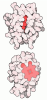
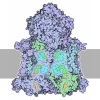
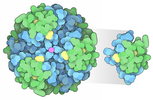
 emd_72393.png
 http://ftp.pdbj.org/pub/emdb/structures/EMD-72393
 Z (Sec.)
 Y (Row.)
 X (Col.)


 Sample components
 Escherichia coli (E. coli)
 Processing
 Electron microscopy
 FIELD EMISSION GUN
