[English] 日本語
Yorodumi
- EMDB-71459: Negative stain EM map 3 of polyclonal serum from mouse immunized ... -

+
Open data


ID or keywords:

Loading...

-
Basic information

Entry
Database: EMDB / ID: EMD-71459
TitleNegative stain EM map 3 of polyclonal serum from mouse immunized with H5 TX24-FMLMI-RC_I_1 in complex with TX24-I53_dn5B.
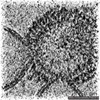
Map dataNegative stain EM map of polyclonal serum from mouse immunized with H5 TX24-FMLMI-RC_I_1 in complex with TX24-I53_dn5B.
Sample
  • Complex: Polyclonal serum from mouse immunized with H5 TX24-FMLMI-RC_I_1 in complex with TX24-I53_dn5B.
    • Complex: Polyclonal serum from mouse immunized with H5 TX24-FMLMI-RC_I_1
    • Complex: A/Texas/37/2024 HA-I53_dn5B
KeywordsFab / Serum / Influenza Hemagglutinin / Immune Complex / IMMUNE SYSTEM
Biological speciesMus musculus (house mouse) / Influenza A virus
Methodsingle particle reconstruction / negative staining / Resolution: 18.99 Å
AuthorsDosey A / King NP
Funding support United States, 1 items
OrganizationGrant numberCountry
National Institutes of Health/National Institute Of Allergy and Infectious Diseases (NIH/NIAID)1U19AI181881-01 United States
CitationJournal: Sci Transl Med / Year: 2026
Title: Stabilization of the H5 clade 2.3.4.4b hemagglutinin improves vaccine-elicited neutralizing antibody responses in mice.
Authors: Annie Dosey / Bernadeta Dadonaite / Rebecca A Gillespie / Elizabeth M Leaf / Matthew J Vukovich / Jackson McGowan / Emily Grey / Hiromi Muramatsu / Rachel H J Jun / Norbert Pardi / Masaru ...Authors: Annie Dosey / Bernadeta Dadonaite / Rebecca A Gillespie / Elizabeth M Leaf / Matthew J Vukovich / Jackson McGowan / Emily Grey / Hiromi Muramatsu / Rachel H J Jun / Norbert Pardi / Masaru Kanekiyo / Jesse D Bloom / Neil P King /
Abstract: Transmission of highly pathogenic avian influenza from H5 clade 2.3.4.4b has expanded in recent years to infect large populations of birds and mammals, heightening the risk of a human pandemic. ...Transmission of highly pathogenic avian influenza from H5 clade 2.3.4.4b has expanded in recent years to infect large populations of birds and mammals, heightening the risk of a human pandemic. Influenza viruses that are adapted to transmission in birds and a variety of mammals tend to have a less stable hemagglutinin (HA) than seasonal influenza viruses, enabling membrane fusion at comparatively higher pH levels. Here, we combined five mutations in the H5 HA that increased its melting temperature and promoted stable closure of the HA trimer. Structural analysis by cryo-electron microscopy revealed that the stabilizing mutations create several new hydrophobic interactions while maintaining the local HA structure. We found that vaccinating mice with stabilized H5 HA immunogens resulted in higher hemagglutination inhibition and neutralization titers than nonstabilized comparators. Epitope mapping of vaccine-elicited polyclonal antibody responses using negative-stain electron microscopy and deep mutational scanning showed that site E on the side of the HA receptor binding domain was immunodominant across all groups; however, the stabilized immunogens shifted responses toward the receptor binding site, which elicited a higher proportion of neutralizing antibodies. Consistent with these findings, stabilized H5 HA immunogens delivered as messenger RNA-lipid nanoparticle (mRNA-LNP) vaccines protected mice against H5N1 challenge. These findings highlight that H5 HA-stabilizing mutations enhance the quality of antibody responses across different vaccine formats, underscoring their potential to improve pandemic preparedness vaccines targeting viruses from this widely circulating clade.
History
DepositionJun 26, 2025-
Header (metadata) releaseFeb 4, 2026-
Map releaseFeb 4, 2026-
UpdateMar 18, 2026-
Current statusMar 18, 2026Processing site: RCSB / Status: Released

-
Structure visualization

Supplemental images

Downloads & links

-
Map

FileDownload / File: emd_71459.map.gz / Format: CCP4 / Size: 27 MB / Type: IMAGE STORED AS FLOATING POINT NUMBER (4 BYTES)
AnnotationNegative stain EM map of polyclonal serum from mouse immunized with H5 TX24-FMLMI-RC_I_1 in complex with TX24-I53_dn5B.
Projections & slices

Image control

Size
Brightness
Contrast
Others
AxesZ (Sec.)Y (Row.)X (Col.)
2.49 Å/pix.
x 192 pix.
= 478.08 Å
2.49 Å/pix.
x 192 pix.
= 478.08 Å
2.49 Å/pix.
x 192 pix.
= 478.08 Å

Surface

Projections

Slices (1/3)

Slices (1/2)

Slices (2/3)

Images are generated by Spider.

Voxel sizeX=Y=Z: 2.49 Å
Density
Contour LevelBy AUTHOR: 1.0
Minimum - Maximum-0.6867235 - 3.7219963
Average (Standard dev.)-0.009963311 (±0.14356267)
SymmetrySpace group: 1
Details

EMDB XML:

Map geometry
Axis orderXYZ
Origin000
Dimensions192192192
Spacing192192192
CellA=B=C: 478.08002 Å
α=β=γ: 90.0 °

-
Supplemental data

-
Half map: Negative stain EM map of polyclonal serum from...

Fileemd_71459_half_map_1.map
AnnotationNegative stain EM map of polyclonal serum from mouse immunized with H5 TX24-FMLMI-RC_I_1 in complex with TX24-I53_dn5B.
Projections & Slices
AxesZYX

Projections

Slices (1/2)
Density Histograms

-
Half map: Negative stain EM map of polyclonal serum from...

Fileemd_71459_half_map_2.map
AnnotationNegative stain EM map of polyclonal serum from mouse immunized with H5 TX24-FMLMI-RC_I_1 in complex with TX24-I53_dn5B.
Projections & Slices
AxesZYX

Projections

Slices (1/2)
Density Histograms

-
Sample components

-
Entire : Polyclonal serum from mouse immunized with H5 TX24-FMLMI-RC_I_1 i...

EntireName: Polyclonal serum from mouse immunized with H5 TX24-FMLMI-RC_I_1 in complex with TX24-I53_dn5B.
Components
  • Complex: Polyclonal serum from mouse immunized with H5 TX24-FMLMI-RC_I_1 in complex with TX24-I53_dn5B.
    • Complex: Polyclonal serum from mouse immunized with H5 TX24-FMLMI-RC_I_1
    • Complex: A/Texas/37/2024 HA-I53_dn5B

-
Supramolecule #1: Polyclonal serum from mouse immunized with H5 TX24-FMLMI-RC_I_1 i...

SupramoleculeName: Polyclonal serum from mouse immunized with H5 TX24-FMLMI-RC_I_1 in complex with TX24-I53_dn5B.
type: complex / ID: 1 / Parent: 0

-
Supramolecule #2: Polyclonal serum from mouse immunized with H5 TX24-FMLMI-RC_I_1

SupramoleculeName: Polyclonal serum from mouse immunized with H5 TX24-FMLMI-RC_I_1
type: complex / ID: 2 / Parent: 1
Source (natural)Organism: Mus musculus (house mouse)

-
Supramolecule #3: A/Texas/37/2024 HA-I53_dn5B

SupramoleculeName: A/Texas/37/2024 HA-I53_dn5B / type: complex / ID: 3 / Parent: 1
Source (natural)Organism: Influenza A virus / Strain: A/Texas/37/2024

-
Experimental details

-
Structure determination

Methodnegative staining
Processingsingle particle reconstruction
Aggregation stateparticle

-
Sample preparation

BufferpH: 7.5
StainingType: NEGATIVE / Material: Uranyl Acetate

-
Electron microscopy

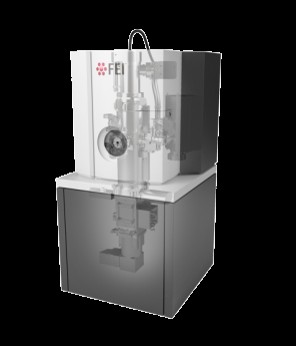
MicroscopeTFS TALOS L120C
Image recordingFilm or detector model: FEI CETA (4k x 4k) / Average electron dose: 40.0 e/Å2
Electron beamAcceleration voltage: 120 kV / Electron source: LAB6
Electron opticsIllumination mode: FLOOD BEAM / Imaging mode: BRIGHT FIELD / Nominal defocus max: 2.5 µm / Nominal defocus min: 1.5 µm
Experimental equipment
Model: Talos L120C / Image courtesy: FEI Company

+
Image processing

CTF correctionSoftware - Name: cryoSPARC / Type: PHASE FLIPPING AND AMPLITUDE CORRECTION
Startup modelType of model: NONE / Details: Ab initio reconstruction
Final reconstructionResolution.type: BY AUTHOR / Resolution: 18.99 Å / Resolution method: FSC 0.143 CUT-OFF / Software - Name: cryoSPARC / Number images used: 11988
Initial angle assignmentType: ANGULAR RECONSTITUTION / Software - Name: cryoSPARC
Final angle assignmentType: ANGULAR RECONSTITUTION / Software - Name: cryoSPARC

+
About Yorodumi

-
News

-
Feb 9, 2022. New format data for meta-information of EMDB entries

New format data for meta-information of EMDB entries

  • Version 3 of the EMDB header file is now the official format.
  • The previous official version 1.9 will be removed from the archive.

Related info.:EMDB header

External links:wwPDB to switch to version 3 of the EMDB data model

-
Aug 12, 2020. Covid-19 info

Covid-19 info

URL: https://pdbj.org/emnavi/covid19.php

New page: Covid-19 featured information page in EM Navigator.

Related info.:Covid-19 info / Mar 5, 2020. Novel coronavirus structure data

+
Mar 5, 2020. Novel coronavirus structure data

Novel coronavirus structure data

Related info.:Yorodumi Speices / Aug 12, 2020. Covid-19 info

External links:COVID-19 featured content - PDBj / Molecule of the Month (242):Coronavirus Proteases

+
Jan 31, 2019. EMDB accession codes are about to change! (news from PDBe EMDB page)

EMDB accession codes are about to change! (news from PDBe EMDB page)

  • The allocation of 4 digits for EMDB accession codes will soon come to an end. Whilst these codes will remain in use, new EMDB accession codes will include an additional digit and will expand incrementally as the available range of codes is exhausted. The current 4-digit format prefixed with “EMD-” (i.e. EMD-XXXX) will advance to a 5-digit format (i.e. EMD-XXXXX), and so on. It is currently estimated that the 4-digit codes will be depleted around Spring 2019, at which point the 5-digit format will come into force.
  • The EM Navigator/Yorodumi systems omit the EMD- prefix.

Related info.:Q: What is EMD? / ID/Accession-code notation in Yorodumi/EM Navigator

External links:EMDB Accession Codes are Changing Soon! / Contact to PDBj

+
Jul 12, 2017. Major update of PDB

Major update of PDB

  • wwPDB released updated PDB data conforming to the new PDBx/mmCIF dictionary.
  • This is a major update changing the version number from 4 to 5, and with Remediation, in which all the entries are updated.
  • In this update, many items about electron microscopy experimental information are reorganized (e.g. em_software).
  • Now, EM Navigator and Yorodumi are based on the updated data.

External links:wwPDB Remediation / Enriched Model Files Conforming to OneDep Data Standards Now Available in the PDB FTP Archive

-
Yorodumi

Thousand views of thousand structures

  • Yorodumi is a browser for structure data from EMDB, PDB, SASBDB, etc.
  • This page is also the successor to EM Navigator detail page, and also detail information page/front-end page for Omokage search.
  • The word "yorodu" (or yorozu) is an old Japanese word meaning "ten thousand". "mi" (miru) is to see.

Related info.:EMDB / PDB / SASBDB / Comparison of 3 databanks / Yorodumi Search / Aug 31, 2016. New EM Navigator & Yorodumi / Yorodumi Papers / Jmol/JSmol / Function and homology information / Changes in new EM Navigator and Yorodumi

Read more