National Institutes of Health/National Heart, Lung, and Blood Institute (NIH/NHLBI)
1ZIAHL006264
United States
Citation
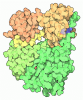
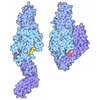
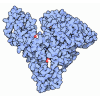
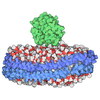
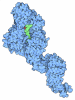
Journal: PNAS Nexus / Year: 2026 Title: Allosteric regulation of fibronectin binding by the anti-β1 integrin antibody TS2/16. Authors: Jienyu Ding / Dalia A Fantini / Dirk Dedden / Stephanie Schumacher / Christian Biertümpfel / Naoko Mizuno / Abstract: The monoclonal antibody (mAb) TS2/16 stabilizes the active conformation of β1 integrin, enhancing its adhesive capacity on the cell surface. However, the molecular mechanism by which TS2/16 ...The monoclonal antibody (mAb) TS2/16 stabilizes the active conformation of β1 integrin, enhancing its adhesive capacity on the cell surface. However, the molecular mechanism by which TS2/16 modulates integrin affinity for extracellular ligands remains unclear. Using endogenous full-length α5β1 integrin purified from human placenta, we determined the structure of integrin α5β1 with fibronectin up to 2.61-Å resolution in the absence of TS2/16, capturing the active form without its aid, and performed comparative B-factor-based analysis and CABS-Flex simulation with and without TS2/16. Despite no global conformational differences, we found that TS2/16 interacts with α2 helix of the integrin β1 subunit and contacts the C-terminus of α3 helix, leading to a localized decrease in B factor. This interaction allosterically alters the dynamics of α2-α3 loop despite not being in direct contact with TS2/16. Notably, this loop directly engages fibronectin, and its dynamic change underlies the enhanced ligand-binding affinity and explains increased cell adhesion observed with TS2/16. These findings reveal an allosteric mechanism of integrin regulation by TS2/16 and offer insights for the rational design of therapeutic antibodies targeting integrin-mediated adhesion in pathological contexts such as inflammation and cancer.
Model: Quantifoil R1.2/1.3 / Material: COPPER / Mesh: 200 / Support film - Material: CARBON / Support film - topology: HOLEY / Pretreatment - Type: GLOW DISCHARGE / Pretreatment - Time: 30 sec. / Pretreatment - Atmosphere: AIR / Pretreatment - Pressure: 3.8000000000000003 kPa
Vitrification
Cryogen name: ETHANE-PROPANE / Chamber humidity: 100 % / Chamber temperature: 277 K / Instrument: FEI VITROBOT MARK IV
Details
integrin a5b1 in nanodiscs (MSPE3D1) was incubated with 10 mM MnCl2 for 30 min at 4C, then mixed with purified FN7-10 at a molar ratio of 1:3, at a final a5b1-ND concentration of 0.15 mg/ml in TBS pH 7.5 and 1 mM MnCl2.
-
Electron microscopy
Microscope
TFS KRIOS
Specialist optics
Energy filter - Name: GIF Bioquantum / Energy filter - Slit width: 20 eV
Software
Name: SerialEM
Image recording
Film or detector model: GATAN K3 BIOQUANTUM (6k x 4k) / Number grids imaged: 1 / Number real images: 10341 / Average electron dose: 69.0 e/Å2
Electron beam
Acceleration voltage: 300 kV / Electron source: FIELD EMISSION GUN
In the structure databanks used in Yorodumi, some data are registered as the other names, "COVID-19 virus" and "2019-nCoV". Here are the details of the virus and the list of structure data.
Jan 31, 2019. EMDB accession codes are about to change! (news from PDBe EMDB page)
EMDB accession codes are about to change! (news from PDBe EMDB page)
The allocation of 4 digits for EMDB accession codes will soon come to an end. Whilst these codes will remain in use, new EMDB accession codes will include an additional digit and will expand incrementally as the available range of codes is exhausted. The current 4-digit format prefixed with “EMD-” (i.e. EMD-XXXX) will advance to a 5-digit format (i.e. EMD-XXXXX), and so on. It is currently estimated that the 4-digit codes will be depleted around Spring 2019, at which point the 5-digit format will come into force.
The EM Navigator/Yorodumi systems omit the EMD- prefix.
Related info.:Q: What is EMD? / ID/Accession-code notation in Yorodumi/EM Navigator
Yorodumi is a browser for structure data from EMDB, PDB, SASBDB, etc.
This page is also the successor to EM Navigator detail page, and also detail information page/front-end page for Omokage search.
The word "yorodu" (or yorozu) is an old Japanese word meaning "ten thousand". "mi" (miru) is to see.
Related info.:EMDB / PDB / SASBDB / Comparison of 3 databanks / Yorodumi Search / Aug 31, 2016. New EM Navigator & Yorodumi / Yorodumi Papers / Jmol/JSmol / Function and homology information / Changes in new EM Navigator and Yorodumi
 Movie
Movie Controller

 Yorodumi
 Open data
 Basic information
 Map data
 Sample
 Keywords
 Function and homology information
 Homo sapiens (human)
 Authors
 United States, 1 items
  Citation
 Structure visualization
 Downloads & links
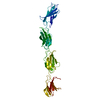
 emd_71324.png
 https://data.pdbj.org/pub/emdb/structures/EMD-71324

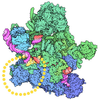
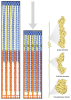
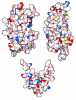
 Z (Sec.)
 Y (Row.)
 X (Col.)


 Sample components
 Escherichia coli BL21(DE3) (bacteria)

 Processing
 Electron microscopy
 FIELD EMISSION GUN