 Movie
Movie Controller

[English] 日本語
 Yorodumi
- EMDB-70071: CryoEM structure of mu-opioid receptor - Gi protein complex bound... -
+ Open data

- Basic information
| Entry |  | |||||||||
|---|---|---|---|---|---|---|---|---|---|---|
| Title | CryoEM structure of mu-opioid receptor - Gi protein complex bound to fluornitrazene (FNZ) | |||||||||
 Map data Map data | ||||||||||
 Sample Sample |
| |||||||||
 Keywords Keywords | Complex / Receptor / Agonist / MOR / MEMBRANE PROTEIN | |||||||||
| Function / homology |  Function and homology information Function and homology informationOpioid Signalling / spine apparatus / sperm ejaculation / positive regulation of appetite / G-protein activation / Peptide ligand-binding receptors / beta-endorphin receptor activity / morphine receptor activity / negative regulation of Wnt protein secretion / adenylate cyclase-inhibiting opioid receptor signaling pathway ...Opioid Signalling / spine apparatus / sperm ejaculation / positive regulation of appetite / G-protein activation / Peptide ligand-binding receptors / beta-endorphin receptor activity / morphine receptor activity / negative regulation of Wnt protein secretion / adenylate cyclase-inhibiting opioid receptor signaling pathway / negative regulation of luteinizing hormone secretion / G protein-coupled opioid receptor activity / G alpha (i) signalling events / G protein-coupled opioid receptor signaling pathway / negative regulation of nitric oxide biosynthetic process / negative regulation of adenylate cyclase-activating G protein-coupled receptor signaling pathway / adenylate cyclase-inhibiting G protein-coupled acetylcholine receptor signaling pathway / behavioral response to ethanol / positive regulation of neurogenesis / regulation of NMDA receptor activity / neuropeptide binding / eating behavior / negative regulation of cytosolic calcium ion concentration / social behavior / regulation of cellular response to stress / transmission of nerve impulse / G-protein alpha-subunit binding / positive regulation of gluconeogenesis / voltage-gated calcium channel activity / sensory perception of pain / regulation of eating behavior / adenylate cyclase inhibitor activity / T cell migration / positive regulation of protein localization to cell cortex / positive regulation of relaxation of smooth muscle / Adenylate cyclase inhibitory pathway / D2 dopamine receptor binding / presynaptic modulation of chemical synaptic transmission / T-tubule / adenylate cyclase-inhibiting dopamine receptor signaling pathway / adenylate cyclase-inhibiting serotonin receptor signaling pathway / G protein-coupled serotonin receptor binding / regulation of G protein-coupled receptor signaling pathway / locomotory behavior / dendrite cytoplasm / excitatory postsynaptic potential / dendrite membrane / cellular response to forskolin / regulation of mitotic spindle organization / mast cell degranulation / chemokine-mediated signaling pathway / sarcoplasmic reticulum / establishment of mitotic spindle orientation / neuropeptide signaling pathway / Regulation of insulin secretion / response to prostaglandin E / GABA-ergic synapse / positive regulation of cholesterol biosynthetic process / sarcolemma / G protein-coupled receptor binding / response to peptide hormone / G protein-coupled receptor activity / G-protein beta/gamma-subunit complex binding / adenylate cyclase-inhibiting G protein-coupled receptor signaling pathway / adenylate cyclase-modulating G protein-coupled receptor signaling pathway / Olfactory Signaling Pathway / phospholipase C-activating G protein-coupled receptor signaling pathway / Activation of the phototransduction cascade / G protein-coupled acetylcholine receptor signaling pathway / G beta:gamma signalling through PLC beta / Presynaptic function of Kainate receptors / Thromboxane signalling through TP receptor / Activation of G protein gated Potassium channels / Inhibition of voltage gated Ca2+ channels via Gbeta/gamma subunits / G-protein activation / Glucagon signaling in metabolic regulation / G beta:gamma signalling through CDC42 / Prostacyclin signalling through prostacyclin receptor / GDP binding / Synthesis, secretion, and inactivation of Glucagon-like Peptide-1 (GLP-1) / photoreceptor disc membrane / G beta:gamma signalling through BTK / ADP signalling through P2Y purinoceptor 12 / Sensory perception of sweet, bitter, and umami (glutamate) taste / Glucagon-type ligand receptors / Adrenaline,noradrenaline inhibits insulin secretion / Vasopressin regulates renal water homeostasis via Aquaporins / G alpha (z) signalling events / Glucagon-like Peptide-1 (GLP1) regulates insulin secretion / ADP signalling through P2Y purinoceptor 1 / cellular response to catecholamine stimulus / G beta:gamma signalling through PI3Kgamma / ADORA2B mediated anti-inflammatory cytokines production / adenylate cyclase-activating dopamine receptor signaling pathway / cellular response to prostaglandin E stimulus / Cooperation of PDCL (PhLP1) and TRiC/CCT in G-protein beta folding / GPER1 signaling / heterotrimeric G-protein complex / G alpha (12/13) signalling events / Inactivation, recovery and regulation of the phototransduction cascade Similarity search - Function | |||||||||
| Biological species |  Homo sapiens (human) / Homo sapiens (human) /   Mus musculus (house mouse) Mus musculus (house mouse) | |||||||||
| Method | single particle reconstruction / cryo EM / Resolution: 2.3 Å | |||||||||
 Authors Authors | Robertson MJ / Skiniotis G | |||||||||
| Funding support | 1 items
| |||||||||
 Citation Citation | Journal: Nature / Year: 2026 Title: A µ-opioid receptor superagonist analgesic with minimal adverse effects. Authors: Juan L Gomez / Emilya N Ventriglia / Zachary J Frangos / Agnieszka Sulima / Michael J Robertson / Michael D Sacco / Reece C Budinich / Ilinca M Giosan / Tongzhen Xie / Oscar Solis / Anna E ...Authors: Juan L Gomez / Emilya N Ventriglia / Zachary J Frangos / Agnieszka Sulima / Michael J Robertson / Michael D Sacco / Reece C Budinich / Ilinca M Giosan / Tongzhen Xie / Oscar Solis / Anna E Tischer / Jennifer M Bossert / Kiera E Caldwell / Hannah Bonbrest / Amelie Essmann / Zelai M Garçon-Poca / Shinbe Choi / Michael R Noya / Feonil Limiac / Ali Arce / Grant C Glatfelter / Margaret Robinson / Li Chen / Angelina A Mullarkey / Dain R Brademan / Garrett Enten / William Dunne / César Quiroz / Ingrid Schoenborn / Chae Bin Lee / Rana Rais / Daniel P Holt / Robert F Dannals / Lei Shi / Ruth Hüttenhain / Sergi Ferré / Eugene Kiyatkin / Jordi Bonaventura / Yavin Shaham / Venetia Zachariou / Michael H Baumann / Georgios Skiniotis / Kenner C Rice / Michael Michaelides /   Abstract: Developing safe and effective pain medications is an ongoing challenge for human health. Agonists for the µ-opioid receptor (MOR) are essential pain medications, but their high intrinsic efficacy ...Developing safe and effective pain medications is an ongoing challenge for human health. Agonists for the µ-opioid receptor (MOR) are essential pain medications, but their high intrinsic efficacy also induces adverse side effects, including respiratory depression, constipation, tolerance, dependence, withdrawal and addiction. Strategies to limit adverse effects traditionally include developing MOR agonists that have low intrinsic efficacy or that preferentially activate G-protein signalling over β-arrestin signalling. Here we identify a novel MOR agonist with supramaximal intrinsic efficacy and a unique pharmacological profile that produced effective analgesia in rodents with minimal adverse effects. N-desethyl-fluornitrazene (DFNZ) was derived from a class of synthetic benzimidazole opioids called nitazenes. DFNZ has impaired brain penetrance, a unique spatiotemporal MOR cellular signalling profile, and diminished efficacy at the MOR-galanin 1 receptor (GAL1) heteromer. DFNZ does not induce respiratory depression, tolerance or MOR downregulation after repeated exposure. Compared with other MOR agonists, DFNZ has limited effects on dopamine neurotransmission in nucleus accumbens and weaker reinforcing effects in the drug self-administration procedure. These results provide novel insights about MOR and nitazene pharmacology, have important implications for pain and addiction treatment, and challenge the prevailing dogma that high-efficacy MOR agonists cannot constitute safe and effective therapeutic agents. | |||||||||
| History |
|
- Structure visualization
| Supplemental images |
|---|

- Downloads & links
-EMDB archive
| Map data | emd_70071.map.gz | 189.1 MB | EMDB map data format | |
|---|---|---|---|---|
| Header (meta data) | emd-70071-v30.xmlemd-70071.xml | 22.2 KB 22.2 KB | Display Display | EMDB header |
| Images |  emd_70071.png emd_70071.png | 81 KB | ||
| Filedesc metadata | emd-70071.cif.gz | 7.5 KB | ||
| Archive directory |  https://data.pdbj.org/pub/emdb/structures/EMD-70071ftp://data.pdbj.org/pub/emdb/structures/EMD-70071 https://data.pdbj.org/pub/emdb/structures/EMD-70071ftp://data.pdbj.org/pub/emdb/structures/EMD-70071 | HTTPS FTP |
-Related structure data
| Related structure data |  9o36MC M: atomic model generated by this map C: citing same article ( |
|---|---|
| Similar structure data |


-Links
| EMDB pages | EMDB (EBI/PDBe) / EMDataResource |
|---|---|
| Related items in Molecule of the Month |

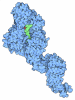
-Map
| File | Download / File: emd_70071.map.gz / Format: CCP4 / Size: 209.3 MB / Type: IMAGE STORED AS FLOATING POINT NUMBER (4 BYTES) | ||||||||||||||||||||||||||||||||||||
|---|---|---|---|---|---|---|---|---|---|---|---|---|---|---|---|---|---|---|---|---|---|---|---|---|---|---|---|---|---|---|---|---|---|---|---|---|---|
| Projections & slices | Image control
Images are generated by Spider. | ||||||||||||||||||||||||||||||||||||
| Voxel size | X=Y=Z: 0.86 Å | ||||||||||||||||||||||||||||||||||||
| Density |
| ||||||||||||||||||||||||||||||||||||
| Symmetry | Space group: 1 | ||||||||||||||||||||||||||||||||||||
| Details | EMDB XML:
|
 X (Sec.)
 Y (Row.)
 Z (Col.)


-Supplemental data
- Sample components
-Entire : MOR-Gi heterotrimer complex
| Entire | Name: MOR-Gi heterotrimer complex |
|---|---|
| Components |
|
-Supramolecule #1: MOR-Gi heterotrimer complex
| Supramolecule | Name: MOR-Gi heterotrimer complex / type: complex / ID: 1 / Parent: 0 / Macromolecule list: #1-#5 |
|---|---|
| Source (natural) | Organism: Homo sapiens (human) |
-Macromolecule #1: Guanine nucleotide-binding protein G(i) subunit alpha-1
| Macromolecule | Name: Guanine nucleotide-binding protein G(i) subunit alpha-1 type: protein_or_peptide / ID: 1 / Number of copies: 1 / Enantiomer: LEVO |
|---|---|
| Source (natural) | Organism: Homo sapiens (human) |
| Molecular weight | Theoretical: 40.415031 KDa |
| Recombinant expression | Organism:  Trichoplusia ni (cabbage looper) Trichoplusia ni (cabbage looper) |
| Sequence | String: MGCTLSAEDK AAVERSKMID RNLREDGEKA AREVKLLLLG AGESGKSTIV KQMKIIHEAG YSEEECKQYK AVVYSNTIQS IIAIIRAMG RLKIDFGDSA RADDARQLFV LAGAAEEGFM TAELAGVIKR LWKDSGVQAC FNRSREYQLN DSAAYYLNDL D RIAQPNYI ...String: MGCTLSAEDK AAVERSKMID RNLREDGEKA AREVKLLLLG AGESGKSTIV KQMKIIHEAG YSEEECKQYK AVVYSNTIQS IIAIIRAMG RLKIDFGDSA RADDARQLFV LAGAAEEGFM TAELAGVIKR LWKDSGVQAC FNRSREYQLN DSAAYYLNDL D RIAQPNYI PTQQDVLRTR VKTTGIVETH FTFKDLHFKM FDVGGQRSER KKWIHCFEGV TAIIFCVALS DYDLVLAEDE EM NRMHESM KLFDSICNNK WFTDTSIILF LNKKDLFEEK IKKSPLTICY PEYAGSNTYE EAAAYIQCQF EDLNKRKDTK EIY THFTCA TDTKNVQFVF DAVTDVIIKN NLKDCGLF UniProtKB: Guanine nucleotide-binding protein G(i) subunit alpha-1 |
-Macromolecule #2: Guanine nucleotide-binding protein G(I)/G(S)/G(T) subunit beta-1
| Macromolecule | Name: Guanine nucleotide-binding protein G(I)/G(S)/G(T) subunit beta-1 type: protein_or_peptide / ID: 2 / Number of copies: 1 / Enantiomer: LEVO |
|---|---|
| Source (natural) | Organism: Homo sapiens (human) |
| Molecular weight | Theoretical: 37.671102 KDa |
| Recombinant expression | Organism: Trichoplusia ni (cabbage looper) |
| Sequence | String: PGSSGSELDQ LRQEAEQLKN QIRDARKACA DATLSQITNN IDPVGRIQMR TRRTLRGHLA KIYAMHWGTD SRLLVSASQD GKLIIWDSY TTNKVHAIPL RSSWVMTCAY APSGNYVACG GLDNICSIYN LKTREGNVRV SRELAGHTGY LSCCRFLDDN Q IVTSSGDT ...String: PGSSGSELDQ LRQEAEQLKN QIRDARKACA DATLSQITNN IDPVGRIQMR TRRTLRGHLA KIYAMHWGTD SRLLVSASQD GKLIIWDSY TTNKVHAIPL RSSWVMTCAY APSGNYVACG GLDNICSIYN LKTREGNVRV SRELAGHTGY LSCCRFLDDN Q IVTSSGDT TCALWDIETG QQTTTFTGHT GDVMSLSLAP DTRLFVSGAC DASAKLWDVR EGMCRQTFTG HESDINAICF FP NGNAFAT GSDDATCRLF DLRADQELMT YSHDNIICGI TSVSFSKSGR LLLAGYDDFN CNVWDALKAD RAGVLAGHDN RVS CLGVTD DGMAVATGSW DSFLKIWN UniProtKB: Guanine nucleotide-binding protein G(I)/G(S)/G(T) subunit beta-1 |
-Macromolecule #3: Guanine nucleotide-binding protein G(I)/G(S)/G(O) subunit gamma-2
| Macromolecule | Name: Guanine nucleotide-binding protein G(I)/G(S)/G(O) subunit gamma-2 type: protein_or_peptide / ID: 3 / Number of copies: 1 / Enantiomer: LEVO |
|---|---|
| Source (natural) | Organism: Homo sapiens (human) |
| Molecular weight | Theoretical: 7.861143 KDa |
| Recombinant expression | Organism: Trichoplusia ni (cabbage looper) |
| Sequence | String: MASNNTASIA QARKLVEQLK MEANIDRIKV SKAAADLMAY CEAHAKEDPL LTPVPASENP FREKKFFCAI L UniProtKB: Guanine nucleotide-binding protein G(I)/G(S)/G(O) subunit gamma-2 |
-Macromolecule #4: scFv16
| Macromolecule | Name: scFv16 / type: protein_or_peptide / ID: 4 / Number of copies: 1 / Enantiomer: LEVO |
|---|---|
| Source (natural) | Organism: Mus musculus (house mouse) |
| Molecular weight | Theoretical: 27.784896 KDa |
| Recombinant expression | Organism: Trichoplusia ni (cabbage looper) |
| Sequence | String: DVQLVESGGG LVQPGGSRKL SCSASGFAFS SFGMHWVRQA PEKGLEWVAY ISSGSGTIYY ADTVKGRFTI SRDDPKNTLF LQMTSLRSE DTAMYYCVRS IYYYGSSPFD FWGQGTTLTV SSGGGGSGGG GSGGGGSDIV MTQATSSVPV TPGESVSISC R SSKSLLHS ...String: DVQLVESGGG LVQPGGSRKL SCSASGFAFS SFGMHWVRQA PEKGLEWVAY ISSGSGTIYY ADTVKGRFTI SRDDPKNTLF LQMTSLRSE DTAMYYCVRS IYYYGSSPFD FWGQGTTLTV SSGGGGSGGG GSGGGGSDIV MTQATSSVPV TPGESVSISC R SSKSLLHS NGNTYLYWFL QRPGQSPQLL IYRMSNLASG VPDRFSGSGS GTAFTLTISR LEAEDVGVYY CMQHLEYPLT FG AGTKLEL KAAAHHHHHH HH |
-Macromolecule #5: Mu-type opioid receptor
| Macromolecule | Name: Mu-type opioid receptor / type: protein_or_peptide / ID: 5 / Number of copies: 1 / Enantiomer: LEVO |
|---|---|
| Source (natural) | Organism: Mus musculus (house mouse) |
| Molecular weight | Theoretical: 47.910758 KDa |
| Recombinant expression | Organism: 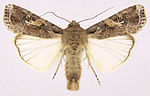 Spodoptera frugiperda (fall armyworm) Spodoptera frugiperda (fall armyworm) |
| Sequence | String: MKTIIALSYI FCLVFADYKD DDDAMGPGNI SDCSDPLAPA SCSPAPGSWL NLSHVDGNQS DPCGPNRTGL GGSHSLCPQT GSPSMVTAI TIMALYSIVC VVGLFGNFLV MYVIVRYTKM KTATNIYIFN LALADALATS TLPFQSVNYL MGTWPFGNIL C KIVISIDY ...String: MKTIIALSYI FCLVFADYKD DDDAMGPGNI SDCSDPLAPA SCSPAPGSWL NLSHVDGNQS DPCGPNRTGL GGSHSLCPQT GSPSMVTAI TIMALYSIVC VVGLFGNFLV MYVIVRYTKM KTATNIYIFN LALADALATS TLPFQSVNYL MGTWPFGNIL C KIVISIDY YNMFTSIFTL CTMSVDRYIA VCHPVKALDF RTPRNAKIVN VCNWILSSAI GLPVMFMATT KYRQGSIDCT LT FSHPTWY WENLLKICVF IFAFIMPVLI ITVCYGLMIL RLKSVRMLSG SKEKDRNLRR ITRMVLVVVA VFIVCWTPIH IYV IIKALI TIPETTFQTV SWHFCIALGY TNSCLNPVLY AFLDENFKRC FREFCIPTSS TIEQQNSARI RQNTREHPST ANTV DRTNH QLENLEAETA PLPDIHHHHH H UniProtKB: Mu-type opioid receptor |
-Macromolecule #6: N,N-diethyl-2-(2-{[4-(2-fluoroethoxy)phenyl]methyl}-5-nitro-1H-1,...
| Macromolecule | Name: N,N-diethyl-2-(2-{[4-(2-fluoroethoxy)phenyl]methyl}-5-nitro-1H-1,3-benzimidazol-1-yl)ethan-1-amine type: ligand / ID: 6 / Number of copies: 1 / Formula: A1B79 |
|---|---|
| Molecular weight | Theoretical: 414.473 Da |
-Experimental details
-Structure determination
| Method | cryo EM |
|---|---|
 Processing Processing | single particle reconstruction |
| Aggregation state | particle |
-Sample preparation
| Buffer | pH: 7.5 |
|---|---|
| Vitrification | Cryogen name: ETHANE |
- Electron microscopy
| Microscope | TFS KRIOS |
|---|---|
| Image recording | Film or detector model: GATAN K3 BIOQUANTUM (6k x 4k) / Average electron dose: 56.0 e/Å2 |
| Electron beam | Acceleration voltage: 300 kV / Electron source:  FIELD EMISSION GUN FIELD EMISSION GUN |
| Electron optics | Illumination mode: FLOOD BEAM / Imaging mode: BRIGHT FIELD / Nominal defocus max: 1.5 µm / Nominal defocus min: 0.6 µm |
| Experimental equipment |  Model: Titan Krios / Image courtesy: FEI Company |
