Cytoskeleton / microtubules / human tubulin isotypes / paclitaxel / STRUCTURAL PROTEIN
Function / homology
Function and homology information
netrin receptor binding / pyramidal neuron differentiation / glial cell differentiation / Post-chaperonin tubulin folding pathway / dorsal root ganglion development / cytoskeleton-dependent intracellular transport / Cargo trafficking to the periciliary membrane / dentate gyrus development / Carboxyterminal post-translational modifications of tubulin / Microtubule-dependent trafficking of connexons from Golgi to the plasma membrane ...netrin receptor binding / pyramidal neuron differentiation / glial cell differentiation / Post-chaperonin tubulin folding pathway / dorsal root ganglion development / cytoskeleton-dependent intracellular transport / Cargo trafficking to the periciliary membrane / dentate gyrus development / Carboxyterminal post-translational modifications of tubulin / Microtubule-dependent trafficking of connexons from Golgi to the plasma membrane / axonemal microtubule / organelle transport along microtubule / forebrain morphogenesis / cerebellar cortex morphogenesis / Sealing of the nuclear envelope (NE) by ESCRT-III / Intraflagellar transport / microtubule plus-end / neuron projection arborization / Formation of tubulin folding intermediates by CCT/TriC / Gap junction assembly / smoothened signaling pathway / homeostasis of number of cells within a tissue / motor behavior / Kinesins / Prefoldin mediated transfer of substrate to CCT/TriC / response to L-glutamate / Assembly and cell surface presentation of NMDA receptors / COPI-independent Golgi-to-ER retrograde traffic / centrosome cycle / sperm principal piece / COPI-dependent Golgi-to-ER retrograde traffic / startle response / intercellular bridge / 'de novo' protein folding / flagellated sperm motility / regulation of synapse organization / sperm end piece / locomotory exploration behavior / Recycling pathway of L1 / microtubule polymerization / response to tumor necrosis factor / ciliary tip / response to mechanical stimulus / neuron apoptotic process / adult locomotory behavior / sperm flagellum / RHO GTPases activate IQGAPs / Hedgehog 'off' state / COPI-mediated anterograde transport / condensed chromosome / Activation of AMPK downstream of NMDARs / peptide binding / Loss of Nlp from mitotic centrosomes / Loss of proteins required for interphase microtubule organization from the centrosome / Recruitment of mitotic centrosome proteins and complexes / microtubule-based process / MHC class II antigen presentation / Recruitment of NuMA to mitotic centrosomes / Anchoring of the basal body to the plasma membrane / visual learning / cellular response to calcium ion / HSP90 chaperone cycle for steroid hormone receptors (SHR) in the presence of ligand / Mitotic Prometaphase / axon guidance / EML4 and NUDC in mitotic spindle formation / AURKA Activation by TPX2 / Resolution of Sister Chromatid Cohesion / cell periphery / filopodium / Translocation of SLC2A4 (GLUT4) to the plasma membrane / neuromuscular junction / intracellular protein transport / neuron migration / memory / microtubule cytoskeleton organization / cerebral cortex development / RHO GTPases Activate Formins / synapse organization / PKR-mediated signaling / recycling endosome / mitotic spindle / structural constituent of cytoskeleton / cytoplasmic ribonucleoprotein granule / HCMV Early Events / Aggrephagy / microtubule cytoskeleton / The role of GTSE1 in G2/M progression after G2 checkpoint / Separation of Sister Chromatids / mitotic cell cycle / Regulation of PLK1 Activity at G2/M Transition / neuron differentiation / cilium / lamellipodium / microtubule / cell division / protein-folding chaperone binding / growth cone / microtubule binding / Hydrolases; Acting on acid anhydrides; Acting on GTP to facilitate cellular and subcellular movement / protein stabilization Similarity search - Function
The University Grants Committee, Research Grants Council (RGC)
17115924
Hong Kong
The University Grants Committee, Research Grants Council (RGC)
C7064-22GF
Hong Kong
National Natural Science Foundation of China (NSFC)
224B2707
China
Citation
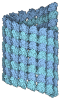
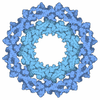
Journal: Nat Chem Biol / Year: 2026 Title: An evolution-conserved allosteric network in human tubulin governs paclitaxel efficacy. Authors: Jingyi Luo / Chen Jing Khoo / Weixin Chen / Zheng Liu / Boxuan Li / Wei Sin Lau / Xiang David Li / Shih-Chieh Ti / Abstract: Tubulin-targeting agents such as paclitaxel have been a cornerstone of cancer treatment. However, the molecular basis by which prognosis-associated tubulin isotypes and mutations (that is, variants) ...Tubulin-targeting agents such as paclitaxel have been a cornerstone of cancer treatment. However, the molecular basis by which prognosis-associated tubulin isotypes and mutations (that is, variants) affect drug efficacy remains unclear. Here we reveal that evolutionarily conserved tubulin residues modulate the allosteric network to determine paclitaxel efficacy. The paclitaxel resistance of human β3-tubulin depends on a residue distant from the taxane-binding pocket. The ~2.3 Å-resolution cryo-EM microtubule reconstructions demonstrate that the paclitaxel-sensitizing tubulin mutation induces allostery at the paclitaxel-binding site, intertubulin interactions and nucleotide-binding pockets. In particular, the reoriented guanine triphosphate (GTP)-hydrolyzing catalytic α-tubulin E254 residue enhances the GTP cap, reducing the catastrophe frequency of dynamic microtubules. Examining genome-edited cancer cells with the paclitaxel-sensitized mutant β3-tubulin indicates that the affinities of tubulin variants for paclitaxel determine drug efficacy. Our findings provide mechanistic insights into the development of new tubulin-targeting therapeutics not only for cancer but also for tubulinopathies associated with mutations in specific tubulin isotypes.
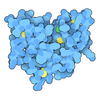
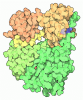
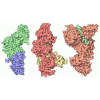
Name: Tubulin alpha-1A chain / type: protein_or_peptide / ID: 1 / Number of copies: 1 / Enantiomer: LEVO EC number: Hydrolases; Acting on acid anhydrides; Acting on GTP to facilitate cellular and subcellular movement
In the structure databanks used in Yorodumi, some data are registered as the other names, "COVID-19 virus" and "2019-nCoV". Here are the details of the virus and the list of structure data.
Jan 31, 2019. EMDB accession codes are about to change! (news from PDBe EMDB page)
EMDB accession codes are about to change! (news from PDBe EMDB page)
The allocation of 4 digits for EMDB accession codes will soon come to an end. Whilst these codes will remain in use, new EMDB accession codes will include an additional digit and will expand incrementally as the available range of codes is exhausted. The current 4-digit format prefixed with “EMD-” (i.e. EMD-XXXX) will advance to a 5-digit format (i.e. EMD-XXXXX), and so on. It is currently estimated that the 4-digit codes will be depleted around Spring 2019, at which point the 5-digit format will come into force.
The EM Navigator/Yorodumi systems omit the EMD- prefix.
Related info.:Q: What is EMD? / ID/Accession-code notation in Yorodumi/EM Navigator
Yorodumi is a browser for structure data from EMDB, PDB, SASBDB, etc.
This page is also the successor to EM Navigator detail page, and also detail information page/front-end page for Omokage search.
The word "yorodu" (or yorozu) is an old Japanese word meaning "ten thousand". "mi" (miru) is to see.
Related info.:EMDB / PDB / SASBDB / Comparison of 3 databanks / Yorodumi Search / Aug 31, 2016. New EM Navigator & Yorodumi / Yorodumi Papers / Jmol/JSmol / Function and homology information / Changes in new EM Navigator and Yorodumi
 Movie
Movie Controller


 Open data
 Basic information
 Map data
 Sample
 Keywords
 Function and homology information
 Homo sapiens (human)
 Authors
 Hong Kong,
  Citation
 Structure visualization
 Downloads & links
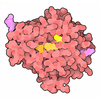
 emd_65886.png
 https://data.pdbj.org/pub/emdb/structures/EMD-65886





 Z (Sec.)
 Y (Row.)
 X (Col.)


 Sample components
 Trichoplusia ni (cabbage looper)
 Processing
 Electron microscopy
 FIELD EMISSION GUN

