 Movie
Movie Controller


+ Open data

- Basic information
| Entry |  | |||||||||
|---|---|---|---|---|---|---|---|---|---|---|
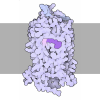
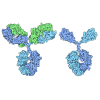
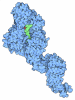
| Title | Cryo-EM structure of the OXGR1(CA)-Gq complex | |||||||||
 Map data Map data | ||||||||||
 Sample Sample |
| |||||||||
 Keywords Keywords | OXGR1 / Gq / constitutive active / MEMBRANE PROTEIN / MEMBRANE PROTEIN-IMMUNE SYSTEM complex | |||||||||
| Function / homology |  Function and homology information Function and homology informationpositive regulation of vascular associated smooth muscle contraction / Class A/1 (Rhodopsin-like receptors) / G protein-coupled receptor activity / Olfactory Signaling Pathway / phospholipase C-activating G protein-coupled receptor signaling pathway / Activation of the phototransduction cascade / G protein-coupled acetylcholine receptor signaling pathway / G beta:gamma signalling through PLC beta / Presynaptic function of Kainate receptors / Thromboxane signalling through TP receptor ...positive regulation of vascular associated smooth muscle contraction / Class A/1 (Rhodopsin-like receptors) / G protein-coupled receptor activity / Olfactory Signaling Pathway / phospholipase C-activating G protein-coupled receptor signaling pathway / Activation of the phototransduction cascade / G protein-coupled acetylcholine receptor signaling pathway / G beta:gamma signalling through PLC beta / Presynaptic function of Kainate receptors / Thromboxane signalling through TP receptor / Activation of G protein gated Potassium channels / Inhibition of voltage gated Ca2+ channels via Gbeta/gamma subunits / G-protein activation / Glucagon signaling in metabolic regulation / G beta:gamma signalling through CDC42 / Prostacyclin signalling through prostacyclin receptor / Synthesis, secretion, and inactivation of Glucagon-like Peptide-1 (GLP-1) / photoreceptor disc membrane / G beta:gamma signalling through BTK / ADP signalling through P2Y purinoceptor 12 / Sensory perception of sweet, bitter, and umami (glutamate) taste / Glucagon-type ligand receptors / Adrenaline,noradrenaline inhibits insulin secretion / Vasopressin regulates renal water homeostasis via Aquaporins / G alpha (z) signalling events / Glucagon-like Peptide-1 (GLP1) regulates insulin secretion / ADP signalling through P2Y purinoceptor 1 / cellular response to catecholamine stimulus / G beta:gamma signalling through PI3Kgamma / ADORA2B mediated anti-inflammatory cytokines production / adenylate cyclase-activating dopamine receptor signaling pathway / cellular response to prostaglandin E stimulus / Cooperation of PDCL (PhLP1) and TRiC/CCT in G-protein beta folding / GPER1 signaling / heterotrimeric G-protein complex / G alpha (12/13) signalling events / Inactivation, recovery and regulation of the phototransduction cascade / signaling receptor activity / G-protein beta-subunit binding / extracellular vesicle / Thrombin signalling through proteinase activated receptors (PARs) / signaling receptor complex adaptor activity / GTPase binding / Ca2+ pathway / High laminar flow shear stress activates signaling by PIEZO1 and PECAM1:CDH5:KDR in endothelial cells / G alpha (i) signalling events / G alpha (s) signalling events / G alpha (q) signalling events / Ras protein signal transduction / Extra-nuclear estrogen signaling / G protein-coupled receptor signaling pathway / lysosomal membrane / GTPase activity / synapse / protein-containing complex binding / signal transduction / extracellular exosome / membrane / plasma membrane / cytosol Similarity search - Function | |||||||||
| Biological species |  Homo sapiens (human) / synthetic construct (others) Homo sapiens (human) / synthetic construct (others) | |||||||||
| Method | single particle reconstruction / cryo EM / Resolution: 2.7 Å | |||||||||
 Authors Authors | Tang XJ / Sun JP / Guo LL / Li J / Deng ZL / Xiao WQ / Zhu Y / Zhu KK | |||||||||
| Funding support |  China, 1 items China, 1 items
| |||||||||
 Citation Citation | Journal: Cell / Year: 2026 Title: Metabolite-gated vascular contractility switch: OXGR1 activation mechanism enables agonist therapy for rosacea erythema. Authors: Wenqin Xiao / Yan Zhu / Xinjie Tang / Kongkai Zhu / Weifeng Zhang / Mengting Chen / Kui Cai / San Xu / Zheng Wu / Mei Wang / Jiayi Liu / Linglong Long / Zixin Tan / Aike Wu / Songqi Zhou / ...Authors: Wenqin Xiao / Yan Zhu / Xinjie Tang / Kongkai Zhu / Weifeng Zhang / Mengting Chen / Kui Cai / San Xu / Zheng Wu / Mei Wang / Jiayi Liu / Linglong Long / Zixin Tan / Aike Wu / Songqi Zhou / Zhixiang Zhao / Yan Tang / Yingxue Huang / Ben Wang / Fangfen Liu / Qian Wang / Fan Yang / Dan Jian / Wei Shi / Hongfu Xie / Xiang Chen / Lulu Guo / Zhili Deng / Jinpeng Sun / Ji Li / Abstract: Rosacea, an inflammatory skin disorder, poses a dilemma owing to limited effectiveness of treatments for pathological vasodilation-mediated erythema. Here, we identify oxoglutaric acid (α-KG) as a ...Rosacea, an inflammatory skin disorder, poses a dilemma owing to limited effectiveness of treatments for pathological vasodilation-mediated erythema. Here, we identify oxoglutaric acid (α-KG) as a rosacea-associated metabolite elevated in patients and correlated with erythema severity. Exogenous α-KG administration ameliorates rosacea-like manifestations in murine models. Mechanistically, α-KG activates OXGR1, a vascular smooth muscle cell (VSMC)-enriched G protein-coupled receptor (GPCR) to induce Gq signaling and enhance MYL9 phosphorylation, promoting VSMC contraction and limiting vasodilation. Cryo-electron microscopy (cryo-EM) structures of OXGR1-Gq complexes bound to α-KG or itaconate reveal a specific bipartite-acid pocket recognizing its endogenous agonist and an activation mechanism distinct from classical GPCRs. Building on these structures, we developed A-1, a synthetic selective OXGR1 agonist that mitigates erythema and inflammation with efficacy comparable to first-line therapy while offering enhanced safety in rosacea-like models. These findings link a metabolite to vascular dysfunction and nominate OXGR1 agonism for precision treatment of erythema and vascular disorders. | |||||||||
| History |
|
- Structure visualization
| Supplemental images |
|---|

- Downloads & links
-EMDB archive
| Map data | emd_65222.map.gz | 53.4 MB | EMDB map data format | |
|---|---|---|---|---|
| Header (meta data) | emd-65222-v30.xmlemd-65222.xml | 23.1 KB 23.1 KB | Display Display | EMDB header |
| Images |  emd_65222.png emd_65222.png | 107.7 KB | ||
| Filedesc metadata | emd-65222.cif.gz | 7 KB | ||
| Others | emd_65222_half_map_1.map.gzemd_65222_half_map_2.map.gz | 59.4 MB 59.4 MB | ||
| Archive directory |  https://data.pdbj.org/pub/emdb/structures/EMD-65222ftp://data.pdbj.org/pub/emdb/structures/EMD-65222 https://data.pdbj.org/pub/emdb/structures/EMD-65222ftp://data.pdbj.org/pub/emdb/structures/EMD-65222 | HTTPS FTP |
-Related structure data
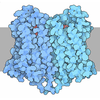
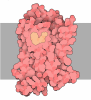
| Related structure data |  9vo2MC  9vmnC  9vmoC  9vmpC M: atomic model generated by this map C: citing same article ( |
|---|---|
| Similar structure data |


-Links
| EMDB pages | EMDB (EBI/PDBe) / EMDataResource |
|---|---|
| Related items in Molecule of the Month |


-Map
| File | Download / File: emd_65222.map.gz / Format: CCP4 / Size: 64 MB / Type: IMAGE STORED AS FLOATING POINT NUMBER (4 BYTES) | ||||||||||||||||||||||||||||||||||||
|---|---|---|---|---|---|---|---|---|---|---|---|---|---|---|---|---|---|---|---|---|---|---|---|---|---|---|---|---|---|---|---|---|---|---|---|---|---|
| Projections & slices | Image control
Images are generated by Spider. | ||||||||||||||||||||||||||||||||||||
| Voxel size | X=Y=Z: 0.82 Å | ||||||||||||||||||||||||||||||||||||
| Density |
| ||||||||||||||||||||||||||||||||||||
| Symmetry | Space group: 1 | ||||||||||||||||||||||||||||||||||||
| Details | EMDB XML:
|
 Z (Sec.)
 Y (Row.)
 X (Col.)


-Supplemental data
-Half map: #1
| File | emd_65222_half_map_1.map | ||||||||||||
|---|---|---|---|---|---|---|---|---|---|---|---|---|---|
| Projections & Slices |
| ||||||||||||
| Density Histograms |


-Half map: #2
| File | emd_65222_half_map_2.map | ||||||||||||
|---|---|---|---|---|---|---|---|---|---|---|---|---|---|
| Projections & Slices |
| ||||||||||||
| Density Histograms |


- Sample components
-Entire : Cryo-EM structure of the apo-OXGR1-Gq complex
| Entire | Name: Cryo-EM structure of the apo-OXGR1-Gq complex |
|---|---|
| Components |
|
-Supramolecule #1: Cryo-EM structure of the apo-OXGR1-Gq complex
| Supramolecule | Name: Cryo-EM structure of the apo-OXGR1-Gq complex / type: complex / ID: 1 / Parent: 0 / Macromolecule list: all |
|---|---|
| Source (natural) | Organism: Homo sapiens (human) / Tissue: Homo sapiens / Organelle: 9606 |
-Macromolecule #1: Guanine nucleotide-binding protein G(q) subunit alpha isoforms short
| Macromolecule | Name: Guanine nucleotide-binding protein G(q) subunit alpha isoforms short type: protein_or_peptide / ID: 1 / Number of copies: 1 / Enantiomer: LEVO |
|---|---|
| Source (natural) | Organism: Homo sapiens (human) |
| Molecular weight | Theoretical: 42.768707 KDa |
| Recombinant expression | Organism:   Spodoptera frugiperda (fall armyworm) Spodoptera frugiperda (fall armyworm) |
| Sequence | String: MMGCTLSAED KAAVERSKMI EKQLQKDKQV YRRTLRLLLL GADNSGKSTI VKQMRIYHVN GYSEEECKQY KAVVYSNTIQ SIIAIIRAM GRLKIDFGDS ARADDARQLS VLAGAAEEGF MTAELAGVIK RLWKDSGVQA CFNRSREYQL NDSAAYYLND L DRIAQPNY ...String: MMGCTLSAED KAAVERSKMI EKQLQKDKQV YRRTLRLLLL GADNSGKSTI VKQMRIYHVN GYSEEECKQY KAVVYSNTIQ SIIAIIRAM GRLKIDFGDS ARADDARQLS VLAGAAEEGF MTAELAGVIK RLWKDSGVQA CFNRSREYQL NDSAAYYLND L DRIAQPNY IPTQQDVLRT RVKTSGIFET KFQVDKVNFH MFDVGAQRDE RRKWIQCFND VTAIIFVVDS SDYNRLQEAL ND FKSIWNN RWLRTISVIL FLNKQDLLAE KVLKSKIEDY FPEFARYTTP EDATPEPGED PRVTRAKYFI RKEFVDISTA SGD GRHICY PHFTCSVDTE NARRIFNDCK DIILQMNLRE YNLVMNAIVV VNLF |
-Macromolecule #2: Guanine nucleotide-binding protein G(I)/G(S)/G(T) subunit beta-1
| Macromolecule | Name: Guanine nucleotide-binding protein G(I)/G(S)/G(T) subunit beta-1 type: protein_or_peptide / ID: 2 / Number of copies: 1 / Enantiomer: LEVO |
|---|---|
| Source (natural) | Organism: Homo sapiens (human) |
| Molecular weight | Theoretical: 37.198656 KDa |
| Recombinant expression | Organism: Spodoptera frugiperda (fall armyworm) |
| Sequence | String: ELDQLRQEAE QLKNQIRDAR KACADATLSQ ITNNIDPVGR IQMRTRRTLR GHLAKIYAMH WGTDSRLLVS ASQDGKLIIW DSYTTNKVH AIPLRSSWVM TCAYAPSGNY VACGGLDNIC SIYNLKTREG NVRVSRELAG HTGYLSCCRF LDDNQIVTSS G DTTCALWD ...String: ELDQLRQEAE QLKNQIRDAR KACADATLSQ ITNNIDPVGR IQMRTRRTLR GHLAKIYAMH WGTDSRLLVS ASQDGKLIIW DSYTTNKVH AIPLRSSWVM TCAYAPSGNY VACGGLDNIC SIYNLKTREG NVRVSRELAG HTGYLSCCRF LDDNQIVTSS G DTTCALWD IETGQQTTTF TGHTGDVMSL SLAPDTRLFV SGACDASAKL WDVREGMCRQ TFTGHESDIN AICFFPNGNA FA TGSDDAT CRLFDLRADQ ELMTYSHDNI ICGITSVSFS KSGRLLLAGY DDFNCNVWDA LKADRAGVLA GHDNRVSCLG VTD DGMAVA TGSWDSFLKI WN UniProtKB: Guanine nucleotide-binding protein G(I)/G(S)/G(T) subunit beta-1 |
-Macromolecule #3: Guanine nucleotide-binding protein G(I)/G(S)/G(O) subunit gamma-2
| Macromolecule | Name: Guanine nucleotide-binding protein G(I)/G(S)/G(O) subunit gamma-2 type: protein_or_peptide / ID: 3 / Number of copies: 1 / Enantiomer: LEVO |
|---|---|
| Source (natural) | Organism: Homo sapiens (human) |
| Molecular weight | Theoretical: 6.504446 KDa |
| Recombinant expression | Organism: Spodoptera frugiperda (fall armyworm) |
| Sequence | String: NTASIAQARK LVEQLKMEAN IDRIKVSKAA ADLMAYCEAH AKEDPLLTPV PASENPFRE UniProtKB: Guanine nucleotide-binding protein G(I)/G(S)/G(O) subunit gamma-2 |
-Macromolecule #4: 2-oxoglutarate receptor 1
| Macromolecule | Name: 2-oxoglutarate receptor 1 / type: protein_or_peptide / ID: 4 / Number of copies: 1 / Enantiomer: LEVO |
|---|---|
| Source (natural) | Organism: Homo sapiens (human) |
| Molecular weight | Theoretical: 38.28402 KDa |
| Recombinant expression | Organism: Spodoptera frugiperda (fall armyworm) |
| Sequence | String: MNEPLDYLAN ASDFPDYAAA FGNCTDENIP LKMHYLPVIY GIIFLVGFPG NAVVISTYIF KMRPWKSSTI IMLNLACTDL LYLTSLPFL IHYYASGENW IFGDFMCKFI RFSFHFNLYS SILFLTCFSI FRYCVIIHPM SCFSIHKTRC AVVACAVVWI I SLVAVIPM ...String: MNEPLDYLAN ASDFPDYAAA FGNCTDENIP LKMHYLPVIY GIIFLVGFPG NAVVISTYIF KMRPWKSSTI IMLNLACTDL LYLTSLPFL IHYYASGENW IFGDFMCKFI RFSFHFNLYS SILFLTCFSI FRYCVIIHPM SCFSIHKTRC AVVACAVVWI I SLVAVIPM TFLITSTNRT NRSACLDLTS SDELNTIKWY NLILTATTFC LPLVIVTLCY TTIIHTLTHG LQTDSCLKQK AR RLTILLL LAFYVCFLPF HILRVIRIES RLLSISCSIE NQIHEAYIVS RPLAALNTFG NLLLYVVVSD NFQQAVCSTV RCK VSGNLE QAKKISYSNN P UniProtKB: 2-oxoglutarate receptor 1 |
-Macromolecule #5: scFv16
| Macromolecule | Name: scFv16 / type: protein_or_peptide / ID: 5 / Number of copies: 1 / Enantiomer: LEVO |
|---|---|
| Source (natural) | Organism: synthetic construct (others) |
| Molecular weight | Theoretical: 30.363043 KDa |
| Recombinant expression | Organism: Spodoptera frugiperda (fall armyworm) |
| Sequence | String: MLLVNQSHQG FNKEHTSKMV SAIVLYVLLA AAAHSAFAVQ LVESGGGLVQ PGGSRKLSCS ASGFAFSSFG MHWVRQAPEK GLEWVAYIS SGSGTIYYAD TVKGRFTISR DDPKNTLFLQ MTSLRSEDTA MYYCVRSIYY YGSSPFDFWG QGTTLTVSAG G GGSGGGGS ...String: MLLVNQSHQG FNKEHTSKMV SAIVLYVLLA AAAHSAFAVQ LVESGGGLVQ PGGSRKLSCS ASGFAFSSFG MHWVRQAPEK GLEWVAYIS SGSGTIYYAD TVKGRFTISR DDPKNTLFLQ MTSLRSEDTA MYYCVRSIYY YGSSPFDFWG QGTTLTVSAG G GGSGGGGS GGGGSADIVM TQATSSVPVT PGESVSISCR SSKSLLHSNG NTYLYWFLQR PGQSPQLLIY RMSNLASGVP DR FSGSGSG TAFTLTISRL EAEDVGVYYC MQHLEYPLTF GAGTKLEL |
-Experimental details
-Structure determination
| Method | cryo EM |
|---|---|
 Processing Processing | single particle reconstruction |
| Aggregation state | particle |
-Sample preparation
| Buffer | pH: 7.4 |
|---|---|
| Vitrification | Cryogen name: ETHANE |
- Electron microscopy
| Microscope | TFS KRIOS |
|---|---|
| Image recording | Film or detector model: GATAN K3 (6k x 4k) / Average electron dose: 1.875 e/Å2 |
| Electron beam | Acceleration voltage: 300 kV / Electron source:  FIELD EMISSION GUN FIELD EMISSION GUN |
| Electron optics | Illumination mode: FLOOD BEAM / Imaging mode: DIFFRACTION / Nominal defocus max: 2.0 µm / Nominal defocus min: 1.0 µm |
| Experimental equipment |  Model: Titan Krios / Image courtesy: FEI Company |
