[English] 日本語
Yorodumi
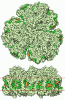
- EMDB-64106: Cryo-EM structure of the tubular mastigoneme (the central tube) f... -

+
Open data


ID or keywords:

Loading...

-
Basic information

Entry
Database: EMDB / ID: EMD-64106
TitleCryo-EM structure of the tubular mastigoneme (the central tube) from golden algae 2.17 angstrom resolution
Map data
Sample
  • Complex: tubular mastigoneme
    • Protein or peptide: x 6 types
  • Ligand: x 5 types
KeywordsCryo-EM / Tubular Mastigoneme / Golden algae / N-Glycans / CARBOHYDRATE
Function / homology
Function and homology information


: / : / : / EGF-like domain, extracellular / EGF-like domain / Epidermal growth factor-like domain. / EGF-like domain profile. / EGF-like domain signature 1. / EGF-like domain signature 2. / EGF-like domain / Prokaryotic membrane lipoprotein lipid attachment site profile.
Similarity search - Domain/homology
Tubular mastigoneme protein / Tubular mastigoneme protein / Tubular mastigoneme protein
Similarity search - Component
Biological speciesOchromonas danica (eukaryote)
Methodsingle particle reconstruction / cryo EM / Resolution: 2.17 Å
AuthorsHuang J / Tao H / Chen S / Cui Y / Xu Y / Yan C / Yan N
Funding support China, 3 items
OrganizationGrant numberCountry
National Natural Science Foundation of China (NSFC)32330052 China
National Natural Science Foundation of China (NSFC)32341016 China
National Natural Science Foundation of China (NSFC)324B2042 China
CitationJournal: Science / Year: 2026
Title: Structural N- and O-glycans revealed by high-resolution cryo-EM analysis of tubular mastigonemes.
Authors: Junhao Huang / Hui Tao / Sheng Chen / Yahua Cui / Yiran Xu / Chuangye Yan / Nieng Yan /
Abstract: The chemical complexity and non-templated biosynthesis of glycans have posed significant challenges for establishing sequence-structure relationships. Here we report cryo-EM structures of tubular ...The chemical complexity and non-templated biosynthesis of glycans have posed significant challenges for establishing sequence-structure relationships. Here we report cryo-EM structures of tubular mastigonemes from a golden alga species, , in which a large number of N- and O-glycans are resolved at 1.8-2.2 Å resolution. Beyond high-mannose and complex N-glycans, we identify a non-canonical N-glycan on the Ala--Asp (AD) motif. The surface spikes comprise dense O-glycans coating PSXX tetrapeptide repeats, with two glycans linked on trihydroxylated proline and one on serine per repeat. In addition to various types of sugars and their covalent modifiers, water molecules (>10% of resolved volume) and cations are clearly resolved and mediate the structural assembly. Our study establishes a framework for investigating glycan folding in high-order biological assemblies.
History
DepositionApr 10, 2025-
Header (metadata) releaseApr 29, 2026-
Map releaseApr 29, 2026-
UpdateMay 6, 2026-
Current statusMay 6, 2026Processing site: PDBc / Status: Released

-
Structure visualization

Supplemental images

Downloads & links

-
Map

FileDownload / File: emd_64106.map.gz / Format: CCP4 / Size: 512 MB / Type: IMAGE STORED AS FLOATING POINT NUMBER (4 BYTES)
Projections & slices

Image control

Size
Brightness
Contrast
Others
AxesZ (Sec.)Y (Row.)X (Col.)
0.9 Å/pix.
x 512 pix.
= 460.001 Å
0.9 Å/pix.
x 512 pix.
= 460.001 Å
0.9 Å/pix.
x 512 pix.
= 460.001 Å

Surface

Projections

Slices (1/3)

Slices (1/2)

Slices (2/3)

Images are generated by Spider.

Voxel sizeX=Y=Z: 0.89844 Å
Density
Contour LevelBy AUTHOR: 0.2
Minimum - Maximum-0.9952057 - 1.5189638
Average (Standard dev.)0.0013658343 (±0.0550123)
SymmetrySpace group: 1
Details

EMDB XML:

Map geometry
Axis orderXYZ
Origin000
Dimensions512512512
Spacing512512512
CellA=B=C: 460.00128 Å
α=β=γ: 90.0 °

-
Supplemental data

-
Mask #1

Fileemd_64106_msk_1.map
Projections & Slices
AxesZYX

Projections

Slices (1/2)
Density Histograms

-
Half map: #2

Fileemd_64106_half_map_1.map
Projections & Slices
AxesZYX

Projections

Slices (1/2)
Density Histograms

-
Half map: #1

Fileemd_64106_half_map_2.map
Projections & Slices
AxesZYX

Projections

Slices (1/2)
Density Histograms

-
Sample components

+
Entire : tubular mastigoneme

EntireName: tubular mastigoneme
Components
  • Complex: tubular mastigoneme
    • Protein or peptide: OCM5
    • Protein or peptide: OCM6
    • Protein or peptide: Tubular mastigoneme protein
    • Protein or peptide: OCM3
    • Protein or peptide: Tubular mastigoneme protein
    • Protein or peptide: Tubular mastigoneme protein
  • Ligand: CALCIUM ION
  • Ligand: 2-acetamido-2-deoxy-beta-D-glucopyranose
  • Ligand: PHOSPHONATE
  • Ligand: CHLORIDE ION
  • Ligand: water

+
Supramolecule #1: tubular mastigoneme

SupramoleculeName: tubular mastigoneme / type: complex / ID: 1 / Parent: 0 / Macromolecule list: #1-#6
Source (natural)Organism: Ochromonas danica (eukaryote)

+
Macromolecule #1: OCM5

MacromoleculeName: OCM5 / type: protein_or_peptide / ID: 1 / Number of copies: 3 / Enantiomer: LEVO
Source (natural)Organism: Ochromonas danica (eukaryote)
Molecular weightTheoretical: 40.219859 KDa
SequenceString: MFKLLIAFAT IFGYAYAGCD NGCSGHGQCT QHGVCQCFDN WGIGLSHLSG DCSERICPYE IAWVDNPDKL GRRHQYAECA NRGICNRES GECECFPGYE GKACQRSTCP NDCSGHGRCV YIQDLPFGAV AADYSTGDFS VQDPKTFDYN GWDRSKTRGC Y CDPEYGDV ...String:
MFKLLIAFAT IFGYAYAGCD NGCSGHGQCT QHGVCQCFDN WGIGLSHLSG DCSERICPYE IAWVDNPDKL GRRHQYAECA NRGICNRES GECECFPGYE GKACQRSTCP NDCSGHGRCV YIQDLPFGAV AADYSTGDFS VQDPKTFDYN GWDRSKTRGC Y CDPEYGDV DCSKRMCPYG TDVMDQRPDL TKPAKYQVQQ IAIQAPTSTF GTSGLGGNTF ALTFKSKLNE TFTTLPIPLF NG ASDFRTF ILYVEQALER LPNGVIDNVD VAGSYSASSN VVYLNITFVG DSVQGPQHLL TVRDYLCGDG CTPKLEGVEL LPY SNNITQ LQKSDFSSYE CGRRGKCDYA TGICNCFAGY TGATCGTISC LV

+
Macromolecule #2: OCM6

MacromoleculeName: OCM6 / type: protein_or_peptide / ID: 2 / Number of copies: 3 / Enantiomer: LEVO
Source (natural)Organism: Ochromonas danica (eukaryote)
Molecular weightTheoretical: 78.780789 KDa
SequenceString: MTKTLPVLTL LLLGIAGLIN AECPNACSAH GKCGAYDMCT CFRNWMANDC SERICQFGLA HVDSPKGDLD ASSGALSNAS EIVVVNDFI YRFGTTELYP ATTDIAGNVL TNTAHEYREC SNKGLCDRST GTCSCFEGYE GSACQRASCP SGPNGVCSGH G TCETISEI ...String:
MTKTLPVLTL LLLGIAGLIN AECPNACSAH GKCGAYDMCT CFRNWMANDC SERICQFGLA HVDSPKGDLD ASSGALSNAS EIVVVNDFI YRFGTTELYP ATTDIAGNVL TNTAHEYREC SNKGLCDRST GTCSCFEGYE GSACQRASCP SGPNGVCSGH G TCETISEI AAQDFDNIYR LWDEDITMGC VCDSGYSGAD CSQRDCPVGT DPLYFDNNAT IRYSNFTYQF FSDSSSNVVT GN YSIIFTD VYGEDWNTVP IDIAATCATI QAALETLPNN VIDAGSVRCY KWNAAQSGPI VDGNMFIHAR YTLAFPRNPG KLK QIAIDR FLDGSRATLY TNEPVSSLGW HVYPNGFTGE FVDLVPNRCF GVIANLAAGA TLEGGVTGDI GTHYLAGLDA TEQS LLKTC LGGSDNNTAN NVEVYNWDYG SFNNPHLIKL QDATQYTYVY EVNSNGDIIY DPQIQYRPAS SLCDSTSPNA ARFGD DAYG NPMCWNKQAP GFYAVLVYVS SLANPFRLWT RAATDFGSTT PFYVYTTNGF LNLVSSDAGV YTYRNYYSNW EKVVSH HSN VVHSTNIGTT PGYYGDMSCE THPVGSTYAL DCLNKGDLVM TLLQPDGSSA TLANNPIYPN VYTTEKIYRA RRNNITD VT YNEEERLNII FDYSLNSAFS NRAPAYVYKF YPDTSSADGG YLHTGACGTR GICNSDTGLC ECFSGYGKAD CSCNTCNL L SF

+
Macromolecule #3: Tubular mastigoneme protein

MacromoleculeName: Tubular mastigoneme protein / type: protein_or_peptide / ID: 3 / Number of copies: 3 / Enantiomer: LEVO
Source (natural)Organism: Ochromonas danica (eukaryote)
Molecular weightTheoretical: 22.290113 KDa
SequenceString: MLRYILLLAF LLAVAQAACP NGCNGHGSCG ANDKCTCYTR IDGEPAWTYA DCSGRTCPKS SAWVGDVQNA NDAHPVVECS NKGVCDRKT GECKCFANYD GIACERSICP NKCSDAGVCF TQKQLAVDAA RTYATPWDAE KEVGCVCDLG RRGPDCSLFE C PSGPDVLK ...String:
MLRYILLLAF LLAVAQAACP NGCNGHGSCG ANDKCTCYTR IDGEPAWTYA DCSGRTCPKS SAWVGDVQNA NDAHPVVECS NKGVCDRKT GECKCFANYD GIACERSICP NKCSDAGVCF TQKQLAVDAA RTYATPWDAE KEVGCVCDLG RRGPDCSLFE C PSGPDVLK GFGSEAGRDC SGRGLCDYSS GICNCFHGYY GTKCEYQTVL G

UniProtKB: Tubular mastigoneme protein

+
Macromolecule #4: OCM3

MacromoleculeName: OCM3 / type: protein_or_peptide / ID: 4 / Number of copies: 3 / Enantiomer: LEVO
Source (natural)Organism: Ochromonas danica (eukaryote)
Molecular weightTheoretical: 36.806273 KDa
SequenceString: MKWLFLLSIV LMLSTKMTTV GSAPTEVPTG QPSGQPSGKP SGQPSGKPSG QPSGQPSGQP SGKPSGQPSG SPSGQPSGQP SGQPSGQPS GSPTGQPSGQ PSRQPSGQPT ARPSTQPSTQ PSSSPSGQPT SVPSSAPSYR AESWGQITWD KRRHRQGGLC E NHCSNHGT ...String:
MKWLFLLSIV LMLSTKMTTV GSAPTEVPTG QPSGQPSGKP SGQPSGKPSG QPSGQPSGQP SGKPSGQPSG SPSGQPSGQP SGQPSGQPS GSPTGQPSGQ PSRQPSGQPT ARPSTQPSTQ PSSSPSGQPT SVPSSAPSYR AESWGQITWD KRRHRQGGLC E NHCSNHGT CEYNNNCKCF TGLDGEPEWT GPDCSLRTCP KDFAWVGEVV NANDLHPWAE CSNKGVCDRT TGTCNCFAGY DG VACQRTV CPNNCNDRGT CWPEKLLASK AGRTYSEPWD AMKHVGCFCD AGYRGPACDL QECPSGTDPL DGYGNEAGRD CSG RGLCNY QEGTCQCFSG FYGTRCQYQT TIF

+
Macromolecule #5: Tubular mastigoneme protein

MacromoleculeName: Tubular mastigoneme protein / type: protein_or_peptide / ID: 5 / Number of copies: 3 / Enantiomer: LEVO
Source (natural)Organism: Ochromonas danica (eukaryote)
Molecular weightTheoretical: 83.365664 KDa
SequenceString: MKYSFLLSTT LVAALWSLAH SECANACNGH GKCTSYDMCI CNRNWQASDC SERVCMFGLA HVDTPKGDLD GSGTLSNANI VVTENSFVY PYGTTEQFPQ MQDSDLQTLT NTAHYYMECS NKGRCDRTTG ECQCFDGYDG VACQRASCPG YPNSCSGHGV C KTISQLAE ...String:
MKYSFLLSTT LVAALWSLAH SECANACNGH GKCTSYDMCI CNRNWQASDC SERVCMFGLA HVDTPKGDLD GSGTLSNANI VVTENSFVY PYGTTEQFPQ MQDSDLQTLT NTAHYYMECS NKGRCDRTTG ECQCFDGYDG VACQRASCPG YPNSCSGHGV C KTISQLAE SDYGNVYKLW DKDATMGCEC DKGYTGADCS ERLCKYGVDP LYLDDATTAK YSIFDLATLT TKTSSPYFTN GE SEAKSAY WAIRFYDNHE EDWVTTPIIA GATCTEVVEA LESLPNNVIP ANSIDCSVVT FNGNENSFTM TNAYYDAQHP SGS RHPYRI FYRFAMWEAL TASDQGELGP TTALQYYHGS NQTSTVSLYG NVYRLKFYSN PGKLKQPSIE VYLDGTRPSL ISPG YKVIT RVWTDGQQGE DDDYFADHCT GVTATIGVIA SSTDYMTQSY LTGFTTTERG LLKKCLGDAD FDTTNNVDVY NWDYG SKYY PHMIKLVRTV TSYNDGGYYA VLWYDSNTHW DSIAPEGTFR LLNPFRPPDN FLTDNYDIYT TKGTLALTSV FAEATF GFG SQYIYTVNTT YDQNSTISTV VYDGDISCEV GNNNAYKLDY ISHCLNRSDL FTMLNWEFPE FNPPHLNLYS AKRLYTH SP EHYVVDRFAV NSVIARSNNT LHYMTHMITA DLSTNWAASV GIDGGGHSSL TNPHFHVYKF FPATESTYEY VAECSNRG I CDRDSGVCKC FAGYTSDSCS VQSSLSL

UniProtKB: Tubular mastigoneme protein

+
Macromolecule #6: Tubular mastigoneme protein

MacromoleculeName: Tubular mastigoneme protein / type: protein_or_peptide / ID: 6 / Number of copies: 3 / Enantiomer: LEVO
Source (natural)Organism: Ochromonas danica (eukaryote)
Molecular weightTheoretical: 40.980375 KDa
SequenceString: MFQARLLVLA LCFAGIMAAC DNNCSGHGTC STDDVCECYD NWGVGLSHDS GDCSDRICPY ELAWVDTPDN TGAFHKYAEC ANRGICNRE TGECQCFDGY EGKGCQRSTC PNDCSGHGTC EYIEELAFGE TWNDYSKQYF IEDPKTFPYH GWDNRKIRTC V CDPTYGDV ...String:
MFQARLLVLA LCFAGIMAAC DNNCSGHGTC STDDVCECYD NWGVGLSHDS GDCSDRICPY ELAWVDTPDN TGAFHKYAEC ANRGICNRE TGECQCFDGY EGKGCQRSTC PNDCSGHGTC EYIEELAFGE TWNDYSKQYF IEDPKTFPYH GWDNRKIRTC V CDPTYGDV DCSKRLCPYG NDVLDIQDNS IITNYQIQQI RIKAINQLQG LRTQTFALTF KSKLNETFTT YPIVFDDSDL ND FVHDVQL ALLKLPNRVI DGVSVAANRD YATDYLNLNI TFTGNNVQGK QNLLVVESYE CSDGCTPKIT GIDVQTLYNQ KHS NISEVL AADYYSFECG RRGKCDYNTG LCNCFTGYTG DNCNTMTTLT

UniProtKB: Tubular mastigoneme protein

+
Macromolecule #21: CALCIUM ION

MacromoleculeName: CALCIUM ION / type: ligand / ID: 21 / Number of copies: 55 / Formula: CA
Molecular weightTheoretical: 40.078 Da

+
Macromolecule #22: 2-acetamido-2-deoxy-beta-D-glucopyranose

MacromoleculeName: 2-acetamido-2-deoxy-beta-D-glucopyranose / type: ligand / ID: 22 / Number of copies: 6 / Formula: NAG
Molecular weightTheoretical: 221.208 Da
Chemical component information

ChemComp-NAG:
2-acetamido-2-deoxy-beta-D-glucopyranose

+
Macromolecule #23: PHOSPHONATE

MacromoleculeName: PHOSPHONATE / type: ligand / ID: 23 / Number of copies: 21 / Formula: 2PO
Molecular weightTheoretical: 79.98 Da
Chemical component information

ChemComp-2PO:
PHOSPHONATE

+
Macromolecule #24: CHLORIDE ION

MacromoleculeName: CHLORIDE ION / type: ligand / ID: 24 / Number of copies: 3 / Formula: CL
Molecular weightTheoretical: 35.453 Da

+
Macromolecule #25: water

MacromoleculeName: water / type: ligand / ID: 25 / Number of copies: 6687 / Formula: HOH
Molecular weightTheoretical: 18.015 Da
Chemical component information

ChemComp-HOH:
WATER

-
Experimental details

-
Structure determination

Methodcryo EM
Processingsingle particle reconstruction
Aggregation statefilament

-
Sample preparation

BufferpH: 7.4
VitrificationCryogen name: ETHANE

-
Electron microscopy

MicroscopeTFS KRIOS
Image recordingFilm or detector model: FEI FALCON IV (4k x 4k) / Average electron dose: 50.0 e/Å2
Electron beamAcceleration voltage: 300 kV / Electron source: FIELD EMISSION GUN
Electron opticsIllumination mode: FLOOD BEAM / Imaging mode: BRIGHT FIELD / Nominal defocus max: 1.2 µm / Nominal defocus min: 0.6 µm
Experimental equipment
Model: Titan Krios / Image courtesy: FEI Company

+
Image processing

CTF correctionType: PHASE FLIPPING AND AMPLITUDE CORRECTION
Startup modelType of model: NONE
Final reconstructionResolution.type: BY AUTHOR / Resolution: 2.17 Å / Resolution method: FSC 0.143 CUT-OFF / Software - Name: cryoSPARC / Number images used: 104125
Initial angle assignmentType: MAXIMUM LIKELIHOOD
Final angle assignmentType: MAXIMUM LIKELIHOOD

+
About Yorodumi

-
News

-
Feb 9, 2022. New format data for meta-information of EMDB entries

New format data for meta-information of EMDB entries

  • Version 3 of the EMDB header file is now the official format.
  • The previous official version 1.9 will be removed from the archive.

Related info.:EMDB header

External links:wwPDB to switch to version 3 of the EMDB data model

-
Aug 12, 2020. Covid-19 info

Covid-19 info

URL: https://pdbj.org/emnavi/covid19.php

New page: Covid-19 featured information page in EM Navigator.

Related info.:Covid-19 info / Mar 5, 2020. Novel coronavirus structure data

+
Mar 5, 2020. Novel coronavirus structure data

Novel coronavirus structure data

Related info.:Yorodumi Speices / Aug 12, 2020. Covid-19 info

External links:COVID-19 featured content - PDBj / Molecule of the Month (242):Coronavirus Proteases

+
Jan 31, 2019. EMDB accession codes are about to change! (news from PDBe EMDB page)

EMDB accession codes are about to change! (news from PDBe EMDB page)

  • The allocation of 4 digits for EMDB accession codes will soon come to an end. Whilst these codes will remain in use, new EMDB accession codes will include an additional digit and will expand incrementally as the available range of codes is exhausted. The current 4-digit format prefixed with “EMD-” (i.e. EMD-XXXX) will advance to a 5-digit format (i.e. EMD-XXXXX), and so on. It is currently estimated that the 4-digit codes will be depleted around Spring 2019, at which point the 5-digit format will come into force.
  • The EM Navigator/Yorodumi systems omit the EMD- prefix.

Related info.:Q: What is EMD? / ID/Accession-code notation in Yorodumi/EM Navigator

External links:EMDB Accession Codes are Changing Soon! / Contact to PDBj

+
Jul 12, 2017. Major update of PDB

Major update of PDB

  • wwPDB released updated PDB data conforming to the new PDBx/mmCIF dictionary.
  • This is a major update changing the version number from 4 to 5, and with Remediation, in which all the entries are updated.
  • In this update, many items about electron microscopy experimental information are reorganized (e.g. em_software).
  • Now, EM Navigator and Yorodumi are based on the updated data.

External links:wwPDB Remediation / Enriched Model Files Conforming to OneDep Data Standards Now Available in the PDB FTP Archive

-
Yorodumi

Thousand views of thousand structures

  • Yorodumi is a browser for structure data from EMDB, PDB, SASBDB, etc.
  • This page is also the successor to EM Navigator detail page, and also detail information page/front-end page for Omokage search.
  • The word "yorodu" (or yorozu) is an old Japanese word meaning "ten thousand". "mi" (miru) is to see.

Related info.:EMDB / PDB / SASBDB / Comparison of 3 databanks / Yorodumi Search / Aug 31, 2016. New EM Navigator & Yorodumi / Yorodumi Papers / Jmol/JSmol / Function and homology information / Changes in new EM Navigator and Yorodumi

Read more