National Natural Science Foundation of China (NSFC)
中国
引用
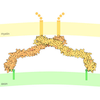
ジャーナル: Proc Natl Acad Sci U S A / 年: 2025 タイトル: Binding of autotransporter adhesin CbpF to human CEACAM1 and CEACAM5: A Velcro model for bacterium adhesion. 著者: Fan Shen / Linjie Li / Dongchun Yang / Zhexiao Tang / Lu Zhang / Kefang Liu / Wenzhe Hou / Zhuozhuang Lu / Jing-Yuan Fang / Jianxun Qi / Xin Zhao / George F Gao / 要旨: In eukaryotic systems, three major types of cell junctions have been well characterized. While bacterial adhesion mechanisms also exhibit remarkable diversity, the molecular processes that regulate ...In eukaryotic systems, three major types of cell junctions have been well characterized. While bacterial adhesion mechanisms also exhibit remarkable diversity, the molecular processes that regulate the dynamic modulation of binding strength between elongated bacterial cells and host cells remain poorly understood. () utilizes the surface adhesin CbpF to interact with the highly expressed host receptors CEACAM1 and CEACAM5 on cancer cells to facilitate tumor colonization. By elucidating the structural details of CbpF binding to human CEACAM1/CEACAM5 receptors, and through mechanistic investigations, we identified that the prominent EFNGQYQ loop on CbpF and the key Q78 residue of CEACAM1/CEACAM5 constitute the molecular linchpin of this pathogen-host interface. Furthermore, we found a distinct type of binding particle and proposed a Velcro-like adhesion model. In this model, CbpF mediates robust attachment through the simultaneous interaction of multiple binding sites, akin to the interlocking mechanism of Velcro. This multivalent interaction allows to dynamically switch between firm anchoring and easy detachment, adapting to varying physiological microenvironments. Our study elucidates the dynamic modulation of bacterial adhesion strength and lays the foundation for developing therapeutic interventions to disrupt the bacterium-host interface.
 ムービー
ムービー コントローラー


 データを開く
 基本情報
基本情報
 マップデータ
 試料
試料 キーワード
キーワード 機能・相同性情報
 Fusobacterium nucleatum (バクテリア) /
  Homo sapiens (ヒト)
 データ登録者
 中国, 1件
  引用
引用 構造の表示
構造の表示
 ダウンロードとリンク
 emd_63958.png
 http://ftp.pdbj.org/pub/emdb/structures/EMD-63958



 Z (Sec.)
 Y (Row.)
 X (Col.)


 試料の構成要素
 Escherichia coli (大腸菌)
 解析
解析 電子顕微鏡法
 FIELD EMISSION GUN
