National Natural Science Foundation of China (NSFC)
China
Citation
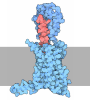
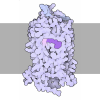
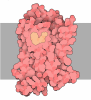
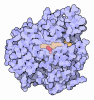
Journal: Nat Commun / Year: 2025 Title: Structural insights into antagonist recognition by the vasopressin V2 receptor. Authors: Tianwei Zhang / Hongli Liu / Chongzhao You / Yixiao Zhang / Youwei Xu / Benxun Pan / Canrong Wu / Sanshan Jin / Yu-Ling Yin / Kai Wu / Yue Chen / Hong Sun / Yuan Si / Yangxia Tan / Wanchao ...Authors: Tianwei Zhang / Hongli Liu / Chongzhao You / Yixiao Zhang / Youwei Xu / Benxun Pan / Canrong Wu / Sanshan Jin / Yu-Ling Yin / Kai Wu / Yue Chen / Hong Sun / Yuan Si / Yangxia Tan / Wanchao Yin / H Eric Xu / Dong Guo / Yi Jiang / Abstract: The vasopressin V2 receptor (V2R), a class A G protein-coupled receptor, is essential for regulating body water homeostasis. V2R antagonists have emerged as promising treatments for hyponatremia; ...The vasopressin V2 receptor (V2R), a class A G protein-coupled receptor, is essential for regulating body water homeostasis. V2R antagonists have emerged as promising treatments for hyponatremia; however, the absence of structural information for antagonist-bound V2R hampers our understanding of antagonist recognition and the targeted design of V2R antagonists. In this study, we present two cryo-electron microscopy structures of inactive V2R bound to the clinically approved antagonists tolvaptan and conivaptan. Combined with functional analyses and molecular dynamic simulations, these structures reveal distinct binding poses: tolvaptan is deeply inserted within the binding pocket, whereas conivaptan is positioned at a shallower depth. Integrated analyses further define critical pharmacophoric features governing antagonist activity and unveil a TM7 helical conformation-dependent antagonism mechanism that is distinct from classical GPCR inactivation modes. Our findings deepen understanding of antagonist recognition and antagonism of V2R, providing a foundation for the development of V2R-targeted therapies.
In the structure databanks used in Yorodumi, some data are registered as the other names, "COVID-19 virus" and "2019-nCoV". Here are the details of the virus and the list of structure data.
Jan 31, 2019. EMDB accession codes are about to change! (news from PDBe EMDB page)
EMDB accession codes are about to change! (news from PDBe EMDB page)
The allocation of 4 digits for EMDB accession codes will soon come to an end. Whilst these codes will remain in use, new EMDB accession codes will include an additional digit and will expand incrementally as the available range of codes is exhausted. The current 4-digit format prefixed with “EMD-” (i.e. EMD-XXXX) will advance to a 5-digit format (i.e. EMD-XXXXX), and so on. It is currently estimated that the 4-digit codes will be depleted around Spring 2019, at which point the 5-digit format will come into force.
The EM Navigator/Yorodumi systems omit the EMD- prefix.
Related info.:Q: What is EMD? / ID/Accession-code notation in Yorodumi/EM Navigator
Yorodumi is a browser for structure data from EMDB, PDB, SASBDB, etc.
This page is also the successor to EM Navigator detail page, and also detail information page/front-end page for Omokage search.
The word "yorodu" (or yorozu) is an old Japanese word meaning "ten thousand". "mi" (miru) is to see.
Related info.:EMDB / PDB / SASBDB / Comparison of 3 databanks / Yorodumi Search / Aug 31, 2016. New EM Navigator & Yorodumi / Yorodumi Papers / Jmol/JSmol / Function and homology information / Changes in new EM Navigator and Yorodumi
 Movie
Movie Controller

 Yorodumi
 Open data
 Basic information
 Map data
 Sample
 Keywords
 Function and homology information
 Homo sapiens (human)
 Authors
 China, 1 items
  Citation
 Structure visualization
 Downloads & links
 emd_63949.png
 http://ftp.pdbj.org/pub/emdb/structures/EMD-63949


 Z (Sec.)
 Y (Row.)
 X (Col.)


 Sample components
 Trichoplusia ni (cabbage looper)
 Processing
 Electron microscopy
 FIELD EMISSION GUN