National Natural Science Foundation of China (NSFC)
31970146
China
National Natural Science Foundation of China (NSFC)
82030062
China
Citation
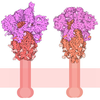
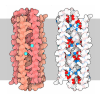
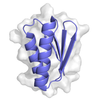
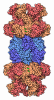
Journal: Mucosal Immunol / Year: 2026 Title: Enteric α-defensins contribute to intestinal mucosal immunity against SARS-CoV-2 infection. Authors: Yilin Yang / Qianxi Yang / Xin Huang / Chongbing Liao / Zhenguo Chen / Wuyuan Lu / Abstract: SARS-CoV-2 primarily targets epithelial cells in the respiratory and intestinal tracts where its cognate receptor ACE2 and obligate processing enzymes furin and TMPRSS2 are richly expressed. However, ...SARS-CoV-2 primarily targets epithelial cells in the respiratory and intestinal tracts where its cognate receptor ACE2 and obligate processing enzymes furin and TMPRSS2 are richly expressed. However, compared with severe inflammation and tissue damage in the lungs of a COVID-19 patient, clinical lesions in the intestine are rare, suggesting an effective intestinal mucosal immunity against SARS-CoV-2 infection. Here, we report that MMP7/hACE2 hybrid mice lacking mature enteric α-defensins or cryptdins were more susceptible to SARS-CoV-2 infection in the intestine than K18-hACE2 transgenic mice. The mouse α-defensin cryptdin-5 (Crp5) displayed potent and broad antiviral activity in vitro and in vivo by two distinct mechanisms, (1) directly targeting the RBD of the spike (S) protein to antagonize its interactions with ACE2, thus blocking viral attachment, membrane fusion and cell-to-cell transmission, and (2) binding to the 630 loop of the S protein to induce its multimerization, thereby impairing proteolytic processing, membrane fusion and, ultimately, viral infectivity. Our findings imply that enteric α-defensins help alleviate, as host protective factors, Covid-19 symptoms in the intestine despite higher ACE2 expression in the gut than in the lungs, and that Crp5 may be developed as a broad-spectrum antiviral for the treatment of coronavirus infection irrespective of virus type and variant.
In the structure databanks used in Yorodumi, some data are registered as the other names, "COVID-19 virus" and "2019-nCoV". Here are the details of the virus and the list of structure data.
Jan 31, 2019. EMDB accession codes are about to change! (news from PDBe EMDB page)
EMDB accession codes are about to change! (news from PDBe EMDB page)
The allocation of 4 digits for EMDB accession codes will soon come to an end. Whilst these codes will remain in use, new EMDB accession codes will include an additional digit and will expand incrementally as the available range of codes is exhausted. The current 4-digit format prefixed with “EMD-” (i.e. EMD-XXXX) will advance to a 5-digit format (i.e. EMD-XXXXX), and so on. It is currently estimated that the 4-digit codes will be depleted around Spring 2019, at which point the 5-digit format will come into force.
The EM Navigator/Yorodumi systems omit the EMD- prefix.
Related info.:Q: What is EMD? / ID/Accession-code notation in Yorodumi/EM Navigator
Yorodumi is a browser for structure data from EMDB, PDB, SASBDB, etc.
This page is also the successor to EM Navigator detail page, and also detail information page/front-end page for Omokage search.
The word "yorodu" (or yorozu) is an old Japanese word meaning "ten thousand". "mi" (miru) is to see.
Related info.:EMDB / PDB / SASBDB / Comparison of 3 databanks / Yorodumi Search / Aug 31, 2016. New EM Navigator & Yorodumi / Yorodumi Papers / Jmol/JSmol / Function and homology information / Changes in new EM Navigator and Yorodumi
 Movie
Movie Controller


 Open data
 Basic information
 Map data
 Sample
 Keywords
 Function and homology information
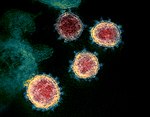 Severe acute respiratory syndrome coronavirus 2 /
 Mus musculus (house mouse)
 Authors
 China, 2 items
  Citation
 Structure visualization
 Downloads & links
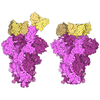
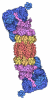
 emd_63757.png
 https://data.pdbj.org/pub/emdb/structures/EMD-63757



 Z (Sec.)
 Y (Row.)
 X (Col.)


 Sample components
 Homo sapiens (human)
 Processing
 Electron microscopy
 FIELD EMISSION GUN