olfactory receptor activity / detection of chemical stimulus involved in sensory perception of smell / G protein-coupled receptor activity / sensory perception of smell / G protein-coupled receptor signaling pathway / membrane / plasma membrane Similarity search - Function
National Natural Science Foundation of China (NSFC)
81773704
China
Citation
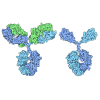
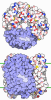
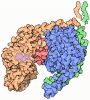
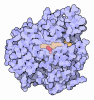
Journal: Cell / Year: 2026 Title: Mechanistic insights into fatty acid odor detection mediated by class II olfactory receptors. Authors: Xiang Han / Ming-Hui Zhang / Nai-Kang Rong / Kong-Kai Zhu / Yuan Pei / Xiao-Yan Ge / Qi Liu / Huan Lu / Jing Liu / Li-Jun Zhang / Hong-Qiang Bao / Jia-Hao Pi / Lei Fan / Yu Fu / Xu-Hang Shao ...Authors: Xiang Han / Ming-Hui Zhang / Nai-Kang Rong / Kong-Kai Zhu / Yuan Pei / Xiao-Yan Ge / Qi Liu / Huan Lu / Jing Liu / Li-Jun Zhang / Hong-Qiang Bao / Jia-Hao Pi / Lei Fan / Yu Fu / Xu-Hang Shao / Wen-Qi Yan / Xi-He Gao / Ming-Yue Zhang / Lu-Lu Guo / Yan Lu / Shang-Lei Ning / Hua Zhang / Yun-Fei Xu / Xiao-Ya Feng / Jie Cheng / Ming Xia / Qian Li / Xiao Yu / Fan Yang / Jin-Peng Sun / Abstract: Smell is one of the fundamental senses mediated by thousands of odorant receptors (ORs). How hydrophobic and volatile odor molecules are recognized by class II ORs remains elusive. Here, we present ...Smell is one of the fundamental senses mediated by thousands of odorant receptors (ORs). How hydrophobic and volatile odor molecules are recognized by class II ORs remains elusive. Here, we present cryo-electron microscopy (cryo-EM) structures of class II OR Olfr110 complexed with the unsaturated fatty acid metabolite (UFAM) PL45, Gs, and cons-OR5. The structural study revealed an unusually large hydrophobic pocket accommodating PL45 and the endogenous agonist 12(S)-hydroxyeicosapentaenoic acid (12(S)-HEPE). This pocket is decorated with polar residues and aromatic residue arrays, constituting polar networks and π-π interactions with the natural agonist PL45, respectively. Conserved motifs in the type II OR5 subfamily responsible for ligand recognition are characterized. The inward movement of extracellular loop 3 (ECL3) and an unconventional activation mechanism underlie Olfr110 activation. At the G protein interface, Olfr110 displays common and unique interactions. Overall, we revealed the structural basis of odor recognition and the activation mechanism of class II ORs, which may facilitate drug development targeting these receptors.
In the structure databanks used in Yorodumi, some data are registered as the other names, "COVID-19 virus" and "2019-nCoV". Here are the details of the virus and the list of structure data.
Jan 31, 2019. EMDB accession codes are about to change! (news from PDBe EMDB page)
EMDB accession codes are about to change! (news from PDBe EMDB page)
The allocation of 4 digits for EMDB accession codes will soon come to an end. Whilst these codes will remain in use, new EMDB accession codes will include an additional digit and will expand incrementally as the available range of codes is exhausted. The current 4-digit format prefixed with “EMD-” (i.e. EMD-XXXX) will advance to a 5-digit format (i.e. EMD-XXXXX), and so on. It is currently estimated that the 4-digit codes will be depleted around Spring 2019, at which point the 5-digit format will come into force.
The EM Navigator/Yorodumi systems omit the EMD- prefix.
Related info.:Q: What is EMD? / ID/Accession-code notation in Yorodumi/EM Navigator
Yorodumi is a browser for structure data from EMDB, PDB, SASBDB, etc.
This page is also the successor to EM Navigator detail page, and also detail information page/front-end page for Omokage search.
The word "yorodu" (or yorozu) is an old Japanese word meaning "ten thousand". "mi" (miru) is to see.
Related info.:EMDB / PDB / SASBDB / Comparison of 3 databanks / Yorodumi Search / Aug 31, 2016. New EM Navigator & Yorodumi / Yorodumi Papers / Jmol/JSmol / Function and homology information / Changes in new EM Navigator and Yorodumi
 Movie
Movie Controller


 Open data
 Basic information
 Map data
 Sample
 Keywords
 Function and homology information
 Mus musculus (house mouse)
 Authors
 China, 1 items
  Citation
 Structure visualization
 Downloads & links
 emd_63175.png
 https://data.pdbj.org/pub/emdb/structures/EMD-63175


 Z (Sec.)
 Y (Row.)
 X (Col.)


 Sample components
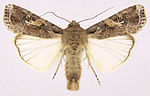 Spodoptera frugiperda (fall armyworm)
 Processing
 Electron microscopy
 FIELD EMISSION GUN
