 Movie
Movie Controller

[English] 日本語
 Yorodumi
- EMDB-62687: The local refined map of SARS-CoV-2 EG.5.1 Variant Spike protein ... -
+ Open data

- Basic information
| Entry |  | |||||||||
|---|---|---|---|---|---|---|---|---|---|---|
| Title | The local refined map of SARS-CoV-2 EG.5.1 Variant Spike protein complexed with antibody XGi-198 | |||||||||
 Map data Map data | ||||||||||
 Sample Sample |
| |||||||||
 Keywords Keywords | Spike-antibody complex / VIRAL PROTEIN/IMMUNE SYSTEM / VIRAL PROTEIN-IMMUNE SYSTEM complex | |||||||||
| Function / homology |  Function and homology information Function and homology informationsymbiont-mediated disruption of host tissue / Maturation of spike protein / host cell surface / Translation of Structural Proteins / Virion Assembly and Release / Lectin pathway of complement activation / host extracellular region / symbiont-mediated-mediated suppression of host tetherin activity / structural constituent of virion / Induction of Cell-Cell Fusion ...symbiont-mediated disruption of host tissue / Maturation of spike protein / host cell surface / Translation of Structural Proteins / Virion Assembly and Release / Lectin pathway of complement activation / host extracellular region / symbiont-mediated-mediated suppression of host tetherin activity / structural constituent of virion / Induction of Cell-Cell Fusion / positive regulation of viral entry into host cell / Initial triggering of complement / membrane fusion / host cell endoplasmic reticulum-Golgi intermediate compartment membrane / Attachment and Entry / entry receptor-mediated virion attachment to host cell / receptor-mediated virion attachment to host cell / host cell surface receptor binding / symbiont-mediated suppression of host innate immune response / endocytosis involved in viral entry into host cell / receptor ligand activity / fusion of virus membrane with host plasma membrane / fusion of virus membrane with host endosome membrane / viral envelope / symbiont entry into host cell / virion attachment to host cell / host cell plasma membrane / SARS-CoV-2 activates/modulates innate and adaptive immune responses / virion membrane / membrane / identical protein binding / plasma membrane Similarity search - Function | |||||||||
| Biological species |  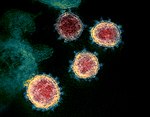 Severe acute respiratory syndrome coronavirus 2 / Severe acute respiratory syndrome coronavirus 2 /  Homo sapiens (human) Homo sapiens (human) | |||||||||
| Method | single particle reconstruction / cryo EM / Resolution: 3.24 Å | |||||||||
 Authors Authors | Qiu YN / Sun L | |||||||||
| Funding support |  China, 2 items China, 2 items
| |||||||||
 Citation Citation | Journal: Nat Commun / Year: 2025 Title: Orphan broadly RBD-binding antibodies annotate three remaining conserved RBD epitopes along SARS-CoV-2 evolution. Authors: Minxiang Xie / Yinong Qiu / Xiaoyu Zhao / Jialu Shi / Yuanchen Liu / Qingsong Zhang / Jiaying He / Jiayan Li / Luotian Liu / Siyuan Sun / Yuzhen Zhu / Qiyu Mao / Yiming Long / Thiago Y ...Authors: Minxiang Xie / Yinong Qiu / Xiaoyu Zhao / Jialu Shi / Yuanchen Liu / Qingsong Zhang / Jiaying He / Jiayan Li / Luotian Liu / Siyuan Sun / Yuzhen Zhu / Qiyu Mao / Yiming Long / Thiago Y Oliveira / Zijun Wang / Yunjiao Zhou / Yan Yan / Anqi Xia / Wenjing Zai / Christian T Mayer / Youhua Xie / Shibo Jiang / Lu Lu / Rong Xia / Fan Wu / Lei Sun / Pengfei Wang / Hin Chu / Qiao Wang /  Abstract: The receptor-binding domain (RBD) of the SARS-CoV-2 spike (S) protein continues to evolve, facilitating antibody evasion. It remains unclear whether any conserved RBD epitopes persist across SARS-CoV- ...The receptor-binding domain (RBD) of the SARS-CoV-2 spike (S) protein continues to evolve, facilitating antibody evasion. It remains unclear whether any conserved RBD epitopes persist across SARS-CoV-2 variants and whether vaccination and/or breakthrough infection (BTI) can elicit antibodies capable of targeting these conserved regions to counter future variants. Here, using a heterogeneous double-bait single B-cell sorting strategy, we identify a subset of antibodies with broad-spectrum RBD binding, including recognition of SARS-CoV-1 and emerging variants such as EG.5.1, BA.2.86, JN.1, and KP.2/3. These broadly binding antibodies (bbAbs) exhibit elevated levels of somatic hypermutation but are infrequently derived from clonally expanded B lymphocytes. Passive transfer of representative bbAbs reduces viral infection in a male hamster model. Structural analyses reveals that these bbAbs primarily target three distinct, highly conserved RBD epitopes, suggesting potential regions of future mutational pressure and highlighting the presence of conserved and immunogenic RBD conformations that may serve as a foundation for the development of broadly protective vaccines. | |||||||||
| History |
|
- Structure visualization
| Supplemental images |
|---|

- Downloads & links
-EMDB archive
| Map data | emd_62687.map.gz | 1 GB | EMDB map data format | |
|---|---|---|---|---|
| Header (meta data) | emd-62687-v30.xmlemd-62687.xml | 21.9 KB 21.9 KB | Display Display | EMDB header |
| Images |  emd_62687.png emd_62687.png | 60.6 KB | ||
| Filedesc metadata | emd-62687.cif.gz | 7.2 KB | ||
| Others | emd_62687_half_map_1.map.gzemd_62687_half_map_2.map.gz | 1.1 GB 1.1 GB | ||
| Archive directory |  http://ftp.pdbj.org/pub/emdb/structures/EMD-62687ftp://ftp.pdbj.org/pub/emdb/structures/EMD-62687 http://ftp.pdbj.org/pub/emdb/structures/EMD-62687ftp://ftp.pdbj.org/pub/emdb/structures/EMD-62687 | HTTPS FTP |
-Related structure data
| Related structure data |  9l05MC  9kzdC  9kzeC  9kzzC  9l07C  9l15C  9l2lC C: citing same article ( M: atomic model generated by this map |
|---|---|
| Similar structure data |


-Links
| EMDB pages | EMDB (EBI/PDBe) / EMDataResource |
|---|---|
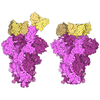
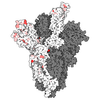
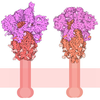
| Related items in Molecule of the Month |
-Map
| File | Download / File: emd_62687.map.gz / Format: CCP4 / Size: 1.2 GB / Type: IMAGE STORED AS FLOATING POINT NUMBER (4 BYTES) | ||||||||||||||||||||||||||||||||||||
|---|---|---|---|---|---|---|---|---|---|---|---|---|---|---|---|---|---|---|---|---|---|---|---|---|---|---|---|---|---|---|---|---|---|---|---|---|---|
| Projections & slices | Image control
Images are generated by Spider. | ||||||||||||||||||||||||||||||||||||
| Voxel size | X=Y=Z: 0.932 Å | ||||||||||||||||||||||||||||||||||||
| Density |
| ||||||||||||||||||||||||||||||||||||
| Symmetry | Space group: 1 | ||||||||||||||||||||||||||||||||||||
| Details | EMDB XML:
|
 Z (Sec.)
 Y (Row.)
 X (Col.)


-Supplemental data
-Half map: #2
| File | emd_62687_half_map_1.map | ||||||||||||
|---|---|---|---|---|---|---|---|---|---|---|---|---|---|
| Projections & Slices |
| ||||||||||||
| Density Histograms |


-Half map: #1
| File | emd_62687_half_map_2.map | ||||||||||||
|---|---|---|---|---|---|---|---|---|---|---|---|---|---|
| Projections & Slices |
| ||||||||||||
| Density Histograms |


- Sample components
-Entire : EG.5.1 spike protein (S) in complex with antibody XGi-198
| Entire | Name: EG.5.1 spike protein (S) in complex with antibody XGi-198 |
|---|---|
| Components |
|
-Supramolecule #1: EG.5.1 spike protein (S) in complex with antibody XGi-198
| Supramolecule | Name: EG.5.1 spike protein (S) in complex with antibody XGi-198 type: complex / ID: 1 / Parent: 0 / Macromolecule list: all |
|---|---|
| Source (natural) | Organism: Severe acute respiratory syndrome coronavirus 2 |
-Supramolecule #2: XGi-198 heavy chain
| Supramolecule | Name: XGi-198 heavy chain / type: complex / ID: 2 / Parent: 1 / Macromolecule list: #1 |
|---|---|
| Source (natural) | Organism: Homo sapiens (human) |
-Supramolecule #3: XGi-198 light chain
| Supramolecule | Name: XGi-198 light chain / type: complex / ID: 3 / Parent: 1 / Macromolecule list: #2 |
|---|---|
| Source (natural) | Organism: Homo sapiens (human) |
-Supramolecule #4: EG.5.1 Spike glycoprotein
| Supramolecule | Name: EG.5.1 Spike glycoprotein / type: complex / ID: 4 / Parent: 1 / Macromolecule list: #3 |
|---|---|
| Source (natural) | Organism: Severe acute respiratory syndrome coronavirus 2 |
-Macromolecule #1: XGi-198 light chain
| Macromolecule | Name: XGi-198 light chain / type: protein_or_peptide / ID: 1 / Number of copies: 1 / Enantiomer: LEVO |
|---|---|
| Source (natural) | Organism: Homo sapiens (human) |
| Molecular weight | Theoretical: 23.255408 KDa |
| Recombinant expression | Organism: Homo sapiens (human) |
| Sequence | String: EFMLTQPHSV SESPEMTVTI SCTGSSGSIA DNYVQWYQQR PGSAPTTVIY ENYQRPSGVP NRFSGSIDSS SNSASLTISG LKTEDEADY YCQSYDNSNV AVFGGGTQLT VLGQPKAAPS VTLFPPSSEE LQANKATLVC LISDFYPGAV TVAWKADSSP V KAGVETTT ...String: EFMLTQPHSV SESPEMTVTI SCTGSSGSIA DNYVQWYQQR PGSAPTTVIY ENYQRPSGVP NRFSGSIDSS SNSASLTISG LKTEDEADY YCQSYDNSNV AVFGGGTQLT VLGQPKAAPS VTLFPPSSEE LQANKATLVC LISDFYPGAV TVAWKADSSP V KAGVETTT PSKQSNNKYA ASSYLSLTPE QWKSHRSYSC QVTHEGSTVE KTVAPTECS |
-Macromolecule #2: XGi-198 heavy chain
| Macromolecule | Name: XGi-198 heavy chain / type: protein_or_peptide / ID: 2 / Number of copies: 1 / Enantiomer: LEVO |
|---|---|
| Source (natural) | Organism: Homo sapiens (human) |
| Molecular weight | Theoretical: 49.731945 KDa |
| Recombinant expression | Organism: Homo sapiens (human) |
| Sequence | String: QVQLQESGPG LVRPSQTLSL TCTVSGGSVR NEYYYWSWIR QPPGQGLEWI GYMHNSGNTY YNPSLKSRVA ISVDMSKNQF SLKLSSVTV ADTAVYYCAR VDVGGTLVST FDHWGQGILV TVSSASTKGP SVFPLAPSSK STSGGTAALG CLVKDYFPEP V TVSWNSGA ...String: QVQLQESGPG LVRPSQTLSL TCTVSGGSVR NEYYYWSWIR QPPGQGLEWI GYMHNSGNTY YNPSLKSRVA ISVDMSKNQF SLKLSSVTV ADTAVYYCAR VDVGGTLVST FDHWGQGILV TVSSASTKGP SVFPLAPSSK STSGGTAALG CLVKDYFPEP V TVSWNSGA LTSGVHTFPA VLQSSGLYSL SSVVTVPSSS LGTQTYICNV NHKPSNTKVD KRVEPKSCDK THTCPPCPAP EL LGGPSVF LFPPKPKDTL MISRTPEVTC VVVDVSHEDP EVKFNWYVDG VEVHNAKTKP REEQYNSTYR VVSVLTVLHQ DWL NGKEYK CKVSNKALPA PIEKTISKAK GQPREPQVYT LPPSREEMTK NQVSLTCLVK GFYPSDIAVE WESNGQPENN YKTT PPVLD SDGSFFLYSK LTVDKSRWQQ GNVFSCSVMH EALHNHYTQK SLSLSPGK |
-Macromolecule #3: Spike glycoprotein
| Macromolecule | Name: Spike glycoprotein / type: protein_or_peptide / ID: 3 / Number of copies: 1 / Enantiomer: LEVO |
|---|---|
| Source (natural) | Organism: Severe acute respiratory syndrome coronavirus 2 / Strain: Omicron/EG.5.1 |
| Molecular weight | Theoretical: 143.147594 KDa |
| Recombinant expression | Organism: Homo sapiens (human) |
| Sequence | String: MPMGSLQPLA TLYLLGMLVA SVLAQCVNLI TRTQSYTNSF TRGVYYPDKV FRSSVLHSTH DLFLPFFSNV TWFHAIHVSG TNGTKRFDN PALPFNDGVY FASTEKSNII RGWIFGTTLD SKTQSLLIVN NATNVVIKVC EFQFCNDPFL DVYQKNNKSW M ESEFRVYS ...String: MPMGSLQPLA TLYLLGMLVA SVLAQCVNLI TRTQSYTNSF TRGVYYPDKV FRSSVLHSTH DLFLPFFSNV TWFHAIHVSG TNGTKRFDN PALPFNDGVY FASTEKSNII RGWIFGTTLD SKTQSLLIVN NATNVVIKVC EFQFCNDPFL DVYQKNNKSW M ESEFRVYS SANNCTFEYV SQPFLMDLEG KEGNFKNLRE FVFKNIDGYF KIYSKHTPIN LERDLPQGFS ALEPLVDLPI GI NITRFQT LLALHRSYLT PVDSSSGWTA GAAAYYVGYL QPRTFLLKYN ENGTITDAVD CALDPLSETK CTLKSFTVEK GIY QTSNFR VQPTESIVRF PNITNLCPFH EVFNATTFAS VYAWNRKRIS NCVADYSVIY NFAPFFAFKC YGVSPTKLND LCFT NVYAD SFVIRGNEVS QIAPGQTGNI ADYNYKLPDD FTGCVIAWNS NKLDSKPSGN YNYLYRLLRK SKLKPFERDI STEIY QAGN KPCNGVAGPN CYSPLQSYGF RPTYGVGHQP YRVVVLSFEL LHAPATVCGP KKSTNLVKNK CVNFNFNGLT GTGVLT ESN KKFLPFQQFG RDIADTTDAV RDPQTLEILD ITPCSFGGVS VITPGTNTSN QVAVLYQGVN CTEVPVAIHA DQLTPTW RV YSTGSNVFQT RAGCLIGAEY VNNSYECDIP IGAGICASYQ TQTKSHGSAS SVASQSIIAY TMSLGAENSV AYSNNSIA I PTNFTISVTT EILPVSMTKT SVDCTMYICG DSTECSNLLL QYGSFCTQLK RALTGIAVEQ DKNTQEVFAQ VKQIYKTPP IKYFGGFNFS QILPDPSKPS KRSPIEDLLF NKVTLADAGF IKQYGDCLGD IAARDLICAQ KFNGLTVLPP LLTDEMIAQY TSALLAGTI TSGWTFGAGP ALQIPFPMQM AYRFNGIGVT QNVLYENQKL IANQFNSAIG KIQDSLSSTP SALGKLQDVV N HNAQALNT LVKQLSSKFG AISSVLNDIL SRLDPPEAEV QIDRLITGRL QSLQTYVTQQ LIRAAEIRAS ANLAATKMSE CV LGQSKRV DFCGKGYHLM SFPQSAPHGV VFLHVTYVPA QEKNFTTAPA ICHDGKAHFP REGVFVSNGT HWFVTQRNFY EPQ IITTDN TFVSGNCDVV IGIVNNTVYD PLQPELDSFK EELDKYFKNH TSPDVDLGDI SGINASVVNI QKEIDRLNEV AKNL NESLI DLQELGKYEQ GSGYIPEAPR DGQAYVRKDG EWVFLSTFLS GLEVLFQGPG GWSHPQFEKG GGSGGGSGGS AWSHP QFEK GGSHHHHHHH H UniProtKB: Spike glycoprotein |
-Experimental details
-Structure determination
| Method | cryo EM |
|---|---|
 Processing Processing | single particle reconstruction |
| Aggregation state | particle |
-Sample preparation
| Buffer | pH: 8 |
|---|---|
| Vitrification | Cryogen name: ETHANE |
- Electron microscopy
| Microscope | TFS KRIOS |
|---|---|
| Image recording | Film or detector model: FEI FALCON IV (4k x 4k) / Average electron dose: 50.0 e/Å2 |
| Electron beam | Acceleration voltage: 300 kV / Electron source:  FIELD EMISSION GUN FIELD EMISSION GUN |
| Electron optics | Illumination mode: FLOOD BEAM / Imaging mode: BRIGHT FIELD / Nominal defocus max: 3.0 µm / Nominal defocus min: 1.0 µm |
| Experimental equipment |  Model: Titan Krios / Image courtesy: FEI Company |
