[English] 日本語
Yorodumi
- EMDB-57363: HRV K4058A mutant -

+
Open data


ID or keywords:

Loading...

-
Basic information

Entry
Database: EMDB / ID: EMD-57363
TitleHRV K4058A mutant
Map dataSharpened map
Sample
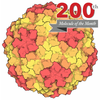
  • Virus: rhinovirus B14
    • Protein or peptide: Capsid protein VP1
    • Protein or peptide: Capsid protein VP2
    • Protein or peptide: Capsid protein VP3
    • Protein or peptide: Capsid protein VP4
KeywordsCryoem / virion / HRV / virus
Function / homology
Function and homology information


lysis of host organelle involved in viral entry into host cell / symbiont-mediated suppression of host cytoplasmic pattern recognition receptor signaling pathway via inhibition of RIG-I activity / picornain 2A / symbiont-mediated suppression of host mRNA export from nucleus / symbiont genome entry into host cell via pore formation in plasma membrane / picornain 3C / T=pseudo3 icosahedral viral capsid / host cell cytoplasmic vesicle membrane / ribonucleoside triphosphate phosphatase activity / nucleoside-triphosphate phosphatase ...lysis of host organelle involved in viral entry into host cell / symbiont-mediated suppression of host cytoplasmic pattern recognition receptor signaling pathway via inhibition of RIG-I activity / picornain 2A / symbiont-mediated suppression of host mRNA export from nucleus / symbiont genome entry into host cell via pore formation in plasma membrane / picornain 3C / T=pseudo3 icosahedral viral capsid / host cell cytoplasmic vesicle membrane / ribonucleoside triphosphate phosphatase activity / nucleoside-triphosphate phosphatase / channel activity / monoatomic ion transmembrane transport / DNA replication / RNA helicase activity / endocytosis involved in viral entry into host cell / symbiont-mediated activation of host autophagy / RNA-directed RNA polymerase / cysteine-type endopeptidase activity / viral RNA genome replication / RNA-directed RNA polymerase activity / virion attachment to host cell / host cell nucleus / structural molecule activity / DNA-templated transcription / proteolysis / RNA binding / zinc ion binding / ATP binding
Similarity search - Function
Picornavirus coat protein VP4 superfamily / Poliovirus 3A protein-like / Poliovirus 3A protein like / Picornavirus 2B protein / Poliovirus core protein 3a, soluble domain / Picornavirus 2B protein / Peptidase C3, picornavirus core protein 2A / Picornavirus core protein 2A / Picornavirus coat protein VP4 / Picornavirus coat protein (VP4) ...Picornavirus coat protein VP4 superfamily / Poliovirus 3A protein-like / Poliovirus 3A protein like / Picornavirus 2B protein / Poliovirus core protein 3a, soluble domain / Picornavirus 2B protein / Peptidase C3, picornavirus core protein 2A / Picornavirus core protein 2A / Picornavirus coat protein VP4 / Picornavirus coat protein (VP4) / Peptidase C3A/C3B, picornaviral / 3C cysteine protease (picornain 3C) / Picornavirales 3C/3C-like protease domain / Picornavirales 3C/3C-like protease domain profile. / Picornavirus capsid / picornavirus capsid protein / Helicase, superfamily 3, single-stranded RNA virus / Superfamily 3 helicase of positive ssRNA viruses domain profile. / Helicase, superfamily 3, single-stranded DNA/RNA virus / RNA helicase / Picornavirus/Calicivirus coat protein / Viral coat protein subunit / Reverse transcriptase/Diguanylate cyclase domain / RNA-directed RNA polymerase, C-terminal domain / Viral RNA-dependent RNA polymerase / RNA-directed RNA polymerase, catalytic domain / RdRp of positive ssRNA viruses catalytic domain profile. / ATPases associated with a variety of cellular activities / AAA+ ATPase domain / Peptidase S1, PA clan, chymotrypsin-like fold / Peptidase S1, PA clan / DNA/RNA polymerase superfamily / P-loop containing nucleoside triphosphate hydrolase
Similarity search - Domain/homology
Biological speciesrhinovirus B14
Methodsingle particle reconstruction / cryo EM / Resolution: 3.26 Å
AuthorsMartinez-Romero JM / Caston JR / Mauricio MG
Funding support Spain, 1 items
OrganizationGrant numberCountry
Spanish Ministry of Science, Innovation, and Universities Spain
CitationJournal: J Mol Biol / Year: 2026
Title: Biologically Relevant, Cationic Residues in Human Rhinovirus Stabilize Capsid-Bound RNA Duplexes, and Restrict Capsid Flexibility.
Authors: Juan M Martínez-Romero / Luis Valiente / José Luis Vilas / Valentín Riomoros-Barahona / Alejandro Valbuena / Mauricio G Mateu / José R Castón /
Abstract: Human rhinoviruses (RV) cause severe socioeconomic problems and are also associated to, or exacerbate, severe respiratory diseases, but no anti-RV drugs are available so far. Understanding the ...Human rhinoviruses (RV) cause severe socioeconomic problems and are also associated to, or exacerbate, severe respiratory diseases, but no anti-RV drugs are available so far. Understanding the functional role(s) of capsid-RNA interactions in the RV virion may contribute to antiviral drug development. Our previous studies showed that the genome inside the RV-B14 virion is organized as a capsid-bound RNA dodecahedral cage formed by 30 intrachain RNA duplexes; and that positively charged capsid residues close to each RNA duplex, including K4058 and K2052, are involved in viral infection by promoting virion assembly and controlling genome uncoating. In this study, cryogenic electron microscopy was used to investigate the structural basis that underlies the functional roles of those positively charged residues in the RV virion. The atomic structure and equilibrium conformation dynamics of mutant virions carrying either K4058A or K2052A substitutions were compared with those of the parental RV-B14 virion under identical conditions. The results showed that both K4058 and K2052 residues stabilize the RNA duplex structure, and modulate capsid conformation and equilibrium dynamics. Notably, the partially disorganized RNA elements in the K4058A mutant virion strongly resemble those previously found by other researchers in an alternative wild-type RV-B14 structure. Comparison of the two alternative wild-type virion structures and the mutant virion structures supports the existence of two conformational states of the RV virion in the absence of cell receptor: a basal state with well-structured RNA duplexes, and an activated, RNA release-prone state in which the RNA duplexes are partially disorganized.
History
DepositionApr 7, 2026-
Header (metadata) releaseJul 15, 2026-
Map releaseJul 15, 2026-
UpdateJul 15, 2026-
Current statusJul 15, 2026Processing site: PDBe / Status: Released

-
Structure visualization

Supplemental images

Downloads & links

-
Map

FileDownload / File: emd_57363.map.gz / Format: CCP4 / Size: 421.9 MB / Type: IMAGE STORED AS FLOATING POINT NUMBER (4 BYTES)
AnnotationSharpened map
Projections & slices

Image control

Size
Brightness
Contrast
Others
AxesZ (Sec.)Y (Row.)X (Col.)
0.84 Å/pix.
x 480 pix.
= 403.2 Å
0.84 Å/pix.
x 480 pix.
= 403.2 Å
0.84 Å/pix.
x 480 pix.
= 403.2 Å

Surface

Projections

Slices (1/3)

Slices (1/2)

Slices (2/3)

Images are generated by Spider.

Voxel sizeX=Y=Z: 0.84 Å
Density
Contour LevelBy AUTHOR: 0.07
Minimum - Maximum-0.25760472 - 0.39829567
Average (Standard dev.)0.00390575 (±0.031070521)
SymmetrySpace group: 1
Details

EMDB XML:

Map geometry
Axis orderXYZ
Origin000
Dimensions480480480
Spacing480480480
CellA=B=C: 403.19998 Å
α=β=γ: 90.0 °

-
Supplemental data

-
Additional map: no sharpened map

Fileemd_57363_additional_1.map
Annotationno sharpened map
Projections & Slices
AxesZYX

Projections

Slices (1/2)
Density Histograms

-
Half map: Half-B

Fileemd_57363_half_map_1.map
AnnotationHalf-B
Projections & Slices
AxesZYX

Projections

Slices (1/2)
Density Histograms

-
Half map: Half-A

Fileemd_57363_half_map_2.map
AnnotationHalf-A
Projections & Slices
AxesZYX

Projections

Slices (1/2)
Density Histograms

-
Sample components

-
Entire : rhinovirus B14

EntireName: rhinovirus B14
Components
  • Virus: rhinovirus B14
    • Protein or peptide: Capsid protein VP1
    • Protein or peptide: Capsid protein VP2
    • Protein or peptide: Capsid protein VP3
    • Protein or peptide: Capsid protein VP4

-
Supramolecule #1: rhinovirus B14

SupramoleculeName: rhinovirus B14 / type: virus / ID: 1 / Parent: 0 / Macromolecule list: all / NCBI-ID: 12131 / Sci species name: rhinovirus B14 / Virus type: VIRION / Virus isolate: SPECIES / Virus enveloped: No / Virus empty: No
Virus shellShell ID: 1 / Diameter: 300.0 Å / T number (triangulation number): 3

-
Macromolecule #1: Capsid protein VP1

MacromoleculeName: Capsid protein VP1 / type: protein_or_peptide / ID: 1 / Number of copies: 1 / Enantiomer: LEVO
Source (natural)Organism: rhinovirus B14
Molecular weightTheoretical: 31.147984 KDa
Recombinant expressionOrganism: rhinovirus B14
SequenceString: TKQTVASISS GPKHTQKVPI LTANETGATM PVLPSDSIET RTTYMHFNGS ETDVECFLGR AACVHVTEIQ NKDATGIDNH REAKLFNDW KINLSSLVQL RKKLELFTYV RFDSEYTILA TASQPDSANY SSNLVVQAMY VPPGAPNPKE WDDYTWQSAS N PSVFFKVG ...String:
TKQTVASISS GPKHTQKVPI LTANETGATM PVLPSDSIET RTTYMHFNGS ETDVECFLGR AACVHVTEIQ NKDATGIDNH REAKLFNDW KINLSSLVQL RKKLELFTYV RFDSEYTILA TASQPDSANY SSNLVVQAMY VPPGAPNPKE WDDYTWQSAS N PSVFFKVG DTSRFSVPYV GLASAYNCFY DGYSHDDAET QYGITVLNHM GSMAFRIVNE HDEHKTLVKI RVYHRAKHVE AW IPRAPRA LPYTSIGRTN YPKNTEPVIK KRKGDIKSY

UniProtKB: Genome polyprotein

-
Macromolecule #2: Capsid protein VP2

MacromoleculeName: Capsid protein VP2 / type: protein_or_peptide / ID: 2 / Number of copies: 1 / Enantiomer: LEVO
Source (natural)Organism: rhinovirus B14
Molecular weightTheoretical: 27.903746 KDa
Recombinant expressionOrganism: rhinovirus B14
SequenceString: CGYSDRVQQI TLGNSTITTQ EAANAVVCYA EWPEYLPDVD ASDVNKTSKP DTSVCRFYTL DSKTWTTGSK GWCWKLPDAL KDMGVFGQN MFFHSLGRSG YTVHVQCNAT KFHSGCLLVV VIPEHQLASH EGGNVSVKYT FTHPGERGID LSSANEVGGP V KDVLYNMN ...String:
CGYSDRVQQI TLGNSTITTQ EAANAVVCYA EWPEYLPDVD ASDVNKTSKP DTSVCRFYTL DSKTWTTGSK GWCWKLPDAL KDMGVFGQN MFFHSLGRSG YTVHVQCNAT KFHSGCLLVV VIPEHQLASH EGGNVSVKYT FTHPGERGID LSSANEVGGP V KDVLYNMN GTLLGNLLIF PHQFINLRTN NTATIVIPYI NSVPIDSMTR HNNVSLMVIP IAPLTVPTGA TPSLPITVTI AP MCTEFSG IRSKSIVPQ

UniProtKB: Genome polyprotein

-
Macromolecule #3: Capsid protein VP3

MacromoleculeName: Capsid protein VP3 / type: protein_or_peptide / ID: 3 / Number of copies: 1 / Enantiomer: LEVO
Source (natural)Organism: rhinovirus B14
Molecular weightTheoretical: 26.236754 KDa
Recombinant expressionOrganism: rhinovirus B14
SequenceString: GLPTTTLPGS GQFLTTDDRQ SPSALPNYEP TPRIHIPGKV HNLLEIIQVD TLIPMNNTHT KDEVNSYLIP LNANRQNEQV FGTNLFIGD GVFKTTLLGE IVQYYTHWSG SLRFSLMYTG PALSSAKLIL AYTPPGARGP QDRREAMLGT HVVWDIGLQS T IVMTIPWT ...String:
GLPTTTLPGS GQFLTTDDRQ SPSALPNYEP TPRIHIPGKV HNLLEIIQVD TLIPMNNTHT KDEVNSYLIP LNANRQNEQV FGTNLFIGD GVFKTTLLGE IVQYYTHWSG SLRFSLMYTG PALSSAKLIL AYTPPGARGP QDRREAMLGT HVVWDIGLQS T IVMTIPWT SGVQFRYTDP DTYTSAGFLS CWYQTSLILP PETTGQVYLL SFISACPDFK LRLMKDTQTI SQTVALTE

UniProtKB: Genome polyprotein

-
Macromolecule #4: Capsid protein VP4

MacromoleculeName: Capsid protein VP4 / type: protein_or_peptide / ID: 4 / Number of copies: 1 / Enantiomer: LEVO
Source (natural)Organism: rhinovirus B14
Molecular weightTheoretical: 4.706242 KDa
Recombinant expressionOrganism: rhinovirus B14
SequenceString:
TFTYINYYKD AASTSSAGQS LSMDPSKFTE PVADLMLKGA PALN

UniProtKB: Genome polyprotein

-
Experimental details

-
Structure determination

Methodcryo EM
Processingsingle particle reconstruction
Aggregation stateparticle

-
Sample preparation

BufferpH: 7.4
VitrificationCryogen name: ETHANE / Chamber humidity: 95 %

-
Electron microscopy

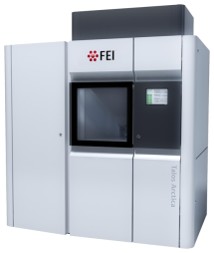
MicroscopeFEI TALOS ARCTICA
Image recordingFilm or detector model: FEI FALCON IV (4k x 4k) / Average electron dose: 35.0 e/Å2
Electron beamAcceleration voltage: 200 kV / Electron source: FIELD EMISSION GUN
Electron opticsIllumination mode: FLOOD BEAM / Imaging mode: BRIGHT FIELD / Nominal defocus max: 2.6 µm / Nominal defocus min: 0.8 µm
Experimental equipment
Model: Talos Arctica / Image courtesy: FEI Company

+
Image processing

CTF correctionType: PHASE FLIPPING AND AMPLITUDE CORRECTION
Startup modelType of model: INSILICO MODEL
Final reconstructionResolution.type: BY AUTHOR / Resolution: 3.26 Å / Resolution method: FSC 0.143 CUT-OFF / Software - Name: cryoSPARC / Number images used: 63778
Initial angle assignmentType: MAXIMUM LIKELIHOOD
Final angle assignmentType: MAXIMUM LIKELIHOOD
FSC plot (resolution estimation)

+
About Yorodumi

-
News

-
Feb 9, 2022. New format data for meta-information of EMDB entries

New format data for meta-information of EMDB entries

  • Version 3 of the EMDB header file is now the official format.
  • The previous official version 1.9 will be removed from the archive.

Related info.:EMDB header

External links:wwPDB to switch to version 3 of the EMDB data model

-
Aug 12, 2020. Covid-19 info

Covid-19 info

URL: https://pdbj.org/emnavi/covid19.php

New page: Covid-19 featured information page in EM Navigator.

Related info.:Covid-19 info / Mar 5, 2020. Novel coronavirus structure data

+
Mar 5, 2020. Novel coronavirus structure data

Novel coronavirus structure data

Related info.:Yorodumi Speices / Aug 12, 2020. Covid-19 info

External links:COVID-19 featured content - PDBj / Molecule of the Month (242):Coronavirus Proteases

+
Jan 31, 2019. EMDB accession codes are about to change! (news from PDBe EMDB page)

EMDB accession codes are about to change! (news from PDBe EMDB page)

  • The allocation of 4 digits for EMDB accession codes will soon come to an end. Whilst these codes will remain in use, new EMDB accession codes will include an additional digit and will expand incrementally as the available range of codes is exhausted. The current 4-digit format prefixed with “EMD-” (i.e. EMD-XXXX) will advance to a 5-digit format (i.e. EMD-XXXXX), and so on. It is currently estimated that the 4-digit codes will be depleted around Spring 2019, at which point the 5-digit format will come into force.
  • The EM Navigator/Yorodumi systems omit the EMD- prefix.

Related info.:Q: What is EMD? / ID/Accession-code notation in Yorodumi/EM Navigator

External links:EMDB Accession Codes are Changing Soon! / Contact to PDBj

+
Jul 12, 2017. Major update of PDB

Major update of PDB

  • wwPDB released updated PDB data conforming to the new PDBx/mmCIF dictionary.
  • This is a major update changing the version number from 4 to 5, and with Remediation, in which all the entries are updated.
  • In this update, many items about electron microscopy experimental information are reorganized (e.g. em_software).
  • Now, EM Navigator and Yorodumi are based on the updated data.

External links:wwPDB Remediation / Enriched Model Files Conforming to OneDep Data Standards Now Available in the PDB FTP Archive

-
Yorodumi

Thousand views of thousand structures

  • Yorodumi is a browser for structure data from EMDB, PDB, SASBDB, etc.
  • This page is also the successor to EM Navigator detail page, and also detail information page/front-end page for Omokage search.
  • The word "yorodu" (or yorozu) is an old Japanese word meaning "ten thousand". "mi" (miru) is to see.

Related info.:EMDB / PDB / SASBDB / Comparison of 3 databanks / Yorodumi Search / Aug 31, 2016. New EM Navigator & Yorodumi / Yorodumi Papers / Jmol/JSmol / Function and homology information / Changes in new EM Navigator and Yorodumi

Read more