National Institutes of Health/National Institute Of Allergy and Infectious Diseases (NIH/NIAID)
GM134931
United States
National Institutes of Health/National Institute Of Allergy and Infectious Diseases (NIH/NIAID)
AI139202
United States
National Institutes of Health/National Institute Of Allergy and Infectious Diseases (NIH/NIAID)
AG082005
United States
Citation
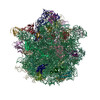
Journal: bioRxiv / Year: 2026 Title: Mechanistic insights into recovery from growth arrest. Authors: Ahmed Hassan / Yuko Nakano / Howard Gamper / Isao Masuda / Matyas Pinkas / Sathya Nagarajan / Jonathan Dworkin / Gregor Blaha / Ya-Ming Hou / Gabriel Demo / Abstract: Bacteria survive hostile conditions in clinically relevant conditions by shutting down protein synthesis, but how they restart growth remains poorly understood. Here, we use an Δ strain, which ...Bacteria survive hostile conditions in clinically relevant conditions by shutting down protein synthesis, but how they restart growth remains poorly understood. Here, we use an Δ strain, which exhibits a prolonged growth arrest, as a model to investigate how bacteria recover from this arrested state and restore protein synthesis. RimM is a conserved ribosome maturation factor for the 3'-major (head) domain of the 16S rRNA within the bacterial 30S subunit. The loss of RimM causes a significantly longer delay in recovery than other 30S maturation factors, including RbfA - the presumed primary factor in 30S maturation. Cryo-EM analysis of Δ ribosomes revealed a delayed recruitment of ribosomal proteins to the 30S head domain and increased occupancy of the initiation factors IF1 and IF3, as well as recruitment of the silencing factor RsfS to the 50S subunit. These coordinated changes provide a safeguarding mechanism to block the assembly of premature 70S ribosomes. Notably, while the delayed 30S assembly in Δ reduces the activity of global protein synthesis during the recovery phase, bacteria attempt to compensate for this deficiency by producing higher levels of the ribosomal machinery, indicating a programmatic change in energy allocation to generate the ribosome machinery. These findings highlight the importance of the RimM-assisted assembly of the ribosomal head domain for bacterial recovery from growth arrest.
In the structure databanks used in Yorodumi, some data are registered as the other names, "COVID-19 virus" and "2019-nCoV". Here are the details of the virus and the list of structure data.
Jan 31, 2019. EMDB accession codes are about to change! (news from PDBe EMDB page)
EMDB accession codes are about to change! (news from PDBe EMDB page)
The allocation of 4 digits for EMDB accession codes will soon come to an end. Whilst these codes will remain in use, new EMDB accession codes will include an additional digit and will expand incrementally as the available range of codes is exhausted. The current 4-digit format prefixed with “EMD-” (i.e. EMD-XXXX) will advance to a 5-digit format (i.e. EMD-XXXXX), and so on. It is currently estimated that the 4-digit codes will be depleted around Spring 2019, at which point the 5-digit format will come into force.
The EM Navigator/Yorodumi systems omit the EMD- prefix.
Related info.:Q: What is EMD? / ID/Accession-code notation in Yorodumi/EM Navigator
Yorodumi is a browser for structure data from EMDB, PDB, SASBDB, etc.
This page is also the successor to EM Navigator detail page, and also detail information page/front-end page for Omokage search.
The word "yorodu" (or yorozu) is an old Japanese word meaning "ten thousand". "mi" (miru) is to see.
Related info.:EMDB / PDB / SASBDB / Comparison of 3 databanks / Yorodumi Search / Aug 31, 2016. New EM Navigator & Yorodumi / Yorodumi Papers / Jmol/JSmol / Function and homology information / Changes in new EM Navigator and Yorodumi
 Movie
Movie Controller


 Open data
 Basic information
 Map data
 Sample
 Keywords
 Escherichia coli (E. coli)
 Authors
 Czech Republic,
  United States, 4 items
  Citation
 Structure visualization
 Downloads & links
 EMDB map data format
 emd_55183.png
 https://data.pdbj.org/pub/emdb/structures/EMD-55183


 Z (Sec.)
 Y (Row.)
 X (Col.)


 Sample components
 Processing
 Electron microscopy
 FIELD EMISSION GUN