Journal: Mol Cell / Year: 2026 Title: Toward community-driven visual proteomics with large-scale cryo-electron tomography of Chlamydomonas reinhardtii. Authors: Ron Kelley / Sagar Khavnekar / Ricardo D Righetto / Jessica Heebner / Martin Obr / Xianjun Zhang / Saikat Chakraborty / Grigory Tagiltsev / Alicia K Michael / Sofie van Dorst / Florent Waltz ...Authors: Ron Kelley / Sagar Khavnekar / Ricardo D Righetto / Jessica Heebner / Martin Obr / Xianjun Zhang / Saikat Chakraborty / Grigory Tagiltsev / Alicia K Michael / Sofie van Dorst / Florent Waltz / Caitlyn L McCafferty / Lorenz Lamm / Simon Zufferey / Philippe Van der Stappen / Hugo van den Hoek / Wojciech Wietrzynski / Pavol Harar / William Wan / John A G Briggs / Jürgen M Plitzko / Benjamin D Engel / Abhay Kotecha / Abstract: In situ cryo-electron tomography (cryo-ET) has emerged as the method of choice to investigate the structures of biomolecules in their native context. However, challenges remain for the efficient ...In situ cryo-electron tomography (cryo-ET) has emerged as the method of choice to investigate the structures of biomolecules in their native context. However, challenges remain for the efficient production and sharing of large-scale cryo-ET datasets. Here, we combined cryogenic plasma-based focused ion beam (cryo-PFIB) milling with recent advances in cryo-ET acquisition and processing to generate a dataset of 1,829 annotated tomograms of the green alga Chlamydomonas reinhardtii, which we provide as a community resource to drive method development and inspire biological discovery. To assay data quality, we performed subtomogram averaging of both soluble and membrane-bound complexes ranging in size from >3 MDa to ∼200 kDa, including 80S ribosomes, Rubisco, nucleosomes, microtubules, clathrin, photosystem II, and mitochondrial ATP synthase. The majority of these density maps reached sub-nanometer resolution, demonstrating the potential of this C. reinhardtii dataset as well as the promise of modern cryo-ET workflows and open data sharing to empower visual proteomics.
In the structure databanks used in Yorodumi, some data are registered as the other names, "COVID-19 virus" and "2019-nCoV". Here are the details of the virus and the list of structure data.
Jan 31, 2019. EMDB accession codes are about to change! (news from PDBe EMDB page)
EMDB accession codes are about to change! (news from PDBe EMDB page)
The allocation of 4 digits for EMDB accession codes will soon come to an end. Whilst these codes will remain in use, new EMDB accession codes will include an additional digit and will expand incrementally as the available range of codes is exhausted. The current 4-digit format prefixed with “EMD-” (i.e. EMD-XXXX) will advance to a 5-digit format (i.e. EMD-XXXXX), and so on. It is currently estimated that the 4-digit codes will be depleted around Spring 2019, at which point the 5-digit format will come into force.
The EM Navigator/Yorodumi systems omit the EMD- prefix.
Related info.:Q: What is EMD? / ID/Accession-code notation in Yorodumi/EM Navigator
Yorodumi is a browser for structure data from EMDB, PDB, SASBDB, etc.
This page is also the successor to EM Navigator detail page, and also detail information page/front-end page for Omokage search.
The word "yorodu" (or yorozu) is an old Japanese word meaning "ten thousand". "mi" (miru) is to see.
Related info.:EMDB / PDB / SASBDB / Comparison of 3 databanks / Yorodumi Search / Aug 31, 2016. New EM Navigator & Yorodumi / Yorodumi Papers / Jmol/JSmol / Function and homology information / Changes in new EM Navigator and Yorodumi
 Movie
Movie Controller


 Open data
 Basic information
 Map data
 Sample
 Keywords
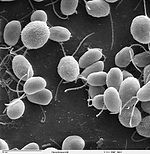 Chlamydomonas reinhardtii (plant)
 Authors
 Germany, 1 items
  Citation


 Structure visualization
 Downloads & links
 EMDB map data format
 emd_51847.png
 https://data.pdbj.org/pub/emdb/structures/EMD-51847

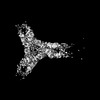
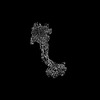


 Z (Sec.)
 Y (Row.)
 X (Col.)


 Sample components
 Processing
 Electron microscopy
 FIELD EMISSION GUN
