Journal: Proc Natl Acad Sci U S A / Year: 2026 Title: Rubisco kinetic acclimation at the holoenzyme level. Authors: Bryce Askey / Maddie Ceminsky / Elena Scott / Yongsheng Wang / Zhen Guo Oh / Stavros Azinas / Arthur Laganowsky / Laura Helen Gunn / Abstract: In plants, the CO-fixing enzyme Rubisco is hexadecameric, with each mature holoenzyme containing eight small subunits (SSus). Many plants express multiple SSus and vary their expression in response ...In plants, the CO-fixing enzyme Rubisco is hexadecameric, with each mature holoenzyme containing eight small subunits (SSus). Many plants express multiple SSus and vary their expression in response to environmental cues. Previous work indicates that this may allow fine-tuning of Rubisco's performance in a variable environment (i.e., kinetic acclimation). Despite SSu pools being heterogeneous and dynamic, nearly no evidence exists for holoenzyme-level heterogeneity. Here, we characterized the structural and kinetic plasticity of Rubisco. We first established that SSu-heterogeneous Rubisco exists in and quantified the prevalence of heterogeneity. We found SSu-heterogeneous Rubisco to make up over half of the Rubisco pool when heterologously expressed. This Rubisco contained at least four unique SSu ratios, indicating a variety of holoenzyme arrangements are possible. We then tested the kinetic effect of different SSus and found heterogeneity to have an antagonistic effect on substrate and inhibitor affinity. Kinetic differences between the SSus correlated with changes in local flexibility, and cryo-EM analysis illustrated a structural mechanism through which SSus may influence catalysis. Our kinetic and structural findings align with the hypothesized role of SSus in kinetic acclimation, as we observed the warm temperature-expressed SSu of to confer a stabilizing effect to the active site relative to the cool temperature-expressed SSu. This increase in stability manifested as a reduction in flexibility and increase in substrate affinity, indicating that fine-tuning of local stability may underlie Rubisco kinetic acclimation.
In the structure databanks used in Yorodumi, some data are registered as the other names, "COVID-19 virus" and "2019-nCoV". Here are the details of the virus and the list of structure data.
Jan 31, 2019. EMDB accession codes are about to change! (news from PDBe EMDB page)
EMDB accession codes are about to change! (news from PDBe EMDB page)
The allocation of 4 digits for EMDB accession codes will soon come to an end. Whilst these codes will remain in use, new EMDB accession codes will include an additional digit and will expand incrementally as the available range of codes is exhausted. The current 4-digit format prefixed with “EMD-” (i.e. EMD-XXXX) will advance to a 5-digit format (i.e. EMD-XXXXX), and so on. It is currently estimated that the 4-digit codes will be depleted around Spring 2019, at which point the 5-digit format will come into force.
The EM Navigator/Yorodumi systems omit the EMD- prefix.
Related info.:Q: What is EMD? / ID/Accession-code notation in Yorodumi/EM Navigator
Yorodumi is a browser for structure data from EMDB, PDB, SASBDB, etc.
This page is also the successor to EM Navigator detail page, and also detail information page/front-end page for Omokage search.
The word "yorodu" (or yorozu) is an old Japanese word meaning "ten thousand". "mi" (miru) is to see.
Related info.:EMDB / PDB / SASBDB / Comparison of 3 databanks / Yorodumi Search / Aug 31, 2016. New EM Navigator & Yorodumi / Yorodumi Papers / Jmol/JSmol / Function and homology information / Changes in new EM Navigator and Yorodumi
 Movie
Movie Controller

 Yorodumi
 Open data
 Basic information
 Map data
 Sample
 Keywords
 Function and homology information
 Arabidopsis thaliana (thale cress)
 Authors
 Sweden,
  United States, 3 items
  Citation
 Structure visualization
 Downloads & links
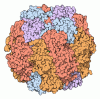
 emd_48847.png
 https://data.pdbj.org/pub/emdb/structures/EMD-48847


 Z (Sec.)
 Y (Row.)
 X (Col.)


 Sample components
 Escherichia coli 'BL21-Gold(DE3)pLysS AG' (bacteria)
 Processing
 Electron microscopy
 FIELD EMISSION GUN


