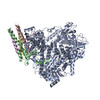
Journal: J Virol / Year: 2025 Title: Discovery of a non-nucleoside inhibitor that binds to a novel site in the palm domain of the respiratory syncytial virus RNA-dependent RNA polymerase. Authors: Jay H Kalin / Yanting Yin / Minh T Tran / Madison Piassek / Amy Fung / Sandrine Grosse / Edgar Jacoby / Anusarka Bhaumik / Suraj Adhikary / Robyn Miller / Cynthia Lemmens / Ferdinand H ...Authors: Jay H Kalin / Yanting Yin / Minh T Tran / Madison Piassek / Amy Fung / Sandrine Grosse / Edgar Jacoby / Anusarka Bhaumik / Suraj Adhikary / Robyn Miller / Cynthia Lemmens / Ferdinand H Lutter / Serge Pieters / Ludwig Cooymans / Geert Rombouts / Daniel Oehlrich / Sonia Tomaso / Kate Lozada / Miguel Osorio Garcia / Brandon Anson / Suzanne De Bruyn / Constance Smith-Monroy / Jean-Marc Neefs / Nádia Conceição-Neto / Bart Stoops / Herman van Vlijmen / Aaron Patrick / Xiaodi Yu / Victoria Wong / Daniel Krosky / Pravien Abeywickrema / Stephen Mason / Zhinan Jin / Tim H M Jonckers / Sujata Sharma / Abstract: Respiratory syncytial virus (RSV) is a major cause of severe respiratory tract infections in infants, young children, and the elderly. We report herein the discovery and characterization of a novel ...Respiratory syncytial virus (RSV) is a major cause of severe respiratory tract infections in infants, young children, and the elderly. We report herein the discovery and characterization of a novel RSV polymerase (RSVpol) non-nucleoside inhibitor (NNI) chemotype that binds to a previously undescribed, highly conserved site in the palm domain of the L protein. Consistent with the observed mode of inhibition, cryogenic electron microscopy (cryo-EM) revealed the site to be adjacent to the nucleotide binding site. Minireplicon assays confirmed on-target activity against RSVpol, and cell-based antiviral assays showed that the lead compound effectively inhibited viral mRNA transcription and replication in clinically relevant A and B strains. Together, our data provides valuable insights into the molecular basis of inhibition for a novel mechanism of action and paves the way for structure-based design to deliver effective therapeutics against RSV.IMPORTANCERespiratory syncytial virus (RSV) is a negative-sense, single-stranded RNA virus belonging to the family of the order . Currently, monoclonal antibody treatments are only approved for infants, and vaccines are reserved for pregnant women and adults aged 60 years and older. Prophylaxis is also limited to the pediatric patient population, and there are currently no direct antiviral therapies for post-exposure treatment. Viral polymerases are considered well-validated drug targets due to their critical role in transcription and genome replication. Herein, we disclose the discovery of a spiro-indolinone series as polymerase inhibitors and describe the preliminary structure-activity relationship (SAR). A cryogenic electron microscopy (cryo-EM) structure obtained with an optimized lead revealed a novel binding site located in the palm domain, which will enable future structure-based drug design efforts. Novel RSV antivirals could be beneficial both as therapeutics following diagnosis and as a prophylactic in patients less likely to respond to vaccines.
In the structure databanks used in Yorodumi, some data are registered as the other names, "COVID-19 virus" and "2019-nCoV". Here are the details of the virus and the list of structure data.
Jan 31, 2019. EMDB accession codes are about to change! (news from PDBe EMDB page)
EMDB accession codes are about to change! (news from PDBe EMDB page)
The allocation of 4 digits for EMDB accession codes will soon come to an end. Whilst these codes will remain in use, new EMDB accession codes will include an additional digit and will expand incrementally as the available range of codes is exhausted. The current 4-digit format prefixed with “EMD-” (i.e. EMD-XXXX) will advance to a 5-digit format (i.e. EMD-XXXXX), and so on. It is currently estimated that the 4-digit codes will be depleted around Spring 2019, at which point the 5-digit format will come into force.
The EM Navigator/Yorodumi systems omit the EMD- prefix.
Related info.:Q: What is EMD? / ID/Accession-code notation in Yorodumi/EM Navigator
Yorodumi is a browser for structure data from EMDB, PDB, SASBDB, etc.
This page is also the successor to EM Navigator detail page, and also detail information page/front-end page for Omokage search.
The word "yorodu" (or yorozu) is an old Japanese word meaning "ten thousand". "mi" (miru) is to see.
Related info.:EMDB / PDB / SASBDB / Comparison of 3 databanks / Yorodumi Search / Aug 31, 2016. New EM Navigator & Yorodumi / Yorodumi Papers / Jmol/JSmol / Function and homology information / Changes in new EM Navigator and Yorodumi
 Movie
Movie Controller

 Yorodumi
 Open data
 Basic information
 Map data
 Sample
 Keywords
 Function and homology information
 human respiratory syncytial virus
 Authors
 Citation

 Structure visualization
 Downloads & links
 emd_48846.png
 https://data.pdbj.org/pub/emdb/structures/EMD-48846
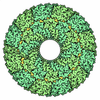
 Z (Sec.)
 Y (Row.)
 X (Col.)


 Sample components
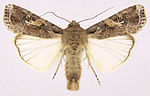 Spodoptera frugiperda (fall armyworm)
 Processing
 Electron microscopy
 FIELD EMISSION GUN