National Institutes of Health/National Institute of Environmental Health Sciences (NIH/NIEHS)
DP2-ES036404
United States
Citation
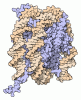
Journal: Nucleic Acids Res / Year: 2026 Title: Structure and function of IWS1 in transcription elongation. Authors: Della Syau / Felix Steinruecke / Sophie Roth / Ernst Schmid / Karen Adelman / Johannes C Walter / Lucas Farnung / Abstract: Transcription elongation by RNA polymerase II is a tightly regulated process that requires coordinated interactions between transcription elongation factors. IWS1 (Interacts with SPT6) has been ...Transcription elongation by RNA polymerase II is a tightly regulated process that requires coordinated interactions between transcription elongation factors. IWS1 (Interacts with SPT6) has been implicated as a core elongation factor, but its molecular role remains unclear. We show that the intrinsically disordered C-terminal region of IWS1 contains short linear motifs (SLiMs) that multivalently engage the elongation machinery. Using cryo-electron microscopy, we map SLiMs in IWS1 that interact with Pol II subunits RPB1, RPB2, and RPB5, as well as elongation factors DSIF, SPT6, and ELOF1. Functional assays demonstrate that distinct IWS1 SLiMs specify IWS1 recruitment and IWS1-dependent transcription stimulation. IWS1 recruitment to the transcription elongation complex depends on association via the RPB1 jaw and binding of downstream DNA. Transcription elongation stimulation requires interactions with the RPB2 lobe and ELOF1. We identify other transcription elongation factors including ELOA and RECQL5 that bind the RPB1 jaw and demonstrate that IWS1 protects the activated transcription elongation complex from RECQL5 inhibition. We also reveal the binding of the histone reader and IWS1 interactor LEDGF to a transcribed downstream nucleosome. Our findings establish IWS1 as a modular scaffold that helps organize the transcription elongation complex, illustrating how disordered regions regulate transcription elongation.
Cryogen name: ETHANE / Chamber humidity: 100 % / Chamber temperature: 277 K / Instrument: FEI VITROBOT MARK IV
-
Electron microscopy
Microscope
TFS KRIOS
Specialist optics
Phase plate: VOLTA PHASE PLATE / Energy filter - Name: TFS Selectris
Image recording
Film or detector model: TFS FALCON 4i (4k x 4k) / Number grids imaged: 2 / Number real images: 30316 / Average exposure time: 4.21 sec. / Average electron dose: 37.0 e/Å2
Electron beam
Acceleration voltage: 300 kV / Electron source: FIELD EMISSION GUN
In the structure databanks used in Yorodumi, some data are registered as the other names, "COVID-19 virus" and "2019-nCoV". Here are the details of the virus and the list of structure data.
Jan 31, 2019. EMDB accession codes are about to change! (news from PDBe EMDB page)
EMDB accession codes are about to change! (news from PDBe EMDB page)
The allocation of 4 digits for EMDB accession codes will soon come to an end. Whilst these codes will remain in use, new EMDB accession codes will include an additional digit and will expand incrementally as the available range of codes is exhausted. The current 4-digit format prefixed with “EMD-” (i.e. EMD-XXXX) will advance to a 5-digit format (i.e. EMD-XXXXX), and so on. It is currently estimated that the 4-digit codes will be depleted around Spring 2019, at which point the 5-digit format will come into force.
The EM Navigator/Yorodumi systems omit the EMD- prefix.
Related info.:Q: What is EMD? / ID/Accession-code notation in Yorodumi/EM Navigator
Yorodumi is a browser for structure data from EMDB, PDB, SASBDB, etc.
This page is also the successor to EM Navigator detail page, and also detail information page/front-end page for Omokage search.
The word "yorodu" (or yorozu) is an old Japanese word meaning "ten thousand". "mi" (miru) is to see.
Related info.:EMDB / PDB / SASBDB / Comparison of 3 databanks / Yorodumi Search / Aug 31, 2016. New EM Navigator & Yorodumi / Yorodumi Papers / Jmol/JSmol / Function and homology information / Changes in new EM Navigator and Yorodumi
 Movie
Movie Controller

 Yorodumi
 Open data
 Basic information
 Map data
 Sample
 Keywords
 Homo sapiens (human) /
 Sus scrofa (pig) /
  Xenopus laevis (African clawed frog)
 Authors
 United States, 3 items
  Citation
 Structure visualization
 Downloads & links
 EMDB map data format
 emd_48358.png
 https://data.pdbj.org/pub/emdb/structures/EMD-48358


 Z (Sec.)
 Y (Row.)
 X (Col.)


 Sample components
 Processing
 Electron microscopy
 FIELD EMISSION GUN

