National Institutes of Health/National Institute Of Allergy and Infectious Diseases (NIH/NIAID)
United States
Citation
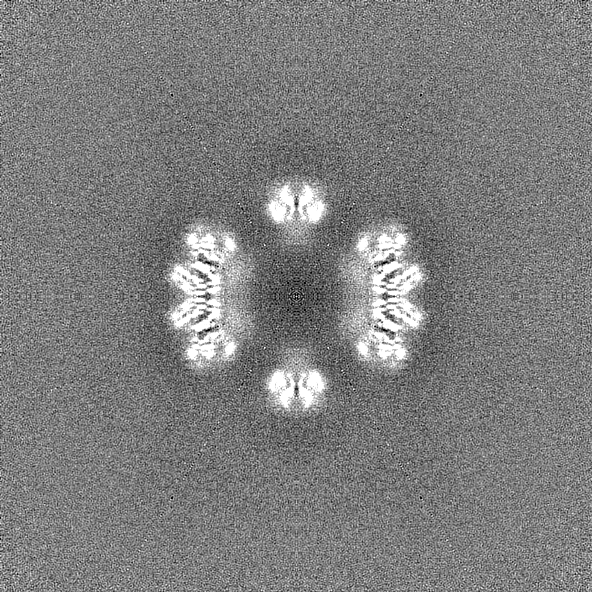
Journal: bioRxiv / Year: 2025 Title: From sequence to scaffold: computational design of protein nanoparticle vaccines from AlphaFold2-predicted building blocks. Authors: Cyrus M Haas / Naveen Jasti / Annie Dosey / Joel D Allen / Rebecca Gillespie / Jackson McGowan / Elizabeth M Leaf / Max Crispin / Cole A DeForest / Masaru Kanekiyo / Neil P King / Abstract: Self-assembling protein nanoparticles are being increasingly utilized in the design of next-generation vaccines due to their ability to induce antibody responses of superior magnitude, breadth, and ...Self-assembling protein nanoparticles are being increasingly utilized in the design of next-generation vaccines due to their ability to induce antibody responses of superior magnitude, breadth, and durability. Computational protein design offers a route to novel nanoparticle scaffolds with structural and biochemical features tailored to specific vaccine applications. Although strategies for designing new self-assembling proteins have been established, the recent development of powerful machine learning-based tools for protein structure prediction and design provides an opportunity to overcome several of their limitations. Here, we leveraged these tools to develop a generalizable method for designing novel self-assembling proteins starting from AlphaFold2 predictions of oligomeric protein building blocks. We used the method to generate six new 60-subunit protein nanoparticles with icosahedral symmetry, and single-particle cryo-electron microscopy reconstructions of three of them revealed that they were designed with atomic-level accuracy. To transform one of these nanoparticles into a functional immunogen, we reoriented its termini through circular permutation, added a genetically encoded oligomannose-type glycan, and displayed a stabilized trimeric variant of the influenza hemagglutinin receptor binding domain through a rigid linker. The resultant immunogen elicited potent receptor-blocking and neutralizing antibody responses in mice. Our results demonstrate the practical utility of machine learning-based protein modeling tools in the design of nanoparticle vaccines. More broadly, by eliminating the requirement for experimentally determined structures of protein building blocks, our method dramatically expands the number of starting points available for designing new self-assembling proteins.
In the structure databanks used in Yorodumi, some data are registered as the other names, "COVID-19 virus" and "2019-nCoV". Here are the details of the virus and the list of structure data.
Jan 31, 2019. EMDB accession codes are about to change! (news from PDBe EMDB page)
EMDB accession codes are about to change! (news from PDBe EMDB page)
The allocation of 4 digits for EMDB accession codes will soon come to an end. Whilst these codes will remain in use, new EMDB accession codes will include an additional digit and will expand incrementally as the available range of codes is exhausted. The current 4-digit format prefixed with “EMD-” (i.e. EMD-XXXX) will advance to a 5-digit format (i.e. EMD-XXXXX), and so on. It is currently estimated that the 4-digit codes will be depleted around Spring 2019, at which point the 5-digit format will come into force.
The EM Navigator/Yorodumi systems omit the EMD- prefix.
Related info.:Q: What is EMD? / ID/Accession-code notation in Yorodumi/EM Navigator
Yorodumi is a browser for structure data from EMDB, PDB, SASBDB, etc.
This page is also the successor to EM Navigator detail page, and also detail information page/front-end page for Omokage search.
The word "yorodu" (or yorozu) is an old Japanese word meaning "ten thousand". "mi" (miru) is to see.
Related info.:EMDB / PDB / SASBDB / Comparison of 3 databanks / Yorodumi Search / Aug 31, 2016. New EM Navigator & Yorodumi / Yorodumi Papers / Jmol/JSmol / Function and homology information / Changes in new EM Navigator and Yorodumi
 Movie
Movie Controller


 Open data
 Basic information
 Map data
 Sample
 Keywords
 Escherichia coli (E. coli)
 Authors
 United States, 1 items
  Citation
 Structure visualization
 Downloads & links
 EMDB map data format
 emd_45735.png
 https://data.pdbj.org/pub/emdb/structures/EMD-45735


 Z (Sec.)
 Y (Row.)
 X (Col.)




 Sample components
 Processing
 Electron microscopy
 FIELD EMISSION GUN

