National Institutes of Health/National Institute of General Medical Sciences (NIH/NIGMS)
GM071940
United States
National Institutes of Health/National Institute Of Allergy and Infectious Diseases (NIH/NIAID)
AI171426
United States
Citation
Journal: Sci Adv / Year: 2024 Title: Capturing intermediates and membrane remodeling in class III viral fusion. Authors: Lenka Milojević / Zhu Si / Xian Xia / Lauren Chen / Yao He / Sijia Tang / Ming Luo / Z Hong Zhou / Abstract: Enveloped viruses enter cells by fusing their envelopes to host cell membranes. Vesicular stomatitis virus (VSV) glycoprotein (G) is a prototype for class III fusion proteins. Although structures of ...Enveloped viruses enter cells by fusing their envelopes to host cell membranes. Vesicular stomatitis virus (VSV) glycoprotein (G) is a prototype for class III fusion proteins. Although structures of the stable pre- and postfusion ectodomain of G are known, its fusogenic intermediates are insufficiently characterized. Here, we incubated VSV virions with late endosome-mimicking liposomes at pH 5.5 and used cryo-electron tomography (cryo-ET) to visualize stages of VSV's membrane fusion pathway, capture refolding intermediates of G, and reconstruct a sequence of G conformational changes. We observe that the G trimer disassembles into monomers and parallel dimers that explore a broad conformational space. Extended intermediates engage target membranes and mediate fusion, resulting in viral uncoating and linearization of the ribonucleoprotein genome. These viral fusion intermediates provide mechanistic insights into class III viral fusion processes, opening avenues for future research and structure-based design of fusion inhibition-based antiviral therapeutics.
In the structure databanks used in Yorodumi, some data are registered as the other names, "COVID-19 virus" and "2019-nCoV". Here are the details of the virus and the list of structure data.
Jan 31, 2019. EMDB accession codes are about to change! (news from PDBe EMDB page)
EMDB accession codes are about to change! (news from PDBe EMDB page)
The allocation of 4 digits for EMDB accession codes will soon come to an end. Whilst these codes will remain in use, new EMDB accession codes will include an additional digit and will expand incrementally as the available range of codes is exhausted. The current 4-digit format prefixed with “EMD-” (i.e. EMD-XXXX) will advance to a 5-digit format (i.e. EMD-XXXXX), and so on. It is currently estimated that the 4-digit codes will be depleted around Spring 2019, at which point the 5-digit format will come into force.
The EM Navigator/Yorodumi systems omit the EMD- prefix.
Related info.:Q: What is EMD? / ID/Accession-code notation in Yorodumi/EM Navigator
Yorodumi is a browser for structure data from EMDB, PDB, SASBDB, etc.
This page is also the successor to EM Navigator detail page, and also detail information page/front-end page for Omokage search.
The word "yorodu" (or yorozu) is an old Japanese word meaning "ten thousand". "mi" (miru) is to see.
Related info.:EMDB / PDB / SASBDB / Comparison of 3 databanks / Yorodumi Search / Aug 31, 2016. New EM Navigator & Yorodumi / Yorodumi Papers / Jmol/JSmol / Function and homology information / Changes in new EM Navigator and Yorodumi
 Movie
Movie Controller


 Open data
 Basic information
 Map data
 Sample
 Keywords
 Vesicular stomatitis Indiana virus strain San Juan
 Authors
 United States, 2 items
  Citation
 Structure visualization
 Downloads & links
 EMDB map data format
 emd_43382.png
 http://ftp.pdbj.org/pub/emdb/structures/EMD-43382
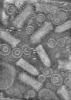
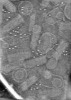

 Z (Sec.)
 Y (Row.)
 X (Col.)


 Sample components
 Processing
 Electron microscopy
 FIELD EMISSION GUN
