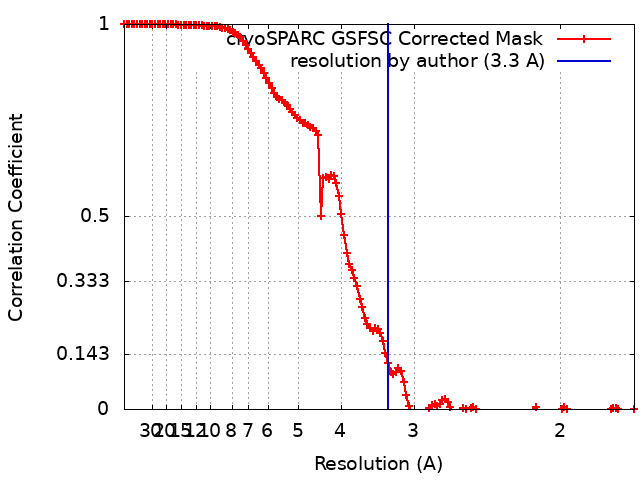
positive regulation of peripheral T cell tolerance induction / CD4-positive, CD25-positive, alpha-beta regulatory T cell lineage commitment / establishment of endothelial blood-brain barrier / response to rapamycin / tolerance induction / negative regulation of interleukin-4 production / : / RUNX1 and FOXP3 control the development of regulatory T lymphocytes (Tregs) / negative regulation of chronic inflammatory response / negative regulation of T cell cytokine production ...positive regulation of peripheral T cell tolerance induction / CD4-positive, CD25-positive, alpha-beta regulatory T cell lineage commitment / establishment of endothelial blood-brain barrier / response to rapamycin / tolerance induction / negative regulation of interleukin-4 production / : / RUNX1 and FOXP3 control the development of regulatory T lymphocytes (Tregs) / negative regulation of chronic inflammatory response / negative regulation of T cell cytokine production / negative regulation of interleukin-5 production / regulation of isotype switching to IgG isotypes / tolerance induction to self antigen / negative regulation of defense response to virus / negative regulation of lymphocyte proliferation / negative regulation of T-helper 17 cell differentiation / positive regulation of transforming growth factor beta1 production / T cell mediated immunity / negative regulation of immune response / positive regulation of T cell tolerance induction / positive regulation of T cell anergy / positive regulation of immature T cell proliferation in thymus / positive regulation of CD4-positive, CD25-positive, alpha-beta regulatory T cell differentiation / regulatory T cell differentiation / negative regulation of isotype switching to IgE isotypes / regulation of immunoglobulin production / negative regulation of interleukin-17 production / regulation of T cell anergy / myeloid cell homeostasis / : / positive regulation of regulatory T cell differentiation / negative regulation of cytokine production / negative regulation of interleukin-2 production / negative regulation of interleukin-10 production / NFAT protein binding / histone acetyltransferase binding / positive regulation of interleukin-4 production / B cell homeostasis / negative regulation of type II interferon production / negative regulation of interleukin-6 production / : / negative regulation of tumor necrosis factor production / negative regulation of T cell proliferation / T cell activation / DNA-binding transcription repressor activity, RNA polymerase II-specific / negative regulation of inflammatory response / response to virus / histone deacetylase binding / sequence-specific double-stranded DNA binding / transcription corepressor activity / T cell receptor signaling pathway / DNA-binding transcription activator activity, RNA polymerase II-specific / response to lipopolysaccharide / sequence-specific DNA binding / gene expression / DNA-binding transcription factor activity, RNA polymerase II-specific / RNA polymerase II cis-regulatory region sequence-specific DNA binding / chromatin remodeling / DNA-binding transcription factor activity / negative regulation of cell population proliferation / negative regulation of gene expression / negative regulation of DNA-templated transcription / positive regulation of gene expression / regulation of transcription by RNA polymerase II / positive regulation of DNA-templated transcription / negative regulation of transcription by RNA polymerase II / protein homodimerization activity / positive regulation of transcription by RNA polymerase II / DNA binding / zinc ion binding / nucleoplasm / identical protein binding / nucleus / cytoplasm / cytosol 類似検索 - 分子機能
: / Forkhead box protein P (FoxP) family leucine zipper (ZIP) domain profile. / FOXP, coiled-coil domain / : / FOXP coiled-coil domain / Fork head domain / Forkhead domain / Fork head domain profile. / FORKHEAD / Fork head domain conserved site 2 ...: / Forkhead box protein P (FoxP) family leucine zipper (ZIP) domain profile. / FOXP, coiled-coil domain / : / FOXP coiled-coil domain / Fork head domain / Forkhead domain / Fork head domain profile. / FORKHEAD / Fork head domain conserved site 2 / Fork head domain signature 2. / Zinc finger C2H2 type domain signature. / Zinc finger C2H2-type / Winged helix DNA-binding domain superfamily / Winged helix-like DNA-binding domain superfamily 類似検索 - ドメイン・相同性
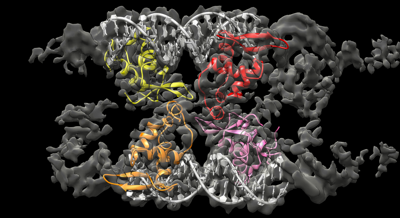
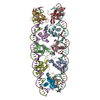
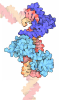
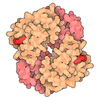
ジャーナル: Nature / 年: 2023 タイトル: FOXP3 recognizes microsatellites and bridges DNA through multimerization. 著者: Wenxiang Zhang / Fangwei Leng / Xi Wang / Ricardo N Ramirez / Jinseok Park / Christophe Benoist / Sun Hur / 要旨: FOXP3 is a transcription factor that is essential for the development of regulatory T cells, a branch of T cells that suppress excessive inflammation and autoimmunity. However, the molecular ...FOXP3 is a transcription factor that is essential for the development of regulatory T cells, a branch of T cells that suppress excessive inflammation and autoimmunity. However, the molecular mechanisms of FOXP3 remain unclear. Here we here show that FOXP3 uses the forkhead domain-a DNA-binding domain that is commonly thought to function as a monomer or dimer-to form a higher-order multimer after binding to TG repeat microsatellites. The cryo-electron microscopy structure of FOXP3 in a complex with TG repeats reveals a ladder-like architecture, whereby two double-stranded DNA molecules form the two 'side rails' bridged by five pairs of FOXP3 molecules, with each pair forming a 'rung'. Each FOXP3 subunit occupies TGTTTGT within the repeats in a manner that is indistinguishable from that of FOXP3 bound to the forkhead consensus motif (TGTTTAC). Mutations in the intra-rung interface impair TG repeat recognition, DNA bridging and the cellular functions of FOXP3, all without affecting binding to the forkhead consensus motif. FOXP3 can tolerate variable inter-rung spacings, explaining its broad specificity for TG-repeat-like sequences in vivo and in vitro. Both FOXP3 orthologues and paralogues show similar TG repeat recognition and DNA bridging. These findings therefore reveal a mode of DNA recognition that involves transcription factor homomultimerization and DNA bridging, and further implicates microsatellites in transcriptional regulation and diseases.
 ムービー
ムービー コントローラー


 データを開く
 基本情報
基本情報
 マップデータ
 試料
試料 キーワード
キーワード 機能・相同性情報
 Mus musculus (ハツカネズミ) / synthetic construct (人工物)
 データ登録者
 米国, 1件
  引用
引用 構造の表示
構造の表示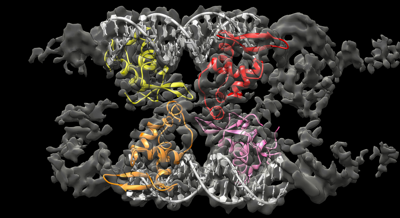
 ダウンロードとリンク
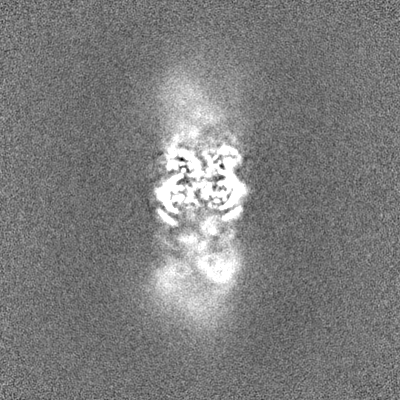
 emd_40736.png
 http://ftp.pdbj.org/pub/emdb/structures/EMD-40736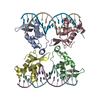

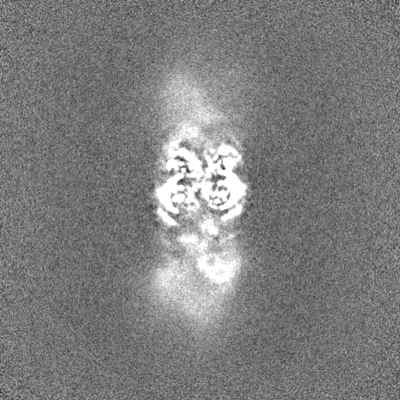
 Z (Sec.)
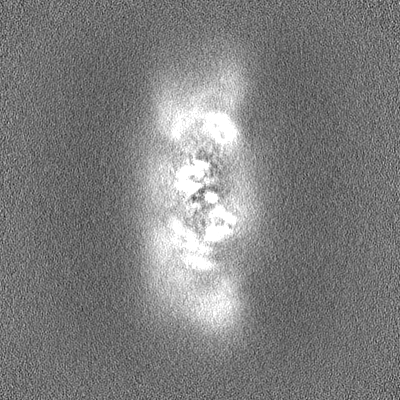
 Y (Row.)
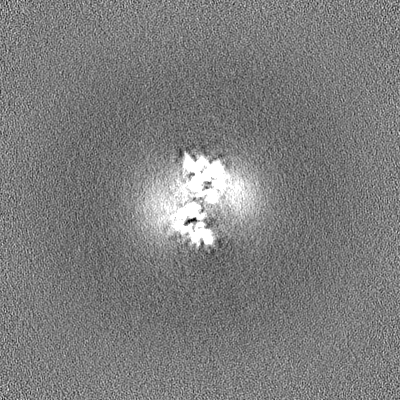
 X (Col.)










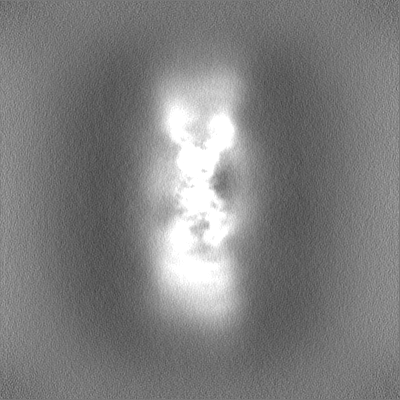
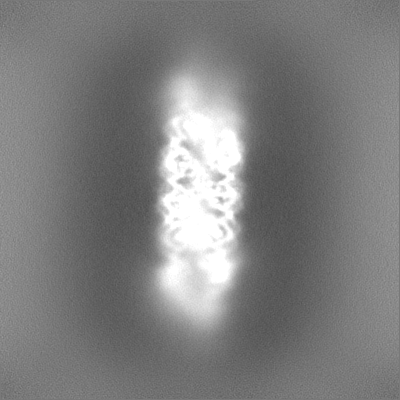
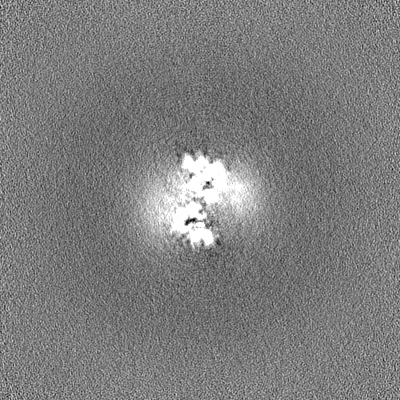
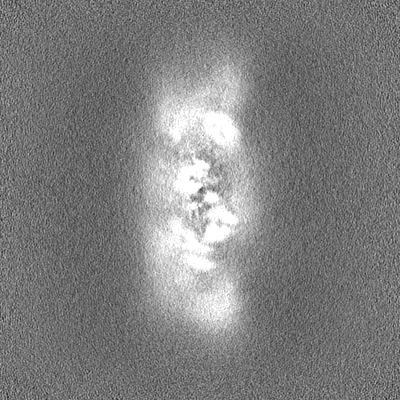
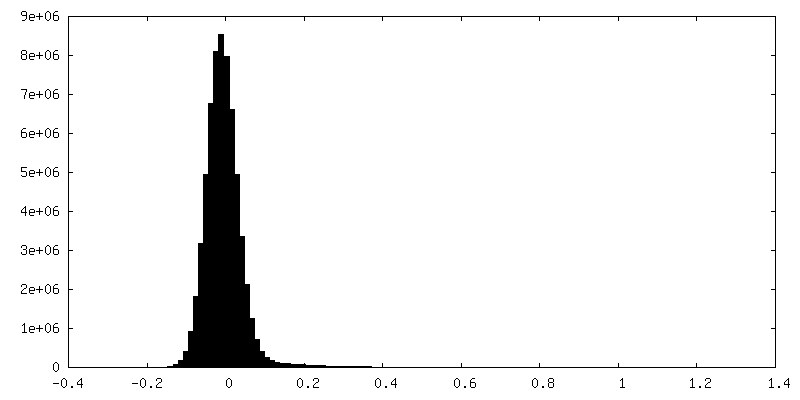
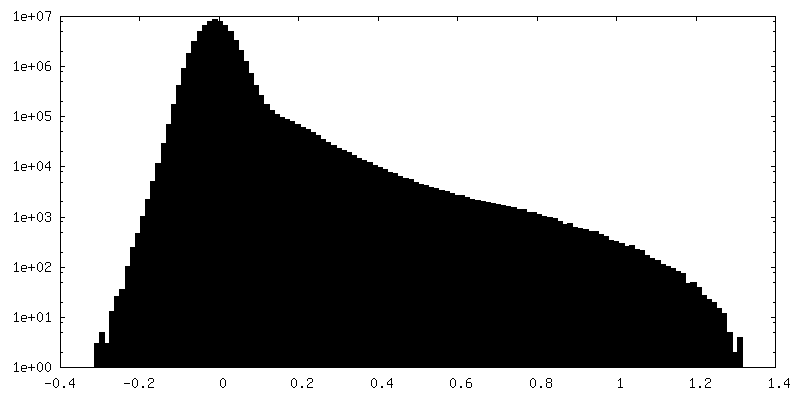

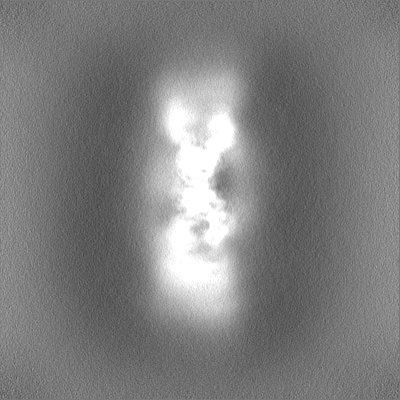

 試料の構成要素
 Escherichia coli BL21(DE3) (大腸菌)
 解析
解析 電子顕微鏡法
 FIELD EMISSION GUN