National Natural Science Foundation of China (NSFC)
32171200
China
Other government
JCYJ20220530115210023
China
Citation
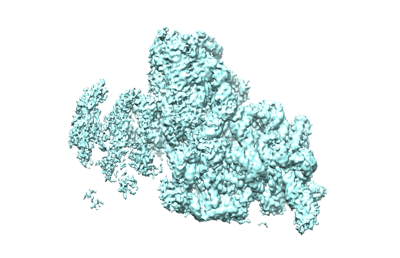
Journal: Biomolecules / Year: 2023 Title: Structural Insights into the Distortion of the Ribosomal Small Subunit at Different Magnesium Concentrations. Authors: Ting Yu / Junyi Jiang / Qianxi Yu / Xin Li / Fuxing Zeng / Abstract: Magnesium ions are abundant and play indispensable functions in the ribosome. A decrease in Mg concentration causes 70S ribosome dissociation and subsequent unfolding. Structural distortion at low Mg ...Magnesium ions are abundant and play indispensable functions in the ribosome. A decrease in Mg concentration causes 70S ribosome dissociation and subsequent unfolding. Structural distortion at low Mg concentrations has been observed in an immature pre50S, while the structural changes in mature subunits have not yet been studied. Here, we purified the 30S subunits of cells under various Mg concentrations and analyzed their structural distortion by cryo-electron microscopy. Upon systematically interrogating the structural heterogeneity within the 1 mM Mg dataset, we observed 30S particles with different levels of structural distortion in the decoding center, h17, and the 30S head. Our model showed that, when the Mg concentration decreases, the decoding center distorts, starting from h44 and followed by the shifting of h18 and h27, as well as the dissociation of ribosomal protein S12. Mg deficiency also eliminates the interactions between h17, h10, h15, and S16, resulting in the movement of h17 towards the tip of h6. More flexible structures were observed in the 30S head and platform, showing high variability in these regions. In summary, the structures resolved here showed several prominent distortion events in the decoding center and h17. The requirement for Mg in ribosomes suggests that the conformational changes reported here are likely shared due to a lack of cellular Mg in all domains of life.
In the structure databanks used in Yorodumi, some data are registered as the other names, "COVID-19 virus" and "2019-nCoV". Here are the details of the virus and the list of structure data.
Jan 31, 2019. EMDB accession codes are about to change! (news from PDBe EMDB page)
EMDB accession codes are about to change! (news from PDBe EMDB page)
The allocation of 4 digits for EMDB accession codes will soon come to an end. Whilst these codes will remain in use, new EMDB accession codes will include an additional digit and will expand incrementally as the available range of codes is exhausted. The current 4-digit format prefixed with “EMD-” (i.e. EMD-XXXX) will advance to a 5-digit format (i.e. EMD-XXXXX), and so on. It is currently estimated that the 4-digit codes will be depleted around Spring 2019, at which point the 5-digit format will come into force.
The EM Navigator/Yorodumi systems omit the EMD- prefix.
Related info.:Q: What is EMD? / ID/Accession-code notation in Yorodumi/EM Navigator
Yorodumi is a browser for structure data from EMDB, PDB, SASBDB, etc.
This page is also the successor to EM Navigator detail page, and also detail information page/front-end page for Omokage search.
The word "yorodu" (or yorozu) is an old Japanese word meaning "ten thousand". "mi" (miru) is to see.
Related info.:EMDB / PDB / SASBDB / Comparison of 3 databanks / Yorodumi Search / Aug 31, 2016. New EM Navigator & Yorodumi / Yorodumi Papers / Jmol/JSmol / Function and homology information / Changes in new EM Navigator and Yorodumi
 Movie
Movie Controller

 Yorodumi
 Open data
 Basic information
 Map data
 Sample
 Escherichia coli (E. coli)
 Authors
 China, 3 items
  Citation
 Structure visualization
 Downloads & links
 EMDB map data format
 emd_34985.png
 http://ftp.pdbj.org/pub/emdb/structures/EMD-34985
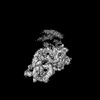
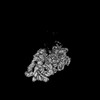
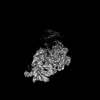
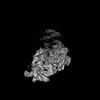
 Z (Sec.)
 Y (Row.)
 X (Col.)






 Sample components
 Processing
 Electron microscopy
 FIELD EMISSION GUN


