negative regulation of mRNA 3'-end processing / Deposition of new CENPA-containing nucleosomes at the centromere / Inhibition of DNA recombination at telomere / DNA Damage/Telomere Stress Induced Senescence / Regulation of PD-L1(CD274) transcription / Regulation of endogenous retroelements by KRAB-ZFP proteins / Condensation of Prophase Chromosomes / Negative Regulation of CDH1 Gene Transcription / histone H2AK127 ubiquitin ligase activity / histone H2AK129 ubiquitin ligase activity ...negative regulation of mRNA 3'-end processing / Deposition of new CENPA-containing nucleosomes at the centromere / Inhibition of DNA recombination at telomere / DNA Damage/Telomere Stress Induced Senescence / Regulation of PD-L1(CD274) transcription / Regulation of endogenous retroelements by KRAB-ZFP proteins / Condensation of Prophase Chromosomes / Negative Regulation of CDH1 Gene Transcription / histone H2AK127 ubiquitin ligase activity / histone H2AK129 ubiquitin ligase activity / Defective DNA double strand break response due to BRCA1 loss of function / Defective DNA double strand break response due to BARD1 loss of function / Recognition and association of DNA glycosylase with site containing an affected purine / BRCA1-BARD1 complex / Cleavage of the damaged purine / PRC2 methylates histones and DNA / Metalloprotease DUBs / MLL4 and MLL3 complexes regulate expression of PPARG target genes in adipogenesis and hepatic steatosis / UCH proteinases / BRCA1-A complex / negative regulation of centriole replication / RUNX1 regulates genes involved in megakaryocyte differentiation and platelet function / polytene chromosome / chordate embryonic development / RMTs methylate histone arginines / tissue homeostasis / negative regulation of intracellular estrogen receptor signaling pathway / gamma-tubulin ring complex / ubiquitin-modified histone reader activity / cellular response to indole-3-methanol / DNA strand resection involved in replication fork processing / regulation of phosphorylation / homologous recombination / negative regulation of fatty acid biosynthetic process / Regulation of MITF-M-dependent genes involved in DNA replication, damage repair and senescence / negative regulation of protein export from nucleus / Ub-specific processing proteases / lateral element / mitotic G2/M transition checkpoint / XY body / Impaired BRCA2 binding to PALB2 / RNA polymerase binding / protein K6-linked ubiquitination / DNA damage tolerance / regulation of DNA damage checkpoint / negative regulation of gene expression via chromosomal CpG island methylation / HDR through Single Strand Annealing (SSA) / response to ionizing radiation / Homologous DNA Pairing and Strand Exchange / Defective homologous recombination repair (HRR) due to BRCA1 loss of function / Defective HDR through Homologous Recombination Repair (HRR) due to PALB2 loss of BRCA1 binding function / Defective HDR through Homologous Recombination Repair (HRR) due to PALB2 loss of BRCA2/RAD51/RAD51C binding function / Resolution of D-loop Structures through Synthesis-Dependent Strand Annealing (SDSA) / mitotic G2 DNA damage checkpoint signaling / Resolution of D-loop Structures through Holliday Junction Intermediates / Transcriptional Regulation by E2F6 / negative regulation of cell cycle / negative regulation of reactive oxygen species metabolic process / Impaired BRCA2 binding to RAD51 / positive regulation of vascular endothelial growth factor production / negative regulation of extrinsic apoptotic signaling pathway via death domain receptors / Presynaptic phase of homologous DNA pairing and strand exchange / ubiquitin ligase complex / SUMOylation of DNA damage response and repair proteins / protein autoubiquitination / regulation of DNA repair / Meiotic synapsis / positive regulation of DNA repair / cellular response to ionizing radiation / TP53 Regulates Transcription of DNA Repair Genes / chromosome segregation / Nonhomologous End-Joining (NHEJ) / cellular response to tumor necrosis factor / tubulin binding / negative regulation of cell growth / intrinsic apoptotic signaling pathway in response to DNA damage / RING-type E3 ubiquitin transferase / double-strand break repair via homologous recombination / G2/M DNA damage checkpoint / Meiotic recombination / HDR through Homologous Recombination (HRR) / kinase binding / fatty acid biosynthetic process / positive regulation of angiogenesis / Metalloprotease DUBs / positive regulation of protein catabolic process / ubiquitin-protein transferase activity / p53 binding / structural constituent of chromatin / ubiquitin protein ligase activity / nucleosome / UCH proteinases / KEAP1-NFE2L2 pathway / double-strand break repair / chromosome / Recruitment and ATM-mediated phosphorylation of repair and signaling proteins at DNA double strand breaks / heterochromatin formation / Neddylation / Processing of DNA double-strand break ends / Regulation of TP53 Activity through Phosphorylation Similarity search - Function
BARD1, Zinc finger, RING-type / zf-RING of BARD1-type protein / Breast cancer type 1 susceptibility protein (BRCA1) / BRCA1, serine-rich domain / BRCA1-associated / Serine-rich domain associated with BRCT / Zinc finger, C3HC4 RING-type / Zinc finger, C3HC4 type (RING finger) / BRCA1 C Terminus (BRCT) domain / breast cancer carboxy-terminal domain ...BARD1, Zinc finger, RING-type / zf-RING of BARD1-type protein / Breast cancer type 1 susceptibility protein (BRCA1) / BRCA1, serine-rich domain / BRCA1-associated / Serine-rich domain associated with BRCT / Zinc finger, C3HC4 RING-type / Zinc finger, C3HC4 type (RING finger) / BRCA1 C Terminus (BRCT) domain / breast cancer carboxy-terminal domain / BRCT domain profile. / BRCT domain / BRCT domain superfamily / Zinc finger, RING-type, conserved site / Zinc finger RING-type signature. / Ring finger / Ankyrin repeat profile. / Histone H2A conserved site / Histone H2A signature. / Ankyrin repeats (3 copies) / Histone H2A, C-terminal domain / C-terminus of histone H2A / Ankyrin repeat region circular profile. / Histone 2A / Histone H2A / TATA box binding protein associated factor / TATA box binding protein associated factor (TAF), histone-like fold domain / ankyrin repeats / Histone H4 / Histone H4 / CENP-T/Histone H4, histone fold / Centromere kinetochore component CENP-T histone fold / Ankyrin repeat / Ankyrin repeat-containing domain superfamily / Zinc finger RING-type profile. / Zinc finger, RING-type / Histone H3 signature 1. / Histone H3 signature 2. / Histone H3 / Histone H3/CENP-A / Histone H2A/H2B/H3 / Core histone H2A/H2B/H3/H4 domain / Histone-fold / Zinc finger, RING/FYVE/PHD-type Similarity search - Domain/homology
Histone H4 / Histone H3 / Breast cancer type 1 susceptibility protein / Histone H2A type 1-H / BRCA1-associated RING domain protein 1 Similarity search - Component
Biological species
Homo sapiens (human)
Method
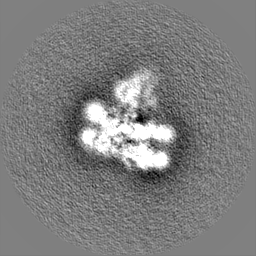
single particle reconstruction / cryo EM / Resolution: 3.87 Å
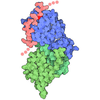
Macromolecule #7: Breast cancer type 1 susceptibility protein
Macromolecule
Name: Breast cancer type 1 susceptibility protein / type: protein_or_peptide / ID: 7 / Number of copies: 1 / Enantiomer: LEVO / EC number: RING-type E3 ubiquitin transferase
In the structure databanks used in Yorodumi, some data are registered as the other names, "COVID-19 virus" and "2019-nCoV". Here are the details of the virus and the list of structure data.
Jan 31, 2019. EMDB accession codes are about to change! (news from PDBe EMDB page)
EMDB accession codes are about to change! (news from PDBe EMDB page)
The allocation of 4 digits for EMDB accession codes will soon come to an end. Whilst these codes will remain in use, new EMDB accession codes will include an additional digit and will expand incrementally as the available range of codes is exhausted. The current 4-digit format prefixed with “EMD-” (i.e. EMD-XXXX) will advance to a 5-digit format (i.e. EMD-XXXXX), and so on. It is currently estimated that the 4-digit codes will be depleted around Spring 2019, at which point the 5-digit format will come into force.
The EM Navigator/Yorodumi systems omit the EMD- prefix.
Related info.:Q: What is EMD? / ID/Accession-code notation in Yorodumi/EM Navigator
Yorodumi is a browser for structure data from EMDB, PDB, SASBDB, etc.
This page is also the successor to EM Navigator detail page, and also detail information page/front-end page for Omokage search.
The word "yorodu" (or yorozu) is an old Japanese word meaning "ten thousand". "mi" (miru) is to see.
Related info.:EMDB / PDB / SASBDB / Comparison of 3 databanks / Yorodumi Search / Aug 31, 2016. New EM Navigator & Yorodumi / Yorodumi Papers / Jmol/JSmol / Function and homology information / Changes in new EM Navigator and Yorodumi
 Movie
Movie Controller

 Yorodumi
 Open data
 Basic information
 Map data
 Sample
 Keywords
 Function and homology information
 Homo sapiens (human)
 Authors
 China, 1 items
  Citation
 Structure visualization
 Downloads & links
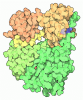
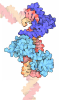
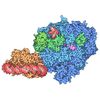
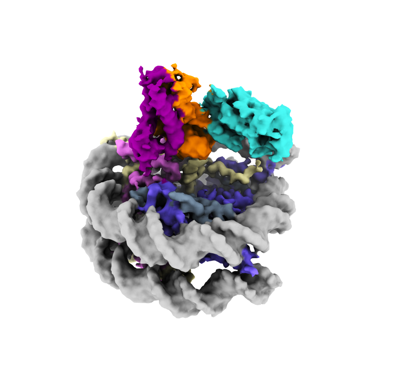 emd_34212.png
 http://ftp.pdbj.org/pub/emdb/structures/EMD-34212
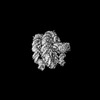
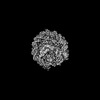
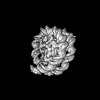
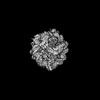

 Z (Sec.)
 Y (Row.)
 X (Col.)




 Sample components
 Escherichia coli (E. coli)
 Processing
 Electron microscopy
 FIELD EMISSION GUN
