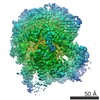
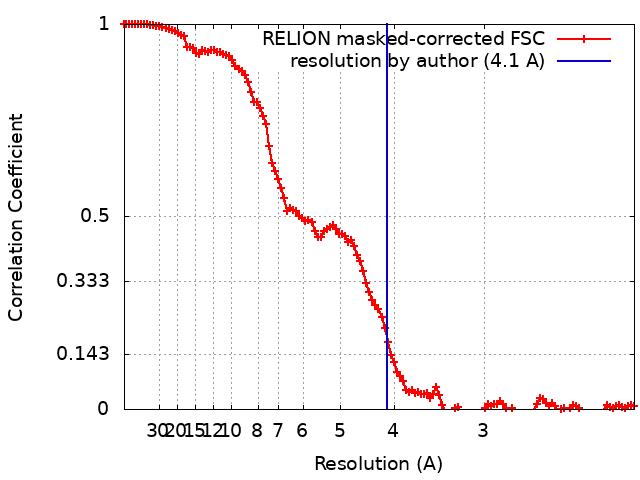
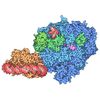
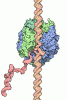
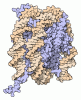
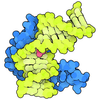
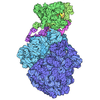
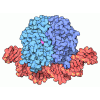
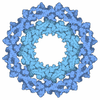
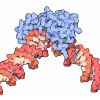
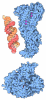
- EMDB-32407: RNA polymerase II elongation complex bound with Elf1 and Spt4/5, ... -
+
データを開く
IDまたはキーワード:
読み込み中...
-
基本情報
登録情報
データベース: EMDB / ID: EMD-32407
タイトル
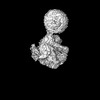
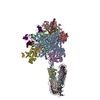
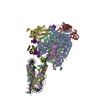
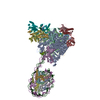
RNA polymerase II elongation complex bound with Elf1 and Spt4/5, stalled at SHL(-4) of the nucleosome
マップデータ
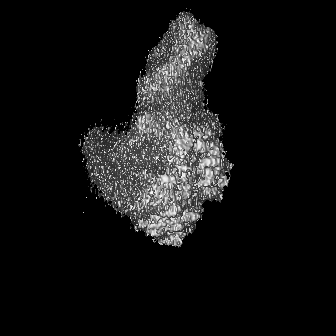
RNA polymerase II elongation complex bound with Elf1 and Spt4/5, stalled at SHL(-4) of the nucleosome
試料
複合体: RNA polymerase II elongation complex bound with Elf1 and Spt4/5, stalled at SHL(-4) of the nucleosome
複合体: RNA polymerase II elongation complex bound with Elf1 and Spt4/5
タンパク質・ペプチド: x 15種
複合体: Histone
タンパク質・ペプチド: x 4種
複合体: DNA, RNA
DNA: x 2種
RNA: x 1種
リガンド: x 2種
キーワード
Transcription / RNA / DNA
機能・相同性
機能・相同性情報
negative regulation of transcription elongation by RNA polymerase I / positive regulation of transcription elongation by RNA polymerase I / mating-type region heterochromatin / regulation of septum digestion after cytokinesis / regulation of transcription-coupled nucleotide-excision repair / co-transcriptional lncRNA 3' end processing, cleavage and polyadenylation pathway / siRNA-mediated pericentric heterochromatin formation / Barr body / DSIF complex / regulation of rRNA processing ...negative regulation of transcription elongation by RNA polymerase I / positive regulation of transcription elongation by RNA polymerase I / mating-type region heterochromatin / regulation of septum digestion after cytokinesis / regulation of transcription-coupled nucleotide-excision repair / co-transcriptional lncRNA 3' end processing, cleavage and polyadenylation pathway / siRNA-mediated pericentric heterochromatin formation / Barr body / DSIF complex / regulation of rRNA processing / intracellular mRNA localization / negative regulation of chromosome condensation / rDNA binding / rDNA heterochromatin / inner kinetochore / pericentric heterochromatin formation / RPB4-RPB7 complex / muscle cell differentiation / intracellular phosphate ion homeostasis / transcription elongation-coupled chromatin remodeling / oocyte maturation / chromatin-protein adaptor activity / nuclear-transcribed mRNA catabolic process, deadenylation-dependent decay / nucleosomal DNA binding / termination of RNA polymerase II transcription / termination of RNA polymerase III transcription / nucleus organization / positive regulation of nuclear-transcribed mRNA poly(A) tail shortening / transcription initiation at RNA polymerase III promoter / termination of RNA polymerase I transcription / transcription initiation at RNA polymerase I promoter / RNA polymerase II complex binding / maintenance of transcriptional fidelity during transcription elongation by RNA polymerase II / positive regulation of translational initiation / nuclear-transcribed mRNA catabolic process / spermatid development / 7-methylguanosine mRNA capping / single fertilization / negative regulation of tumor necrosis factor-mediated signaling pathway / subtelomeric heterochromatin formation / RNA polymerase II core promoter sequence-specific DNA binding / RNA polymerase I complex / pericentric heterochromatin / RNA polymerase III complex / transcription elongation by RNA polymerase I / RNA polymerase II, core complex / tRNA transcription by RNA polymerase III / negative regulation of megakaryocyte differentiation / transcription by RNA polymerase I / protein localization to CENP-A containing chromatin / translesion synthesis / Replacement of protamines by nucleosomes in the male pronucleus / CENP-A containing nucleosome / transcription-coupled nucleotide-excision repair / Packaging Of Telomere Ends / translation initiation factor binding / Recognition and association of DNA glycosylase with site containing an affected purine / Cleavage of the damaged purine / embryo implantation / Deposition of new CENPA-containing nucleosomes at the centromere / telomere organization / Recognition and association of DNA glycosylase with site containing an affected pyrimidine / Cleavage of the damaged pyrimidine / RNA Polymerase I Promoter Opening / Inhibition of DNA recombination at telomere / transcription initiation-coupled chromatin remodeling / Assembly of the ORC complex at the origin of replication / Meiotic synapsis / regulation of DNA-templated transcription elongation / SUMOylation of chromatin organization proteins / Regulation of endogenous retroelements by the Human Silencing Hub (HUSH) complex / DNA methylation / transcription elongation factor complex / Condensation of Prophase Chromosomes / Chromatin modifications during the maternal to zygotic transition (MZT) / SIRT1 negatively regulates rRNA expression / HCMV Late Events / negative regulation of autophagy / ERCC6 (CSB) and EHMT2 (G9a) positively regulate rRNA expression / PRC2 methylates histones and DNA / innate immune response in mucosa / Regulation of endogenous retroelements by KRAB-ZFP proteins / Defective pyroptosis / HDACs deacetylate histones / transcription initiation at RNA polymerase II promoter / Regulation of endogenous retroelements by Piwi-interacting RNAs (piRNAs) / Nonhomologous End-Joining (NHEJ) / RNA Polymerase I Promoter Escape / transcription elongation by RNA polymerase II / positive regulation of transcription elongation by RNA polymerase II / P-body / lipopolysaccharide binding / Transcriptional regulation by small RNAs / Formation of the beta-catenin:TCF transactivating complex / Activated PKN1 stimulates transcription of AR (androgen receptor) regulated genes KLK2 and KLK3 / HDMs demethylate histones / RUNX1 regulates genes involved in megakaryocyte differentiation and platelet function / G2/M DNA damage checkpoint / Negative Regulation of CDH1 Gene Transcription / NoRC negatively regulates rRNA expression 類似検索 - 分子機能
Transcription elongation factor 1 homolog / DNA-directed RNA polymerase subunit beta / DNA-directed RNA polymerases I, II, and III subunit RPABC5 / Transcription elongation factor SPT4 / DNA-directed RNA polymerases I, II, and III subunit RPABC2 / DNA-directed RNA polymerases I, II, and III subunit RPABC3 / RNA polymerase II subunit B32 / DNA-directed RNA polymerases I, II, and III subunit RPABC1 / RNA polymerase II subunit B12.5 / DNA-directed RNA polymerase subunit ...Transcription elongation factor 1 homolog / DNA-directed RNA polymerase subunit beta / DNA-directed RNA polymerases I, II, and III subunit RPABC5 / Transcription elongation factor SPT4 / DNA-directed RNA polymerases I, II, and III subunit RPABC2 / DNA-directed RNA polymerases I, II, and III subunit RPABC3 / RNA polymerase II subunit B32 / DNA-directed RNA polymerases I, II, and III subunit RPABC1 / RNA polymerase II subunit B12.5 / DNA-directed RNA polymerase subunit / DNA-directed RNA polymerase II subunit RPB3 / DNA-directed RNA polymerase subunit / RNA polymerase subunit ABC10-alpha / DNA-directed RNA polymerase subunit / Transcription elongation factor SPT5 / Histone H2A type 1-B/E / Histone H2B type 1-J / Histone H4 / Histone H3.3 類似検索 - 構成要素
Japan Agency for Medical Research and Development (AMED)
JP21am0101076
日本
Japan Science and Technology
JPMJER1901
日本
引用
ジャーナル: J Mol Biol / 年: 2023 タイトル: Structural Basis of Damaged Nucleotide Recognition by Transcribing RNA Polymerase II in the Nucleosome. 著者: Ken Osumi / Tomoya Kujirai / Haruhiko Ehara / Mitsuo Ogasawara / Chiaki Kinoshita / Mika Saotome / Wataru Kagawa / Shun-Ichi Sekine / Yoshimasa Takizawa / Hitoshi Kurumizaka / 要旨: In transcription-coupled repair (TCR), transcribing RNA polymerase II (RNAPII) stalls at a DNA lesion and recruits TCR proteins to the damaged site. However, the mechanism by which RNAPII recognizes ...In transcription-coupled repair (TCR), transcribing RNA polymerase II (RNAPII) stalls at a DNA lesion and recruits TCR proteins to the damaged site. However, the mechanism by which RNAPII recognizes a DNA lesion in the nucleosome remains enigmatic. In the present study, we inserted an apurinic/apyrimidinic DNA lesion analogue, tetrahydrofuran (THF), in the nucleosomal DNA, where RNAPII stalls at the SHL(-4), SHL(-3.5), and SHL(-3) positions, and determined the structures of these complexes by cryo-electron microscopy. In the RNAPII-nucleosome complex stalled at SHL(-3.5), the nucleosome orientation relative to RNAPII is quite different from those in the SHL(-4) and SHL(-3) complexes, which have nucleosome orientations similar to naturally paused RNAPII-nucleosome complexes. Furthermore, we found that an essential TCR protein, Rad26 (CSB), enhances the RNAPII processivity, and consequently augments the DNA damage recognition efficiency of RNAPII in the nucleosome. The cryo-EM structure of the Rad26-RNAPII-nucleosome complex revealed that Rad26 binds to the stalled RNAPII through a novel interface, which is completely different from those previously reported. These structures may provide important information to understand the mechanism by which RNAPII recognizes the nucleosomal DNA lesion and recruits TCR proteins to the stalled RNAPII on the nucleosome.
超分子 #1: RNA polymerase II elongation complex bound with Elf1 and Spt4/5, ...
超分子
名称: RNA polymerase II elongation complex bound with Elf1 and Spt4/5, stalled at SHL(-4) of the nucleosome タイプ: complex / ID: 1 / 親要素: 0 / 含まれる分子: #1-#22
由来(天然)
生物種: Komagataella phaffii (菌類)
+
超分子 #2: RNA polymerase II elongation complex bound with Elf1 and Spt4/5
超分子
名称: RNA polymerase II elongation complex bound with Elf1 and Spt4/5 タイプ: complex / ID: 2 / 親要素: 1 / 含まれる分子: #1-#13, #17-#18
 ムービー
ムービー コントローラー


 データを開く
 基本情報
基本情報
 マップデータ
 試料
試料 キーワード
キーワード 機能・相同性情報
 Komagataella phaffii (菌類) /
  Homo sapiens (ヒト) / synthetic construct (人工物)
 データ登録者
 日本, 9件
  引用
引用 構造の表示
構造の表示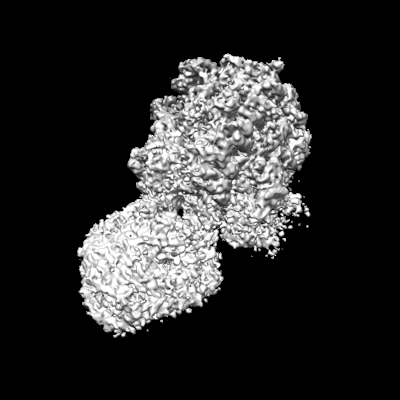
 ダウンロードとリンク
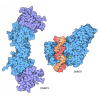
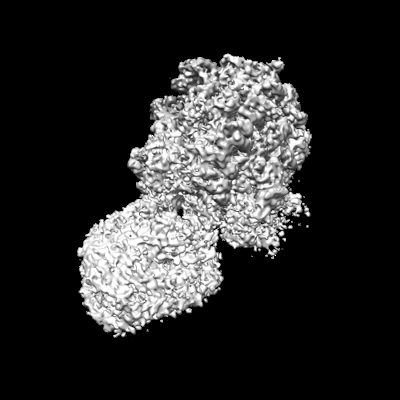 emd_32407.png
 http://ftp.pdbj.org/pub/emdb/structures/EMD-32407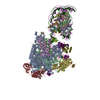
 Z (Sec.)
 Y (Row.)
 X (Col.)







 試料の構成要素
 Escherichia coli (大腸菌)
 解析
解析 電子顕微鏡法
 FIELD EMISSION GUN