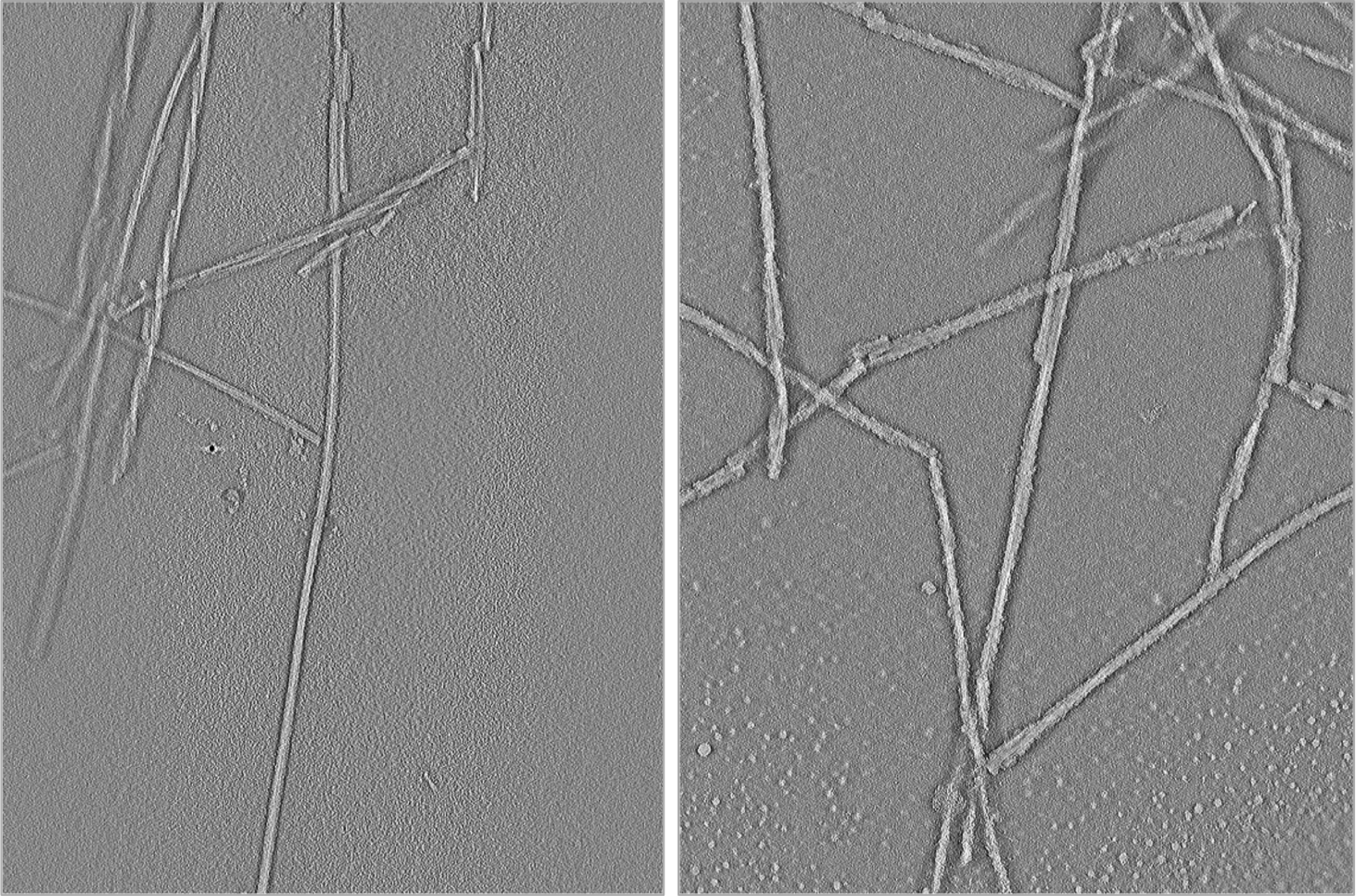
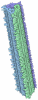
Journal: Mol Cell / Year: 2015 Title: Human Hsp70 Disaggregase Reverses Parkinson's-Linked α-Synuclein Amyloid Fibrils. Authors: Xuechao Gao / Marta Carroni / Carmen Nussbaum-Krammer / Axel Mogk / Nadinath B Nillegoda / Anna Szlachcic / D Lys Guilbride / Helen R Saibil / Matthias P Mayer / Bernd Bukau / Abstract: Intracellular amyloid fibrils linked to neurodegenerative disease typically accumulate in an age-related manner, suggesting inherent cellular capacity for counteracting amyloid formation in early ...Intracellular amyloid fibrils linked to neurodegenerative disease typically accumulate in an age-related manner, suggesting inherent cellular capacity for counteracting amyloid formation in early life. Metazoan molecular chaperones assist native folding and block polymerization of amyloidogenic proteins, preempting amyloid fibril formation. Chaperone capacity for amyloid disassembly, however, is unclear. Here, we show that a specific combination of human Hsp70 disaggregase-associated chaperone components efficiently disassembles α-synuclein amyloid fibrils characteristic of Parkinson's disease in vitro. Specifically, the Hsc70 chaperone, the class B J-protein DNAJB1, and an Hsp110 family nucleotide exchange factor (NEF) provide ATP-dependent activity that disassembles amyloids within minutes via combined fibril fragmentation and depolymerization. This ultimately generates non-toxic α-synuclein monomers. Concerted, rapid interaction cycles of all three chaperone components with fibrils generate the power stroke required for disassembly. This identifies a powerful human Hsp70 disaggregase activity that efficiently disassembles amyloid fibrils and points to crucial yet undefined biology underlying amyloid-based diseases.
In the structure databanks used in Yorodumi, some data are registered as the other names, "COVID-19 virus" and "2019-nCoV". Here are the details of the virus and the list of structure data.
Jan 31, 2019. EMDB accession codes are about to change! (news from PDBe EMDB page)
EMDB accession codes are about to change! (news from PDBe EMDB page)
The allocation of 4 digits for EMDB accession codes will soon come to an end. Whilst these codes will remain in use, new EMDB accession codes will include an additional digit and will expand incrementally as the available range of codes is exhausted. The current 4-digit format prefixed with “EMD-” (i.e. EMD-XXXX) will advance to a 5-digit format (i.e. EMD-XXXXX), and so on. It is currently estimated that the 4-digit codes will be depleted around Spring 2019, at which point the 5-digit format will come into force.
The EM Navigator/Yorodumi systems omit the EMD- prefix.
Related info.:Q: What is EMD? / ID/Accession-code notation in Yorodumi/EM Navigator
Yorodumi is a browser for structure data from EMDB, PDB, SASBDB, etc.
This page is also the successor to EM Navigator detail page, and also detail information page/front-end page for Omokage search.
The word "yorodu" (or yorozu) is an old Japanese word meaning "ten thousand". "mi" (miru) is to see.
Related info.:EMDB / PDB / SASBDB / Comparison of 3 databanks / Yorodumi Search / Aug 31, 2016. New EM Navigator & Yorodumi / Yorodumi Papers / Jmol/JSmol / Function and homology information / Changes in new EM Navigator and Yorodumi
 Movie
Movie Controller

 Yorodumi
 Open data
 Basic information
 Map data
 Sample
 Keywords
 Function and homology information
 Homo sapiens (human)
 Authors
 Citation

 Structure visualization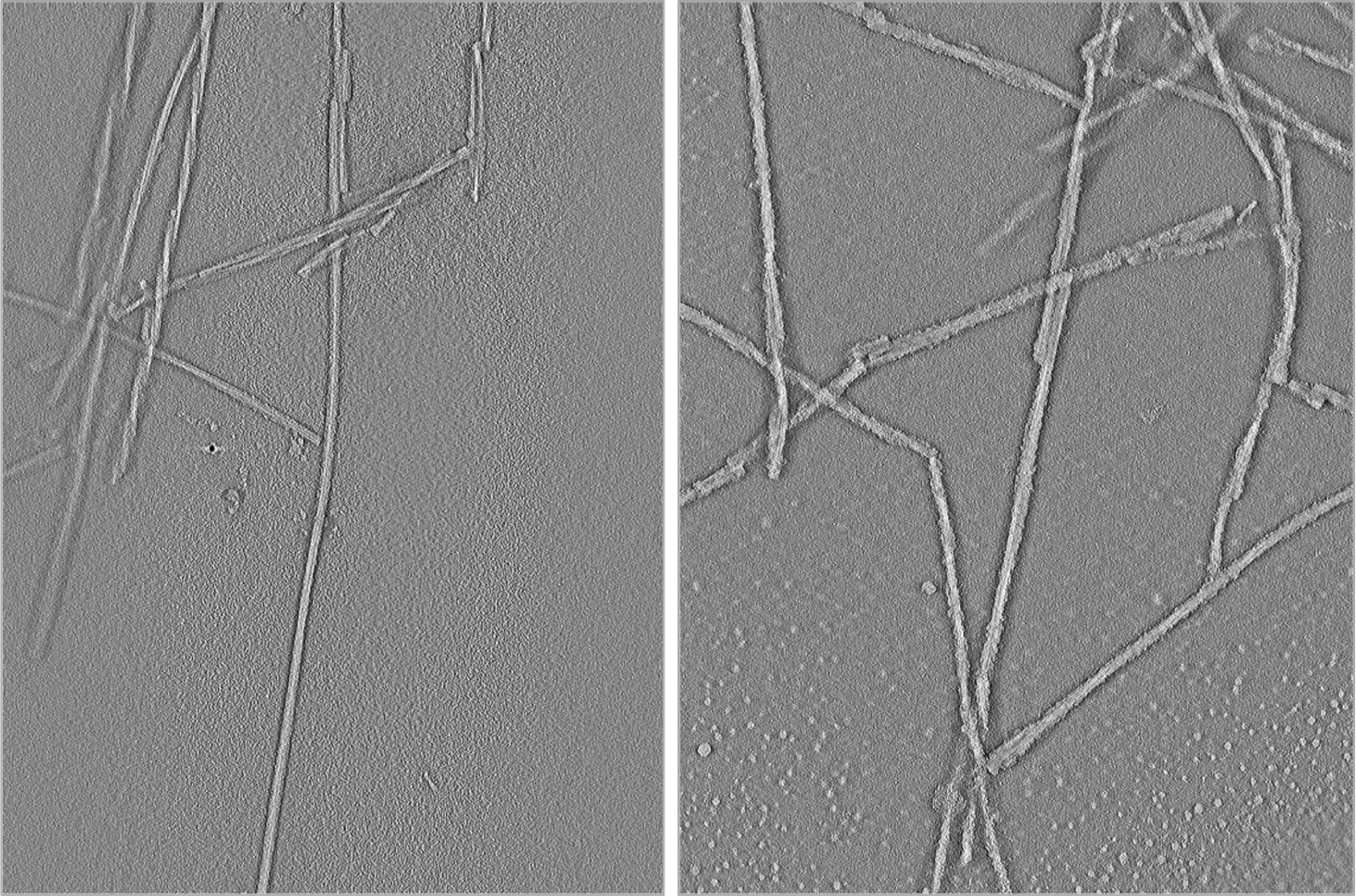
 Downloads & links
 EMD-3095.png
 http://ftp.pdbj.org/pub/emdb/structures/EMD-3095
 Sample components
 Escherichia coli (E. coli) / Recombinant strain: BL21 / Recombinant plasmid: pTYB11
 Processing
 Electron microscopy
 FIELD EMISSION GUN