 Movie
Movie Controller


+ Open data

- Basic information
| Entry |  | |||||||||
|---|---|---|---|---|---|---|---|---|---|---|
| Title | 96nm doublet microtubule repeat from LRRC23-KO mouse sperm | |||||||||
 Map data Map data | masked map of 96nm doublet microtubule repeat from LRRC23-KO mouse sperm | |||||||||
 Sample Sample |
| |||||||||
 Keywords Keywords | 96nm doublet microtubule repeat from LRRC23-KO mouse sperm / STRUCTURAL PROTEIN | |||||||||
| Biological species |   Mus (mice) Mus (mice) | |||||||||
| Method | subtomogram averaging / cryo EM / Resolution: 27.0 Å | |||||||||
 Authors Authors | Hwang JY / Chai P / Nawaz S | |||||||||
| Funding support |  United States, 2 items United States, 2 items
| |||||||||
 Citation Citation | Journal: Elife / Year: 2023 Title: LRRC23 truncation impairs radial spoke 3 head assembly and sperm motility underlying male infertility. Authors: Jae Yeon Hwang / Pengxin Chai / Shoaib Nawaz / Jungmin Choi / Francesc Lopez-Giraldez / Shabir Hussain / Kaya Bilguvar / Shrikant Mane / Richard P Lifton / Wasim Ahmad / Kai Zhang / Jean-Ju Chung /   Abstract: Radial spokes (RS) are T-shaped multiprotein complexes on the axonemal microtubules. Repeated RS1, RS2, and RS3 couple the central pair to modulate ciliary and flagellar motility. Despite the cell ...Radial spokes (RS) are T-shaped multiprotein complexes on the axonemal microtubules. Repeated RS1, RS2, and RS3 couple the central pair to modulate ciliary and flagellar motility. Despite the cell type specificity of RS3 substructures, their molecular components remain largely unknown. Here, we report that a leucine-rich repeat-containing protein, LRRC23, is an RS3 head component essential for its head assembly and flagellar motility in mammalian spermatozoa. From infertile male patients with defective sperm motility, we identified a splice site variant of . A mutant mouse model mimicking this variant produces a truncated LRRC23 at the C-terminus that fails to localize to the sperm tail, causing male infertility due to defective sperm motility. LRRC23 was previously proposed to be an ortholog of the RS stalk protein RSP15. However, we found that purified recombinant LRRC23 interacts with an RS head protein RSPH9, which is abolished by the C-terminal truncation. Evolutionary and structural comparison also shows that LRRC34, not LRRC23, is the RSP15 ortholog. Cryo-electron tomography clearly revealed that the absence of the RS3 head and the sperm-specific RS2-RS3 bridge structure in LRRC23 mutant spermatozoa. Our study provides new insights into the structure and function of RS3 in mammalian spermatozoa and the molecular pathogenicity of LRRC23 underlying reduced sperm motility in infertile human males. | |||||||||
| History |
|
- Structure visualization
| Supplemental images |
|---|

- Downloads & links
-EMDB archive
| Map data | emd_28606.map.gz | 1.7 MB |  EMDB map data format EMDB map data format | |
|---|---|---|---|---|
| Header (meta data) | emd-28606-v30.xmlemd-28606.xml | 16.2 KB 16.2 KB | Display Display | EMDB header |
| FSC (resolution estimation) | emd_28606_fsc.xml | 5.8 KB | Display | FSC data file |
| Images |  emd_28606.png emd_28606.png | 53.7 KB | ||
| Filedesc metadata | emd-28606.cif.gz | 4.3 KB | ||
| Others | emd_28606_additional_1.map.gzemd_28606_half_map_1.map.gzemd_28606_half_map_2.map.gz | 14.7 MB 7.7 MB 7.7 MB | ||
| Archive directory |  https://data.pdbj.org/pub/emdb/structures/EMD-28606ftp://data.pdbj.org/pub/emdb/structures/EMD-28606 https://data.pdbj.org/pub/emdb/structures/EMD-28606ftp://data.pdbj.org/pub/emdb/structures/EMD-28606 | HTTPS FTP |
-Related structure data
-Links
| EMDB pages | EMDB (EBI/PDBe) / EMDataResource |
|---|
-Map
| File | Download / File: emd_28606.map.gz / Format: CCP4 / Size: 15.6 MB / Type: IMAGE STORED AS FLOATING POINT NUMBER (4 BYTES) | ||||||||||||||||||||||||||||||||||||
|---|---|---|---|---|---|---|---|---|---|---|---|---|---|---|---|---|---|---|---|---|---|---|---|---|---|---|---|---|---|---|---|---|---|---|---|---|---|
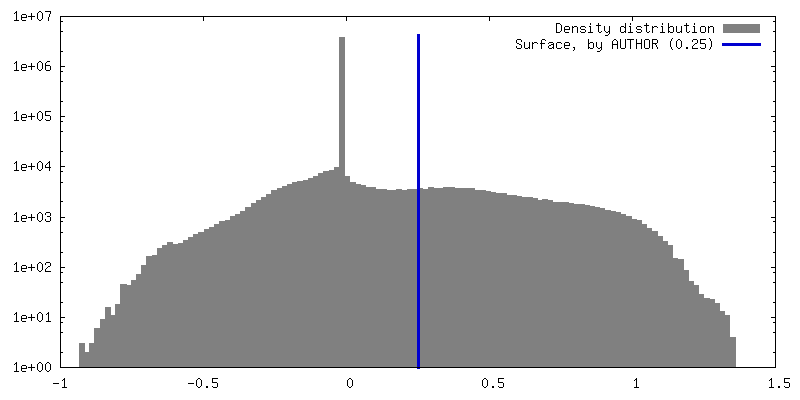
| Annotation | masked map of 96nm doublet microtubule repeat from LRRC23-KO mouse sperm | ||||||||||||||||||||||||||||||||||||
| Projections & slices | Image control
Images are generated by Spider. | ||||||||||||||||||||||||||||||||||||
| Voxel size | X=Y=Z: 10.2 Å | ||||||||||||||||||||||||||||||||||||
| Density |
| ||||||||||||||||||||||||||||||||||||
| Symmetry | Space group: 1 | ||||||||||||||||||||||||||||||||||||
| Details | EMDB XML:
|
 Z (Sec.)
 Y (Row.)
 X (Col.)


-Supplemental data
-Additional map: unmasked map of 96nm doublet microtubule repeat from...
| File | emd_28606_additional_1.map | ||||||||||||
|---|---|---|---|---|---|---|---|---|---|---|---|---|---|
| Annotation | unmasked map of 96nm doublet microtubule repeat from LRRC23-KO mouse sperm | ||||||||||||
| Projections & Slices |
| ||||||||||||
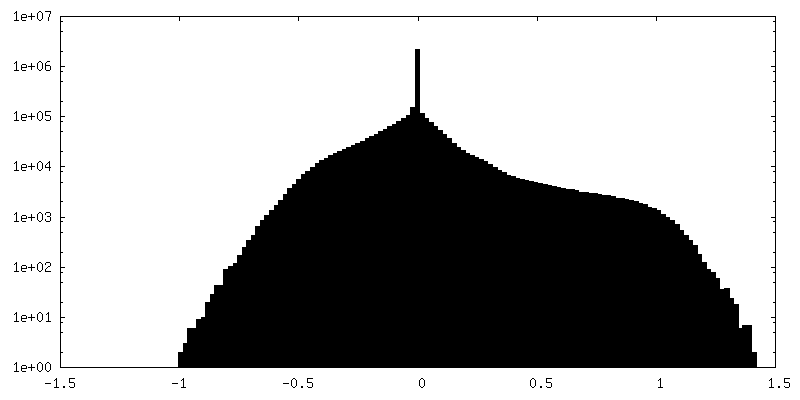
| Density Histograms |


-Half map: half map 1 of 96nm doublet microtubule repeat...
| File | emd_28606_half_map_1.map | ||||||||||||
|---|---|---|---|---|---|---|---|---|---|---|---|---|---|
| Annotation | half map 1 of 96nm doublet microtubule repeat from LRRC23-KO mouse sperm | ||||||||||||
| Projections & Slices |
| ||||||||||||
| Density Histograms |


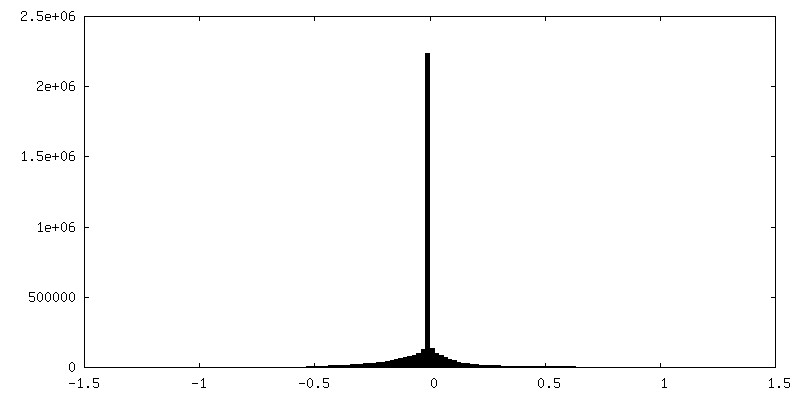
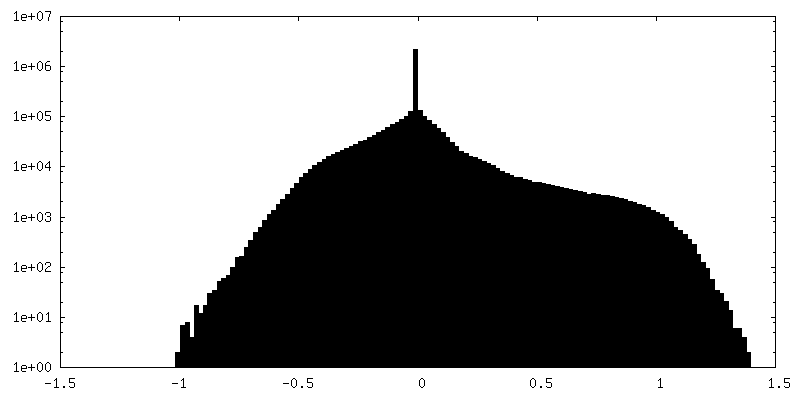
-Half map: half map 2 of 96nm doublet microtubule repeat...
| File | emd_28606_half_map_2.map | ||||||||||||
|---|---|---|---|---|---|---|---|---|---|---|---|---|---|
| Annotation | half map 2 of 96nm doublet microtubule repeat from LRRC23-KO mouse sperm | ||||||||||||
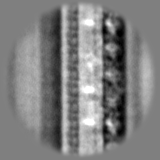
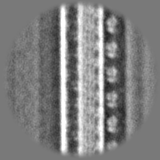
| Projections & Slices |
| ||||||||||||
| Density Histograms |





- Sample components
-Entire : Mouse sperm
| Entire | Name: Mouse sperm |
|---|---|
| Components |
|
-Supramolecule #1: Mouse sperm
| Supramolecule | Name: Mouse sperm / type: cell / ID: 1 / Parent: 0 |
|---|---|
| Source (natural) | Organism: Mus (mice) |
-Experimental details
-Structure determination
| Method | cryo EM |
|---|---|
 Processing Processing | subtomogram averaging |
| Aggregation state | cell |
-Sample preparation
| Buffer | pH: 5.5 |
|---|---|
| Grid | Model: Quantifoil R2/2 / Support film - Material: CARBON / Support film - topology: HOLEY |
| Vitrification | Cryogen name: ETHANE / Chamber humidity: 30 % / Chamber temperature: 298 K / Instrument: HOMEMADE PLUNGER |
- Electron microscopy
| Microscope | FEI TITAN KRIOS |
|---|---|
| Specialist optics | Phase plate: VOLTA PHASE PLATE |
| Image recording | Film or detector model: GATAN K3 (6k x 4k) / Average electron dose: 3.0 e/Å2 |
| Electron beam | Acceleration voltage: 300 kV / Electron source:  FIELD EMISSION GUN FIELD EMISSION GUN |
| Electron optics | C2 aperture diameter: 100.0 µm / Illumination mode: FLOOD BEAM / Imaging mode: BRIGHT FIELD / Cs: 2.7 mm / Nominal defocus max: 0.5 µm / Nominal defocus min: 0.2 µm |
| Experimental equipment |  Model: Titan Krios / Image courtesy: FEI Company |
-Image processing
| Final reconstruction | Applied symmetry - Point group: C1 (asymmetric) / Algorithm: BACK PROJECTION / Resolution.type: BY AUTHOR / Resolution: 27.0 Å / Resolution method: FSC 0.143 CUT-OFF / Software - Name: RELION (ver. 4) / Number subtomograms used: 2137 |
|---|---|
| Extraction | Number tomograms: 8 / Number images used: 1212 / Software - Name: IMOD (ver. 4.9) |
| Final angle assignment | Type: MAXIMUM LIKELIHOOD / Software - Name: RELION (ver. 4) |
| FSC plot (resolution estimation) | 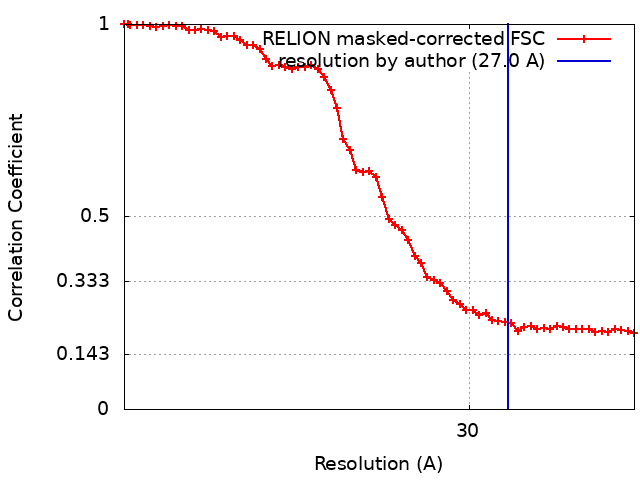 |
