European Union, Netherlands, Germany, United States, 7 items
Organization
Grant number
Country
European Research Council (ERC)
883684
European Union
Netherlands Organisation for Scientific Research (NWO)
BaSyC
Netherlands
Other government
NanoFront
Netherlands
European Research Council (ERC)
724261
European Union
German Research Foundation (DFG)
Gottfried-Wilhelm-Leibniz Program
Germany
German Research Foundation (DFG)
SFB863 111166240 TPA9
Germany
National Science Foundation (NSF, United States)
DMR-1827346
United States
Citation
Journal: Nat Nanotechnol / Year: 2024 Title: A DNA turbine powered by a transmembrane potential across a nanopore. Authors: Xin Shi / Anna-Katharina Pumm / Christopher Maffeo / Fabian Kohler / Elija Feigl / Wenxuan Zhao / Daniel Verschueren / Ramin Golestanian / Aleksei Aksimentiev / Hendrik Dietz / Cees Dekker / Abstract: Rotary motors play key roles in energy transduction, from macroscale windmills to nanoscale turbines such as ATP synthase in cells. Despite our abilities to construct engines at many scales, ...Rotary motors play key roles in energy transduction, from macroscale windmills to nanoscale turbines such as ATP synthase in cells. Despite our abilities to construct engines at many scales, developing functional synthetic turbines at the nanoscale has remained challenging. Here, we experimentally demonstrate rationally designed nanoscale DNA origami turbines with three chiral blades. These DNA nanoturbines are 24-27 nm in height and diameter and can utilize transmembrane electrochemical potentials across nanopores to drive DNA bundles into sustained unidirectional rotations of up to 10 revolutions s. The rotation direction is set by the designed chirality of the turbine. All-atom molecular dynamics simulations show how hydrodynamic flows drive this turbine. At high salt concentrations, the rotation direction of turbines with the same chirality is reversed, which is explained by a change in the anisotropy of the electrophoretic mobility. Our artificial turbines operate autonomously in physiological conditions, converting energy from naturally abundant electrochemical potentials into mechanical work. The results open new possibilities for engineering active robotics at the nanoscale.
In the structure databanks used in Yorodumi, some data are registered as the other names, "COVID-19 virus" and "2019-nCoV". Here are the details of the virus and the list of structure data.
Jan 31, 2019. EMDB accession codes are about to change! (news from PDBe EMDB page)
EMDB accession codes are about to change! (news from PDBe EMDB page)
The allocation of 4 digits for EMDB accession codes will soon come to an end. Whilst these codes will remain in use, new EMDB accession codes will include an additional digit and will expand incrementally as the available range of codes is exhausted. The current 4-digit format prefixed with “EMD-” (i.e. EMD-XXXX) will advance to a 5-digit format (i.e. EMD-XXXXX), and so on. It is currently estimated that the 4-digit codes will be depleted around Spring 2019, at which point the 5-digit format will come into force.
The EM Navigator/Yorodumi systems omit the EMD- prefix.
Related info.:Q: What is EMD? / ID/Accession-code notation in Yorodumi/EM Navigator
Yorodumi is a browser for structure data from EMDB, PDB, SASBDB, etc.
This page is also the successor to EM Navigator detail page, and also detail information page/front-end page for Omokage search.
The word "yorodu" (or yorozu) is an old Japanese word meaning "ten thousand". "mi" (miru) is to see.
Related info.:EMDB / PDB / SASBDB / Comparison of 3 databanks / Yorodumi Search / Aug 31, 2016. New EM Navigator & Yorodumi / Yorodumi Papers / Jmol/JSmol / Function and homology information / Changes in new EM Navigator and Yorodumi
 Movie
Movie Controller


 Open data
 Basic information
 Map data
 Sample
 Keywords
 Inovirus M13 / synthetic construct (others)
 Authors
 Netherlands,
  Germany,
  United States, 7 items
  Citation

 Structure visualization
 Downloads & links
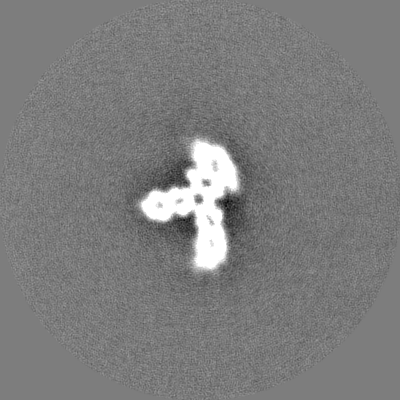
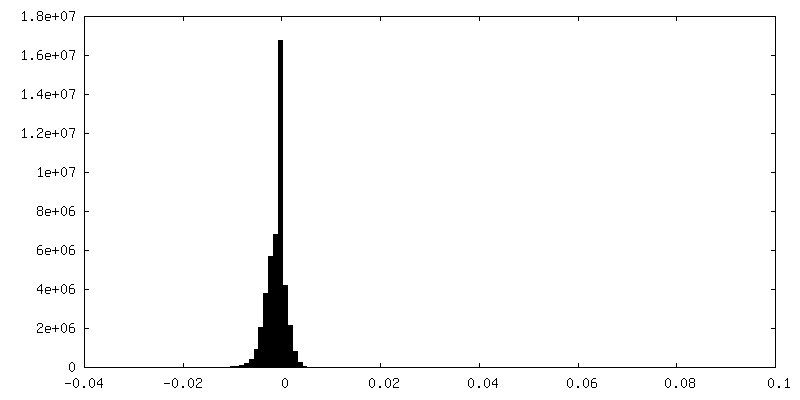
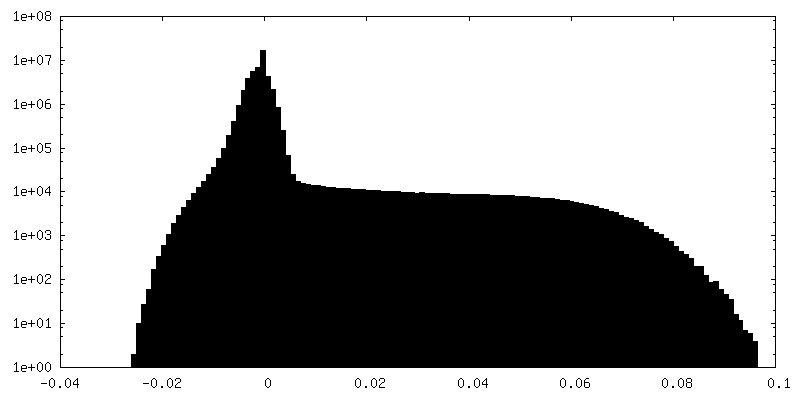
 EMDB map data format
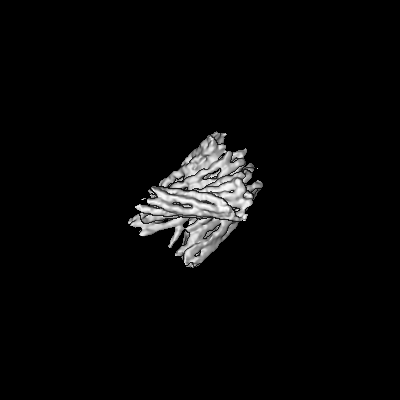
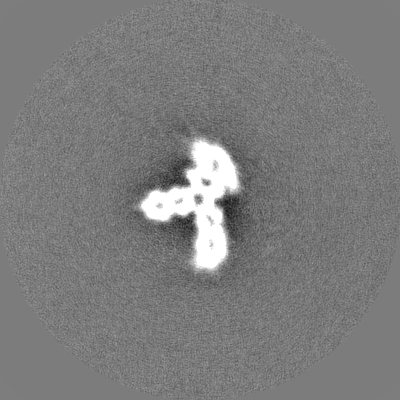
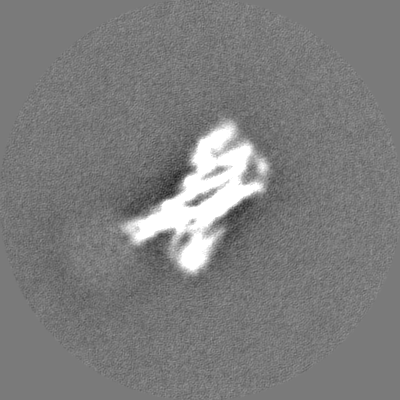
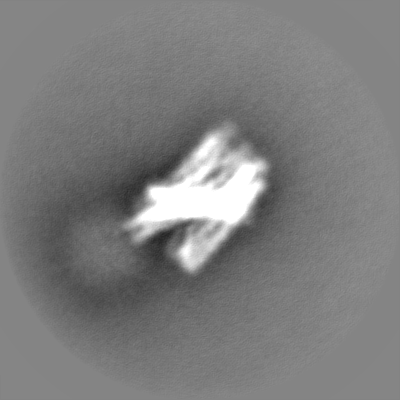
 emd_17606.png
 https://data.pdbj.org/pub/emdb/structures/EMD-17606
 Z (Sec.)
 Y (Row.)
 X (Col.)






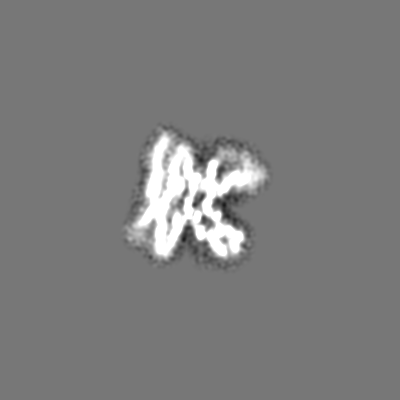


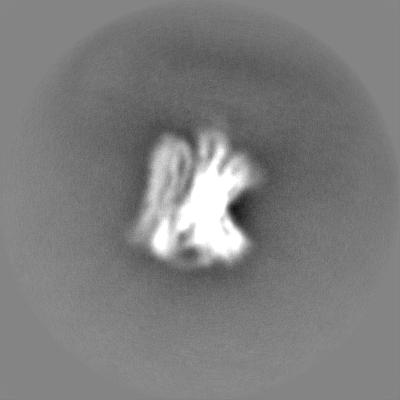
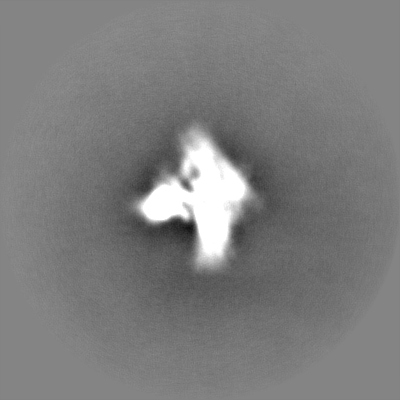

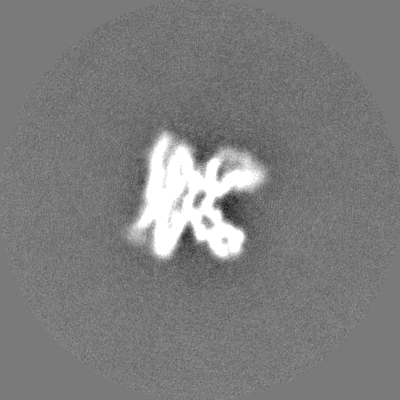




 Sample components
 Processing
 Electron microscopy
 FIELD EMISSION GUN