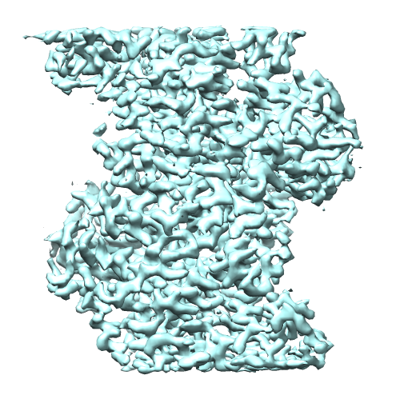
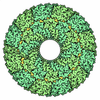
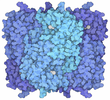
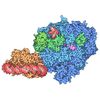
Complex: Polymerised arginylated actin with bound ADP
Protein or peptide: Actin, cytoplasmic 1, N-terminally processed
Ligand: ADENOSINE-5'-DIPHOSPHATE
Ligand: MAGNESIUM ION
Keywords
actin / methylated / filament / CONTRACTILE PROTEIN
Function / homology
Function and homology information
positive regulation of norepinephrine uptake / cellular response to cytochalasin B / Formation of the embryonic stem cell BAF (esBAF) complex / regulation of transepithelial transport / Formation of the canonical BAF (cBAF) complex / morphogenesis of a polarized epithelium / Formation of annular gap junctions / Formation of the dystrophin-glycoprotein complex (DGC) / structural constituent of postsynaptic actin cytoskeleton / Formation of the polybromo-BAF (pBAF) complex ...positive regulation of norepinephrine uptake / cellular response to cytochalasin B / Formation of the embryonic stem cell BAF (esBAF) complex / regulation of transepithelial transport / Formation of the canonical BAF (cBAF) complex / morphogenesis of a polarized epithelium / Formation of annular gap junctions / Formation of the dystrophin-glycoprotein complex (DGC) / structural constituent of postsynaptic actin cytoskeleton / Formation of the polybromo-BAF (pBAF) complex / Gap junction degradation / GBP-mediated host defense / Formation of neuronal progenitor and neuronal BAF (npBAF and nBAF) / protein localization to adherens junction / Formation of the non-canonical BAF (ncBAF) complex / Cell-extracellular matrix interactions / regulation of G0 to G1 transition / dense body / Folding of actin by CCT/TriC / Tat protein binding / postsynaptic actin cytoskeleton / Regulation of CDH1 Function / apical protein localization / Prefoldin mediated transfer of substrate to CCT/TriC / Adherens junctions interactions / regulation of double-strand break repair / microtubule nucleation / adherens junction assembly / RHOF GTPase cycle / Sensory processing of sound by outer hair cells of the cochlea / tight junction / Sensory processing of sound by inner hair cells of the cochlea / regulation of mitotic metaphase/anaphase transition / positive regulation of T cell differentiation / maintenance of blood-brain barrier / Interaction between L1 and Ankyrins / apical junction complex / regulation of nucleotide-excision repair / positive regulation of stem cell population maintenance / NuA4 histone acetyltransferase complex / regulation of norepinephrine uptake / transporter regulator activity / Recycling pathway of L1 / cortical cytoskeleton / positive regulation of double-strand break repair / Regulation of MITF-M-dependent genes involved in pigmentation / negative regulation of cell differentiation / establishment or maintenance of cell polarity / nitric-oxide synthase binding / brush border / EPH-ephrin mediated repulsion of cells / positive regulation of myoblast differentiation / regulation of synaptic vesicle endocytosis / RHO GTPases Activate WASPs and WAVEs / kinesin binding / regulation of protein localization to plasma membrane / RHO GTPases activate IQGAPs / positive regulation of double-strand break repair via homologous recombination / regulation of G1/S transition of mitotic cell cycle / axonogenesis / cytoskeleton organization / EPHB-mediated forward signaling / substantia nigra development / calyx of Held / cell motility / nitric-oxide synthase regulator activity / FCGR3A-mediated phagocytosis / Translocation of SLC2A4 (GLUT4) to the plasma membrane / actin filament / positive regulation of cell differentiation / adherens junction / Regulation of endogenous retroelements by Piwi-interacting RNAs (piRNAs) / RHO GTPases Activate Formins / Signaling by high-kinase activity BRAF mutants / MAP2K and MAPK activation / Regulation of actin dynamics for phagocytic cup formation / platelet aggregation / VEGFA-VEGFR2 Pathway / B-WICH complex positively regulates rRNA expression / tau protein binding / Schaffer collateral - CA1 synapse / DNA Damage Recognition in GG-NER / Hydrolases; Acting on acid anhydrides; Acting on acid anhydrides to facilitate cellular and subcellular movement / structural constituent of cytoskeleton / cytoplasmic ribonucleoprotein granule / kinetochore / nuclear matrix / Signaling by RAF1 mutants / cell-cell junction / Signaling by moderate kinase activity BRAF mutants / Paradoxical activation of RAF signaling by kinase inactive BRAF / Signaling downstream of RAS mutants / actin cytoskeleton / Signaling by BRAF and RAF1 fusions / UCH proteinases / lamellipodium / presynapse / HATs acetylate histones / Clathrin-mediated endocytosis / Factors involved in megakaryocyte development and platelet production Similarity search - Function
Actins signature 1. / Actin, conserved site / Actins signature 2. / Actin/actin-like conserved site / Actins and actin-related proteins signature. / Actin / Actin family / Actin / ATPase, nucleotide binding domain Similarity search - Domain/homology
Biotechnology and Biological Sciences Research Council (BBSRC)
BB/S003789/1
United Kingdom
Wellcome Trust
203276/Z/16/Z
United Kingdom
Citation
Journal: J Cell Biol / Year: 2026 Title: Actin arginylation alters myosin engagement and F-actin patterning despite structural conservation. Authors: Clyde Savio Pinto / Saskia E Bakker / Andrejus Suchenko / Isabella M Kolodny / Hamdi Hussain / Tomoyuki Hatano / Karuna Sampath / Krishna Chinthalapudi / Sarah M Heissler / Masanori Mishima ...Authors: Clyde Savio Pinto / Saskia E Bakker / Andrejus Suchenko / Isabella M Kolodny / Hamdi Hussain / Tomoyuki Hatano / Karuna Sampath / Krishna Chinthalapudi / Sarah M Heissler / Masanori Mishima / Mohan Balasubramanian / Abstract: Actin is a conserved protein with crucial roles in cell polarity, division, and muscle contraction. Its function is regulated in part by posttranslational modifications, one of which is N-terminal ...Actin is a conserved protein with crucial roles in cell polarity, division, and muscle contraction. Its function is regulated in part by posttranslational modifications, one of which is N-terminal arginylation. What is the structure of arginylated-β-actin (R-β-actin), and how does it regulate F-actin function? Here we report the 3.6 Å structures of ADP-R-β-actin filaments, which are nearly identical to that of non-arginylated F-actin. In vitro assays reveal that the interaction between myosin-II and actin is altered upon actin arginylation, characterized by frequent detachment of R-actin filaments from myosin-II. In vivo, replacement of the only actin gene in Schizosaccharomyces pombe with a synthetic gene encoding R-Sp-actin reduces Arp2/3-based actin patches while thickening formin-induced actin cables. Consistent with defective interactions between myosin-II and R-actin filaments, assembly and constriction of the cytokinetic actomyosin ring are perturbed in R-Sp-actin cells. Thus, despite structural similarity of arginylated and non-arginylated actin filaments, actin arginylation affects F-actin assortment into distinct subcellular structures and its interaction with myosin-II.
Name: MAGNESIUM ION / type: ligand / ID: 3 / Number of copies: 1 / Formula: MG
Molecular weight
Theoretical: 24.305 Da
-
Experimental details
-
Structure determination
Method
cryo EM
Processing
single particle reconstruction
Aggregation state
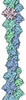
helical array
-
Sample preparation
Buffer
pH: 7.4 Details: Actin for EM was polymerized by mixing, 20 ul 20 uM G-actin, 8 ul 10x MKE and 52 ul 5 mM HEPES-KOH pH 7.4 containing 0.2 mM ATP and 0.5 mM DTT and incubating at RT for 1 hour.
Grid
Model: Quantifoil R3.5/1 / Material: COPPER / Mesh: 200 / Support film - Material: CARBON / Support film - topology: HOLEY ARRAY / Pretreatment - Type: GLOW DISCHARGE / Pretreatment - Time: 60 sec. / Pretreatment - Atmosphere: AIR
Vitrification
Cryogen name: ETHANE-PROPANE / Chamber humidity: 95 % / Chamber temperature: 277 K / Instrument: LEICA EM GP
-
Electron microscopy
Microscope
FEI TITAN KRIOS
Image recording
Film or detector model: GATAN K2 SUMMIT (4k x 4k) / Detector mode: COUNTING / Number grids imaged: 1 / Average exposure time: 60.0 sec. / Average electron dose: 42.0 e/Å2
Electron beam
Acceleration voltage: 300 kV / Electron source: FIELD EMISSION GUN
Type of model: OTHER Details: Used featureless cylinder as starting model for 3D classification.
Final reconstruction
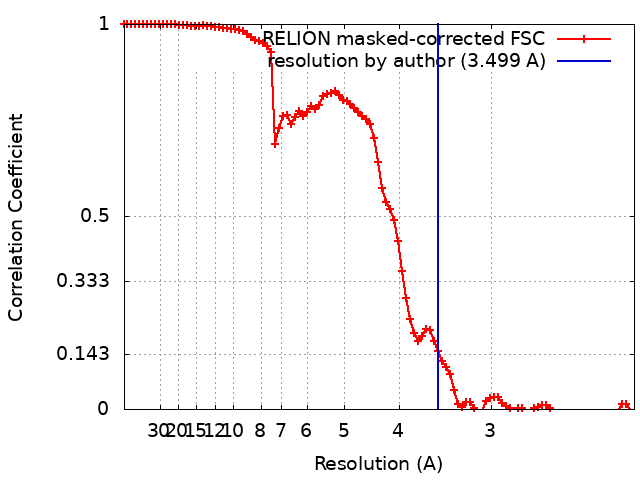
Algorithm: FOURIER SPACE / Resolution.type: BY AUTHOR / Resolution: 3.499 Å / Resolution method: FSC 0.143 CUT-OFF Details: RELION 3.09 was used throughout using helical reconstruction. Number images used: 42701
Initial angle assignment
Type: MAXIMUM LIKELIHOOD
Final angle assignment
Type: MAXIMUM LIKELIHOOD
FSC plot (resolution estimation)
+
About Yorodumi
-
News
-
Feb 9, 2022. New format data for meta-information of EMDB entries
New format data for meta-information of EMDB entries
Version 3 of the EMDB header file is now the official format.
The previous official version 1.9 will be removed from the archive.
In the structure databanks used in Yorodumi, some data are registered as the other names, "COVID-19 virus" and "2019-nCoV". Here are the details of the virus and the list of structure data.
Jan 31, 2019. EMDB accession codes are about to change! (news from PDBe EMDB page)
EMDB accession codes are about to change! (news from PDBe EMDB page)
The allocation of 4 digits for EMDB accession codes will soon come to an end. Whilst these codes will remain in use, new EMDB accession codes will include an additional digit and will expand incrementally as the available range of codes is exhausted. The current 4-digit format prefixed with “EMD-” (i.e. EMD-XXXX) will advance to a 5-digit format (i.e. EMD-XXXXX), and so on. It is currently estimated that the 4-digit codes will be depleted around Spring 2019, at which point the 5-digit format will come into force.
The EM Navigator/Yorodumi systems omit the EMD- prefix.
Related info.:Q: What is EMD? / ID/Accession-code notation in Yorodumi/EM Navigator
Yorodumi is a browser for structure data from EMDB, PDB, SASBDB, etc.
This page is also the successor to EM Navigator detail page, and also detail information page/front-end page for Omokage search.
The word "yorodu" (or yorozu) is an old Japanese word meaning "ten thousand". "mi" (miru) is to see.
Related info.:EMDB / PDB / SASBDB / Comparison of 3 databanks / Yorodumi Search / Aug 31, 2016. New EM Navigator & Yorodumi / Yorodumi Papers / Jmol/JSmol / Function and homology information / Changes in new EM Navigator and Yorodumi
 Movie
Movie Controller


 Open data
 Basic information
 Map data
 Sample
 Keywords
 Function and homology information
 Homo sapiens (human)
 Authors
 United Kingdom, European Union, 4 items
  Citation
 Structure visualization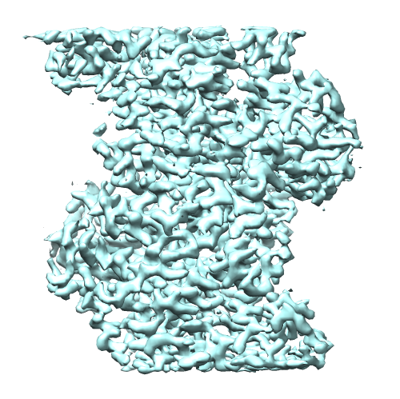
 Downloads & links
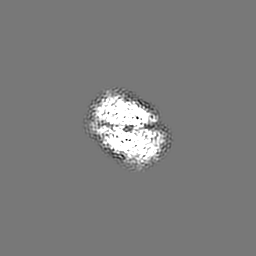
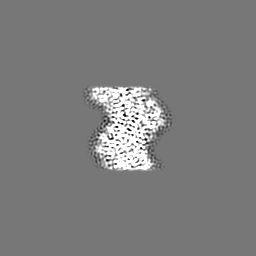
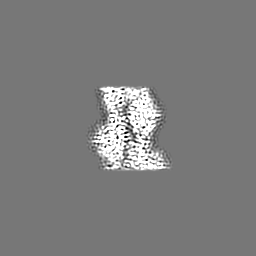
 emd_16776.png
 http://ftp.pdbj.org/pub/emdb/structures/EMD-16776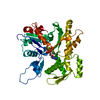

 Z (Sec.)
 Y (Row.)
 X (Col.)





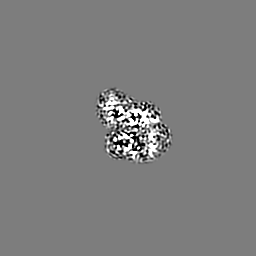



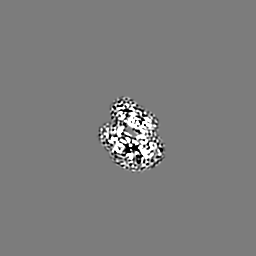
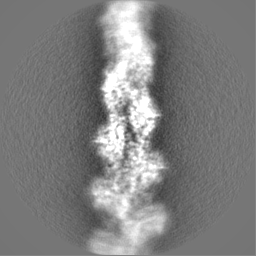
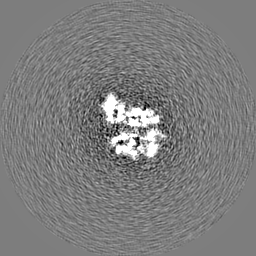
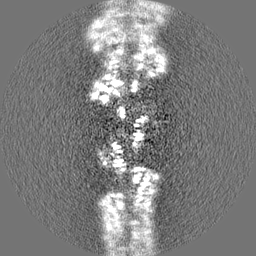
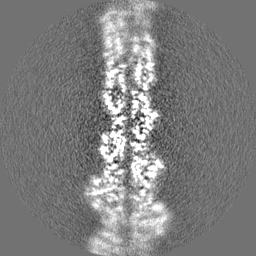
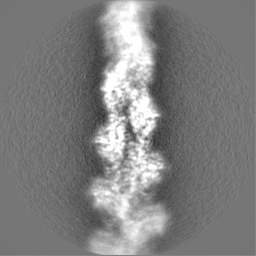
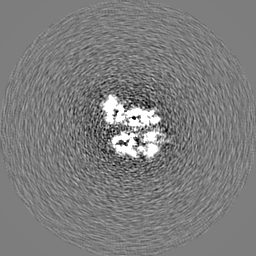
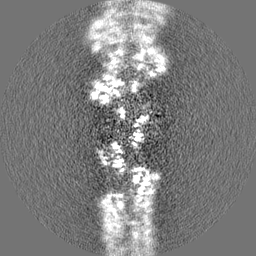
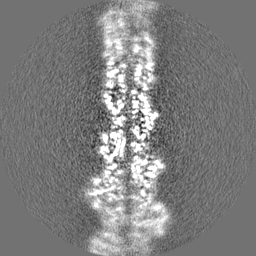
 Sample components
 Komagataella pastoris (fungus)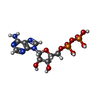
 Processing
 Electron microscopy
 FIELD EMISSION GUN