 Movie
Movie Controller


+ Open data

- Basic information
| Entry | Database: PDB / ID: 9zbk | ||||||||||||||||||||||||||||||||||||||||||||||||||||||||||||||||||||||||||||||||||||||||||||||||||||||||||||||||||||||||||||||||||||
|---|---|---|---|---|---|---|---|---|---|---|---|---|---|---|---|---|---|---|---|---|---|---|---|---|---|---|---|---|---|---|---|---|---|---|---|---|---|---|---|---|---|---|---|---|---|---|---|---|---|---|---|---|---|---|---|---|---|---|---|---|---|---|---|---|---|---|---|---|---|---|---|---|---|---|---|---|---|---|---|---|---|---|---|---|---|---|---|---|---|---|---|---|---|---|---|---|---|---|---|---|---|---|---|---|---|---|---|---|---|---|---|---|---|---|---|---|---|---|---|---|---|---|---|---|---|---|---|---|---|---|---|---|---|
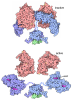
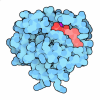
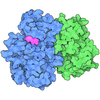
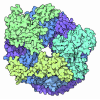
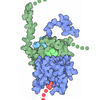
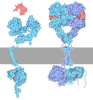
| Title | mTORC2 in complex with Akt1 | ||||||||||||||||||||||||||||||||||||||||||||||||||||||||||||||||||||||||||||||||||||||||||||||||||||||||||||||||||||||||||||||||||||
 Components Components |
| ||||||||||||||||||||||||||||||||||||||||||||||||||||||||||||||||||||||||||||||||||||||||||||||||||||||||||||||||||||||||||||||||||||
 Keywords Keywords | TRANSFERASE / cellular growth control / Torin | ||||||||||||||||||||||||||||||||||||||||||||||||||||||||||||||||||||||||||||||||||||||||||||||||||||||||||||||||||||||||||||||||||||
| Function / homology |  Function and homology information Function and homology informationpositive regulation of endodeoxyribonuclease activity / regulation of tRNA methylation / negative regulation of protein maturation / negative regulation of fatty acid beta-oxidation / positive regulation of protein localization to endoplasmic reticulum / regulation of glycogen biosynthetic process / negative regulation of lymphocyte migration / negative regulation of protein localization to lysosome / maintenance of protein location in mitochondrion / Inhibition of TSC complex formation by AKT (PKB) ...positive regulation of endodeoxyribonuclease activity / regulation of tRNA methylation / negative regulation of protein maturation / negative regulation of fatty acid beta-oxidation / positive regulation of protein localization to endoplasmic reticulum / regulation of glycogen biosynthetic process / negative regulation of lymphocyte migration / negative regulation of protein localization to lysosome / maintenance of protein location in mitochondrion / Inhibition of TSC complex formation by AKT (PKB) / AKT-mediated inactivation of FOXO1A / cellular response to rapamycin / negative regulation of long-chain fatty acid import across plasma membrane / Negative regulation of the PI3K/AKT network / regulation of type B pancreatic cell development / activation-induced cell death of T cells / positive regulation of anaphase-promoting complex-dependent catabolic process / cardiac cell development / positive regulation of SCF-dependent proteasomal ubiquitin-dependent catabolic process / potassium channel activator activity / RNA polymerase III type 2 promoter sequence-specific DNA binding / T-helper 1 cell lineage commitment / fibroblast migration / RNA polymerase III type 1 promoter sequence-specific DNA binding / mammary gland epithelial cell differentiation / positive regulation of cytoplasmic translational initiation / regulation of locomotor rhythm / AKT phosphorylates targets in the nucleus / positive regulation of pentose-phosphate shunt / positive regulation of wound healing, spreading of epidermal cells / regulation of phosphatidylinositol 3-kinase/protein kinase B signal transduction / cellular response to oxidised low-density lipoprotein particle stimulus / negative regulation of cilium assembly / TORC2 complex / cellular response to leucine starvation / negative regulation of hydrogen peroxide-induced neuron intrinsic apoptotic signaling pathway / Butyrate Response Factor 1 (BRF1) binds and destabilizes mRNA / TFIIIC-class transcription factor complex binding / regulation of lysosome organization / positive regulation of TORC2 signaling / positive regulation of glucose metabolic process / TORC1 complex / regulation of cellular response to oxidative stress / negative regulation of lysosome organization / RUNX2 regulates genes involved in cell migration / regulation of osteoclast differentiation / beta-arrestin-dependent dopamine receptor signaling pathway / RNA polymerase III type 3 promoter sequence-specific DNA binding / positive regulation of keratinocyte migration / positive regulation of transcription of nucleolar large rRNA by RNA polymerase I / negative regulation of Ras protein signal transduction / positive regulation of protein localization to cell surface / response to fluid shear stress / interleukin-18-mediated signaling pathway / response to growth factor / Energy dependent regulation of mTOR by LKB1-AMPK / cellular response to nutrient / cellular response to L-leucine / regulation of autophagosome assembly / phosphatidic acid binding / Amino acids regulate mTORC1 / cell migration involved in sprouting angiogenesis / embryo development ending in birth or egg hatching / negative regulation of leukocyte cell-cell adhesion / Dengue virus modulates apoptosis / RAB GEFs exchange GTP for GDP on RABs / cellular response to methionine / phosphatidylinositol-3,4-bisphosphate binding / TORC2 signaling / complement receptor mediated signaling pathway / sphingosine-1-phosphate receptor signaling pathway / TORC1 signaling / cellular response to osmotic stress / response to growth hormone / AKT phosphorylates targets in the cytosol / MTOR signalling / inositol hexakisphosphate binding / anoikis / regulation of postsynapse organization / negative regulation of protein localization to nucleus / positive regulation of ubiquitin-dependent protein catabolic process / regulation of neuron projection development / KSRP (KHSRP) binds and destabilizes mRNA / response to UV-A / Regulation of TP53 Activity through Association with Co-factors / regulation of cell size / cellular response to stress / negative regulation of Notch signaling pathway / Mechanical load activates signaling by PIEZO1 and integrins in osteocytes / Co-inhibition by CTLA4 / phosphatidylinositol-3,5-bisphosphate binding / lipid biosynthetic process / TORC2 complex binding / negative regulation of release of cytochrome c from mitochondria / negative regulation of cGAS/STING signaling pathway / Macroautophagy / peptidyl-threonine phosphorylation / negative regulation of PERK-mediated unfolded protein response / Constitutive Signaling by AKT1 E17K in Cancer / behavioral response to pain Similarity search - Function | ||||||||||||||||||||||||||||||||||||||||||||||||||||||||||||||||||||||||||||||||||||||||||||||||||||||||||||||||||||||||||||||||||||
| Biological species |  Homo sapiens (human) Homo sapiens (human) | ||||||||||||||||||||||||||||||||||||||||||||||||||||||||||||||||||||||||||||||||||||||||||||||||||||||||||||||||||||||||||||||||||||
| Method | ELECTRON MICROSCOPY / single particle reconstruction / cryo EM / Resolution: 2.6 Å | ||||||||||||||||||||||||||||||||||||||||||||||||||||||||||||||||||||||||||||||||||||||||||||||||||||||||||||||||||||||||||||||||||||
 Authors Authors | Wranik, M. / Lee, J.M. / Rogala, K.B. | ||||||||||||||||||||||||||||||||||||||||||||||||||||||||||||||||||||||||||||||||||||||||||||||||||||||||||||||||||||||||||||||||||||
| Funding support |  United States, United States,  Germany, 6items Germany, 6items
| ||||||||||||||||||||||||||||||||||||||||||||||||||||||||||||||||||||||||||||||||||||||||||||||||||||||||||||||||||||||||||||||||||||
 Citation Citation | Journal: Science / Year: 2026 Title: Structural basis for the recruitment and selective phosphorylation of Akt by mTORC2. Authors: Martin S Taylor / Maggie Chen / Matthew Hancock / Maximilian Wranik / Bryant D Miller / Timothy R O'Meara / Brad A Palanski / Scott B Ficarro / Brian J Groendyke / Yufei Xiang / Kazuma T ...Authors: Martin S Taylor / Maggie Chen / Matthew Hancock / Maximilian Wranik / Bryant D Miller / Timothy R O'Meara / Brad A Palanski / Scott B Ficarro / Brian J Groendyke / Yufei Xiang / Kazuma T Kondo / Karen Y Linde-Garelli / Michelle J Lee / Dibyendu Mondal / Daniel Freund / Samantha Congreve / Kaay Matas / Maximiliaan Hennink / Kera Xibinaku / Max L Valenstein / Trevor van Eeuwen / Jarrod A Marto / Andrej Sali / Yi Shi / Nathanael S Gray / David M Sabatini / Nam Chu / Kacper B Rogala / Philip A Cole /  Abstract: The mechanistic target of rapamycin (mTOR) protein kinase forms two multiprotein complexes, mTORC1 and mTORC2, that function in distinct signaling pathways. mTORC1 is regulated by nutrients, and ...The mechanistic target of rapamycin (mTOR) protein kinase forms two multiprotein complexes, mTORC1 and mTORC2, that function in distinct signaling pathways. mTORC1 is regulated by nutrients, and mTORC2 is a central node in phosphoinositide-3 kinase (PI3K) and small guanosine triphosphate Ras signaling networks commonly deregulated in cancer and diabetes. Although mTOR phosphorylates many substrates in vitro, in cells, mTORC1 and mTORC2 have high specificity: mTORC2 phosphorylates the protein kinases Akt and PKC, but not closely related kinases that are mTORC1 substrates. To understand how mTORC2 recognizes substrates, we created semisynthetic probes to trap the mTORC2 :: Akt complex and determine its structure. Whereas most protein kinases recognize amino acids adjacent to the phosphorylation site, local sequence contributes little to substrate recognition by mTORC2. Instead, the specificity determinants were secondary and tertiary structural elements of Akt that bound the mTORC2 component mSin1 distal to the mTOR active site and were conserved among at least 18 related substrates. These results reveal how mTORC2 recognizes its canonical substrates and may enable the design of mTORC2-specific inhibitors. | ||||||||||||||||||||||||||||||||||||||||||||||||||||||||||||||||||||||||||||||||||||||||||||||||||||||||||||||||||||||||||||||||||||
| History |
|
- Structure visualization
| Structure viewer | Molecule: MolmilJmol/JSmol |
|---|
- Downloads & links
-Download
| PDBx/mmCIF format | 9zbk.cif.gz | 822.8 KB | Display | PDBx/mmCIF format |
|---|---|---|---|---|
| PDB format | pdb9zbk.ent.gz | Display | PDB format | |
| PDBx/mmJSON format | 9zbk.json.gz | Tree view | PDBx/mmJSON format | |
| Others |  Other downloads Other downloads |
-Validation report
| Arichive directory | https://data.pdbj.org/pub/pdb/validation_reports/zb/9zbkftp://data.pdbj.org/pub/pdb/validation_reports/zb/9zbk | HTTPS FTP |
|---|
-Related structure data
| Related structure data |  73992MC  9zbjC M: map data used to model this data C: citing same article ( |
|---|---|
| Similar structure data |

-Links
 PDBj
PDBj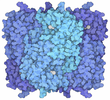


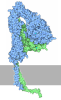
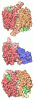

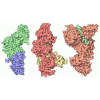
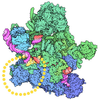
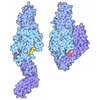
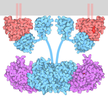
- Assembly
| Deposited unit | 
| ||||||||||||
|---|---|---|---|---|---|---|---|---|---|---|---|---|---|
| 1 |
| ||||||||||||
| Noncrystallographic symmetry (NCS) | NCS oper:
|
-Components
-Protein , 3 types, 3 molecules ACE
| #1: Protein | Mass: 280530.062 Da / Num. of mol.: 1 Source method: isolated from a genetically manipulated source Source: (gene. exp.) Homo sapiens (human) / Gene: MTOR, FRAP, FRAP1, FRAP2, RAFT1, RAPT1 / Cell line (production host): Sf9 / Production host:   Spodoptera frugiperda (fall armyworm) Spodoptera frugiperda (fall armyworm)References: UniProt: P42345, non-specific serine/threonine protein kinase, non-specific protein-tyrosine kinase |
|---|---|
| #3: Protein | Mass: 188389.453 Da / Num. of mol.: 1 Source method: isolated from a genetically manipulated source Source: (gene. exp.) Homo sapiens (human) / Gene: RICTOR, KIAA1999 / Cell line (production host): Sf9 / Production host: Spodoptera frugiperda (fall armyworm) / References: UniProt: Q6R327 |
| #5: Protein | Mass: 39206.875 Da / Num. of mol.: 1 Source method: isolated from a genetically manipulated source Details: Sequence position 333 contains the chemically modification T1C (C-T1C) Source: (gene. exp.) Homo sapiens (human) / Gene: AKT1, PKB, RAC / Cell line (production host): Sf9 / Production host: Spodoptera frugiperda (fall armyworm)References: UniProt: P31749, non-specific serine/threonine protein kinase |
-Target of rapamycin complex ... , 2 types, 2 molecules BD
| #2: Protein | Mass: 35152.238 Da / Num. of mol.: 1 Source method: isolated from a genetically manipulated source Source: (gene. exp.) Homo sapiens (human) / Gene: MLST8, GBL, LST8 / Cell line (production host): Sf9 / Production host: Spodoptera frugiperda (fall armyworm) / References: UniProt: Q9BVC4 |
|---|---|
| #4: Protein | Mass: 30466.355 Da / Num. of mol.: 1 Source method: isolated from a genetically manipulated source Source: (gene. exp.) Homo sapiens (human) / Gene: MAPKAP1, MIP1, SIN1 / Cell line (production host): Sf9 / Production host: Spodoptera frugiperda (fall armyworm) / References: UniProt: Q9BPZ7 |
-Non-polymers , 2 types, 2 molecules 
| #6: Chemical | ChemComp-ZN /  Mass: 65.409 Da / Num. of mol.: 1 / Source method: obtained synthetically / Formula: Zn Mass: 65.409 Da / Num. of mol.: 1 / Source method: obtained synthetically / Formula: Zn |
|---|---|
| #7: Chemical | ChemComp-A1AID / ( Mass: 605.608 Da / Num. of mol.: 1 Source method: isolated from a genetically manipulated source Formula: C35H26F3N5O2 Details: Sequence position 333 contains the chemically modification T1C (C-T1C) Source: (gene. exp.) Homo sapiens (human) / Gene: AKT1, PKB, RAC / Cell line (production host): Sf9 / Production host: Spodoptera frugiperda (fall armyworm) / Feature type: SUBJECT OF INVESTIGATION / References: non-specific serine/threonine protein kinase |
-Details
| Has ligand of interest | Y |
|---|---|
| Has protein modification | Y |
-Experimental details
-Experiment
| Experiment | Method: ELECTRON MICROSCOPY |
|---|---|
| EM experiment | Aggregation state: PARTICLE / 3D reconstruction method: single particle reconstruction |
- Sample preparation
| Component | Name: mTORC2 in complex with Akt1 / Type: COMPLEX / Entity ID: #1, #3-#4, #2, #5 / Source: RECOMBINANT |
|---|---|
| Source (natural) | Organism: Homo sapiens (human) |
| Source (recombinant) | Organism: Spodoptera frugiperda (fall armyworm) / Cell: Sf9 |
| Buffer solution | pH: 7.5 |
| Specimen | Embedding applied: NO / Shadowing applied: NO / Staining applied: NO / Vitrification applied: YES |
| Vitrification | Cryogen name: ETHANE |
- Electron microscopy imaging
| Experimental equipment |  Model: Titan Krios / Image courtesy: FEI Company |
|---|---|
| Microscopy | Model: TFS KRIOS |
| Electron gun | Electron source:  FIELD EMISSION GUN / Accelerating voltage: 300 kV / Illumination mode: FLOOD BEAM FIELD EMISSION GUN / Accelerating voltage: 300 kV / Illumination mode: FLOOD BEAM |
| Electron lens | Mode: 4D-STEM / Nominal defocus max: 2100 nm / Nominal defocus min: 700 nm / Cs: 2.7 mm |
| Image recording | Electron dose: 69.72 e/Å2 / Film or detector model: GATAN K3 BIOQUANTUM (6k x 4k) |
- Processing
| EM software |
| ||||||||||||||||||||||||
|---|---|---|---|---|---|---|---|---|---|---|---|---|---|---|---|---|---|---|---|---|---|---|---|---|---|
| CTF correction | Type: PHASE FLIPPING AND AMPLITUDE CORRECTION | ||||||||||||||||||||||||
| 3D reconstruction | Resolution: 2.6 Å / Resolution method: FSC 0.143 CUT-OFF / Num. of particles: 3169869 / Symmetry type: POINT | ||||||||||||||||||||||||
| Refinement | Highest resolution: 2.6 Å Stereochemistry target values: REAL-SPACE (WEIGHTED MAP SUM AT ATOM CENTERS) | ||||||||||||||||||||||||
| Refine LS restraints |
|
