 Movie
Movie Controller

[English] 日本語
 Yorodumi
- PDB-9yot: Cryo-EM structure of an inactive dimer of the C. elegans EGFR (LE... -
+ Open data

- Basic information
| Entry | Database: PDB / ID: 9yot | ||||||||||||||||||||||||
|---|---|---|---|---|---|---|---|---|---|---|---|---|---|---|---|---|---|---|---|---|---|---|---|---|---|
| Title | Cryo-EM structure of an inactive dimer of the C. elegans EGFR (LET-23) extracellular region bound to LIN-3. | ||||||||||||||||||||||||
 Components Components |
| ||||||||||||||||||||||||
 Keywords Keywords | SIGNALING PROTEIN / Receptor Tyrosine Kinase / epidermal growth factor receptor / ligand-bound dimer | ||||||||||||||||||||||||
| Function / homology |  Function and homology information Function and homology informationinductive cell-cell signaling / vulval cell fate specification / SHC1 events in ERBB2 signaling / Nuclear signaling by ERBB4 / Signaling by EGFR / GAB1 signalosome / EGFR interacts with phospholipase C-gamma / Sema4D induced cell migration and growth-cone collapse / ERBB2 Regulates Cell Motility / ERBB2 Activates PTK6 Signaling ...inductive cell-cell signaling / vulval cell fate specification / SHC1 events in ERBB2 signaling / Nuclear signaling by ERBB4 / Signaling by EGFR / GAB1 signalosome / EGFR interacts with phospholipase C-gamma / Sema4D induced cell migration and growth-cone collapse / ERBB2 Regulates Cell Motility / ERBB2 Activates PTK6 Signaling / Signaling by ERBB2 / Extra-nuclear estrogen signaling / Drug-mediated inhibition of ERBB2 signaling / Signal transduction by L1 / positive regulation of vulval development / Downregulation of ERBB4 signaling / PIP3 activates AKT signaling / GRB2 events in EGFR signaling / SHC1 events in EGFR signaling / PI3K events in ERBB2 signaling / EGFR Transactivation by Gastrin / PI5P, PP2A and IER3 Regulate PI3K/AKT Signaling / Downregulation of ERBB2 signaling / RAF/MAP kinase cascade / EGFR downregulation / Cargo recognition for clathrin-mediated endocytosis / Clathrin-mediated endocytosis / vulval development / positive regulation of ovulation / nematode larval development / ovulation / egg-laying behavior / male genitalia development / regulation of cell fate specification / sleep / epidermal growth factor receptor activity / uterus development / lateral plasma membrane / post-embryonic development / transmembrane receptor protein tyrosine kinase activity / positive regulation of epithelial cell proliferation / basal plasma membrane / molecular function activator activity / growth factor activity / receptor protein-tyrosine kinase / epidermal growth factor receptor signaling pathway / neuron differentiation / cell-cell junction / positive regulation of proteasomal ubiquitin-dependent protein catabolic process / basolateral plasma membrane / positive regulation of MAPK cascade / signaling receptor complex / apical plasma membrane / receptor ligand activity / regulation of DNA-templated transcription / lipid binding / negative regulation of apoptotic process / : / ATP binding / membrane / plasma membrane Similarity search - Function | ||||||||||||||||||||||||
| Biological species |   Caenorhabditis elegans (invertebrata) Caenorhabditis elegans (invertebrata)  Drosophila melanogaster (fruit fly) Drosophila melanogaster (fruit fly) | ||||||||||||||||||||||||
| Method | ELECTRON MICROSCOPY / single particle reconstruction / cryo EM / Resolution: 2.81 Å | ||||||||||||||||||||||||
 Authors Authors | Zuo, Y. / Han, L. / Ferguson, K.M. | ||||||||||||||||||||||||
| Funding support |  United States, 1items United States, 1items
| ||||||||||||||||||||||||
 Citation Citation | Journal: Proc.Natl.Acad.Sci.USA / Year: 2026 Title: Ligand regulation and function of preformed EGFR dimers Authors: Zuo, Y. / Schwartz, H.T. / Walker, K. / Han, L. / Sternberg, P.W. / Ferguson, K.M. | ||||||||||||||||||||||||
| History |
|
- Structure visualization
| Structure viewer | Molecule: MolmilJmol/JSmol |
|---|
- Downloads & links
-Download
| PDBx/mmCIF format | 9yot.cif.gz | 394.7 KB | Display | PDBx/mmCIF format |
|---|---|---|---|---|
| PDB format | pdb9yot.ent.gz | 271.9 KB | Display | PDB format |
| PDBx/mmJSON format | 9yot.json.gz | Tree view | PDBx/mmJSON format | |
| Others |  Other downloads Other downloads |
-Validation report
| Arichive directory | https://data.pdbj.org/pub/pdb/validation_reports/yo/9yotftp://data.pdbj.org/pub/pdb/validation_reports/yo/9yot | HTTPS FTP |
|---|
-Related structure data
| Related structure data |  73277MC  9yorC  9yosC  9youC  9yovC M: map data used to model this data C: citing same article ( |
|---|---|
| Similar structure data |


-Links
 PDBj
PDBj
- Assembly
| Deposited unit | 
|
|---|---|
| 1 |
|
-Components
-Protein , 2 types, 4 molecules ABCD
| #1: Protein | Mass: 91067.219 Da / Num. of mol.: 2 Source method: isolated from a genetically manipulated source Details: Extracellular region (aa 27-819) of C. elegans EGFR, LET-23, with a C-terminal 6x-His tag Source: (gene. exp.) Caenorhabditis elegans (invertebrata) / Gene: let-23, kin-7, ZK1067.1 / Plasmid: pFastBac / Cell line (production host): Sf9 / Production host: 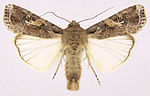 Spodoptera frugiperda (fall armyworm) Spodoptera frugiperda (fall armyworm)References: UniProt: P24348, receptor protein-tyrosine kinase #2: Protein | Mass: 11781.285 Da / Num. of mol.: 2 Source method: isolated from a genetically manipulated source Details: The EGF domain of LIN-3 (aa K148-N206) follows an N-terminal fusion comprising (i) an Arg, (ii) 6xHis tag (iii) aa 44-79 of Drosophila melanogaster SPITZ (Q01083) and (iv) a Factor Xa ...Details: The EGF domain of LIN-3 (aa K148-N206) follows an N-terminal fusion comprising (i) an Arg, (ii) 6xHis tag (iii) aa 44-79 of Drosophila melanogaster SPITZ (Q01083) and (iv) a Factor Xa cleavage site (IEDGR). See PMID 26060020.,The EGF domain of LIN-3 (aa K148-N206) follows an N-terminal fusion comprising (i) an Arg, (ii) 6xHis tag (iii) aa 44-79 of Drosophila melanogaster SPITZ (Q01083) and (iv) a Factor Xa cleavage site (IEDGR). See PMID 26060020. Source: (gene. exp.) Drosophila melanogaster (fruit fly), (gene. exp.) Caenorhabditis elegans (invertebrata)Gene: spi, CG10334, lin-3, let-94, F36H1.4 / Plasmid: PMT / Cell line (production host): SCHNEIDER 2(S2) CELLS / Production host: Drosophila melanogaster (fruit fly) / References: UniProt: Q03345 |
|---|
-Sugars , 4 types, 14 molecules 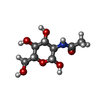
| #3: Polysaccharide | Source method: isolated from a genetically manipulated source #4: Polysaccharide | 2-acetamido-2-deoxy-beta-D-glucopyranose-(1-4)-2-acetamido-2-deoxy-beta-D-glucopyranose Source method: isolated from a genetically manipulated source #5: Polysaccharide | Source method: isolated from a genetically manipulated source #6: Sugar | ChemComp-NAG / 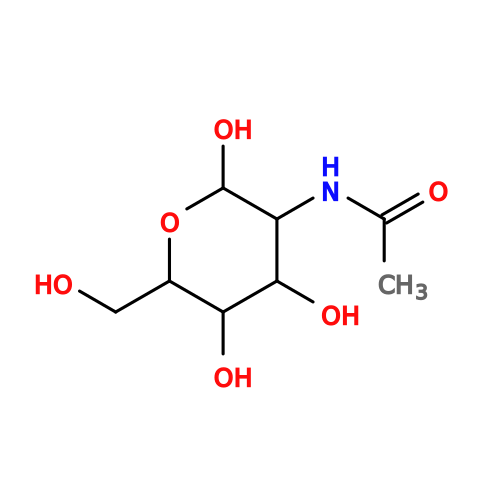 Type: D-saccharide, beta linking / Mass: 221.208 Da / Num. of mol.: 4 Type: D-saccharide, beta linking / Mass: 221.208 Da / Num. of mol.: 4Source method: isolated from a genetically manipulated source Formula: C8H15NO6 |
|---|
-Details
| Has ligand of interest | N |
|---|---|
| Has protein modification | Y |
-Experimental details
-Experiment
| Experiment | Method: ELECTRON MICROSCOPY |
|---|---|
| EM experiment | Aggregation state: PARTICLE / 3D reconstruction method: single particle reconstruction |
- Sample preparation
| Component | Name: Inactive dimer of the C. elegans EGFR (LET-23) extracellular region bound to LIN-3. Type: COMPLEX Details: Extracellular region (aa 27-819) of C. elegans EGFR, LET-23, with a C-terminal 6x-His tag bound to the EGF domain of LIN-3 (aa K148-N206), with an N-terminal fusion comprising (i) an Arg, ...Details: Extracellular region (aa 27-819) of C. elegans EGFR, LET-23, with a C-terminal 6x-His tag bound to the EGF domain of LIN-3 (aa K148-N206), with an N-terminal fusion comprising (i) an Arg, (ii) 6xHis tag (iii) aa 44-79 of Drosophila melanogaster SPITZ (Q01083) and (iv) a Factor Xa cleavage site (IEDGR). Entity ID: #1-#2 / Source: RECOMBINANT |
|---|---|
| Molecular weight | Experimental value: NO |
| Source (natural) | Organism: Caenorhabditis elegans (invertebrata) |
| Source (recombinant) | Organism: Spodoptera frugiperda (fall armyworm) / Strain: Sf9 / Plasmid: pFastBac |
| Buffer solution | pH: 7.4 |
| Specimen | Embedding applied: NO / Shadowing applied: NO / Staining applied: NO / Vitrification applied: YES |
| Vitrification | Cryogen name: ETHANE |
- Electron microscopy imaging
| Experimental equipment |  Model: Titan Krios / Image courtesy: FEI Company |
|---|---|
| Microscopy | Model: TFS KRIOS |
| Electron gun | Electron source:  FIELD EMISSION GUN / Accelerating voltage: 300 kV / Illumination mode: FLOOD BEAM FIELD EMISSION GUN / Accelerating voltage: 300 kV / Illumination mode: FLOOD BEAM |
| Electron lens | Mode: BRIGHT FIELD / Nominal defocus max: 2000 nm / Nominal defocus min: 800 nm |
| Image recording | Electron dose: 50 e/Å2 / Film or detector model: GATAN K3 BIOQUANTUM (6k x 4k) |
- Processing
| EM software |
| ||||||||||||||||||||||||
|---|---|---|---|---|---|---|---|---|---|---|---|---|---|---|---|---|---|---|---|---|---|---|---|---|---|
| CTF correction | Type: PHASE FLIPPING AND AMPLITUDE CORRECTION | ||||||||||||||||||||||||
| 3D reconstruction | Resolution: 2.81 Å / Resolution method: FSC 0.143 CUT-OFF / Num. of particles: 267599 / Symmetry type: POINT | ||||||||||||||||||||||||
| Atomic model building | Space: REAL | ||||||||||||||||||||||||
| Refinement | Cross valid method: NONE Stereochemistry target values: GeoStd + Monomer Library + CDL v1.2 | ||||||||||||||||||||||||
| Displacement parameters | Biso mean: 190.96 Å2 | ||||||||||||||||||||||||
| Refine LS restraints |
|
