 Movie
Movie Controller

[English] 日本語
 Yorodumi
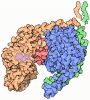
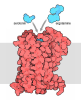
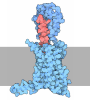
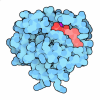
- PDB-9ydp: Human delta opioid receptor complex with mini-Gi and agonist DADLE -
+ Open data

- Basic information
| Entry | Database: PDB / ID: 9ydp | |||||||||
|---|---|---|---|---|---|---|---|---|---|---|
| Title | Human delta opioid receptor complex with mini-Gi and agonist DADLE | |||||||||
 Components Components |
| |||||||||
 Keywords Keywords | MEMBRANE PROTEIN / GPCR / opioid receptor / ligand binding | |||||||||
| Function / homology |  Function and homology information Function and homology informationG protein-coupled enkephalin receptor activity / spine apparatus / G protein-coupled opioid receptor activity / G protein-coupled opioid receptor signaling pathway / receptor serine/threonine kinase binding / cellular response to toxic substance / neuropeptide binding / eating behavior / regulation of calcium ion transport / G protein-coupled receptor signaling pathway, coupled to cyclic nucleotide second messenger ...G protein-coupled enkephalin receptor activity / spine apparatus / G protein-coupled opioid receptor activity / G protein-coupled opioid receptor signaling pathway / receptor serine/threonine kinase binding / cellular response to toxic substance / neuropeptide binding / eating behavior / regulation of calcium ion transport / G protein-coupled receptor signaling pathway, coupled to cyclic nucleotide second messenger / negative regulation of protein-containing complex assembly / neuronal dense core vesicle / regulation of mitochondrial membrane potential / dendrite membrane / axon terminus / Peptide ligand-binding receptors / response to nicotine / neuropeptide signaling pathway / cellular response to growth factor stimulus / postsynaptic density membrane / phospholipase C-activating G protein-coupled receptor signaling pathway / Olfactory Signaling Pathway / Activation of the phototransduction cascade / G protein-coupled acetylcholine receptor signaling pathway / G beta:gamma signalling through PLC beta / Presynaptic function of Kainate receptors / Thromboxane signalling through TP receptor / Activation of G protein gated Potassium channels / Inhibition of voltage gated Ca2+ channels via Gbeta/gamma subunits / G-protein activation / Glucagon signaling in metabolic regulation / G beta:gamma signalling through CDC42 / Prostacyclin signalling through prostacyclin receptor / Synthesis, secretion, and inactivation of Glucagon-like Peptide-1 (GLP-1) / photoreceptor disc membrane / G beta:gamma signalling through BTK / synaptic vesicle membrane / ADP signalling through P2Y purinoceptor 12 / Glucagon-type ligand receptors / Sensory perception of sweet, bitter, and umami (glutamate) taste / Adrenaline,noradrenaline inhibits insulin secretion / Vasopressin regulates renal water homeostasis via Aquaporins / G alpha (z) signalling events / Glucagon-like Peptide-1 (GLP1) regulates insulin secretion / ADP signalling through P2Y purinoceptor 1 / cellular response to catecholamine stimulus / G beta:gamma signalling through PI3Kgamma / ADORA2B mediated anti-inflammatory cytokines production / adenylate cyclase-activating dopamine receptor signaling pathway / cellular response to prostaglandin E stimulus / Cooperation of PDCL (PhLP1) and TRiC/CCT in G-protein beta folding / GPER1 signaling / heterotrimeric G-protein complex / Inactivation, recovery and regulation of the phototransduction cascade / G alpha (12/13) signalling events / G-protein beta-subunit binding / extracellular vesicle / Thrombin signalling through proteinase activated receptors (PARs) / signaling receptor complex adaptor activity / Interleukin-4 and Interleukin-13 signaling / GTPase binding / presynaptic membrane / cellular response to hypoxia / Ca2+ pathway / High laminar flow shear stress activates signaling by PIEZO1 and PECAM1:CDH5:KDR in endothelial cells / G alpha (i) signalling events / G alpha (s) signalling events / response to ethanol / G alpha (q) signalling events / Ras protein signal transduction / Extra-nuclear estrogen signaling / neuron projection / immune response / G protein-coupled receptor signaling pathway / negative regulation of gene expression / lysosomal membrane / GTPase activity / synapse / protein-containing complex binding / signal transduction / extracellular exosome / membrane / plasma membrane / cytosol / cytoplasm Similarity search - Function | |||||||||
| Biological species |  Homo sapiens (human) Homo sapiens (human)  Lama glama (llama) Lama glama (llama) | |||||||||
| Method | ELECTRON MICROSCOPY / single particle reconstruction / cryo EM / Resolution: 1.95 Å | |||||||||
 Authors Authors | Mobbs, J.I. / Venugopal, H. / Thal, D.M. | |||||||||
| Funding support |  Australia, 2items Australia, 2items
| |||||||||
 Citation Citation | Journal: bioRxiv / Year: 2025 Title: Structure-guided allosteric modulation of the delta opioid receptor. Authors: Jesse I Mobbs / M Deborah Nguyen / Owindeep Deo / Damian Bartuzi / Hariprasad Venugopal / Sadia Alvi / Vi Pham / Nick Barnes / Arthur Christopoulos / Daniel P Poole / Simona E Carbone / ...Authors: Jesse I Mobbs / M Deborah Nguyen / Owindeep Deo / Damian Bartuzi / Hariprasad Venugopal / Sadia Alvi / Vi Pham / Nick Barnes / Arthur Christopoulos / Daniel P Poole / Simona E Carbone / Manuela Jörg / Ben Capuano / Jens Carlsson / Arisbel B Gondin / Peter J Scammells / Celine Valant / David M Thal /   Abstract: Opioid analgesics remain essential for pain management but are associated with significant adverse effects, including respiratory depression, tolerance, and dependence. The δ-opioid receptor (δOR) ...Opioid analgesics remain essential for pain management but are associated with significant adverse effects, including respiratory depression, tolerance, and dependence. The δ-opioid receptor (δOR) represents a promising therapeutic target for developing safer opioid analgesics with reduced adverse effects compared to conventional μ-opioid receptor-targeting drugs. Positive allosteric modulators (PAMs) offer advantages over direct agonists by enhancing endogenous opioid signaling while preserving natural spatiotemporal activation patterns, potentially avoiding tolerance and dependence issues. Here, we present high-resolution cryo-EM structures of δOR complexed with the peptide agonist DADLE and the PAM MIPS3614, revealing a novel lipid-facing allosteric binding site formed by transmembrane helices 2, 3, and 4. MIPS3614 stabilizes the active receptor conformation through a critical hydrogen bond with residue N131 in the conserved sodium binding site, a key regulatory region controlling GPCR activation. Comprehensive mutagenesis, molecular dynamics simulations, and structure-activity relationships validate this proposed mechanism. Structure-guided optimization yielded MIPS3983 with enhanced binding affinity and retained cooperativity. Our findings establish the first molecular framework for δOR allosteric modulation and provide a structural foundation for the rational design of safer opioid therapeutics. | |||||||||
| History |
|
- Structure visualization
| Structure viewer | Molecule: MolmilJmol/JSmol |
|---|
- Downloads & links
-Download
| PDBx/mmCIF format | 9ydp.cif.gz | 220.9 KB | Display | PDBx/mmCIF format |
|---|---|---|---|---|
| PDB format | pdb9ydp.ent.gz | 169.1 KB | Display | PDB format |
| PDBx/mmJSON format | 9ydp.json.gz | Tree view | PDBx/mmJSON format | |
| Others |  Other downloads Other downloads |
-Validation report
| Arichive directory | https://data.pdbj.org/pub/pdb/validation_reports/yd/9ydpftp://data.pdbj.org/pub/pdb/validation_reports/yd/9ydp | HTTPS FTP |
|---|
-Related structure data
| Related structure data |  72825MC  9ydqC  9ydrC M: map data used to model this data C: citing same article ( |
|---|---|
| Similar structure data |


-Links
 PDBj
PDBj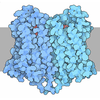
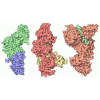
- Assembly
| Deposited unit | 
|
|---|---|
| 1 |
|
-Components
-Guanine nucleotide-binding protein ... , 3 types, 3 molecules ABG
| #1: Protein | Mass: 27915.672 Da / Num. of mol.: 1 Source method: isolated from a genetically manipulated source Source: (gene. exp.) Homo sapiens (human) / Gene: GNAS, GNAS1 / Production host:  Trichoplusia ni (cabbage looper) Trichoplusia ni (cabbage looper)References: Hydrolases; Acting on acid anhydrides; Acting on GTP to facilitate cellular and subcellular movement |
|---|---|
| #2: Protein | Mass: 38534.062 Da / Num. of mol.: 1 Source method: isolated from a genetically manipulated source Source: (gene. exp.) Homo sapiens (human) / Gene: GNB1 / Production host: Trichoplusia ni (cabbage looper) / References: UniProt: P62873 |
| #3: Protein | Mass: 7861.143 Da / Num. of mol.: 1 Source method: isolated from a genetically manipulated source Source: (gene. exp.) Homo sapiens (human) / Gene: GNG2 / Production host: Trichoplusia ni (cabbage looper) / References: UniProt: P59768 |
-Antibody / Protein / Protein/peptide / Non-polymers , 4 types, 96 molecules NRP
| #4: Antibody | Mass: 16926.076 Da / Num. of mol.: 1 Source method: isolated from a genetically manipulated source Source: (gene. exp.) Lama glama (llama) / Production host:   Escherichia coli (E. coli) Escherichia coli (E. coli) |
|---|---|
| #5: Protein | Mass: 42363.539 Da / Num. of mol.: 1 Source method: isolated from a genetically manipulated source Source: (gene. exp.) Homo sapiens (human) / Gene: OPRD1, OPRD / Production host: Trichoplusia ni (cabbage looper) / References: UniProt: P41143 |
| #6: Protein/peptide | Mass: 569.650 Da / Num. of mol.: 1 / Source method: obtained synthetically / Source: (synth.) Homo sapiens (human) |
| #7: Water | ChemComp-HOH / Mass: 18.015 Da / Num. of mol.: 93 / Source method: isolated from a natural source / Formula: H2O |
-Details
| Has ligand of interest | Y |
|---|---|
| Has protein modification | Y |
-Experimental details
-Experiment
| Experiment | Method: ELECTRON MICROSCOPY |
|---|---|
| EM experiment | Aggregation state: PARTICLE / 3D reconstruction method: single particle reconstruction |
- Sample preparation
| Component | Name: Human delta opioid receptor complex with mini-Gi and agonist DADLE Type: COMPLEX / Entity ID: #1-#6 / Source: RECOMBINANT |
|---|---|
| Molecular weight | Value: 0.15 MDa / Experimental value: NO |
| Source (natural) | Organism: Homo sapiens (human) |
| Source (recombinant) | Organism: Trichoplusia ni (cabbage looper) |
| Buffer solution | pH: 7.4 |
| Specimen | Embedding applied: NO / Shadowing applied: NO / Staining applied: NO / Vitrification applied: YES |
| Specimen support | Grid material: GOLD / Grid type: UltrAuFoil R1.2/1.3 |
| Vitrification | Cryogen name: ETHANE |
- Electron microscopy imaging
| Experimental equipment |  Model: Titan Krios / Image courtesy: FEI Company |
|---|---|
| Microscopy | Model: TFS KRIOS |
| Electron gun | Electron source:  FIELD EMISSION GUN / Accelerating voltage: 300 kV / Illumination mode: FLOOD BEAM FIELD EMISSION GUN / Accelerating voltage: 300 kV / Illumination mode: FLOOD BEAM |
| Electron lens | Mode: BRIGHT FIELD / Nominal defocus max: 1500 nm / Nominal defocus min: 500 nm |
| Image recording | Electron dose: 60 e/Å2 / Film or detector model: GATAN K3 (6k x 4k) |
- Processing
| EM software |
| ||||||||||||||||||||||||
|---|---|---|---|---|---|---|---|---|---|---|---|---|---|---|---|---|---|---|---|---|---|---|---|---|---|
| CTF correction | Type: PHASE FLIPPING AND AMPLITUDE CORRECTION | ||||||||||||||||||||||||
| 3D reconstruction | Resolution: 1.95 Å / Resolution method: FSC 0.143 CUT-OFF / Num. of particles: 1245037 / Symmetry type: POINT | ||||||||||||||||||||||||
| Refinement | Highest resolution: 1.95 Å Stereochemistry target values: REAL-SPACE (WEIGHTED MAP SUM AT ATOM CENTERS) | ||||||||||||||||||||||||
| Refine LS restraints |
|
