 Movie
Movie Controller


+ Open data

- Basic information
| Entry | Database: PDB / ID: 9w74 | |||||||||||||||||||||||||||
|---|---|---|---|---|---|---|---|---|---|---|---|---|---|---|---|---|---|---|---|---|---|---|---|---|---|---|---|---|
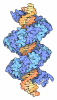
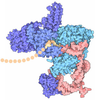
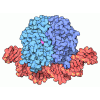
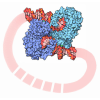
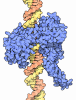
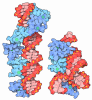
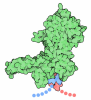
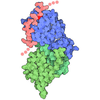
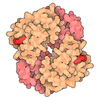
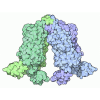
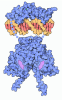
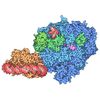
| Title | Cryo-EM structure of the close-packed di-hexasome (CPDH) | |||||||||||||||||||||||||||
 Components Components |
| |||||||||||||||||||||||||||
 Keywords Keywords | GENE REGULATION / Chromatin / Nucleosome / Hexasome / Subnucleosome / Histone / DNA | |||||||||||||||||||||||||||
| Function / homology |  Function and homology information Function and homology informationstructural constituent of chromatin / nucleosome / nucleosome assembly / heterochromatin formation / protein heterodimerization activity / DNA binding / nucleoplasm / nucleus Similarity search - Function | |||||||||||||||||||||||||||
| Biological species |  Xenopus laevis (African clawed frog) Xenopus laevis (African clawed frog)  Escherichia coli (E. coli) Escherichia coli (E. coli) | |||||||||||||||||||||||||||
| Method | ELECTRON MICROSCOPY / single particle reconstruction / cryo EM / Resolution: 4.94 Å | |||||||||||||||||||||||||||
 Authors Authors | Ho, C.-H. / Takizawa, Y. / Kurumizaka, H. | |||||||||||||||||||||||||||
| Funding support |  Japan, 8items Japan, 8items
| |||||||||||||||||||||||||||
 Citation Citation | Journal: iScience / Year: 2026 Title: A method for cryo-EM analysis of eukaryotic nucleosomes reconstituted in bacterial cells. Authors: Cheng-Han Ho / Yuki Kobayashi / Mitsuo Ogasawara / Yoshimasa Takizawa / Hitoshi Kurumizaka / Abstract: Conventional methods for preparing nucleosomes are time-consuming and technically demanding. In the present study, we extended the approach of generating nucleosomes in by the co-expression of all ...Conventional methods for preparing nucleosomes are time-consuming and technically demanding. In the present study, we extended the approach of generating nucleosomes in by the co-expression of all four histones, allowing nucleosomes to be assembled in cells. The bacterially reconstituted nucleosomes can be readily prepared from the cells and directly subjected to cryo-EM single particle analysis. Using this method, we obtained a 2.56 Å nucleosome structure that is highly similar to a previously reported nucleosome crystal structure, validating the use of nucleosomes formed in for cryo-EM analysis. Unexpectedly, we also discovered a non-canonical nucleosome structure, in which two hexasomes are closely packed. This system provides a robust and efficient platform for structural studies of nucleosomes and nucleosome variants, and may facilitate the discovery of chromatin architectures. | |||||||||||||||||||||||||||
| History |
|
- Structure visualization
| Structure viewer | Molecule: MolmilJmol/JSmol |
|---|
- Downloads & links
-Download
| PDBx/mmCIF format | 9w74.cif.gz | 399.2 KB | Display | PDBx/mmCIF format |
|---|---|---|---|---|
| PDB format | pdb9w74.ent.gz | 302.6 KB | Display | PDB format |
| PDBx/mmJSON format | 9w74.json.gz | Tree view | PDBx/mmJSON format | |
| Others |  Other downloads Other downloads |
-Validation report
| Arichive directory | https://data.pdbj.org/pub/pdb/validation_reports/w7/9w74ftp://data.pdbj.org/pub/pdb/validation_reports/w7/9w74 | HTTPS FTP |
|---|
-Related structure data
| Related structure data |  65716MC M: map data used to model this data C: citing same article ( |
|---|---|
| Similar structure data |

-Links
 PDBj
PDBj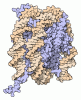
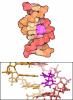
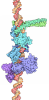
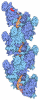
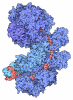
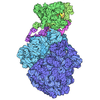
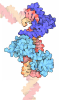
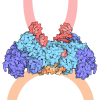
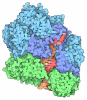

- Assembly
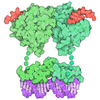
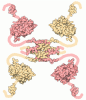
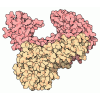
| Deposited unit | 
|
|---|---|
| 1 |
|
-Components
-Protein , 4 types, 12 molecules AEKOBFLPCMDN
| #1: Protein | Mass: 15435.126 Da / Num. of mol.: 4 Source method: isolated from a genetically manipulated source Source: (gene. exp.) Xenopus laevis (African clawed frog) / Production host: Escherichia coli (E. coli) / References: UniProt: P84233#2: Protein | Mass: 13307.514 Da / Num. of mol.: 4 Source method: isolated from a genetically manipulated source Source: (gene. exp.) Xenopus laevis (African clawed frog) / Production host: Escherichia coli (E. coli) / References: UniProt: P62799#3: Protein | Mass: 18086.951 Da / Num. of mol.: 2 Source method: isolated from a genetically manipulated source Source: (gene. exp.) Xenopus laevis (African clawed frog) / Production host: Escherichia coli (E. coli) / References: UniProt: P06897#4: Protein | Mass: 13655.948 Da / Num. of mol.: 2 Source method: isolated from a genetically manipulated source Source: (gene. exp.) Xenopus laevis (African clawed frog) / Production host: Escherichia coli (E. coli) / References: UniProt: P02281 |
|---|
-DNA chain , 2 types, 2 molecules IJ
| #5: DNA chain | Mass: 64788.910 Da / Num. of mol.: 1 / Source method: isolated from a natural source Details: The molecule was purified directly from E. coli cells, so it contains random E. coli genomic DNA. The poly-A sequence is used since it cannot be assigned the specific sequence Source: (natural) Escherichia coli (E. coli) |
|---|---|
| #6: DNA chain | Mass: 62922.816 Da / Num. of mol.: 1 / Source method: isolated from a natural source Details: The molecule was purified directly from E. coli cells, so it contains random E. coli genomic DNA. The poly-T sequence is used since it cannot be assigned the specific sequence Source: (natural) Escherichia coli (E. coli) |
-Details
| Has protein modification | N |
|---|
-Experimental details
-Experiment
| Experiment | Method: ELECTRON MICROSCOPY |
|---|---|
| EM experiment | Aggregation state: PARTICLE / 3D reconstruction method: single particle reconstruction |
- Sample preparation
| Component |
| ||||||||||||||||||||||||
|---|---|---|---|---|---|---|---|---|---|---|---|---|---|---|---|---|---|---|---|---|---|---|---|---|---|
| Molecular weight | Experimental value: NO | ||||||||||||||||||||||||
| Source (natural) |
| ||||||||||||||||||||||||
| Source (recombinant) |
| ||||||||||||||||||||||||
| Buffer solution | pH: 7.5 | ||||||||||||||||||||||||
| Specimen | Embedding applied: NO / Shadowing applied: NO / Staining applied: NO / Vitrification applied: YES | ||||||||||||||||||||||||
| Vitrification | Instrument: FEI VITROBOT MARK IV / Cryogen name: ETHANE / Humidity: 100 % / Chamber temperature: 277 K |

 Mus musculus (house mouse)
- Electron microscopy imaging
| Experimental equipment |  Model: Titan Krios / Image courtesy: FEI Company |
|---|---|
| Microscopy | Model: TFS KRIOS |
| Electron gun | Electron source:  FIELD EMISSION GUN / Accelerating voltage: 300 kV / Illumination mode: FLOOD BEAM FIELD EMISSION GUN / Accelerating voltage: 300 kV / Illumination mode: FLOOD BEAM |
| Electron lens | Mode: BRIGHT FIELD / Nominal defocus max: 2250 nm / Nominal defocus min: 1250 nm |
| Image recording | Electron dose: 60.1 e/Å2 / Film or detector model: GATAN K3 BIOQUANTUM (6k x 4k) |
- Processing
| EM software |
| ||||||||||||||||||||||||
|---|---|---|---|---|---|---|---|---|---|---|---|---|---|---|---|---|---|---|---|---|---|---|---|---|---|
| CTF correction | Type: PHASE FLIPPING AND AMPLITUDE CORRECTION | ||||||||||||||||||||||||
| 3D reconstruction | Resolution: 4.94 Å / Resolution method: FSC 0.143 CUT-OFF / Num. of particles: 4963 / Symmetry type: POINT | ||||||||||||||||||||||||
| Refinement | Highest resolution: 4.94 Å Stereochemistry target values: REAL-SPACE (WEIGHTED MAP SUM AT ATOM CENTERS) | ||||||||||||||||||||||||
| Refine LS restraints |
|
