 ムービー
ムービー コントローラー


+ データを開く

- 基本情報
基本情報
| 登録情報 | データベース: PDB / ID: 9vb2 | ||||||||||||||||||||||||||||||
|---|---|---|---|---|---|---|---|---|---|---|---|---|---|---|---|---|---|---|---|---|---|---|---|---|---|---|---|---|---|---|---|
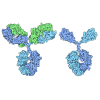
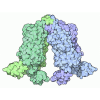
| タイトル | Cryo-EM structure of the human neurotensin receptor 1 (hNTSR1)-Gi1 complex in the GDP-bound, AHD-closed C state 1, plunge-frozen 8 seconds after GDP addition | ||||||||||||||||||||||||||||||
 要素 要素 |
| ||||||||||||||||||||||||||||||
 キーワード キーワード | MEMBRANE PROTEIN / GPCR / NTSR1 / neurotensin / G-protein | ||||||||||||||||||||||||||||||
| 機能・相同性 |  機能・相同性情報 機能・相同性情報G protein-coupled neurotensin receptor activity / inositol phosphate catabolic process / symmetric synapse / positive regulation of locomotion / regulation of inositol trisphosphate biosynthetic process / positive regulation of gamma-aminobutyric acid secretion / L-glutamate import across plasma membrane / D-aspartate import across plasma membrane / positive regulation of arachidonate secretion / vocalization behavior ...G protein-coupled neurotensin receptor activity / inositol phosphate catabolic process / symmetric synapse / positive regulation of locomotion / regulation of inositol trisphosphate biosynthetic process / positive regulation of gamma-aminobutyric acid secretion / L-glutamate import across plasma membrane / D-aspartate import across plasma membrane / positive regulation of arachidonate secretion / vocalization behavior / regulation of behavioral fear response / regulation of respiratory gaseous exchange / cAMP biosynthetic process / negative regulation of systemic arterial blood pressure / positive regulation of inhibitory postsynaptic potential / negative regulation of release of sequestered calcium ion into cytosol / response to food / positive regulation of glutamate secretion / temperature homeostasis / response to lipid / regulation of membrane depolarization / response to stress / positive regulation of inositol phosphate biosynthetic process / detection of temperature stimulus involved in sensory perception of pain / conditioned place preference / regulation of eating behavior / adenylate cyclase inhibitor activity / T cell migration / positive regulation of protein localization to cell cortex / positive regulation of relaxation of smooth muscle / Adenylate cyclase inhibitory pathway / D2 dopamine receptor binding / adenylate cyclase-inhibiting serotonin receptor signaling pathway / G protein-coupled serotonin receptor binding / positive regulation of release of sequestered calcium ion into cytosol / cellular response to forskolin / regulation of mitotic spindle organization / Peptide ligand-binding receptors / dendritic shaft / mast cell degranulation / chemokine-mediated signaling pathway / neuropeptide signaling pathway / Regulation of insulin secretion / response to prostaglandin E / positive regulation of cholesterol biosynthetic process / G protein-coupled receptor binding / response to peptide hormone / G protein-coupled receptor activity / G-protein beta/gamma-subunit complex binding / cytoplasmic side of plasma membrane / adenylate cyclase-inhibiting G protein-coupled receptor signaling pathway / adenylate cyclase-modulating G protein-coupled receptor signaling pathway / Olfactory Signaling Pathway / Activation of the phototransduction cascade / terminal bouton / G protein-coupled acetylcholine receptor signaling pathway / G beta:gamma signalling through PLC beta / Presynaptic function of Kainate receptors / Thromboxane signalling through TP receptor / Activation of G protein gated Potassium channels / Inhibition of voltage gated Ca2+ channels via Gbeta/gamma subunits / G-protein activation / Glucagon signaling in metabolic regulation / G beta:gamma signalling through CDC42 / Prostacyclin signalling through prostacyclin receptor / Synthesis, secretion, and inactivation of Glucagon-like Peptide-1 (GLP-1) / GDP binding / G beta:gamma signalling through BTK / photoreceptor disc membrane / ADP signalling through P2Y purinoceptor 12 / Glucagon-type ligand receptors / Sensory perception of sweet, bitter, and umami (glutamate) taste / Adrenaline,noradrenaline inhibits insulin secretion / Vasopressin regulates renal water homeostasis via Aquaporins / G alpha (z) signalling events / Glucagon-like Peptide-1 (GLP1) regulates insulin secretion / ADP signalling through P2Y purinoceptor 1 / cellular response to catecholamine stimulus / G beta:gamma signalling through PI3Kgamma / ADORA2B mediated anti-inflammatory cytokines production / adenylate cyclase-activating dopamine receptor signaling pathway / cellular response to prostaglandin E stimulus / Cooperation of PDCL (PhLP1) and TRiC/CCT in G-protein beta folding / GPER1 signaling / heterotrimeric G-protein complex / Inactivation, recovery and regulation of the phototransduction cascade / G alpha (12/13) signalling events / G-protein beta-subunit binding / extracellular vesicle / Thrombin signalling through proteinase activated receptors (PARs) / signaling receptor complex adaptor activity / adenylate cyclase-activating G protein-coupled receptor signaling pathway / ciliary basal body / GTPase binding / G protein activity / midbody / chemical synaptic transmission / Ca2+ pathway / cell cortex / High laminar flow shear stress activates signaling by PIEZO1 and PECAM1:CDH5:KDR in endothelial cells 類似検索 - 分子機能 | ||||||||||||||||||||||||||||||
| 生物種 |  Homo sapiens (ヒト) Homo sapiens (ヒト)  Mus musculus (ハツカネズミ) Mus musculus (ハツカネズミ)synthetic construct (人工物) | ||||||||||||||||||||||||||||||
| 手法 | 電子顕微鏡法 / 単粒子再構成法 / 解像度: 3.08 Å | ||||||||||||||||||||||||||||||
 データ登録者 データ登録者 | Kobayashi, K. / Matsui, T.E. / Fukuda, M. / Kawakami, K. / Yamashita, K. / Kato, H.E. | ||||||||||||||||||||||||||||||
| 資金援助 |  日本, 7件 日本, 7件
| ||||||||||||||||||||||||||||||
 引用 引用 | ジャーナル: Nature / 年: 2026 タイトル: The dynamic basis of G-protein recognition and activation by a GPCR. 著者: Kazuhiro Kobayashi / Kouki Kawakami / Toshiki E Matsui / Shun Yokoi / Masahiro Fukuda / Tomohiro J Narita / Hiroki Arai / Mai Tambo / Takashi Sumikama / Manae Tatsumi / Keitaro Yamashita / ...著者: Kazuhiro Kobayashi / Kouki Kawakami / Toshiki E Matsui / Shun Yokoi / Masahiro Fukuda / Tomohiro J Narita / Hiroki Arai / Mai Tambo / Takashi Sumikama / Manae Tatsumi / Keitaro Yamashita / Junki Koyanagi / Mai Kugawa / Hisako Ikeda / Ayumi Sumino / Ayori Mitsutake / Brian K Kobilka / Asuka Inoue / Hideaki E Kato /  要旨: G-protein-coupled receptor (GPCR) signalling occurs through heterotrimeric G proteins, whose selective activation leads to distinct cellular outcomes. Although more than 200 GPCR-G protein complex ...G-protein-coupled receptor (GPCR) signalling occurs through heterotrimeric G proteins, whose selective activation leads to distinct cellular outcomes. Although more than 200 GPCR-G protein complex structures have been determined, these static snapshots provide limited insight into the dynamics of G-protein association and dissociation. Here we present cryo-electron microscopy structures of human neurotensin receptor type 1 (NTSR1) with minimally modified G and G, showing how the receptor's intracellular surface dynamically rearranges to accommodate each G-protein subtype. Furthermore, time-resolved cryo-electron microscopy analyses of NTSR1-G visualized G-protein dissociation processes on GDP/GTP binding. Characterization of more than 20 intermediates, complemented by mutational and computational analyses, identifies four key mechanistic features. First, GDP/GTP induces G release from both canonical and non-canonical active conformations with distinct kinetics. Second, NTSR1 uses common intracellular rearrangements to recognize different G-protein subtypes and to promote activation of a single subtype. Third, separation from Gβγ involves stepwise remodelling of the Gα switches I-III. Finally, G dissociates from the receptor through a pathway that is distinct from that of G, and the canonical and non-canonical NTSR1-G complexes further diverge in their dissociation trajectories. These findings provide a comprehensive framework for understanding GPCR signalling dynamics and guiding signal-targeted therapeutic development. | ||||||||||||||||||||||||||||||
| 履歴 |
|
- 構造の表示
構造の表示
| 構造ビューア | 分子: MolmilJmol/JSmol |
|---|
- ダウンロードとリンク
-ダウンロード
| PDBx/mmCIF形式 | 9vb2.cif.gz | 275.6 KB | 表示 | PDBx/mmCIF形式 |
|---|---|---|---|---|
| PDB形式 | pdb9vb2.ent.gz | 210.8 KB | 表示 | PDB形式 |
| PDBx/mmJSON形式 | 9vb2.json.gz | ツリー表示 | PDBx/mmJSON形式 | |
| その他 |  その他のダウンロード その他のダウンロード |
-検証レポート
| アーカイブディレクトリ | https://data.pdbj.org/pub/pdb/validation_reports/vb/9vb2ftp://data.pdbj.org/pub/pdb/validation_reports/vb/9vb2 | HTTPS FTP |
|---|
-関連構造データ
| 関連構造データ |  64913MC  20zcC  20zdC  20zgC  20zhC  20ziC  20zjC  20zkC  20zlC  9vatC  9vauC  9vavC  9vawC  9vaxC  9vayC  9vazC  9vb0C  9vb1C  9vb3C  9vb4C  9vb5C  9vb6C  9vb7C  9vbaC M: このデータのモデリングに利用したマップデータ C: 同じ文献を引用 ( |
|---|---|
| 類似構造データ |


-リンク
 PDBj
PDBj
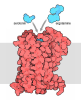
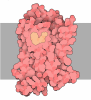

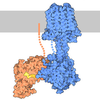
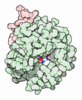
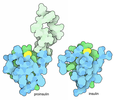
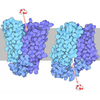
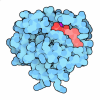
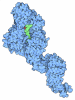
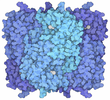
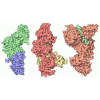
- 集合体
集合体
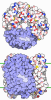
| 登録構造単位 | 
|
|---|---|
| 1 |
|
-要素
-Guanine nucleotide-binding protein ... , 3種, 3分子 ABC
| #3: タンパク質 | 分子量: 40415.031 Da / 分子数: 1 / 由来タイプ: 組換発現 / 由来: (組換発現) Homo sapiens (ヒト) / 遺伝子: GNAI1 / 発現宿主:  Trichoplusia ni (イラクサキンウワバ) / 参照: UniProt: P63096 Trichoplusia ni (イラクサキンウワバ) / 参照: UniProt: P63096 |
|---|---|
| #4: タンパク質 | 分子量: 39418.086 Da / 分子数: 1 / 由来タイプ: 組換発現 / 由来: (組換発現) Homo sapiens (ヒト) / 遺伝子: GNB1 / 発現宿主: Trichoplusia ni (イラクサキンウワバ) / 参照: UniProt: P62873 |
| #5: タンパク質 | 分子量: 7861.143 Da / 分子数: 1 / 由来タイプ: 組換発現 / 由来: (組換発現) Homo sapiens (ヒト) / 遺伝子: GNG2 / 発現宿主: Trichoplusia ni (イラクサキンウワバ) / 参照: UniProt: P59768 |
-タンパク質 / タンパク質・ペプチド / 抗体 / 非ポリマー , 4種, 4分子 RLD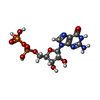
| #1: タンパク質 | 分子量: 48535.051 Da / 分子数: 1 / 由来タイプ: 組換発現 / 由来: (組換発現) Homo sapiens (ヒト) / 遺伝子: NTSR1, NTRR発現宿主:  Spodoptera frugiperda (ツマジロクサヨトウ) Spodoptera frugiperda (ツマジロクサヨトウ)参照: UniProt: P30989 |
|---|---|
| #2: タンパク質・ペプチド | 分子量: 762.979 Da / 分子数: 1 / 由来タイプ: 合成 / 由来: (合成) synthetic construct (人工物) |
| #6: 抗体 | 分子量: 27784.896 Da / 分子数: 1 / 由来タイプ: 組換発現 / 由来: (組換発現) Mus musculus (ハツカネズミ) / 発現宿主: Trichoplusia ni (イラクサキンウワバ) |
| #7: 化合物 | ChemComp-GDP / 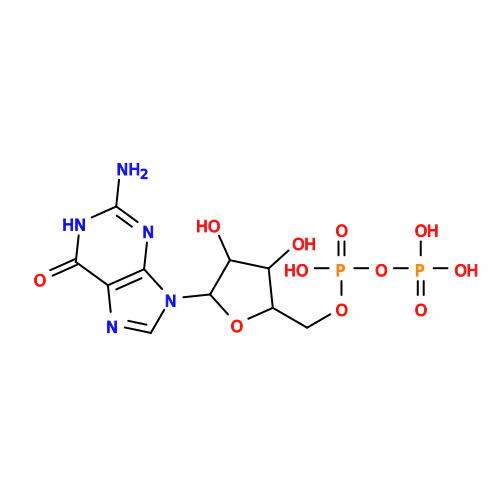 タイプ: RNA linking / 分子量: 443.201 Da / 分子数: 1 / 由来タイプ: 合成 / 式: C10H15N5O11P2 / タイプ: SUBJECT OF INVESTIGATION / コメント: GDP, エネルギー貯蔵分子*YM タイプ: RNA linking / 分子量: 443.201 Da / 分子数: 1 / 由来タイプ: 合成 / 式: C10H15N5O11P2 / タイプ: SUBJECT OF INVESTIGATION / コメント: GDP, エネルギー貯蔵分子*YM |
-詳細
| 研究の焦点であるリガンドがあるか | Y |
|---|---|
| Has protein modification | Y |
-実験情報
-実験
| 実験 | 手法: 電子顕微鏡法 |
|---|---|
| EM実験 | 試料の集合状態: PARTICLE / 3次元再構成法: 単粒子再構成法 |
- 試料調製
試料調製
| 構成要素 |
| ||||||||||||||||||||||||||||||
|---|---|---|---|---|---|---|---|---|---|---|---|---|---|---|---|---|---|---|---|---|---|---|---|---|---|---|---|---|---|---|---|
| 分子量 | 実験値: NO | ||||||||||||||||||||||||||||||
| 由来(天然) |
| ||||||||||||||||||||||||||||||
| 由来(組換発現) |
| ||||||||||||||||||||||||||||||
| 緩衝液 | pH: 7.5 | ||||||||||||||||||||||||||||||
| 試料 | 包埋: NO / シャドウイング: NO / 染色: NO / 凍結: NO | ||||||||||||||||||||||||||||||
| 試料支持 | グリッドの材料: GOLD / グリッドのサイズ: 300 divisions/in. / グリッドのタイプ: Quantifoil R1.2/1.3 |
- 電子顕微鏡撮影
| 実験機器 |  モデル: Titan Krios / 画像提供: FEI Company |
|---|---|
| 顕微鏡 | モデル: TFS KRIOS |
| 電子銃 | 電子線源:  FIELD EMISSION GUN / 加速電圧: 300 kV / 照射モード: OTHER FIELD EMISSION GUN / 加速電圧: 300 kV / 照射モード: OTHER |
| 電子レンズ | モード: BRIGHT FIELD / 最大 デフォーカス(公称値): 1600 nm / 最小 デフォーカス(公称値): 800 nm / Cs: 2.7 mm |
| 試料ホルダ | 凍結剤: NITROGEN |
| 撮影 | 電子線照射量: 58 e/Å2 フィルム・検出器のモデル: GATAN K3 BIOQUANTUM (6k x 4k) |
- 解析
解析
| CTF補正 | タイプ: NONE | ||||||||||||||||||||||||||||||||||||||||||||||||||||||||||||||||||||||||||||||||||||||||||||||||||||||||||
|---|---|---|---|---|---|---|---|---|---|---|---|---|---|---|---|---|---|---|---|---|---|---|---|---|---|---|---|---|---|---|---|---|---|---|---|---|---|---|---|---|---|---|---|---|---|---|---|---|---|---|---|---|---|---|---|---|---|---|---|---|---|---|---|---|---|---|---|---|---|---|---|---|---|---|---|---|---|---|---|---|---|---|---|---|---|---|---|---|---|---|---|---|---|---|---|---|---|---|---|---|---|---|---|---|---|---|---|
| 3次元再構成 | 解像度: 3.08 Å / 解像度の算出法: FSC 0.143 CUT-OFF / 粒子像の数: 250687 / 対称性のタイプ: POINT | ||||||||||||||||||||||||||||||||||||||||||||||||||||||||||||||||||||||||||||||||||||||||||||||||||||||||||
| 精密化 | 解像度: 3.08→3.08 Å / Cor.coef. Fo:Fc: 0.845 / SU B: 11.627 / SU ML: 0.203 / ESU R: 0.333 立体化学のターゲット値: MAXIMUM LIKELIHOOD WITH PHASES 詳細: HYDROGENS HAVE BEEN USED IF PRESENT IN THE INPUT
| ||||||||||||||||||||||||||||||||||||||||||||||||||||||||||||||||||||||||||||||||||||||||||||||||||||||||||
| 溶媒の処理 | 溶媒モデル: PARAMETERS FOR MASK CACLULATION | ||||||||||||||||||||||||||||||||||||||||||||||||||||||||||||||||||||||||||||||||||||||||||||||||||||||||||
| 原子変位パラメータ | Biso mean: 124.693 Å2 | ||||||||||||||||||||||||||||||||||||||||||||||||||||||||||||||||||||||||||||||||||||||||||||||||||||||||||
| 精密化ステップ | サイクル: 1 / 合計: 9991 | ||||||||||||||||||||||||||||||||||||||||||||||||||||||||||||||||||||||||||||||||||||||||||||||||||||||||||
| 拘束条件 |
|