 Movie
Movie Controller

[English] 日本語
 Yorodumi
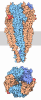
- PDB-9she: Structure of the honeybee GABAA RDL receptor with GABA and Abamectin -
+ Open data

- Basic information
| Entry | Database: PDB / ID: 9she | |||||||||||||||||||||||||||||||||
|---|---|---|---|---|---|---|---|---|---|---|---|---|---|---|---|---|---|---|---|---|---|---|---|---|---|---|---|---|---|---|---|---|---|---|
| Title | Structure of the honeybee GABAA RDL receptor with GABA and Abamectin | |||||||||||||||||||||||||||||||||
 Components Components | Gamma-aminobutyric acid receptor subunit beta | |||||||||||||||||||||||||||||||||
 Keywords Keywords | MEMBRANE PROTEIN / GABAA receptor / insect / neurotransmission / insecticides | |||||||||||||||||||||||||||||||||
| Function / homology |  Function and homology information Function and homology informationligand-gated monoatomic anion channel activity / GABA-A receptor activity / chloride channel activity / chloride channel complex / extracellular ligand-gated monoatomic ion channel activity / postsynaptic membrane Similarity search - Function | |||||||||||||||||||||||||||||||||
| Biological species |   Apis mellifera (honey bee) Apis mellifera (honey bee) | |||||||||||||||||||||||||||||||||
| Method | ELECTRON MICROSCOPY / single particle reconstruction / cryo EM / Resolution: 3.2 Å | |||||||||||||||||||||||||||||||||
 Authors Authors | Laboure, T. / Nury, H. | |||||||||||||||||||||||||||||||||
| Funding support |  France, 1items France, 1items
| |||||||||||||||||||||||||||||||||
 Citation Citation | Journal: Neuron / Year: 2026 Title: Structures of the honeybee GABA RDL receptor illuminate allosteric modulation. Authors: Tatiana Labouré / Mayank Prakash Pandey / Eleftherios Zarkadas / Céline Juillan-Binard / Delphine Baud / Jacques Neyton / Thierry Cens / Matthieu Rousset / François Dehez / Pierre Charnet / Hugues Nury / Abstract: A large share of insecticides targets insect ion channels. In particular, the GABA RDL (resistant to dieldrin) receptor is targeted by old pore blockers or more recent allosteric modulators binding ...A large share of insecticides targets insect ion channels. In particular, the GABA RDL (resistant to dieldrin) receptor is targeted by old pore blockers or more recent allosteric modulators binding to a cavity of its transmembrane domain. Here, we describe three ligand-binding sites and the associated receptor conformations, using a combination of cryoelectron microscopy (cryo-EM), electrophysiology, and molecular dynamics. The GABA site geometry is well conserved with that of mammalian receptors, in line with the absence of orthosteric insecticide. The transmembrane modulation site, occupied here by abamectin, exists in a closed-pore conformation. We identify a second allosteric transmembrane site using a compound named chrodrimanin B. Structures also reveal the existence of a conformation-dependent PIP lipid site. We anticipate our results to be the starting point for investigations on the physiological modulation of insect GABA receptors. The honeybee receptor structures may also foster the search for species-specific, environmentally benign insecticides. | |||||||||||||||||||||||||||||||||
| History |
|
- Structure visualization
| Structure viewer | Molecule: MolmilJmol/JSmol |
|---|
- Downloads & links
-Download
| PDBx/mmCIF format | 9she.cif.gz | 364.2 KB | Display | PDBx/mmCIF format |
|---|---|---|---|---|
| PDB format | pdb9she.ent.gz | Display | PDB format | |
| PDBx/mmJSON format | 9she.json.gz | Tree view | PDBx/mmJSON format | |
| Others |  Other downloads Other downloads |
-Validation report
| Arichive directory | https://data.pdbj.org/pub/pdb/validation_reports/sh/9sheftp://data.pdbj.org/pub/pdb/validation_reports/sh/9she | HTTPS FTP |
|---|
-Related structure data
| Related structure data |  54897MC  9shoC  9sioC  9siqC M: map data used to model this data C: citing same article ( |
|---|---|
| Similar structure data |


-Links
 PDBj
PDBj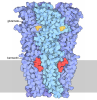
- Assembly
| Deposited unit | 
|
|---|---|
| 1 |
|
-Components
| #1: Protein | Mass: 53517.445 Da / Num. of mol.: 5 / Mutation: 0 Source method: isolated from a genetically manipulated source Source: (gene. exp.) Apis mellifera (honey bee) / Gene: RDL, 406124, LOC406124Production host: Spodoptera aff. frugiperda 1 BOLD-2017 (butterflies/moths)References: UniProt: A0A8U0Y4W2 #2: Chemical | ChemComp-ABU /   Mass: 103.120 Da / Num. of mol.: 5 / Source method: obtained synthetically / Formula: C4H9NO2 / Feature type: SUBJECT OF INVESTIGATION / Comment: neurotransmitter, inhibitor*YM Mass: 103.120 Da / Num. of mol.: 5 / Source method: obtained synthetically / Formula: C4H9NO2 / Feature type: SUBJECT OF INVESTIGATION / Comment: neurotransmitter, inhibitor*YM#3: Sugar | ChemComp-NAG / 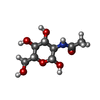 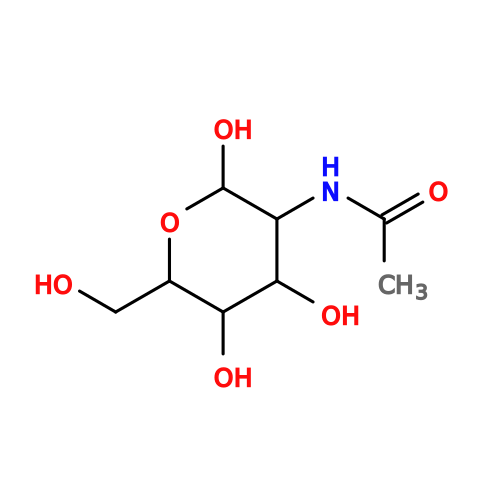 Type: D-saccharide, beta linking / Mass: 221.208 Da / Num. of mol.: 10 / Source method: obtained synthetically / Formula: C8H15NO6 Type: D-saccharide, beta linking / Mass: 221.208 Da / Num. of mol.: 10 / Source method: obtained synthetically / Formula: C8H15NO6#4: Chemical | ChemComp-A1JNZ / Mass: 873.077 Da / Num. of mol.: 5 / Source method: obtained synthetically / Formula: C48H72O14 / Feature type: SUBJECT OF INVESTIGATION Has ligand of interest | Y | Has protein modification | Y | |
|---|
-Experimental details
-Experiment
| Experiment | Method: ELECTRON MICROSCOPY |
|---|---|
| EM experiment | Aggregation state: PARTICLE / 3D reconstruction method: single particle reconstruction |
- Sample preparation
| Component | Name: Gamma-aminobutyric acid receptor subunit beta, RDL in complex with GABA and Abamectin Type: COMPLEX / Entity ID: #1 / Source: RECOMBINANT |
|---|---|
| Source (natural) | Organism: Apis mellifera (honey bee) |
| Source (recombinant) | Organism: Spodoptera aff. frugiperda 1 BOLD-2017 (butterflies/moths) |
| Buffer solution | pH: 7.4 |
| Specimen | Embedding applied: NO / Shadowing applied: NO / Staining applied: NO / Vitrification applied: YES |
| Specimen support | Grid type: UltrAuFoil R1.2/1.3 |
| Vitrification | Cryogen name: ETHANE |
- Electron microscopy imaging
| Experimental equipment |  Model: Titan Krios / Image courtesy: FEI Company |
|---|---|
| Microscopy | Model: TFS KRIOS |
| Electron gun | Electron source:  FIELD EMISSION GUN / Accelerating voltage: 300 kV / Illumination mode: FLOOD BEAM FIELD EMISSION GUN / Accelerating voltage: 300 kV / Illumination mode: FLOOD BEAM |
| Electron lens | Mode: BRIGHT FIELD / Nominal defocus max: 2100 nm / Nominal defocus min: 700 nm |
| Image recording | Electron dose: 59.86 e/Å2 / Film or detector model: GATAN K3 (6k x 4k) |
- Processing
| EM software |
| ||||||||||||||||||||||||||||||||
|---|---|---|---|---|---|---|---|---|---|---|---|---|---|---|---|---|---|---|---|---|---|---|---|---|---|---|---|---|---|---|---|---|---|
| CTF correction | Type: PHASE FLIPPING AND AMPLITUDE CORRECTION | ||||||||||||||||||||||||||||||||
| 3D reconstruction | Resolution: 3.2 Å / Resolution method: FSC 0.143 CUT-OFF / Num. of particles: 30111 / Symmetry type: POINT |
