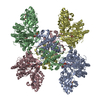
Movie
Movie Controller

[English] 日本語
 Yorodumi
- PDB-9r90: Cryo-EM structure of human ATP citrate lyase in complex with inhi... -
+ Open data

- Basic information
| Entry | Database: PDB / ID: 9r90 | ||||||||||||||||||||||||||||||||||||||||||||||||
|---|---|---|---|---|---|---|---|---|---|---|---|---|---|---|---|---|---|---|---|---|---|---|---|---|---|---|---|---|---|---|---|---|---|---|---|---|---|---|---|---|---|---|---|---|---|---|---|---|---|
| Title | Cryo-EM structure of human ATP citrate lyase in complex with inhibitor EVT0185-CoA | ||||||||||||||||||||||||||||||||||||||||||||||||
 Components Components | Isoform 2 of ATP-citrate synthase | ||||||||||||||||||||||||||||||||||||||||||||||||
 Keywords Keywords | LYASE / ATP citrate lyase / ACL / ACLY / de novo lipogenesis / acetyl-CoA / citrate / oxaloacetate / cancer | ||||||||||||||||||||||||||||||||||||||||||||||||
| Function / homology |  Function and homology information Function and homology informationATP citrate synthase / ATP citrate synthase activity / citrate metabolic process / Fatty acyl-CoA biosynthesis / acetyl-CoA biosynthetic process / ChREBP activates metabolic gene expression / oxaloacetate metabolic process / coenzyme A metabolic process / cholesterol biosynthetic process / lipid biosynthetic process ...ATP citrate synthase / ATP citrate synthase activity / citrate metabolic process / Fatty acyl-CoA biosynthesis / acetyl-CoA biosynthetic process / ChREBP activates metabolic gene expression / oxaloacetate metabolic process / coenzyme A metabolic process / cholesterol biosynthetic process / lipid biosynthetic process / negative regulation of ferroptosis / fatty acid biosynthetic process / azurophil granule lumen / ficolin-1-rich granule lumen / Neutrophil degranulation / extracellular exosome / extracellular region / ATP binding / membrane / metal ion binding / cytosol Similarity search - Function | ||||||||||||||||||||||||||||||||||||||||||||||||
| Biological species |  Homo sapiens (human) Homo sapiens (human) | ||||||||||||||||||||||||||||||||||||||||||||||||
| Method | ELECTRON MICROSCOPY / single particle reconstruction / cryo EM / Resolution: 3.25 Å | ||||||||||||||||||||||||||||||||||||||||||||||||
 Authors Authors | Verstraete, K. / Verschueren, K. / Savvides, S.N. / Steinberg, G.R. | ||||||||||||||||||||||||||||||||||||||||||||||||
| Funding support |  Belgium, 1items Belgium, 1items
| ||||||||||||||||||||||||||||||||||||||||||||||||
 Citation Citation | Journal: Nature / Year: 2025 Title: ACLY inhibition promotes tumour immunity and suppresses liver cancer. Authors: Jaya Gautam / Jianhan Wu / James S V Lally / Jamie D McNicol / Russta Fayyazi / Elham Ahmadi / Daniela Carmen Oniciu / Spencer Heaton / Roger S Newton / Sonia Rehal / Dipankar Bhattacharya / ...Authors: Jaya Gautam / Jianhan Wu / James S V Lally / Jamie D McNicol / Russta Fayyazi / Elham Ahmadi / Daniela Carmen Oniciu / Spencer Heaton / Roger S Newton / Sonia Rehal / Dipankar Bhattacharya / Fiorella Di Pastena / Binh Nguyen / Celina M Valvano / Logan K Townsend / Suhrid Banskota / Battsetseg Batchuluun / Maria Joy Therese Jabile / Alice Payne / Junfeng Lu / Eric M Desjardins / Naoto Kubota / Evangelia E Tsakiridis / Bejal Mistry / Alex Aganostopoulos / Vanessa Houde / Ann Dansercoer / Koen H G Verschueren / Savvas N Savvides / Joanne A Hammill / Ksenia Bezverbnaya / Paola Muti / Theodoros Tsakiridis / Wenting Dai / Lei Jiang / Yujin Hoshida / Mark Larché / Jonathan L Bramson / Scott L Friedman / Kenneth Verstraete / Dongdong Wang / Gregory R Steinberg /   Abstract: Immunosuppressive tumour microenvironments are common in cancers such as metabolic dysfunction-associated steatohepatitis (MASH)-driven hepatocellular carcinoma (HCC) (MASH-HCC). Although immune ...Immunosuppressive tumour microenvironments are common in cancers such as metabolic dysfunction-associated steatohepatitis (MASH)-driven hepatocellular carcinoma (HCC) (MASH-HCC). Although immune cell metabolism influences effector function, the effect of tumour metabolism on immunogenicity is less understood. ATP citrate lyase (ACLY) links substrate availability and mitochondrial metabolism with lipid biosynthesis and gene regulation. Although ACLY inhibition shows antiproliferative effects in various tumours, clinical translation has been limited by challenges in inhibitor development and compensatory metabolic pathways. Here, using a mouse model of MASH-HCC that mirrors human disease, genetic inhibition of ACLY in hepatocytes and tumours reduced neoplastic lesions by over 70%. To evaluate the therapeutic potential of this pathway, a novel small-molecule ACLY inhibitor, EVT0185 (6-[4-(5-carboxy-5-methyl-hexyl)-phenyl]-2,2-dimethylhexanoic acid), was identified via phenotypic screening. EVT0185 is converted to a CoA thioester in the liver by SLC27A2 and structural analysis by cryo-electron microscopy reveals that EVT0185-CoA directly interacts with the CoA-binding site of ACLY. Oral delivery of EVT0185 in three mouse models of MASH-HCC dramatically reduces tumour burden as monotherapy and enhances efficacy of current standards of care including tyrosine kinase inhibitors and immunotherapies. Transcriptomic and spatial profiling in mice and humans linked reduced tumour ACLY with increases in the chemokine CXCL13, tumour-infiltrating B cells and tertiary lymphoid structures. The depletion of B cells blocked the antitumour effects of ACLY inhibition. Together, these findings illustrate how targeting tumour metabolism can rewire immune function and suppress cancer progression in MASH-HCC. | ||||||||||||||||||||||||||||||||||||||||||||||||
| History |
|
- Structure visualization
| Structure viewer | Molecule: MolmilJmol/JSmol |
|---|
- Downloads & links
-Download
| PDBx/mmCIF format | 9r90.cif.gz | 488.3 KB | Display | PDBx/mmCIF format |
|---|---|---|---|---|
| PDB format | pdb9r90.ent.gz | 294 KB | Display | PDB format |
| PDBx/mmJSON format | 9r90.json.gz | Tree view | PDBx/mmJSON format | |
| Others |  Other downloads Other downloads |
-Validation report
| Arichive directory | https://data.pdbj.org/pub/pdb/validation_reports/r9/9r90ftp://data.pdbj.org/pub/pdb/validation_reports/r9/9r90 | HTTPS FTP |
|---|
-Related structure data
| Related structure data |  53847MC M: map data used to model this data C: citing same article ( |
|---|---|
| Similar structure data |
-Links
 PDBj
PDBj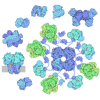
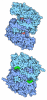
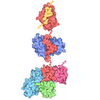
- Assembly
| Deposited unit | 
|
|---|---|
| 1 |
|
-Components
| #1: Protein | Mass: 123342.570 Da / Num. of mol.: 4 Source method: isolated from a genetically manipulated source Details: cDNA encoding full-length human ACLY (hACLY, Uniprot ID P53396-2) was prepared from poly A+ RNA from liver and cloned into the pTrcHis2 vector, in frame with a C-terminal Myc- and His-tag, ...Details: cDNA encoding full-length human ACLY (hACLY, Uniprot ID P53396-2) was prepared from poly A+ RNA from liver and cloned into the pTrcHis2 vector, in frame with a C-terminal Myc- and His-tag, resulting in pTrcHis2-hACLY (LMBP 11277). https://doi.org/10.1038/s41586-019-1095-5 Source: (gene. exp.) Homo sapiens (human) / Gene: ACLY / Plasmid: pTrcHis2-hACLYDetails (production host): Human ACLY in frame with a C-terminal Myc- and His-tag (LMBP 11277) Production host:   Escherichia coli BL21(DE3) (bacteria) / References: UniProt: P53396, ATP citrate synthase Escherichia coli BL21(DE3) (bacteria) / References: UniProt: P53396, ATP citrate synthase#2: Chemical | ChemComp-ADP / | 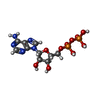 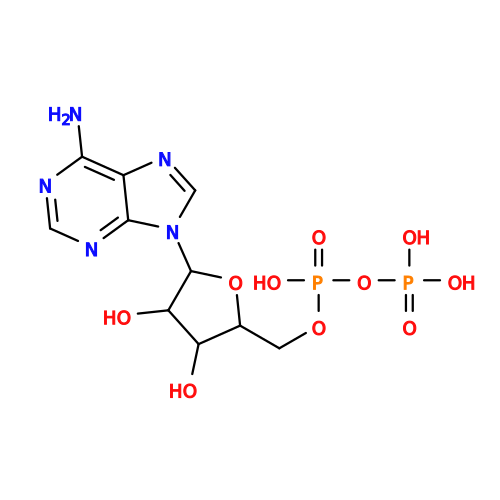 Mass: 427.201 Da / Num. of mol.: 1 / Source method: obtained synthetically / Formula: C10H15N5O10P2 / Feature type: SUBJECT OF INVESTIGATION / Comment: ADP, energy-carrying molecule*YM Mass: 427.201 Da / Num. of mol.: 1 / Source method: obtained synthetically / Formula: C10H15N5O10P2 / Feature type: SUBJECT OF INVESTIGATION / Comment: ADP, energy-carrying molecule*YM#3: Chemical | ChemComp-W1K / | Mass: 1112.022 Da / Num. of mol.: 1 / Source method: obtained synthetically / Formula: C43H68N7O19P3S Has ligand of interest | Y | Has protein modification | N | |
|---|
-Experimental details
-Experiment
| Experiment | Method: ELECTRON MICROSCOPY |
|---|---|
| EM experiment | Aggregation state: PARTICLE / 3D reconstruction method: single particle reconstruction |
- Sample preparation
| Component | Name: Human ATP citrate lyase (homotetramer) / Type: COMPLEX Details: Human ACLY was purified by IMAC and size-exclusion chromatography (SEC) using HiLoad 16/600 Superdex 200 and Superose 6 (Increase) columns with 20 mM HEPES, pH 7.4, 150 mM NaCl as a running ...Details: Human ACLY was purified by IMAC and size-exclusion chromatography (SEC) using HiLoad 16/600 Superdex 200 and Superose 6 (Increase) columns with 20 mM HEPES, pH 7.4, 150 mM NaCl as a running buffer. Top fractions from the final SEC elution peak were pooled and concentrated to 10 mg/mL, aliquoted, flash frozen and stored at -80 C freezer till further use. Entity ID: #1 / Source: RECOMBINANT | |||||||||||||||||||||||||||||||||||
|---|---|---|---|---|---|---|---|---|---|---|---|---|---|---|---|---|---|---|---|---|---|---|---|---|---|---|---|---|---|---|---|---|---|---|---|---|
| Molecular weight | Value: 0.486 MDa / Experimental value: YES | |||||||||||||||||||||||||||||||||||
| Source (natural) | Organism: Homo sapiens (human) / Cellular location: Cytoplasm | |||||||||||||||||||||||||||||||||||
| Source (recombinant) | Organism: Escherichia coli (E. coli) / Plasmid: pTrcHis2-hACLY | |||||||||||||||||||||||||||||||||||
| Buffer solution | pH: 7.4 Details: HBS buffer supplemented with 0.5 % CHAPSO, 1 mM Mg2ATP and 4 mM EVT0185-CoA | |||||||||||||||||||||||||||||||||||
| Buffer component |
| |||||||||||||||||||||||||||||||||||
| Specimen | Conc.: 10 mg/ml / Embedding applied: NO / Shadowing applied: NO / Staining applied: NO / Vitrification applied: YES Details: The sample was monodisperse. For cryo-EM grid preparation, purified ACLY (10 mg/mL in HBS buffer) was supplemented with 0.5 % CHAPSO, 1 mM Mg2ATP and 4 mM EVT0185-CoA. | |||||||||||||||||||||||||||||||||||
| Specimen support | Details: Grids were glow discharged with a Pelco EasiGlOW instrument using a current of 15 mA for 10s at a pressure of 0.4 mBar. Grid material: COPPER / Grid mesh size: 300 divisions/in. / Grid type: C-flat-1.2/1.3 | |||||||||||||||||||||||||||||||||||
| Vitrification | Instrument: LEICA EM GP / Cryogen name: ETHANE / Humidity: 99 % / Chamber temperature: 295 K / Details: Leica EM GP2 |
- Electron microscopy imaging
| Microscopy | Model: JEOL CRYO ARM 300 |
|---|---|
| Electron gun | Electron source:  FIELD EMISSION GUN / Accelerating voltage: 300 kV / Illumination mode: FLOOD BEAM FIELD EMISSION GUN / Accelerating voltage: 300 kV / Illumination mode: FLOOD BEAM |
| Electron lens | Mode: BRIGHT FIELD / Nominal defocus max: 1800 nm / Nominal defocus min: 1200 nm / Alignment procedure: COMA FREE |
| Specimen holder | Cryogen: NITROGEN / Specimen holder model: JEOL CRYOSPECPORTER |
| Image recording | Electron dose: 61.8 e/Å2 / Film or detector model: GATAN K3 (6k x 4k) / Num. of grids imaged: 1 / Num. of real images: 7263 |
| EM imaging optics | Energyfilter name: In-column Omega Filter |
- Processing
| EM software |
| ||||||||||||||||||||||||||||||||||||||||||||||||||
|---|---|---|---|---|---|---|---|---|---|---|---|---|---|---|---|---|---|---|---|---|---|---|---|---|---|---|---|---|---|---|---|---|---|---|---|---|---|---|---|---|---|---|---|---|---|---|---|---|---|---|---|
| Image processing | Details: Movies were processed via patch-based motion correction and CTF estimation as implemented in cryoSPARC v3.1.0. | ||||||||||||||||||||||||||||||||||||||||||||||||||
| CTF correction | Type: PHASE FLIPPING AND AMPLITUDE CORRECTION | ||||||||||||||||||||||||||||||||||||||||||||||||||
| Particle selection | Num. of particles selected: 210900 Details: Initial high-resolution 2D classes were obtained via the Blob Picker job in cryoSPARC, followed by template-based picking and neural network-based particle picking via TOPAZ as implemented ...Details: Initial high-resolution 2D classes were obtained via the Blob Picker job in cryoSPARC, followed by template-based picking and neural network-based particle picking via TOPAZ as implemented in cryoSPARC. Ensuing 2D classification, 2D class selection and removal of potential duplicate particles within a distance of 150 Angstrom resulted in a particle set of 210,900 particles. Particles were extracted with a box size of 480 pixels with 2x binning. | ||||||||||||||||||||||||||||||||||||||||||||||||||
| Symmetry | Point symmetry: C1 (asymmetric) | ||||||||||||||||||||||||||||||||||||||||||||||||||
| 3D reconstruction | Resolution: 3.25 Å / Resolution method: FSC 0.143 CUT-OFF / Num. of particles: 280072 Details: Following 3D classification, local refinement resulted in a cryo-EM volume with a golden standard FSC0.143-resolution of 3.25 Angstrom in which the atomic models for the CSS and CSH modules ...Details: Following 3D classification, local refinement resulted in a cryo-EM volume with a golden standard FSC0.143-resolution of 3.25 Angstrom in which the atomic models for the CSS and CSH modules (extracted from pdb 6xhx) were fitted using Chimera and real-space refined in Phenix using reference restraints to the starting model. Num. of class averages: 3 / Symmetry type: POINT | ||||||||||||||||||||||||||||||||||||||||||||||||||
| Atomic model building | B value: 138.8 / Protocol: FLEXIBLE FIT / Space: REAL Details: Following 3D classification, local refinement resulted in a cryo-EM volume with a golden standard FSC0.143-resolution of 3.25 Angstrom in which the atomic models for the CSS and CSH modules ...Details: Following 3D classification, local refinement resulted in a cryo-EM volume with a golden standard FSC0.143-resolution of 3.25 Angstrom in which the atomic models for the CSS and CSH modules (extracted from pdb 6xhx) were fitted using Chimera and real-space refined in Phenix using reference restraints to the starting model. Cryo-EM map regions representing ligands in the ATP-grasp fold domain of the CCS module and in the CoA-binding domain were of the CSH module modelled as Mg.ADP and the adenosine 3'-phosphate 5'-diphosphate moiety of bound EVT0185-CoA, respectively. Restraints for EVT0185-CoA were generated via de Grade Web Server (https://grade.globalphasing.org). | ||||||||||||||||||||||||||||||||||||||||||||||||||
| Atomic model building | PDB-ID: 6HXH Accession code: 6HXH / Source name: PDB / Type: experimental model | ||||||||||||||||||||||||||||||||||||||||||||||||||
| Refinement | Cross valid method: NONE Stereochemistry target values: GeoStd + Monomer Library + CDL v1.2 | ||||||||||||||||||||||||||||||||||||||||||||||||||
| Displacement parameters | Biso mean: 56.36 Å2 | ||||||||||||||||||||||||||||||||||||||||||||||||||
| Refine LS restraints |
|