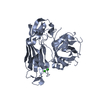
Movie
Movie Controller

[English] 日本語
 Yorodumi
- PDB-9nav: CryoEM structure of human astrovirus 1 spike in complex with huma... -
+ Open data

- Basic information
| Entry | Database: PDB / ID: 9nav | ||||||||||||||||||||||||
|---|---|---|---|---|---|---|---|---|---|---|---|---|---|---|---|---|---|---|---|---|---|---|---|---|---|
| Title | CryoEM structure of human astrovirus 1 spike in complex with human neonatal Fc receptor | ||||||||||||||||||||||||
 Components Components |
| ||||||||||||||||||||||||
 Keywords Keywords | VIRAL PROTEIN / spike protein / FcRn / FCGRT / VP90 / ORF2 / VIRUS / Structural Genomics / Center for Structural Biology of Infectious Diseases / CSBID | ||||||||||||||||||||||||
| Function / homology |  Function and homology information Function and homology informationIgG immunoglobulin transcytosis in epithelial cells mediated by FcRn immunoglobulin receptor / T=3 icosahedral viral capsid / IgG binding / beta-2-microglobulin binding / regulation of natural killer cell mediated immunity / early endosome lumen / Nef mediated downregulation of MHC class I complex cell surface expression / DAP12 interactions / Endosomal/Vacuolar pathway / Antigen Presentation: Folding, assembly and peptide loading of class I MHC ...IgG immunoglobulin transcytosis in epithelial cells mediated by FcRn immunoglobulin receptor / T=3 icosahedral viral capsid / IgG binding / beta-2-microglobulin binding / regulation of natural killer cell mediated immunity / early endosome lumen / Nef mediated downregulation of MHC class I complex cell surface expression / DAP12 interactions / Endosomal/Vacuolar pathway / Antigen Presentation: Folding, assembly and peptide loading of class I MHC / regulation of iron ion transport / negative regulation of iron ion transport / negative regulation of forebrain neuron differentiation / antigen processing and presentation of exogenous peptide antigen via MHC class Ib / peptide antigen assembly with MHC class I protein complex / ER to Golgi transport vesicle membrane / HFE-transferrin receptor complex / MHC class I peptide loading complex / transferrin transport / negative regulation of receptor-mediated endocytosis / cellular response to iron ion / positive regulation of T cell cytokine production / antigen processing and presentation of endogenous peptide antigen via MHC class I / peptide antigen assembly with MHC class II protein complex / MHC class I protein complex / negative regulation of epithelial cell proliferation / cellular response to nicotine / negative regulation of neurogenesis / positive regulation of receptor-mediated endocytosis / MHC class II protein complex / specific granule lumen / positive regulation of immune response / antigen processing and presentation of exogenous peptide antigen via MHC class II / peptide antigen binding / recycling endosome membrane / phagocytic vesicle membrane / positive regulation of T cell activation / Interferon gamma signaling / Immunoregulatory interactions between a Lymphoid and a non-Lymphoid cell / sensory perception of smell / Modulation by Mtb of host immune system / tertiary granule lumen / positive regulation of cellular senescence / MHC class II protein complex binding / DAP12 signaling / late endosome membrane / ER-Phagosome pathway / early endosome membrane / clathrin-dependent endocytosis of virus by host cell / host extracellular region / amyloid fibril formation / protein homotetramerization / intracellular iron ion homeostasis / learning or memory / endosome membrane / immune response / endoplasmic reticulum lumen / Amyloid fiber formation / external side of plasma membrane / Golgi membrane / focal adhesion / lysosomal membrane / Neutrophil degranulation / SARS-CoV-2 activates/modulates innate and adaptive immune responses / structural molecule activity / Golgi apparatus / endoplasmic reticulum / protein homodimerization activity / : / extracellular exosome / extracellular region / membrane / identical protein binding / plasma membrane Similarity search - Function | ||||||||||||||||||||||||
| Biological species |  Homo sapiens (human) Homo sapiens (human) Human astrovirus 1 Human astrovirus 1 | ||||||||||||||||||||||||
| Method | ELECTRON MICROSCOPY / single particle reconstruction / cryo EM / Resolution: 3.81 Å | ||||||||||||||||||||||||
 Authors Authors | Hall, P.D. / Nelson, C.A. / Fremont, D.H. / Center for Structural Biology of Infectious Diseases (CSBID) | ||||||||||||||||||||||||
| Funding support |  United States, 3items United States, 3items
| ||||||||||||||||||||||||
 Citation Citation | Journal: To Be Published Title: Cryo-EM structure of human astrovirus in complex with the neonatal Fc receptor Authors: Hall, P.D. / Nelson, C.A. / Adams, L.J. / Harshad, I. / Molleston, J.M. / Bui, D. / Baldridge, M.T. / Fremont, D.H. | ||||||||||||||||||||||||
| History |
|
- Structure visualization
| Structure viewer | Molecule: MolmilJmol/JSmol |
|---|
- Downloads & links
-Download
| PDBx/mmCIF format | 9nav.cif.gz | 595.3 KB | Display | PDBx/mmCIF format |
|---|---|---|---|---|
| PDB format | pdb9nav.ent.gz | 484.8 KB | Display | PDB format |
| PDBx/mmJSON format | 9nav.json.gz | Tree view | PDBx/mmJSON format | |
| Others |  Other downloads Other downloads |
-Validation report
| Arichive directory | https://data.pdbj.org/pub/pdb/validation_reports/na/9navftp://data.pdbj.org/pub/pdb/validation_reports/na/9nav | HTTPS FTP |
|---|
-Related structure data
| Related structure data |  49204MC  9nauC M: map data used to model this data C: citing same article ( |
|---|---|
| Similar structure data |

-Links
 PDBj
PDBj
- Assembly
| Deposited unit | 
|
|---|---|
| 1 |
|
-Components
| #1: Protein | Mass: 29720.383 Da / Num. of mol.: 2 Source method: isolated from a genetically manipulated source Source: (gene. exp.) Homo sapiens (human) / Gene: FCGRT, FCRN / Production host: Homo sapiens (human) / References: UniProt: P55899#2: Protein | Mass: 11748.160 Da / Num. of mol.: 2 Source method: isolated from a genetically manipulated source Source: (gene. exp.) Homo sapiens (human) / Gene: B2M, CDABP0092, HDCMA22P / Production host: Homo sapiens (human) / References: UniProt: P61769#3: Protein | Mass: 70095.953 Da / Num. of mol.: 2 / Source method: isolated from a natural source / Source: (natural) Human astrovirus 1 / References: UniProt: A0A3G6VE21#4: Protein | Mass: 45173.895 Da / Num. of mol.: 4 / Source method: isolated from a natural source / Source: (natural) Human astrovirus 1 / References: UniProt: O12792Has protein modification | Y | |
|---|
-Experimental details
-Experiment
| Experiment | Method: ELECTRON MICROSCOPY |
|---|---|
| EM experiment | Aggregation state: PARTICLE / 3D reconstruction method: single particle reconstruction |
- Sample preparation
| Component | Name: Human astrovirus 1 / Type: VIRUS / Entity ID: #3-#4, #1-#2 / Source: NATURAL |
|---|---|
| Molecular weight | Experimental value: NO |
| Source (natural) | Organism: Human astrovirus 1 / Strain: reference strain |
| Details of virus | Empty: NO / Enveloped: NO / Isolate: STRAIN / Type: VIRION |
| Natural host | Organism: Homo sapiens |
| Virus shell | Name: ORF2 / Diameter: 350 nm / Triangulation number (T number): 3 |
| Buffer solution | pH: 7.4 |
| Specimen | Embedding applied: NO / Shadowing applied: NO / Staining applied: NO / Vitrification applied: YES |
| Vitrification | Instrument: FEI VITROBOT MARK IV / Cryogen name: ETHANE |
- Electron microscopy imaging
| Experimental equipment |  Model: Titan Krios / Image courtesy: FEI Company | ||||||||||||||||
|---|---|---|---|---|---|---|---|---|---|---|---|---|---|---|---|---|---|
| Microscopy | Model: TFS KRIOS | ||||||||||||||||
| Electron gun | Electron source:  FIELD EMISSION GUN / Accelerating voltage: 300 kV / Illumination mode: FLOOD BEAM FIELD EMISSION GUN / Accelerating voltage: 300 kV / Illumination mode: FLOOD BEAM | ||||||||||||||||
| Electron lens | Mode: BRIGHT FIELD / Nominal defocus max: 2200 nm / Nominal defocus min: 1000 nm | ||||||||||||||||
| Image recording |
|
- Processing
| EM software | Name: PHENIX / Category: model refinement | ||||||||||||||||||||||||||||||||
|---|---|---|---|---|---|---|---|---|---|---|---|---|---|---|---|---|---|---|---|---|---|---|---|---|---|---|---|---|---|---|---|---|---|
| CTF correction | Type: PHASE FLIPPING AND AMPLITUDE CORRECTION | ||||||||||||||||||||||||||||||||
| Symmetry | Point symmetry: C2 (2 fold cyclic) | ||||||||||||||||||||||||||||||||
| 3D reconstruction | Resolution: 3.81 Å / Resolution method: FSC 0.143 CUT-OFF / Num. of particles: 54839 / Symmetry type: POINT | ||||||||||||||||||||||||||||||||
| Atomic model building | Protocol: RIGID BODY FIT / Space: REAL | ||||||||||||||||||||||||||||||||
| Atomic model building | 3D fitting-ID: 1 / Source name: PDB / Type: experimental model
| ||||||||||||||||||||||||||||||||
| Refinement | Highest resolution: 3.81 Å Stereochemistry target values: REAL-SPACE (WEIGHTED MAP SUM AT ATOM CENTERS) | ||||||||||||||||||||||||||||||||
| Refine LS restraints |
|