[English] 日本語
Yorodumi
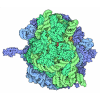
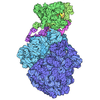
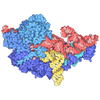
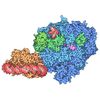
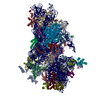
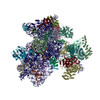
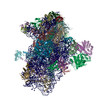
- PDB-9h6y: Late-stage 48S Initiation Complex (LS48S IC) guided by the trans-RNA -

+
Open data


ID or keywords:

Loading...

-
Basic information

Entry
Database: PDB / ID: 9h6y
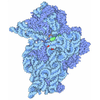
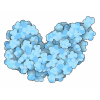
TitleLate-stage 48S Initiation Complex (LS48S IC) guided by the trans-RNA
Components
  • (Eukaryotic translation initiation factor ...) x 4
  • (Small ribosomal subunit protein ...) x 31
  • 18S ribosomal RNA
  • 40S ribosomal protein S24
  • ATP binding cassette subfamily E member 1
  • Initiator methionylated tRNA
  • Linear mRNA
  • Ubiquitin-like FUBI-ribosomal protein eS30 fusion protein
  • Ubiquitin-ribosomal protein eS31 fusion protein
KeywordsTRANSLATION / 48S late-stage initiation complex / Programmable mRNA translation initiation / trans-RNA / activation of mRNA translation
Function / homology
Function and homology information


regulation of macromolecule metabolic process / Translation initiation complex formation / Formation of the ternary complex, and subsequently, the 43S complex / Ribosomal scanning and start codon recognition / eukaryotic initiation factor eIF2 binding / Major pathway of rRNA processing in the nucleolus and cytosol / GTP hydrolysis and joining of the 60S ribosomal subunit / L13a-mediated translational silencing of Ceruloplasmin expression / SRP-dependent cotranslational protein targeting to membrane / Formation of a pool of free 40S subunits ...regulation of macromolecule metabolic process / Translation initiation complex formation / Formation of the ternary complex, and subsequently, the 43S complex / Ribosomal scanning and start codon recognition / eukaryotic initiation factor eIF2 binding / Major pathway of rRNA processing in the nucleolus and cytosol / GTP hydrolysis and joining of the 60S ribosomal subunit / L13a-mediated translational silencing of Ceruloplasmin expression / SRP-dependent cotranslational protein targeting to membrane / Formation of a pool of free 40S subunits / Nonsense Mediated Decay (NMD) independent of the Exon Junction Complex (EJC) / Nonsense Mediated Decay (NMD) enhanced by the Exon Junction Complex (EJC) / eukaryotic translation initiation factor 2 complex / formation of cytoplasmic translation initiation complex / eukaryotic 48S preinitiation complex / cellular response to chemical stress / GDP-dissociation inhibitor activity / laminin receptor activity / endonucleolytic cleavage to generate mature 3'-end of SSU-rRNA from (SSU-rRNA, 5.8S rRNA, LSU-rRNA) / ubiquitin ligase inhibitor activity / positive regulation of signal transduction by p53 class mediator / 90S preribosome / phagocytic cup / endonucleolytic cleavage in ITS1 to separate SSU-rRNA from 5.8S rRNA and LSU-rRNA from tricistronic rRNA transcript (SSU-rRNA, 5.8S rRNA, LSU-rRNA) / laminin binding / rough endoplasmic reticulum / translation regulator activity / ribosomal small subunit export from nucleus / gastrulation / translation initiation factor activity / MDM2/MDM4 family protein binding / cytosolic ribosome / class I DNA-(apurinic or apyrimidinic site) endonuclease activity / DNA-(apurinic or apyrimidinic site) lyase / GTPase activator activity / response to endoplasmic reticulum stress / positive regulation of apoptotic signaling pathway / maturation of SSU-rRNA from tricistronic rRNA transcript (SSU-rRNA, 5.8S rRNA, LSU-rRNA) / maturation of SSU-rRNA / small-subunit processome / spindle / cytoplasmic stress granule / rRNA processing / positive regulation of canonical Wnt signaling pathway / rhythmic process / regulation of translation / ribosome binding / virus receptor activity / ribosomal small subunit biogenesis / ribosomal small subunit assembly / small ribosomal subunit / small ribosomal subunit rRNA binding / cytosolic small ribosomal subunit / perikaryon / cytoplasmic translation / cell differentiation / tRNA binding / mitochondrial inner membrane / rRNA binding / postsynaptic density / structural constituent of ribosome / ribosome / translation / ribonucleoprotein complex / cell division / DNA repair / mRNA binding / apoptotic process / dendrite / synapse / centrosome / GTP binding / nucleolus / perinuclear region of cytoplasm / Golgi apparatus / ATP hydrolysis activity / DNA binding / RNA binding / zinc ion binding / ATP binding / nucleus / membrane / plasma membrane / cytosol / cytoplasm
Similarity search - Function
RLI, domain 1 / RLI1 / RNase L inhibitor RLI-like, possible metal-binding domain / Possible Fer4-like domain in RNase L inhibitor, RLI / Translation initiation factor IF2/IF5 domain / Translation initiation factor IF2/IF5, N-terminal / Translation initiation factor IF2/IF5, zinc-binding / Translation initiation factor IF2/IF5 / Domain found in IF2B/IF5 / domain present in translation initiation factor eIF2B and eIF5 ...RLI, domain 1 / RLI1 / RNase L inhibitor RLI-like, possible metal-binding domain / Possible Fer4-like domain in RNase L inhibitor, RLI / Translation initiation factor IF2/IF5 domain / Translation initiation factor IF2/IF5, N-terminal / Translation initiation factor IF2/IF5, zinc-binding / Translation initiation factor IF2/IF5 / Domain found in IF2B/IF5 / domain present in translation initiation factor eIF2B and eIF5 / eIF4-gamma/eIF5/eIF2-epsilon / Domain at the C-termini of GCD6, eIF-2B epsilon, eIF-4 gamma and eIF-5 / W2 domain / W2 domain profile. / Translation initiation factor 1A (eIF-1A), conserved site / Eukaryotic initiation factor 1A signature. / eukaryotic translation initiation factor 1A / Translation initiation factor 1A (eIF-1A) / Translation initiation factor 2, alpha subunit / Translation initiation factor 2, alpha subunit, middle domain superfamily / Translation initiation factor 2, alpha subunit, C-terminal / IF2a, S1-like domain / Eukaryotic translation initiation factor 2 alpha subunit / RNA-binding domain, S1, IF1 type / Translation initiation factor 1A / IF-1 / S1 domain IF1 type profile. / 4Fe-4S binding domain / 40S ribosomal protein SA / 40S ribosomal protein SA, C-terminal domain / 40S ribosomal protein SA C-terminus / Ubiquitin-like protein FUBI / S1 domain profile. / : / Ribosomal protein S26e signature. / Ribosomal protein L41 / Ribosomal protein L41 / Ribosomal protein S21e, conserved site / Ribosomal protein S21e signature. / Ribosomal protein S26e / Ribosomal protein S26e superfamily / Ribosomal protein S26e / : / Ribosomal protein S12e signature. / Ribosomal protein S12e / Small (40S) ribosomal subunit Asc1/RACK1 / Ribosomal protein S21e / Ribosomal protein S5, eukaryotic/archaeal / Ribosomal protein S21e superfamily / Ribosomal protein S21e / Ribosomal protein S19e, conserved site / Ribosomal protein S19e signature. / Ribosomal protein S2, eukaryotic / S27a-like superfamily / 40S Ribosomal protein S10 / Plectin/S10, N-terminal / Plectin/S10 domain / Ribosomal protein S30 / : / Ribosomal protein S30 / Ribosomal protein S10, eukaryotic/archaeal / Ribosomal protein S7e signature. / Ribosomal protein S25 / S25 ribosomal protein / Ribosomal protein S8e subdomain, eukaryotes / Ribosomal protein S27a / Ribosomal protein S27a / Ribosomal protein S27a / Ribosomal protein S17e, conserved site / Ribosomal protein S17e signature. / Ribosomal protein S2, eukaryotic/archaeal / Ribosomal protein S3Ae, conserved site / Ribosomal protein S3Ae signature. / 40S ribosomal protein S29/30S ribosomal protein S14 type Z / Ribosomal protein S3, eukaryotic/archaeal / 40S ribosomal protein S4, C-terminal domain / 40S ribosomal protein S4 C-terminus / Ribosomal protein S27e signature. / Ribosomal protein S4e, N-terminal, conserved site / Ribosomal protein S4e signature. / Ribosomal protein S19A/S15e / Ribosomal protein S8e, conserved site / Ribosomal protein S8e signature. / Ribosomal protein S6, eukaryotic / Ribosomal protein S19e / Ribosomal protein S19e / Ribosomal_S19e / Ribosomal protein S17e / Ribosomal protein S17e-like superfamily / Ribosomal S17 / Ribosomal protein S1-like RNA-binding domain / 40S ribosomal protein S1/3, eukaryotes / 40S ribosomal protein S11, N-terminal / Ribosomal_S17 N-terminal / Ribosomal protein S7e / Ribosomal protein S7e / : / S1 RNA binding domain / Ribosomal S24e conserved site / Ribosomal protein S24e signature. / Ribosomal protein S4e, N-terminal
Similarity search - Domain/homology
IRON/SULFUR CLUSTER / RNA / RNA (> 10) / RNA (> 100) / RNA (> 1000) / Small ribosomal subunit protein eS32 / Small ribosomal subunit protein uS5 / Small ribosomal subunit protein uS4 / Small ribosomal subunit protein eS12 / ATP-binding cassette sub-family E member 1 ...IRON/SULFUR CLUSTER / RNA / RNA (> 10) / RNA (> 100) / RNA (> 1000) / Small ribosomal subunit protein eS32 / Small ribosomal subunit protein uS5 / Small ribosomal subunit protein uS4 / Small ribosomal subunit protein eS12 / ATP-binding cassette sub-family E member 1 / Small ribosomal subunit protein uS9 / Small ribosomal subunit protein uS10 / Small ribosomal subunit protein RACK1 / Ubiquitin-ribosomal protein eS31 fusion protein / Small ribosomal subunit protein uS15 / Small ribosomal subunit protein eS7 / Eukaryotic translation initiation factor 4C / Small ribosomal subunit protein uS12 / Small ribosomal subunit protein eS10 / Small ribosomal subunit protein uS11 / Eukaryotic translation initiation factor 2 subunit 1 / Ubiquitin-like FUBI-ribosomal protein eS30 fusion protein / Small ribosomal subunit protein eS25 / Small ribosomal subunit protein eS26 / Small ribosomal subunit protein uS7 / Small ribosomal subunit protein uS8 / Eukaryotic translation initiation factor 5 / Small ribosomal subunit protein eS28 / Small ribosomal subunit protein eS8 / Small ribosomal subunit protein eS4 / Small ribosomal subunit protein uS2 / Small ribosomal subunit protein eS6 / Small ribosomal subunit protein eS19 / Small ribosomal subunit protein eS1 / Small ribosomal subunit protein uS3 / Small ribosomal subunit protein uS13 / Small ribosomal subunit protein uS17 / 40S ribosomal protein S24 / Small ribosomal subunit protein eS17 / Small ribosomal subunit protein eS27 / Small ribosomal subunit protein uS19 / Small ribosomal subunit protein uS14 / Small ribosomal subunit protein eS21
Similarity search - Component
Biological speciesOryctolagus cuniculus (rabbit)
MethodELECTRON MICROSCOPY / single particle reconstruction / cryo EM / Resolution: 2.9 Å
AuthorsNguyen, T.T. / Hashem, Y. / Rocha, R.E.O. / Boissier, F. / Qian, S.B. / Jia, L. / Uematsu, S. / Gu, Y. / Shi, S.
Funding support United States, European Union, 3items
OrganizationGrant numberCountry
National Institutes of Health/National Institute of General Medical Sciences (NIH/NIGMS)DP1GM142101 United States
Howard Hughes Medical Institute (HHMI)55108556 United States
European Research Council (ERC)101088541European Union
CitationJournal: Nat Biotechnol / Year: 2025
Title: Programmable initiation of mRNA translation by trans-RNA.
Authors: Longfei Jia / Tan-Trung Nguyen / Saori Uematsu / Yifei Gu / Shengcho Shi / Yaser Hashem / Shu-Bing Qian /
Abstract: Several approaches exist to silence genes, but few tools are available to activate individual mRNAs for translation inside cells. Guiding ribosomes to specific start codons without altering the ...Several approaches exist to silence genes, but few tools are available to activate individual mRNAs for translation inside cells. Guiding ribosomes to specific start codons without altering the original sequence remains a formidable task. Here we design capped trans-RNAs capable of directing ribosomes to specific initiation sites on individual mRNAs when the trans-cap is positioned near the target start codon. Structural and biochemical data suggest that the capped trans-RNA facilitates ribosome loading and scanning on the target mRNA through a synergistic mechanism involving alternative cap recognition. The trans-RNA also acts independently of the cap on the target mRNA, enabling translation of circular RNAs lacking internal ribosome entry sites. We apply trans-RNAs in vivo to achieve programmable alternative translation of endogenous genes in mouse liver. Finally, we provide the evidence for the existence of natural transcripts that, similarly to exogenous trans-RNAs, activate translation of endogenous mRNAs.
History
DepositionOct 25, 2024Deposition site: PDBE / Processing site: PDBE
Revision 1.0Dec 10, 2025Provider: repository / Type: Initial release

-
Structure visualization

Structure viewerMolecule:
MolmilJmol/JSmol

Downloads & links

-
Assembly

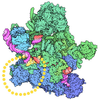
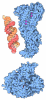
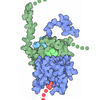
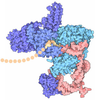
Deposited unit
1: Initiator methionylated tRNA
2: 18S ribosomal RNA
3: Linear mRNA
A: Eukaryotic translation initiation factor 2 subunit 1
B: Eukaryotic translation initiation factor 2 subunit 3
C: Small ribosomal subunit protein uS2
D: Small ribosomal subunit protein eS1
E: Small ribosomal subunit protein uS5
F: Small ribosomal subunit protein uS3
G: Small ribosomal subunit protein eS4
H: Small ribosomal subunit protein uS7
I: Small ribosomal subunit protein eS6
J: Small ribosomal subunit protein eS7
K: Small ribosomal subunit protein eS8
L: Small ribosomal subunit protein uS4
M: Small ribosomal subunit protein eS10
N: Small ribosomal subunit protein uS17
O: Small ribosomal subunit protein eS12
P: Small ribosomal subunit protein uS15
Q: Small ribosomal subunit protein uS11
R: Small ribosomal subunit protein uS19
S: Small ribosomal subunit protein uS9
T: Small ribosomal subunit protein eS17
U: Small ribosomal subunit protein uS13
V: Small ribosomal subunit protein eS19
W: Small ribosomal subunit protein uS10
X: Small ribosomal subunit protein eS21
Y: Small ribosomal subunit protein uS8
Z: Small ribosomal subunit protein uS12
a: 40S ribosomal protein S24
b: Small ribosomal subunit protein eS26
c: Small ribosomal subunit protein eS27
d: Small ribosomal subunit protein eS28
e: Small ribosomal subunit protein uS14
f: Ubiquitin-ribosomal protein eS31 fusion protein
g: Small ribosomal subunit protein RACK1
i: Ubiquitin-like FUBI-ribosomal protein eS30 fusion protein
j: Eukaryotic translation initiation factor 4C
k: ATP binding cassette subfamily E member 1
l: Small ribosomal subunit protein eS32
n: Small ribosomal subunit protein eS25
o: Eukaryotic translation initiation factor 5
hetero molecules


Theoretical massNumber of molelcules
Total (without water)1,522,59444
Polymers1,521,89142
Non-polymers7032
Water00
1


  • Idetical with deposited unit
  • defined by author
  • Evidence: electron microscopy, not applicable
TypeNameSymmetry operationNumber
identity operation1_5551

-
Components

-
RNA chain , 3 types, 3 molecules 123

#1: RNA chain Initiator methionylated tRNA


Mass: 24721.828 Da / Num. of mol.: 1 / Source method: isolated from a natural source / Source: (natural) Oryctolagus cuniculus (rabbit) / Cell line: Reticulocytes / Plasmid details: Rabbit Reticulocyte Lysate, Promega L4960
#2: RNA chain 18S ribosomal RNA


Mass: 601015.688 Da / Num. of mol.: 1 / Source method: isolated from a natural source / Source: (natural) Oryctolagus cuniculus (rabbit) / Cell line: Reticulocytes / Plasmid details: Rabbit Reticulocyte Lysate, Promega L4960
#3: RNA chain Linear mRNA


Mass: 51665.809 Da / Num. of mol.: 1 / Source method: isolated from a natural source / Source: (natural) Oryctolagus cuniculus (rabbit) / Cell line: Reticulocytes / Plasmid details: Rabbit Reticulocyte Lysate, Promega L4960

-
Eukaryotic translation initiation factor ... , 4 types, 4 molecules ABjo

#4: Protein Eukaryotic translation initiation factor 2 subunit 1 / Eukaryotic translation initiation factor 2 subunit alpha


Mass: 32792.867 Da / Num. of mol.: 1 / Source method: isolated from a natural source / Source: (natural) Oryctolagus cuniculus (rabbit) / Cell line: Reticulocytes / Plasmid details: Rabbit Reticulocyte Lysate, Promega L4960 / References: UniProt: G1T2G4
#5: Protein Eukaryotic translation initiation factor 2 subunit 3


Mass: 52499.992 Da / Num. of mol.: 1 / Source method: isolated from a natural source / Details: Uniprot ID: A0A5F9C3W2 / Source: (natural) Oryctolagus cuniculus (rabbit) / Cell line: Reticulocytes / Plasmid details: Rabbit Reticulocyte Lysate, Promega L4960
#38: Protein Eukaryotic translation initiation factor 4C


Mass: 16476.395 Da / Num. of mol.: 1 / Source method: isolated from a natural source
Details: Uniprot: G1SYS4, Eukaryotic translation initiation factor 4C. Many last papers called this protein as Eukaryotic translation initiation factor 1A
Source: (natural) Oryctolagus cuniculus (rabbit) / Cell line: Reticulocytes / Plasmid details: Rabbit Reticulocyte Lysate, Promega L4960 / References: UniProt: G1SYS4
#42: Protein Eukaryotic translation initiation factor 5


Mass: 49131.520 Da / Num. of mol.: 1 / Source method: isolated from a natural source
Details: G1TGW1 (2019-12-11 v2) (430 aa) and A0A5F9C5D3 (2019-12-11 v1) (398 aa). Different the C-ter of two protein isoform from the position 354
Source: (natural) Oryctolagus cuniculus (rabbit) / Cell line: Reticulocytes / Plasmid details: Rabbit Reticulocyte Lysate, Promega L4960 / References: UniProt: G1TGW1

+
Small ribosomal subunit protein ... , 31 types, 31 molecules CDEFGHIJKLMNOPQRSTUVWXYZbcdegln

#6: Protein Small ribosomal subunit protein uS2 / 37 kDa laminin receptor precursor / 37LRP / 37/67 kDa laminin receptor / LRP/LR / 67 kDa laminin ...37 kDa laminin receptor precursor / 37LRP / 37/67 kDa laminin receptor / LRP/LR / 67 kDa laminin receptor / 67LR / Laminin receptor 1 / LamR / Laminin-binding protein precursor p40 / LBP/p40


Mass: 32927.988 Da / Num. of mol.: 1 / Source method: isolated from a natural source / Details: G1TLT8 / Source: (natural) Oryctolagus cuniculus (rabbit) / Cell line: Reticulocytes / Plasmid details: Rabbit Reticulocyte Lysate, Promega L4960 / References: UniProt: G1TLT8
#7: Protein Small ribosomal subunit protein eS1


Mass: 29928.967 Da / Num. of mol.: 1 / Source method: isolated from a natural source / Details: G1TN72 / Source: (natural) Oryctolagus cuniculus (rabbit) / Cell line: Reticulocytes / Plasmid details: Rabbit Reticulocyte Lysate, Promega L4960 / References: UniProt: G1TN72
#8: Protein Small ribosomal subunit protein uS5 / 40S ribosomal protein S2


Mass: 29099.955 Da / Num. of mol.: 1 / Source method: isolated from a natural source / Details: A0AAA9WW19 / Source: (natural) Oryctolagus cuniculus (rabbit) / Cell line: Reticulocytes / Plasmid details: Rabbit Reticulocyte Lysate, Promega L4960 / References: UniProt: A0AAA9WW19
#9: Protein Small ribosomal subunit protein uS3


Mass: 26715.344 Da / Num. of mol.: 1 / Source method: isolated from a natural source / Details: G1TNM3 / Source: (natural) Oryctolagus cuniculus (rabbit) / Cell line: Reticulocytes / Plasmid details: Rabbit Reticulocyte Lysate, Promega L4960 / References: UniProt: G1TNM3
#10: Protein Small ribosomal subunit protein eS4


Mass: 29658.920 Da / Num. of mol.: 1 / Source method: isolated from a natural source / Details: G1TK17 / Source: (natural) Oryctolagus cuniculus (rabbit) / Cell line: Reticulocytes / Plasmid details: Rabbit Reticulocyte Lysate, Promega L4960 / References: UniProt: G1TK17
#11: Protein Small ribosomal subunit protein uS7


Mass: 22913.453 Da / Num. of mol.: 1 / Source method: isolated from a natural source / Details: G1TFM5 / Source: (natural) Oryctolagus cuniculus (rabbit) / Cell line: Reticulocytes / Plasmid details: Rabbit Reticulocyte Lysate, Promega L4960 / References: UniProt: G1TFM5
#12: Protein Small ribosomal subunit protein eS6 / 40S ribosomal protein S6


Mass: 28755.895 Da / Num. of mol.: 1 / Source method: isolated from a natural source / Details: G1TM55 / Source: (natural) Oryctolagus cuniculus (rabbit) / Cell line: Reticulocytes / Plasmid details: Rabbit Reticulocyte Lysate, Promega L4960 / References: UniProt: G1TM55
#13: Protein Small ribosomal subunit protein eS7


Mass: 22168.914 Da / Num. of mol.: 1 / Source method: isolated from a natural source / Details: G1SVB0 / Source: (natural) Oryctolagus cuniculus (rabbit) / Cell line: Reticulocytes / Plasmid details: Rabbit Reticulocyte Lysate, Promega L4960 / References: UniProt: G1SVB0
#14: Protein Small ribosomal subunit protein eS8 / 40S ribosomal protein S8


Mass: 24163.244 Da / Num. of mol.: 1 / Source method: isolated from a natural source / Details: G1TJW1 / Source: (natural) Oryctolagus cuniculus (rabbit) / Cell line: Reticulocytes / Plasmid details: Rabbit Reticulocyte Lysate, Promega L4960 / References: UniProt: G1TJW1
#15: Protein Small ribosomal subunit protein uS4


Mass: 22641.564 Da / Num. of mol.: 1 / Source method: isolated from a natural source / Details: B7NZS8 / Source: (natural) Oryctolagus cuniculus (rabbit) / Cell line: Reticulocytes / Plasmid details: Rabbit Reticulocyte Lysate, Promega L4960 / References: UniProt: B7NZS8
#16: Protein Small ribosomal subunit protein eS10 / 40S ribosomal protein S10


Mass: 17156.865 Da / Num. of mol.: 1 / Source method: isolated from a natural source / Details: G1U0Y5 / Source: (natural) Oryctolagus cuniculus (rabbit) / Cell line: Reticulocytes / Plasmid details: Rabbit Reticulocyte Lysate, Promega L4960 / References: UniProt: G1T168
#17: Protein Small ribosomal subunit protein uS17


Mass: 18468.826 Da / Num. of mol.: 1 / Source method: isolated from a natural source / Details: G1TRM4 / Source: (natural) Oryctolagus cuniculus (rabbit) / Cell line: Reticulocytes / Plasmid details: Rabbit Reticulocyte Lysate, Promega L4960 / References: UniProt: G1TRM4
#18: Protein Small ribosomal subunit protein eS12


Mass: 14538.987 Da / Num. of mol.: 1 / Source method: isolated from a natural source / Details: G1SFR8 / Source: (natural) Oryctolagus cuniculus (rabbit) / Cell line: Reticulocytes / Plasmid details: Rabbit Reticulocyte Lysate, Promega L4960 / References: UniProt: G1SFR8
#19: Protein Small ribosomal subunit protein uS15 / uS15


Mass: 17259.389 Da / Num. of mol.: 1 / Source method: isolated from a natural source / Details: G1SP51 / Source: (natural) Oryctolagus cuniculus (rabbit) / Cell line: Reticulocytes / Plasmid details: Rabbit Reticulocyte Lysate, Promega L4960 / References: UniProt: G1SP51
#20: Protein Small ribosomal subunit protein uS11


Mass: 16302.772 Da / Num. of mol.: 1 / Source method: isolated from a natural source / Details: G1T1F0 / Source: (natural) Oryctolagus cuniculus (rabbit) / Cell line: Reticulocytes / Plasmid details: Rabbit Reticulocyte Lysate, Promega L4960 / References: UniProt: G1T1F0
#21: Protein Small ribosomal subunit protein uS19


Mass: 17049.182 Da / Num. of mol.: 1 / Source method: isolated from a natural source / Details: G1U0Q2 / Source: (natural) Oryctolagus cuniculus (rabbit) / Cell line: Reticulocytes / Plasmid details: Rabbit Reticulocyte Lysate, Promega L4960 / References: UniProt: G1U0Q2
#22: Protein Small ribosomal subunit protein uS9


Mass: 16477.377 Da / Num. of mol.: 1 / Source method: isolated from a natural source / Details: G1SGX4 / Source: (natural) Oryctolagus cuniculus (rabbit) / Cell line: Reticulocytes / Plasmid details: Rabbit Reticulocyte Lysate, Promega L4960 / References: UniProt: G1SGX4
#23: Protein Small ribosomal subunit protein eS17


Mass: 15552.119 Da / Num. of mol.: 1 / Source method: isolated from a natural source / Details: G1TU13 / Source: (natural) Oryctolagus cuniculus (rabbit) / Cell line: Reticulocytes / Plasmid details: Rabbit Reticulocyte Lysate, Promega L4960 / References: UniProt: G1TU13
#24: Protein Small ribosomal subunit protein uS13


Mass: 17759.777 Da / Num. of mol.: 1 / Source method: isolated from a natural source / Details: G1TPG3 / Source: (natural) Oryctolagus cuniculus (rabbit) / Cell line: Reticulocytes / Plasmid details: Rabbit Reticulocyte Lysate, Promega L4960 / References: UniProt: G1TPG3
#25: Protein Small ribosomal subunit protein eS19


Mass: 16235.796 Da / Num. of mol.: 1 / Source method: isolated from a natural source / Details: G1TN62 / Source: (natural) Oryctolagus cuniculus (rabbit) / Cell line: Reticulocytes / Plasmid details: Rabbit Reticulocyte Lysate, Promega L4960 / References: UniProt: G1TN62
#26: Protein Small ribosomal subunit protein uS10


Mass: 13398.763 Da / Num. of mol.: 1 / Source method: isolated from a natural source / Details: G1SIZ2 / Source: (natural) Oryctolagus cuniculus (rabbit) / Cell line: Reticulocytes / Plasmid details: Rabbit Reticulocyte Lysate, Promega L4960 / References: UniProt: G1SIZ2
#27: Protein Small ribosomal subunit protein eS21


Mass: 9124.389 Da / Num. of mol.: 1 / Source method: isolated from a natural source / Details: G1TM82 / Source: (natural) Oryctolagus cuniculus (rabbit) / Cell line: Reticulocytes / Plasmid details: Rabbit Reticulocyte Lysate, Promega L4960 / References: UniProt: Q32PB8
#28: Protein Small ribosomal subunit protein uS8


Mass: 14865.555 Da / Num. of mol.: 1 / Source method: isolated from a natural source / Details: G1TG89 / Source: (natural) Oryctolagus cuniculus (rabbit) / Cell line: Reticulocytes / Plasmid details: Rabbit Reticulocyte Lysate, Promega L4960 / References: UniProt: G1TG89
#29: Protein Small ribosomal subunit protein uS12 / RPS23


Mass: 15844.666 Da / Num. of mol.: 1 / Source method: isolated from a natural source / Details: G1SZ47 / Source: (natural) Oryctolagus cuniculus (rabbit) / Cell line: Reticulocytes / Plasmid details: Rabbit Reticulocyte Lysate, Promega L4960 / References: UniProt: G1SZ47
#31: Protein Small ribosomal subunit protein eS26


Mass: 12961.455 Da / Num. of mol.: 1 / Source method: isolated from a natural source / Details: G1TFE8 / Source: (natural) Oryctolagus cuniculus (rabbit) / Cell line: Reticulocytes / Plasmid details: Rabbit Reticulocyte Lysate, Promega L4960 / References: UniProt: G1TFE8
#32: Protein Small ribosomal subunit protein eS27


Mass: 9480.186 Da / Num. of mol.: 1 / Source method: isolated from a natural source / Details: G1TZ76 / Source: (natural) Oryctolagus cuniculus (rabbit) / Cell line: Reticulocytes / Plasmid details: Rabbit Reticulocyte Lysate, Promega L4960 / References: UniProt: G1TZ76
#33: Protein Small ribosomal subunit protein eS28


Mass: 7855.052 Da / Num. of mol.: 1 / Source method: isolated from a natural source / Details: G1TIB4 / Source: (natural) Oryctolagus cuniculus (rabbit) / Cell line: Reticulocytes / Plasmid details: Rabbit Reticulocyte Lysate, Promega L4960 / References: UniProt: G1TIB4
#34: Protein Small ribosomal subunit protein uS14 / uS14


Mass: 6690.821 Da / Num. of mol.: 1 / Source method: isolated from a natural source / Details: G1U7M4 / Source: (natural) Oryctolagus cuniculus (rabbit) / Cell line: Reticulocytes / Plasmid details: Rabbit Reticulocyte Lysate, Promega L4960 / References: UniProt: G1U7M4
#36: Protein Small ribosomal subunit protein RACK1 / RACK1


Mass: 35115.652 Da / Num. of mol.: 1 / Source method: isolated from a natural source / Details: G1SJB4 / Source: (natural) Oryctolagus cuniculus (rabbit) / Cell line: Reticulocytes / Plasmid details: Rabbit Reticulocyte Lysate, Promega L4960 / References: UniProt: G1SJB4
#40: Protein/peptide Small ribosomal subunit protein eS32


Mass: 3473.451 Da / Num. of mol.: 1 / Source method: isolated from a natural source / Details: A0A087WNH4 / Source: (natural) Oryctolagus cuniculus (rabbit) / Cell line: Reticulocytes / Plasmid details: Rabbit Reticulocyte Lysate, Promega L4960 / References: UniProt: A0A087WNH4
#41: Protein Small ribosomal subunit protein eS25


Mass: 13645.028 Da / Num. of mol.: 1 / Source method: isolated from a natural source / Details: G1TDB3 / Source: (natural) Oryctolagus cuniculus (rabbit) / Cell line: Reticulocytes / Plasmid details: Rabbit Reticulocyte Lysate, Promega L4960 / References: UniProt: G1TDB3

-
Protein , 4 types, 4 molecules afik

#30: Protein 40S ribosomal protein S24


Mass: 15434.267 Da / Num. of mol.: 1 / Source method: isolated from a natural source / Details: G1TS40 / Source: (natural) Oryctolagus cuniculus (rabbit) / Cell line: Reticulocytes / Plasmid details: Rabbit Reticulocyte Lysate, Promega L4960 / References: UniProt: G1TS40
#35: Protein Ubiquitin-ribosomal protein eS31 fusion protein


Mass: 18004.041 Da / Num. of mol.: 1 / Source method: isolated from a natural source / Details: G1SK22 / Source: (natural) Oryctolagus cuniculus (rabbit) / Cell line: Reticulocytes / Plasmid details: Rabbit Reticulocyte Lysate, Promega L4960 / References: UniProt: G1SK22
#37: Protein Ubiquitin-like FUBI-ribosomal protein eS30 fusion protein


Mass: 14498.884 Da / Num. of mol.: 1 / Source method: isolated from a natural source / Details: G1T8A2 / Source: (natural) Oryctolagus cuniculus (rabbit) / Cell line: Reticulocytes / Plasmid details: Rabbit Reticulocyte Lysate, Promega L4960 / References: UniProt: G1T8A2
#39: Protein ATP binding cassette subfamily E member 1


Mass: 67419.258 Da / Num. of mol.: 1 / Source method: isolated from a natural source / Details: G1SG72 / Source: (natural) Oryctolagus cuniculus (rabbit) / Cell line: Reticulocytes / Plasmid details: Rabbit Reticulocyte Lysate, Promega L4960 / References: UniProt: G1SG72

-
Non-polymers , 1 types, 2 molecules

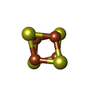
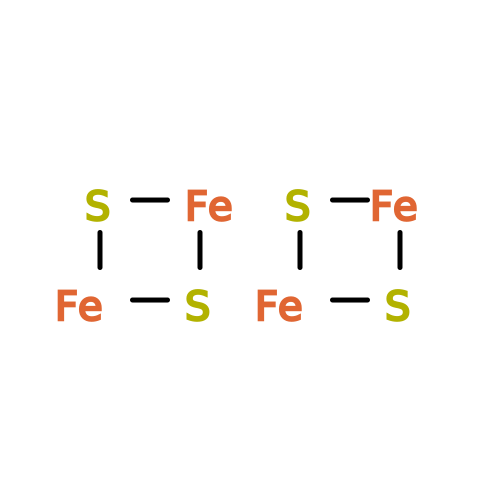
#43: Chemical ChemComp-SF4 / IRON/SULFUR CLUSTER


Mass: 351.640 Da / Num. of mol.: 2 / Source method: obtained synthetically / Formula: Fe4S4 / Feature type: SUBJECT OF INVESTIGATION

-
Details

Has ligand of interestY
Has protein modificationN

-
Experimental details

-
Experiment

ExperimentMethod: ELECTRON MICROSCOPY
EM experimentAggregation state: PARTICLE / 3D reconstruction method: single particle reconstruction

-
Sample preparation

ComponentName: Late-stage 48S Initiation Complex (LS48S IC) guided by the trans-RNA of 15 nt length, purification method of biotinylated DNA-oligo pull-down
Type: RIBOSOME / Entity ID: #1-#42 / Source: NATURAL
Molecular weightValue: 1.3 MDa / Experimental value: NO
Source (natural)Organism: Oryctolagus cuniculus (rabbit)
Buffer solutionpH: 7.4
Details: 10 mM HEPES-KOH pH 7.4, 5 mM Mg(OAc)2, 50 mM KOAc, 10 mM NH4Cl, 2 mM DTT and Roche cOmplete protease inhibitor cocktail
Buffer component
IDConc.NameFormulaBuffer-ID
110 mMHEPES BufferHEPES-KOH1
25 mMMagnesium AcetateMg(OAc)21
350 mMPotassium AcetateKOAc1
410 mMAmmonium ChlorideNH4Cl1
52 mMDithiothreitolDTT1
SpecimenConc.: 0.4 mg/ml / Embedding applied: NO / Shadowing applied: NO / Staining applied: NO / Vitrification applied: YES
Details: late-stage 48S initiation translation complex was dissolved in 20 microlitre buffer containing 10 mM HEPES-KOH pH 7.4, 5 mM Mg(OAc)2, 50 mM KOAc, 10 mM NH4Cl, 2 mM DTT and Roche cOmplete ...Details: late-stage 48S initiation translation complex was dissolved in 20 microlitre buffer containing 10 mM HEPES-KOH pH 7.4, 5 mM Mg(OAc)2, 50 mM KOAc, 10 mM NH4Cl, 2 mM DTT and Roche cOmplete protease inhibitor cocktail
Specimen supportDetails: glow-discharged at 2.5 mA for 20 s / Grid material: COPPER / Grid mesh size: 300 divisions/in. / Grid type: Quantifoil R2/2
VitrificationInstrument: FEI VITROBOT MARK IV / Cryogen name: ETHANE / Humidity: 100 % / Chamber temperature: 277 K
Details: The sample was incubated on the grid for 30 s and then blotted with filter paper from both sides for 1.5 s with the blot force 5

-
Electron microscopy imaging

Experimental equipment
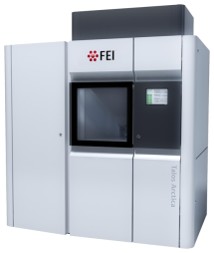
Model: Talos Arctica / Image courtesy: FEI Company
MicroscopyModel: FEI TALOS ARCTICA
Electron gunElectron source: FIELD EMISSION GUN / Accelerating voltage: 200 kV / Illumination mode: FLOOD BEAM
Electron lensMode: BRIGHT FIELD / Nominal magnification: 59000 X / Nominal defocus max: 2500 nm / Nominal defocus min: 500 nm / Cs: 2.7 mm / C2 aperture diameter: 30 µm / Alignment procedure: COMA FREE
Specimen holderCryogen: NITROGEN / Specimen holder model: FEI TITAN KRIOS AUTOGRID HOLDER / Temperature (max): 95 K / Temperature (min): 90 K
Image recordingAverage exposure time: 6 sec. / Electron dose: 50 e/Å2 / Detector mode: COUNTING / Film or detector model: GATAN K2 SUMMIT (4k x 4k) / Num. of grids imaged: 1 / Num. of real images: 9524
Image scansSampling size: 6.35 µm / Width: 4096 / Height: 4096 / Movie frames/image: 40 / Used frames/image: 1-40

-
Processing

EM software
IDNameVersionCategory
1cryoSPARC4.5.1particle selection
2SerialEM4.1image acquisition
4CTFFIND4CTF correction
7UCSF ChimeraX1.8model fitting
9ISOLDE1.6model refinement
10PHENIX1.20.1-4487model refinement
14cryoSPARC4.5.13D reconstruction
CTF correctionType: PHASE FLIPPING AND AMPLITUDE CORRECTION
3D reconstructionResolution: 2.9 Å / Resolution method: OTHER / Num. of particles: 1000 / Symmetry type: POINT
Atomic model buildingProtocol: RIGID BODY FIT
Details: The atomic model of LS48S IC complex (PDB: 8P09) was initially rigid body fitted in density using ChimeraX and further model building was done for mRNA, eIF5 N-terminal domain, eIF2gamma, ...Details: The atomic model of LS48S IC complex (PDB: 8P09) was initially rigid body fitted in density using ChimeraX and further model building was done for mRNA, eIF5 N-terminal domain, eIF2gamma, eIF3d and eIF3 octamer in ChimeraX. Densities for eIF5 N-terminal domain, eIF2gamma, eIF3d and eIF3 octamer were observed in the map and therefore were included in the model. The 3D structure of the eIF5-N terminal domain was generated by Alphafold2 (PDB: G1TGW1). It was then accommodated into the model by aligning structurally to its counterparts in the yeast atomic model of the py48S-eIF5N pre-initiation complex (PDB: 6FYX). IF3d and eIF3 octamer were taken from the atomic model of LS48S IC complex with eIF3 proteins (PDB: 6YAM) and placed into density by rigid-body fitting. The atomic models with and without eIF3 proteins were inspected visually and performed stereochemical, torsional, angle refinement and optimization by using ISOLDE v1.6. Figures featuring cryo-EM densities and atomic models were visualized by using ChimeraX.
Atomic model building

3D fitting-ID: 1

IDPDB-IDAccession codeInitial refinement model-IDSource nameTypeChain-IDChain residue rangeDetails
18P098P091PDBexperimental model
26YAM6YAM2PDBexperimental model
36FYX6FYX3PDBexperimental model
4G1TGW14AlphaFoldin silico modelo1-147Eukaryotic translation initiation factor 5 (N-terminal domain)

+
About Yorodumi

-
News

-
Feb 9, 2022. New format data for meta-information of EMDB entries

New format data for meta-information of EMDB entries

  • Version 3 of the EMDB header file is now the official format.
  • The previous official version 1.9 will be removed from the archive.

Related info.:EMDB header

External links:wwPDB to switch to version 3 of the EMDB data model

-
Aug 12, 2020. Covid-19 info

Covid-19 info

URL: https://pdbj.org/emnavi/covid19.php

New page: Covid-19 featured information page in EM Navigator.

Related info.:Covid-19 info / Mar 5, 2020. Novel coronavirus structure data

+
Mar 5, 2020. Novel coronavirus structure data

Novel coronavirus structure data

Related info.:Yorodumi Speices / Aug 12, 2020. Covid-19 info

External links:COVID-19 featured content - PDBj / Molecule of the Month (242):Coronavirus Proteases
+
Jan 31, 2019. EMDB accession codes are about to change! (news from PDBe EMDB page)

EMDB accession codes are about to change! (news from PDBe EMDB page)

  • The allocation of 4 digits for EMDB accession codes will soon come to an end. Whilst these codes will remain in use, new EMDB accession codes will include an additional digit and will expand incrementally as the available range of codes is exhausted. The current 4-digit format prefixed with “EMD-” (i.e. EMD-XXXX) will advance to a 5-digit format (i.e. EMD-XXXXX), and so on. It is currently estimated that the 4-digit codes will be depleted around Spring 2019, at which point the 5-digit format will come into force.
  • The EM Navigator/Yorodumi systems omit the EMD- prefix.

Related info.:Q: What is EMD? / ID/Accession-code notation in Yorodumi/EM Navigator

External links:EMDB Accession Codes are Changing Soon! / Contact to PDBj
+
Jul 12, 2017. Major update of PDB

Major update of PDB

  • wwPDB released updated PDB data conforming to the new PDBx/mmCIF dictionary.
  • This is a major update changing the version number from 4 to 5, and with Remediation, in which all the entries are updated.
  • In this update, many items about electron microscopy experimental information are reorganized (e.g. em_software).
  • Now, EM Navigator and Yorodumi are based on the updated data.

External links:wwPDB Remediation / Enriched Model Files Conforming to OneDep Data Standards Now Available in the PDB FTP Archive

-
Yorodumi

Thousand views of thousand structures

  • Yorodumi is a browser for structure data from EMDB, PDB, SASBDB, etc.
  • This page is also the successor to EM Navigator detail page, and also detail information page/front-end page for Omokage search.
  • The word "yorodu" (or yorozu) is an old Japanese word meaning "ten thousand". "mi" (miru) is to see.

Related info.:EMDB / PDB / SASBDB / Comparison of 3 databanks / Yorodumi Search / Aug 31, 2016. New EM Navigator & Yorodumi / Yorodumi Papers / Jmol/JSmol / Function and homology information / Changes in new EM Navigator and Yorodumi

Read more