 ムービー
ムービー コントローラー


+ データを開く

- 基本情報
基本情報
| 登録情報 | データベース: PDB / ID: 8uxv | |||||||||||||||||||||||||||||||||||||||||||||||||||||||||
|---|---|---|---|---|---|---|---|---|---|---|---|---|---|---|---|---|---|---|---|---|---|---|---|---|---|---|---|---|---|---|---|---|---|---|---|---|---|---|---|---|---|---|---|---|---|---|---|---|---|---|---|---|---|---|---|---|---|---|
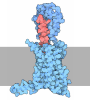
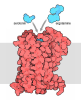
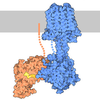
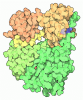
| タイトル | Consensus olfactory receptor consOR51 in complex with mini-Gs trimeric protein | |||||||||||||||||||||||||||||||||||||||||||||||||||||||||
 要素 要素 |
| |||||||||||||||||||||||||||||||||||||||||||||||||||||||||
 キーワード キーワード | SIGNALING PROTEIN / Odorant / Olfaction / GPCR / Receptor | |||||||||||||||||||||||||||||||||||||||||||||||||||||||||
| 機能・相同性 |  機能・相同性情報 機能・相同性情報G-protein beta/gamma-subunit complex binding / Olfactory Signaling Pathway / Activation of the phototransduction cascade / G protein-coupled acetylcholine receptor signaling pathway / G beta:gamma signalling through PLC beta / Presynaptic function of Kainate receptors / Thromboxane signalling through TP receptor / Activation of G protein gated Potassium channels / Inhibition of voltage gated Ca2+ channels via Gbeta/gamma subunits / G-protein activation ...G-protein beta/gamma-subunit complex binding / Olfactory Signaling Pathway / Activation of the phototransduction cascade / G protein-coupled acetylcholine receptor signaling pathway / G beta:gamma signalling through PLC beta / Presynaptic function of Kainate receptors / Thromboxane signalling through TP receptor / Activation of G protein gated Potassium channels / Inhibition of voltage gated Ca2+ channels via Gbeta/gamma subunits / G-protein activation / Glucagon signaling in metabolic regulation / G beta:gamma signalling through CDC42 / Prostacyclin signalling through prostacyclin receptor / G beta:gamma signalling through BTK / Synthesis, secretion, and inactivation of Glucagon-like Peptide-1 (GLP-1) / photoreceptor disc membrane / ADP signalling through P2Y purinoceptor 12 / Sensory perception of sweet, bitter, and umami (glutamate) taste / Glucagon-type ligand receptors / Adrenaline,noradrenaline inhibits insulin secretion / Vasopressin regulates renal water homeostasis via Aquaporins / Glucagon-like Peptide-1 (GLP1) regulates insulin secretion / G alpha (z) signalling events / cellular response to catecholamine stimulus / ADP signalling through P2Y purinoceptor 1 / ADORA2B mediated anti-inflammatory cytokines production / G beta:gamma signalling through PI3Kgamma / adenylate cyclase-activating dopamine receptor signaling pathway / Cooperation of PDCL (PhLP1) and TRiC/CCT in G-protein beta folding / GPER1 signaling / cellular response to prostaglandin E stimulus / heterotrimeric G-protein complex / G-protein beta-subunit binding / G alpha (12/13) signalling events / Inactivation, recovery and regulation of the phototransduction cascade / extracellular vesicle / sensory perception of taste / Thrombin signalling through proteinase activated receptors (PARs) / signaling receptor complex adaptor activity / retina development in camera-type eye / GTPase binding / fibroblast proliferation / Ca2+ pathway / High laminar flow shear stress activates signaling by PIEZO1 and PECAM1:CDH5:KDR in endothelial cells / G alpha (i) signalling events / G alpha (s) signalling events / phospholipase C-activating G protein-coupled receptor signaling pathway / G alpha (q) signalling events / Ras protein signal transduction / cell population proliferation / Extra-nuclear estrogen signaling / G protein-coupled receptor signaling pathway / lysosomal membrane / GTPase activity / synapse / GTP binding / protein-containing complex binding / signal transduction / extracellular exosome / membrane / metal ion binding / plasma membrane / cytoplasm / cytosol 類似検索 - 分子機能 | |||||||||||||||||||||||||||||||||||||||||||||||||||||||||
| 生物種 |   Lama glama (ラマ) Lama glama (ラマ) Homo sapiens (ヒト) Homo sapiens (ヒト)synthetic construct (人工物) | |||||||||||||||||||||||||||||||||||||||||||||||||||||||||
| 手法 | 電子顕微鏡法 / 単粒子再構成法 / クライオ電子顕微鏡法 / 解像度: 3.2 Å | |||||||||||||||||||||||||||||||||||||||||||||||||||||||||
 データ登録者 データ登録者 | Billesboelle, C.B. / Del Torrent, C.L. / Manglik, A. | |||||||||||||||||||||||||||||||||||||||||||||||||||||||||
| 資金援助 |  米国, 3件 米国, 3件
| |||||||||||||||||||||||||||||||||||||||||||||||||||||||||
 引用 引用 | ジャーナル: Nature / 年: 2024 タイトル: Engineered odorant receptors illuminate the basis of odour discrimination. 著者: Claire A de March / Ning Ma / Christian B Billesbølle / Jeevan Tewari / Claudia Llinas Del Torrent / Wijnand J C van der Velden / Ichie Ojiro / Ikumi Takayama / Bryan Faust / Linus Li / ...著者: Claire A de March / Ning Ma / Christian B Billesbølle / Jeevan Tewari / Claudia Llinas Del Torrent / Wijnand J C van der Velden / Ichie Ojiro / Ikumi Takayama / Bryan Faust / Linus Li / Nagarajan Vaidehi / Aashish Manglik / Hiroaki Matsunami /    要旨: How the olfactory system detects and distinguishes odorants with diverse physicochemical properties and molecular configurations remains poorly understood. Vertebrate animals perceive odours through ...How the olfactory system detects and distinguishes odorants with diverse physicochemical properties and molecular configurations remains poorly understood. Vertebrate animals perceive odours through G protein-coupled odorant receptors (ORs). In humans, around 400 ORs enable the sense of smell. The OR family comprises two main classes: class I ORs are tuned to carboxylic acids whereas class II ORs, which represent most of the human repertoire, respond to a wide variety of odorants. A fundamental challenge in understanding olfaction is the inability to visualize odorant binding to ORs. Here we uncover molecular properties of odorant-OR interactions by using engineered ORs crafted using a consensus protein design strategy. Because such consensus ORs (consORs) are derived from the 17 major subfamilies of human ORs, they provide a template for modelling individual native ORs with high sequence and structural homology. The biochemical tractability of consORs enabled the determination of four cryogenic electron microscopy structures of distinct consORs with specific ligand recognition properties. The structure of a class I consOR, consOR51, showed high structural similarity to the native human receptor OR51E2 and generated a homology model of a related member of the human OR51 family with high predictive power. Structures of three class II consORs revealed distinct modes of odorant-binding and activation mechanisms between class I and class II ORs. Thus, the structures of consORs lay the groundwork for understanding molecular recognition of odorants by the OR superfamily. | |||||||||||||||||||||||||||||||||||||||||||||||||||||||||
| 履歴 |
|
- 構造の表示
構造の表示
| 構造ビューア | 分子: MolmilJmol/JSmol |
|---|
- ダウンロードとリンク
-ダウンロード
| PDBx/mmCIF形式 | 8uxv.cif.gz | 196.2 KB | 表示 | PDBx/mmCIF形式 |
|---|---|---|---|---|
| PDB形式 | pdb8uxv.ent.gz | 149.7 KB | 表示 | PDB形式 |
| PDBx/mmJSON形式 | 8uxv.json.gz | ツリー表示 | PDBx/mmJSON形式 | |
| その他 |  その他のダウンロード その他のダウンロード |
-検証レポート
| アーカイブディレクトリ | https://data.pdbj.org/pub/pdb/validation_reports/ux/8uxvftp://data.pdbj.org/pub/pdb/validation_reports/ux/8uxv | HTTPS FTP |
|---|
-関連構造データ


-リンク
 PDBj
PDBj
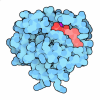
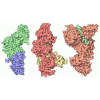
- 集合体
集合体
| 登録構造単位 | 
|
|---|---|
| 1 |
|
-要素
| #1: 抗体 | 分子量: 15931.698 Da / 分子数: 1 / 由来タイプ: 組換発現 / 由来: (組換発現) Lama glama (ラマ) / 発現宿主:   Escherichia coli (大腸菌) Escherichia coli (大腸菌) |
|---|---|
| #2: タンパク質 | 分子量: 30137.025 Da / 分子数: 1 / 由来タイプ: 組換発現 / 由来: (組換発現) Homo sapiens (ヒト) / 遺伝子: GNAS / 発現宿主: Homo sapiens (ヒト) / 参照: UniProt: A0A804HIH4 |
| #3: タンパク質 | 分子量: 40786.566 Da / 分子数: 1 / 由来タイプ: 組換発現 / 由来: (組換発現) Homo sapiens (ヒト) / 遺伝子: GNB1 / 発現宿主: Homo sapiens (ヒト) / 参照: UniProt: P62873 |
| #4: タンパク質 | 分子量: 7861.143 Da / 分子数: 1 / 由来タイプ: 組換発現 / 由来: (組換発現) Homo sapiens (ヒト) / 遺伝子: GNG2 / 発現宿主:  Trichoplusia ni (イラクサキンウワバ) / 株 (発現宿主): Hi5 / 参照: UniProt: P59768 Trichoplusia ni (イラクサキンウワバ) / 株 (発現宿主): Hi5 / 参照: UniProt: P59768 |
| #5: タンパク質 | 分子量: 36305.277 Da / 分子数: 1 / 由来タイプ: 組換発現 / 由来: (組換発現) synthetic construct (人工物) / 発現宿主: Homo sapiens (ヒト) |
| Has protein modification | Y |
-実験情報
-実験
| 実験 | 手法: 電子顕微鏡法 |
|---|---|
| EM実験 | 試料の集合状態: PARTICLE / 3次元再構成法: 単粒子再構成法 |
- 試料調製
試料調製
| 構成要素 | 名称: consOR51-miniGs complex bound to Nb35 / タイプ: COMPLEX / Entity ID: all / 由来: RECOMBINANT |
|---|---|
| 分子量 | 値: 0.1 MDa / 実験値: YES |
| 由来(天然) | 生物種: synthetic construct (人工物) |
| 由来(組換発現) | 生物種: Homo sapiens (ヒト) |
| 緩衝液 | pH: 7.5 |
| 試料 | 包埋: NO / シャドウイング: NO / 染色: NO / 凍結: YES |
| 急速凍結 | 凍結剤: ETHANE |
- 電子顕微鏡撮影
| 実験機器 |  モデル: Titan Krios / 画像提供: FEI Company |
|---|---|
| 顕微鏡 | モデル: FEI TITAN KRIOS |
| 電子銃 | 電子線源:  FIELD EMISSION GUN / 加速電圧: 300 kV / 照射モード: OTHER FIELD EMISSION GUN / 加速電圧: 300 kV / 照射モード: OTHER |
| 電子レンズ | モード: BRIGHT FIELD / 倍率(公称値): 105000 X / 最大 デフォーカス(公称値): 2200 nm / 最小 デフォーカス(公称値): 800 nm |
| 試料ホルダ | 凍結剤: NITROGEN |
| 撮影 | 電子線照射量: 50 e/Å2 フィルム・検出器のモデル: GATAN K3 BIOQUANTUM (6k x 4k) |
- 解析
解析
| EMソフトウェア | 名称: PHENIX / カテゴリ: モデル精密化 | ||||||||||||||||||||||||
|---|---|---|---|---|---|---|---|---|---|---|---|---|---|---|---|---|---|---|---|---|---|---|---|---|---|
| CTF補正 | タイプ: PHASE FLIPPING AND AMPLITUDE CORRECTION | ||||||||||||||||||||||||
| 3次元再構成 | 解像度: 3.2 Å / 解像度の算出法: FSC 0.143 CUT-OFF / 粒子像の数: 204513 / 対称性のタイプ: POINT | ||||||||||||||||||||||||
| 拘束条件 |
|
