 Movie
Movie Controller


+ Open data

- Basic information
| Entry | Database: PDB / ID: 8evh | ||||||
|---|---|---|---|---|---|---|---|
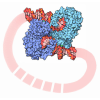
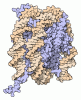
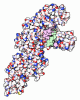
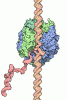
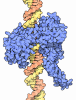
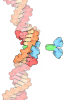
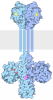
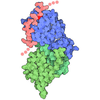
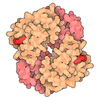
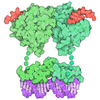
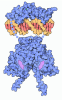
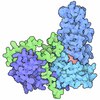
| Title | CX3CR1 nucleosome and wild type PU.1 complex | ||||||
 Components Components |
| ||||||
 Keywords Keywords | TRANSCRIPTION/DNA / nucleosome / transcription factor / transcription / chromatin binding protein-DNA complex / DNA BINDING PROTEIN-DNA complex / TRANSCRIPTION-DNA complex | ||||||
| Function / homology |  Function and homology information Function and homology informationanatomical structure regression / apoptotic process involved in blood vessel morphogenesis / negative regulation of neutrophil degranulation / regulation of myeloid progenitor cell differentiation / positive regulation of antifungal innate immune response / pro-T cell differentiation / follicular B cell differentiation / positive regulation of myeloid dendritic cell chemotaxis / granulocyte differentiation / myeloid leukocyte differentiation ...anatomical structure regression / apoptotic process involved in blood vessel morphogenesis / negative regulation of neutrophil degranulation / regulation of myeloid progenitor cell differentiation / positive regulation of antifungal innate immune response / pro-T cell differentiation / follicular B cell differentiation / positive regulation of myeloid dendritic cell chemotaxis / granulocyte differentiation / myeloid leukocyte differentiation / germinal center B cell differentiation / lymphoid progenitor cell differentiation / positive regulation of microglial cell mediated cytotoxicity / lymphocyte differentiation / immature B cell differentiation / TRAIL-activated apoptotic signaling pathway / negative regulation of MHC class II biosynthetic process / endothelial to hematopoietic transition / pericyte cell differentiation / myeloid dendritic cell differentiation / negative regulation of adipose tissue development / defense response to tumor cell / oncogene-induced cell senescence / vasculature development / positive regulation of p38MAPK cascade / negative regulation of non-canonical NF-kappaB signal transduction / somatic stem cell population maintenance / DNA-binding transcription repressor activity / regulation of erythrocyte differentiation / positive regulation of B cell differentiation / STAT family protein binding / interleukin-6-mediated signaling pathway / NFAT protein binding / DNA-binding transcription activator activity / macrophage differentiation / cellular response to ethanol / osteoclast differentiation / cis-regulatory region sequence-specific DNA binding / negative regulation of megakaryocyte differentiation / protein localization to CENP-A containing chromatin / Chromatin modifying enzymes / lipopolysaccharide-mediated signaling pathway / Replacement of protamines by nucleosomes in the male pronucleus / transforming growth factor beta receptor signaling pathway / negative regulation of protein localization to chromatin / Packaging Of Telomere Ends / Recognition and association of DNA glycosylase with site containing an affected purine / Cleavage of the damaged purine / Deposition of new CENPA-containing nucleosomes at the centromere / telomere organization / Interleukin-7 signaling / epigenetic regulation of gene expression / Recognition and association of DNA glycosylase with site containing an affected pyrimidine / Cleavage of the damaged pyrimidine / RNA Polymerase I Promoter Opening / erythrocyte differentiation / transcription initiation-coupled chromatin remodeling / Inhibition of DNA recombination at telomere / Assembly of the ORC complex at the origin of replication / Meiotic synapsis / negative regulation of canonical NF-kappaB signal transduction / SUMOylation of chromatin organization proteins / Regulation of endogenous retroelements by the Human Silencing Hub (HUSH) complex / DNA methylation / Condensation of Prophase Chromosomes / Chromatin modifications during the maternal to zygotic transition (MZT) / HCMV Late Events / SIRT1 negatively regulates rRNA expression / ERCC6 (CSB) and EHMT2 (G9a) positively regulate rRNA expression / PRC2 methylates histones and DNA / Regulation of endogenous retroelements by KRAB-ZFP proteins / Defective pyroptosis / HDACs deacetylate histones / Transcriptional regulation by small RNAs / Regulation of endogenous retroelements by Piwi-interacting RNAs (piRNAs) / RNA Polymerase I Promoter Escape / Nonhomologous End-Joining (NHEJ) / protein sequestering activity / nucleosomal DNA binding / HDMs demethylate histones / Formation of the beta-catenin:TCF transactivating complex / Activated PKN1 stimulates transcription of AR (androgen receptor) regulated genes KLK2 and KLK3 / RUNX1 regulates genes involved in megakaryocyte differentiation and platelet function / Negative Regulation of CDH1 Gene Transcription / NoRC negatively regulates rRNA expression / positive regulation of miRNA transcription / G2/M DNA damage checkpoint / DNA-binding transcription repressor activity, RNA polymerase II-specific / PKMTs methylate histone lysines / B-WICH complex positively regulates rRNA expression / DNA Damage/Telomere Stress Induced Senescence / Meiotic recombination / Pre-NOTCH Transcription and Translation / Activation of anterior HOX genes in hindbrain development during early embryogenesis / histone deacetylase binding / Transcriptional regulation of granulopoiesis / innate immune response in mucosa / RMTs methylate histone arginines / Metalloprotease DUBs / HCMV Early Events Similarity search - Function | ||||||
| Biological species |  Homo sapiens (human) Homo sapiens (human)  Escherichia coli (E. coli) Escherichia coli (E. coli)  Mus musculus (house mouse) Mus musculus (house mouse) | ||||||
| Method | ELECTRON MICROSCOPY / single particle reconstruction / cryo EM / Resolution: 2.85 Å | ||||||
 Authors Authors | Lian, T. / Guan, R. / Bai, Y. | ||||||
| Funding support |  United States, 1items United States, 1items
| ||||||
 Citation Citation | Journal: Nat Struct Mol Biol / Year: 2024 Title: Structural mechanism of synergistic targeting of the CX3CR1 nucleosome by PU.1 and C/EBPα. Authors: Tengfei Lian / Ruifang Guan / Bing-Rui Zhou / Yawen Bai / Abstract: Pioneer transcription factors are vital for cell fate changes. PU.1 and C/EBPα work together to regulate hematopoietic stem cell differentiation. However, how they recognize in vivo nucleosomal DNA ...Pioneer transcription factors are vital for cell fate changes. PU.1 and C/EBPα work together to regulate hematopoietic stem cell differentiation. However, how they recognize in vivo nucleosomal DNA targets remains elusive. Here we report the structures of the nucleosome containing the mouse genomic CX3CR1 enhancer DNA and its complexes with PU.1 alone and with both PU.1 and the C/EBPα DNA binding domain. Our structures reveal that PU.1 binds the DNA motif at the exit linker, shifting 17 bp of DNA into the core region through interactions with H2A, unwrapping ~20 bp of nucleosomal DNA. C/EBPα binding, aided by PU.1's repositioning, unwraps ~25 bp of entry DNA. The PU.1 Q218H mutation, linked to acute myeloid leukemia, disrupts PU.1-H2A interactions. PU.1 and C/EBPα jointly displace linker histone H1 and open the H1-condensed nucleosome array. Our study unveils how two pioneer factors can work cooperatively to open closed chromatin by altering DNA positioning in the nucleosome. | ||||||
| History |
|
- Structure visualization
| Structure viewer | Molecule: MolmilJmol/JSmol |
|---|
- Downloads & links
-Download
| PDBx/mmCIF format | 8evh.cif.gz | 417.6 KB | Display | PDBx/mmCIF format |
|---|---|---|---|---|
| PDB format | pdb8evh.ent.gz | 320.1 KB | Display | PDB format |
| PDBx/mmJSON format | 8evh.json.gz | Tree view | PDBx/mmJSON format | |
| Others |  Other downloads Other downloads |
-Validation report
| Arichive directory | https://data.pdbj.org/pub/pdb/validation_reports/ev/8evhftp://data.pdbj.org/pub/pdb/validation_reports/ev/8evh | HTTPS FTP |
|---|
-Related structure data
| Related structure data |  28629MC 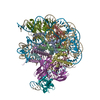 8eviC 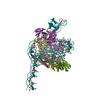 8evjC 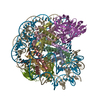 8sypC M: map data used to model this data C: citing same article ( |
|---|---|
| Similar structure data |


-Links
 PDBj
PDBj

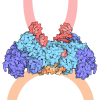


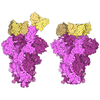
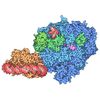
- Assembly
| Deposited unit | 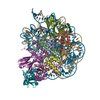
|
|---|---|
| 1 |
|
-Components
-Protein , 5 types, 9 molecules AEBFCGDHO
| #1: Protein | Mass: 15437.167 Da / Num. of mol.: 2 Source method: isolated from a genetically manipulated source Source: (gene. exp.) Homo sapiens (human)Gene: H3C1, H3FA, HIST1H3A, H3C2, H3FL, HIST1H3B, H3C3, H3FC HIST1H3C, H3C4, H3FB, HIST1H3D, H3C6, H3FD, HIST1H3E, H3C7, H3FI, HIST1H3F, H3C8, H3FH, HIST1H3G, H3C10, H3FK, HIST1H3H, H3C11, H3FF, ...Gene: H3C1, H3FA, HIST1H3A, H3C2, H3FL, HIST1H3B, H3C3, H3FC HIST1H3C, H3C4, H3FB, HIST1H3D, H3C6, H3FD, HIST1H3E, H3C7, H3FI, HIST1H3F, H3C8, H3FH, HIST1H3G, H3C10, H3FK, HIST1H3H, H3C11, H3FF, HIST1H3I, H3C12, H3FJ, HIST1H3J Production host: Escherichia coli 'BL21-Gold(DE3)pLysS AG' (bacteria)References: UniProt: P68431 #2: Protein | Mass: 11394.426 Da / Num. of mol.: 2 Source method: isolated from a genetically manipulated source Source: (gene. exp.) Homo sapiens (human)Gene: HIST1H4A, H4/A, H4FA, HIST1H4B, H4/I, H4FI, HIST1H4C, H4/G, H4FG, HIST1H4D, H4/B, H4FB, HIST1H4E, H4/J, H4FJ, HIST1H4F, H4/C, H4FC, HIST1H4H, H4/H, H4FH, HIST1H4I, H4/M, H4FM, HIST1H4J, H4/E, ...Gene: HIST1H4A, H4/A, H4FA, HIST1H4B, H4/I, H4FI, HIST1H4C, H4/G, H4FG, HIST1H4D, H4/B, H4FB, HIST1H4E, H4/J, H4FJ, HIST1H4F, H4/C, H4FC, HIST1H4H, H4/H, H4FH, HIST1H4I, H4/M, H4FM, HIST1H4J, H4/E, H4FE, HIST1H4K, H4/D, H4FD, HIST1H4L, H4/K, H4FK, HIST2H4A, H4/N, H4F2, H4FN, HIST2H4, HIST2H4B, H4/O, H4FO, HIST4H4 Production host: Escherichia coli 'BL21-Gold(DE3)pLysS AG' (bacteria)References: UniProt: P62805 #3: Protein | Mass: 14017.428 Da / Num. of mol.: 2 Source method: isolated from a genetically manipulated source Source: (gene. exp.) Homo sapiens (human) / Gene: H2AC20, H2AFQ, HIST2H2ACProduction host: Escherichia coli 'BL21-Gold(DE3)pLysS AG' (bacteria)References: UniProt: Q16777 #4: Protein | Mass: 13951.239 Da / Num. of mol.: 2 Source method: isolated from a genetically manipulated source Source: (gene. exp.) Homo sapiens (human) / Gene: H2BC21, H2BFQ, HIST2H2BEProduction host: Escherichia coli 'BL21-Gold(DE3)pLysS AG' (bacteria)References: UniProt: Q16778 #8: Protein | | Mass: 32819.750 Da / Num. of mol.: 1 Source method: isolated from a genetically manipulated source Source: (gene. exp.) Mus musculus (house mouse) / Gene: Spi1, Sfpi-1, Sfpi1Production host: Escherichia coli 'BL21-Gold(DE3)pLysS AG' (bacteria)References: UniProt: P17433 |
|---|
-DNA chain , 2 types, 2 molecules IJ
| #5: DNA chain | Mass: 50043.855 Da / Num. of mol.: 1 / Source method: obtained synthetically / Source: (synth.) Mus musculus (house mouse) |
|---|---|
| #6: DNA chain | Mass: 49965.957 Da / Num. of mol.: 1 / Source method: obtained synthetically / Source: (synth.) Mus musculus (house mouse) |
-Antibody , 1 types, 2 molecules MN
| #7: Antibody | Mass: 29030.146 Da / Num. of mol.: 2 Source method: isolated from a genetically manipulated source Source: (gene. exp.) Escherichia coli (E. coli)Production host: Escherichia coli 'BL21-Gold(DE3)pLysS AG' (bacteria) |
|---|
-Details
| Has protein modification | Y |
|---|
-Experimental details
-Experiment
| Experiment | Method: ELECTRON MICROSCOPY |
|---|---|
| EM experiment | Aggregation state: PARTICLE / 3D reconstruction method: single particle reconstruction |
- Sample preparation
| Component | Name: nucleosome PU.1 complex / Type: COMPLEX / Entity ID: all / Source: MULTIPLE SOURCES | ||||||||||||||||
|---|---|---|---|---|---|---|---|---|---|---|---|---|---|---|---|---|---|
| Source (natural) |
| ||||||||||||||||
| Source (recombinant) | Organism: Escherichia coli 'BL21-Gold(DE3)pLysS AG' (bacteria) | ||||||||||||||||
| Buffer solution | pH: 7.3 | ||||||||||||||||
| Specimen | Embedding applied: NO / Shadowing applied: NO / Staining applied: NO / Vitrification applied: YES | ||||||||||||||||
| Vitrification | Cryogen name: ETHANE |
- Electron microscopy imaging
| Experimental equipment |  Model: Titan Krios / Image courtesy: FEI Company |
|---|---|
| Microscopy | Model: FEI TITAN KRIOS |
| Electron gun | Electron source:  FIELD EMISSION GUN / Accelerating voltage: 300 kV / Illumination mode: SPOT SCAN FIELD EMISSION GUN / Accelerating voltage: 300 kV / Illumination mode: SPOT SCAN |
| Electron lens | Mode: BRIGHT FIELD / Nominal defocus max: 2000 nm / Nominal defocus min: 1000 nm |
| Image recording | Electron dose: 53.8 e/Å2 / Film or detector model: GATAN K3 (6k x 4k) |
- Processing
| CTF correction | Type: NONE |
|---|---|
| 3D reconstruction | Resolution: 2.85 Å / Resolution method: FSC 0.143 CUT-OFF / Num. of particles: 89583 / Symmetry type: POINT |
