 ムービー
ムービー コントローラー


+ データを開く

- 基本情報
基本情報
| 登録情報 | データベース: PDB / ID: 7r5j | |||||||||
|---|---|---|---|---|---|---|---|---|---|---|
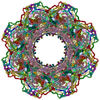
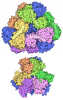
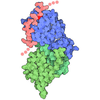
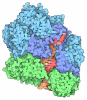
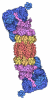
| タイトル | Human nuclear pore complex (dilated) | |||||||||
 要素 要素 |
| |||||||||
 キーワード キーワード | TRANSPORT PROTEIN / nucleocytoplasmic transport / multiprotein complex | |||||||||
| 機能・相同性 |  機能・相同性情報 機能・相同性情報cytoplasmic side of nuclear pore / nuclear pore transmembrane ring / nephron development / centriole assembly / positive regulation of centriole replication / GATOR2 complex / cytoplasmic periphery of the nuclear pore complex / regulation of protein import into nucleus / regulation of Ras protein signal transduction / positive regulation of mitotic cytokinetic process ...cytoplasmic side of nuclear pore / nuclear pore transmembrane ring / nephron development / centriole assembly / positive regulation of centriole replication / GATOR2 complex / cytoplasmic periphery of the nuclear pore complex / regulation of protein import into nucleus / regulation of Ras protein signal transduction / positive regulation of mitotic cytokinetic process / SUMO ligase complex / HuR (ELAVL1) binds and stabilizes mRNA / Seh1-associated complex / SUMO ligase activity / nuclear pore inner ring / COPII-coated vesicle budding / nuclear pore localization / annulate lamellae / protein exit from endoplasmic reticulum / nuclear pore central transport channel / transcription-dependent tethering of RNA polymerase II gene DNA at nuclear periphery / regulation of nucleocytoplasmic transport / telomere tethering at nuclear periphery / nuclear pore complex assembly / nuclear pore outer ring / protein localization to nuclear inner membrane / COPII-coated vesicle cargo loading / nuclear pore organization / somite development / nuclear envelope organization / nuclear pore cytoplasmic filaments / atrial cardiac muscle cell action potential / homologous chromosome pairing at meiosis / COPII vesicle coat / positive regulation of protein localization to centrosome / nuclear export signal receptor activity / paraxial mesoderm development / Nuclear Pore Complex (NPC) Disassembly / post-transcriptional tethering of RNA polymerase II gene DNA at nuclear periphery / nuclear inclusion body / Regulation of Glucokinase by Glucokinase Regulatory Protein / Defective TPR may confer susceptibility towards thyroid papillary carcinoma (TPC) / nuclear pore nuclear basket / Transport of Ribonucleoproteins into the Host Nucleus / attachment of mitotic spindle microtubules to kinetochore / miRNA processing / Transport of the SLBP independent Mature mRNA / Transport of the SLBP Dependant Mature mRNA / Amino acids regulate mTORC1 / NS1 Mediated Effects on Host Pathways / SUMOylation of SUMOylation proteins / negative regulation of Ras protein signal transduction / structural constituent of nuclear pore / positive regulation of mRNA splicing, via spliceosome / microtubule bundle formation / Transport of Mature mRNA Derived from an Intronless Transcript / Flemming body / Rev-mediated nuclear export of HIV RNA / SUMOylation of RNA binding proteins / nuclear export / Nuclear import of Rev protein / mitotic centrosome separation / 転移酵素; アシル基を移すもの; アミノアシル基を移すもの / fertilization / NEP/NS2 Interacts with the Cellular Export Machinery / Transport of Mature mRNA derived from an Intron-Containing Transcript / RNA export from nucleus / SUMO transferase activity / tRNA processing in the nucleus / COPII-mediated vesicle transport / Postmitotic nuclear pore complex (NPC) reformation / kinase activator activity / neural tube development / negative regulation of programmed cell death / centrosome cycle / centrosome localization / protein-containing complex localization / nuclear localization sequence binding / nucleocytoplasmic transport / regulation of gluconeogenesis / lamellipodium assembly / Viral Messenger RNA Synthesis / NLS-bearing protein import into nucleus / PTB domain binding / poly(A)+ mRNA export from nucleus / mitotic metaphase chromosome alignment / SUMOylation of ubiquitinylation proteins / Vpr-mediated nuclear import of PICs / female gonad development / macrophage chemotaxis / SUMOylation of DNA replication proteins / 加水分解酵素; プロテアーゼ; ペプチド結合加水分解酵素; セリンエンドペプチターゼ / positive regulation of SMAD protein signal transduction / negative regulation of epidermal growth factor receptor signaling pathway / protein sumoylation / RHOA GTPase cycle / mitotic spindle assembly / Regulation of HSF1-mediated heat shock response / regulation of signal transduction / positive regulation of TOR signaling 類似検索 - 分子機能 | |||||||||
| 生物種 |  Homo sapiens (ヒト) Homo sapiens (ヒト) | |||||||||
| 手法 | 電子顕微鏡法 / サブトモグラム平均法 / クライオ電子顕微鏡法 / 解像度: 50 Å | |||||||||
 データ登録者 データ登録者 | Mosalaganti, S. / Obarska-Kosinska, A. / Siggel, M. / Taniguchi, R. / Turonova, B. / Zimmerli, C.E. / Buczak, K. / Schmidt, F.H. / Margiotta, E. / Mackmull, M.T. ...Mosalaganti, S. / Obarska-Kosinska, A. / Siggel, M. / Taniguchi, R. / Turonova, B. / Zimmerli, C.E. / Buczak, K. / Schmidt, F.H. / Margiotta, E. / Mackmull, M.T. / Hagen, W.J.H. / Hummer, G. / Kosinski, J. / Beck, M. | |||||||||
| 資金援助 | European Union,  ドイツ, 2件 ドイツ, 2件
| |||||||||
 引用 引用 | ジャーナル: Science / 年: 2022 タイトル: AI-based structure prediction empowers integrative structural analysis of human nuclear pores. 著者: Shyamal Mosalaganti / Agnieszka Obarska-Kosinska / Marc Siggel / Reiya Taniguchi / Beata Turoňová / Christian E Zimmerli / Katarzyna Buczak / Florian H Schmidt / Erica Margiotta / Marie- ...著者: Shyamal Mosalaganti / Agnieszka Obarska-Kosinska / Marc Siggel / Reiya Taniguchi / Beata Turoňová / Christian E Zimmerli / Katarzyna Buczak / Florian H Schmidt / Erica Margiotta / Marie-Therese Mackmull / Wim J H Hagen / Gerhard Hummer / Jan Kosinski / Martin Beck /  要旨: INTRODUCTION The eukaryotic nucleus pro-tects the genome and is enclosed by the two membranes of the nuclear envelope. Nuclear pore complexes (NPCs) perforate the nuclear envelope to facilitate ...INTRODUCTION The eukaryotic nucleus pro-tects the genome and is enclosed by the two membranes of the nuclear envelope. Nuclear pore complexes (NPCs) perforate the nuclear envelope to facilitate nucleocytoplasmic transport. With a molecular weight of ∼120 MDa, the human NPC is one of the larg-est protein complexes. Its ~1000 proteins are taken in multiple copies from a set of about 30 distinct nucleoporins (NUPs). They can be roughly categorized into two classes. Scaf-fold NUPs contain folded domains and form a cylindrical scaffold architecture around a central channel. Intrinsically disordered NUPs line the scaffold and extend into the central channel, where they interact with cargo complexes. The NPC architecture is highly dynamic. It responds to changes in nuclear envelope tension with conforma-tional breathing that manifests in dilation and constriction movements. Elucidating the scaffold architecture, ultimately at atomic resolution, will be important for gaining a more precise understanding of NPC function and dynamics but imposes a substantial chal-lenge for structural biologists. RATIONALE Considerable progress has been made toward this goal by a joint effort in the field. A synergistic combination of complementary approaches has turned out to be critical. In situ structural biology techniques were used to reveal the overall layout of the NPC scaffold that defines the spatial reference for molecular modeling. High-resolution structures of many NUPs were determined in vitro. Proteomic analysis and extensive biochemical work unraveled the interaction network of NUPs. Integra-tive modeling has been used to combine the different types of data, resulting in a rough outline of the NPC scaffold. Previous struc-tural models of the human NPC, however, were patchy and limited in accuracy owing to several challenges: (i) Many of the high-resolution structures of individual NUPs have been solved from distantly related species and, consequently, do not comprehensively cover their human counterparts. (ii) The scaf-fold is interconnected by a set of intrinsically disordered linker NUPs that are not straight-forwardly accessible to common structural biology techniques. (iii) The NPC scaffold intimately embraces the fused inner and outer nuclear membranes in a distinctive topol-ogy and cannot be studied in isolation. (iv) The conformational dynamics of scaffold NUPs limits the resolution achievable in structure determination. RESULTS In this study, we used artificial intelligence (AI)-based prediction to generate an exten-sive repertoire of structural models of human NUPs and their subcomplexes. The resulting models cover various domains and interfaces that so far remained structurally uncharac-terized. Benchmarking against previous and unpublished x-ray and cryo-electron micros-copy structures revealed unprecedented accu-racy. We obtained well-resolved cryo-electron tomographic maps of both the constricted and dilated conformational states of the hu-man NPC. Using integrative modeling, we fit-ted the structural models of individual NUPs into the cryo-electron microscopy maps. We explicitly included several linker NUPs and traced their trajectory through the NPC scaf-fold. We elucidated in great detail how mem-brane-associated and transmembrane NUPs are distributed across the fusion topology of both nuclear membranes. The resulting architectural model increases the structural coverage of the human NPC scaffold by about twofold. We extensively validated our model against both earlier and new experimental data. The completeness of our model has enabled microsecond-long coarse-grained molecular dynamics simulations of the NPC scaffold within an explicit membrane en-vironment and solvent. These simulations reveal that the NPC scaffold prevents the constriction of the otherwise stable double-membrane fusion pore to small diameters in the absence of membrane tension. CONCLUSION Our 70-MDa atomically re-solved model covers >90% of the human NPC scaffold. It captures conforma-tional changes that occur during dilation and constriction. It also reveals the precise anchoring sites for intrinsically disordered NUPs, the identification of which is a prerequisite for a complete and dy-namic model of the NPC. Our study exempli-fies how AI-based structure prediction may accelerate the elucidation of subcellular ar-chitecture at atomic resolution. [Figure: see text]. | |||||||||
| 履歴 |
|
- 構造の表示
構造の表示
| 構造ビューア | 分子: MolmilJmol/JSmol |
|---|
- ダウンロードとリンク
-ダウンロード
| PDBx/mmCIF形式 | 7r5j.cif.gz | 13.1 MB | 表示 | PDBx/mmCIF形式 |
|---|---|---|---|---|
| PDB形式 | pdb7r5j.ent.gz | 表示 | PDB形式 | |
| PDBx/mmJSON形式 | 7r5j.json.gz | ツリー表示 | PDBx/mmJSON形式 | |
| その他 |  その他のダウンロード その他のダウンロード |
-検証レポート
| アーカイブディレクトリ | https://data.pdbj.org/pub/pdb/validation_reports/r5/7r5jftp://data.pdbj.org/pub/pdb/validation_reports/r5/7r5j | HTTPS FTP |
|---|
-関連構造データ


-リンク
 PDBj
PDBj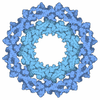
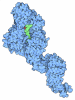
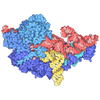


- 集合体
集合体
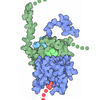
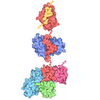
| 登録構造単位 | 
|
|---|---|
| 1 | 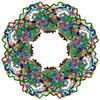
|
-要素
-タンパク質 , 12種, 41分子 00010203044041B0B1E0E1F0F1F2F3H0H1H2H3I0I1I2I3N0N1N2N3O0O1O2...
| #1: タンパク質 | 分子量: 358654.375 Da / 分子数: 5 / 由来タイプ: 天然 / 由来: (天然) Homo sapiens (ヒト)参照: UniProt: P49792, 転移酵素; アシル基を移すもの; アミノアシル基を移すもの #3: タンパク質 | 分子量: 59635.918 Da / 分子数: 2 / 由来タイプ: 天然 / 由来: (天然) Homo sapiens (ヒト) / 参照: UniProt: Q9NRG9#5: タンパク質 | 分子量: 196256.688 Da / 分子数: 2 / 由来タイプ: 天然 / 由来: (天然) Homo sapiens (ヒト) / 参照: UniProt: Q5SRE5#8: タンパク質 | 分子量: 76377.445 Da / 分子数: 2 / 由来タイプ: 天然 / 由来: (天然) Homo sapiens (ヒト) / 参照: UniProt: Q9BTX1#9: タンパク質 | 分子量: 34805.664 Da / 分子数: 4 / 由来タイプ: 天然 / 由来: (天然) Homo sapiens (ヒト) / 参照: UniProt: Q8NFH5#10: タンパク質 | 分子量: 55491.156 Da / 分子数: 4 / 由来タイプ: 天然 / 由来: (天然) Homo sapiens (ヒト) / 参照: UniProt: Q7Z3B4#11: タンパク質 | 分子量: 60941.480 Da / 分子数: 4 / 由来タイプ: 天然 / 由来: (天然) Homo sapiens (ヒト) / 参照: UniProt: Q9BVL2#16: タンパク質 | 分子量: 35578.438 Da / 分子数: 4 / 由来タイプ: 天然 / 由来: (天然) Homo sapiens (ヒト) / 参照: UniProt: P55735#17: タンパク質 | 分子量: 39700.566 Da / 分子数: 4 / 由来タイプ: 天然 / 由来: (天然) Homo sapiens (ヒト) / 参照: UniProt: Q96EE3#19: タンパク質 | 分子量: 42195.652 Da / 分子数: 4 / 由来タイプ: 天然 / 由来: (天然) Homo sapiens (ヒト) / 参照: UniProt: Q8NFH3#21: タンパク質 | 分子量: 36748.512 Da / 分子数: 4 / 由来タイプ: 天然 / 由来: (天然) Homo sapiens (ヒト) / 参照: UniProt: Q8NFH4#22: タンパク質 | 分子量: 252807.984 Da / 分子数: 2 / 由来タイプ: 天然 / 由来: (天然) Homo sapiens (ヒト) / 参照: UniProt: Q8WYP5 |
|---|
-Nuclear pore ... , 13種, 60分子 1011121314151617A0A1A2A3A4A5A6C0C1C2C3C4D0D1D2D3D4D5J0J1J2J3...
| #2: タンパク質 | 分子量: 205314.406 Da / 分子数: 8 / 由来タイプ: 天然 / 由来: (天然) Homo sapiens (ヒト) / 参照: UniProt: Q8TEM1#4: タンパク質 | 分子量: 93599.102 Da / 分子数: 7 / 由来タイプ: 天然 / 由来: (天然) Homo sapiens (ヒト) / 参照: UniProt: Q8N1F7#6: タンパク質 | 分子量: 228172.875 Da / 分子数: 5 / 由来タイプ: 天然 / 由来: (天然) Homo sapiens (ヒト) / 参照: UniProt: Q92621#7: タンパク質 | 分子量: 155357.281 Da / 分子数: 6 / 由来タイプ: 天然 / 由来: (天然) Homo sapiens (ヒト) / 参照: UniProt: O75694#12: タンパク質 | 分子量: 53289.574 Da / 分子数: 5 / 由来タイプ: 天然 / 由来: (天然) Homo sapiens (ヒト) / 参照: UniProt: P37198#13: タンパク質 | 分子量: 129108.461 Da / 分子数: 4 / 由来タイプ: 天然 / 由来: (天然) Homo sapiens (ヒト) / 参照: UniProt: Q8WUM0#14: タンパク質 | 分子量: 106504.969 Da / 分子数: 4 / 由来タイプ: 天然 / 由来: (天然) Homo sapiens (ヒト) / 参照: UniProt: P57740#15: タンパク質 | 分子量: 106039.656 Da / 分子数: 4 / 由来タイプ: 天然 / 由来: (天然) Homo sapiens (ヒト) / 参照: UniProt: P52948#18: タンパク質 | 分子量: 75105.266 Da / 分子数: 4 / 由来タイプ: 天然 / 由来: (天然) Homo sapiens (ヒト) / 参照: UniProt: Q9BW27#20: タンパク質 | 分子量: 162280.203 Da / 分子数: 4 / 由来タイプ: 天然 / 由来: (天然) Homo sapiens (ヒト) / 参照: UniProt: Q12769#23: タンパク質 | 分子量: 91760.117 Da / 分子数: 7 / 由来タイプ: 天然 / 由来: (天然) Homo sapiens (ヒト) / 参照: UniProt: P52948#24: タンパク質 | | 分子量: 213784.828 Da / 分子数: 1 / 由来タイプ: 天然 / 由来: (天然) Homo sapiens (ヒト) / 参照: UniProt: P35658#25: タンパク質 | | 分子量: 83644.711 Da / 分子数: 1 / 由来タイプ: 天然 / 由来: (天然) Homo sapiens (ヒト) / 参照: UniProt: Q99567 |
|---|
-実験情報
-実験
| 実験 | 手法: 電子顕微鏡法 |
|---|---|
| EM実験 | 試料の集合状態: CELL / 3次元再構成法: サブトモグラム平均法 |
- 試料調製
試料調製
| 構成要素 | 名称: Human nuclear pore complex from HEK cells / タイプ: ORGANELLE OR CELLULAR COMPONENT / Entity ID: all / 由来: NATURAL |
|---|---|
| 由来(天然) | 生物種: Homo sapiens (ヒト) |
| 緩衝液 | pH: 7.5 |
| 試料 | 包埋: NO / シャドウイング: NO / 染色: NO / 凍結: YES |
| 試料支持 | グリッドの材料: GOLD / グリッドのサイズ: 200 divisions/in. / グリッドのタイプ: Quantifoil R2/1 |
| 急速凍結 | 装置: LEICA EM GP / 凍結剤: ETHANE-PROPANE / 湿度: 99 % / 凍結前の試料温度: 300 K |
- 電子顕微鏡撮影
| 実験機器 |  モデル: Titan Krios / 画像提供: FEI Company |
|---|---|
| 顕微鏡 | モデル: TFS KRIOS |
| 電子銃 | 電子線源:  FIELD EMISSION GUN / 加速電圧: 300 kV / 照射モード: FLOOD BEAM FIELD EMISSION GUN / 加速電圧: 300 kV / 照射モード: FLOOD BEAM |
| 電子レンズ | モード: BRIGHT FIELD / 最大 デフォーカス(公称値): 3000 nm / 最小 デフォーカス(公称値): 2000 nm |
| 撮影 | 電子線照射量: 3.15 e/Å2 / Avg electron dose per subtomogram: 130 e/Å2 フィルム・検出器のモデル: GATAN K2 QUANTUM (4k x 4k) |
- 解析
解析
| CTF補正 | タイプ: PHASE FLIPPING ONLY |
|---|---|
| 3次元再構成 | 解像度: 50 Å / 解像度の算出法: FSC 0.5 CUT-OFF / 粒子像の数: 150 / 対称性のタイプ: POINT |
| EM volume selection | Num. of tomograms: 8 / Num. of volumes extracted: 30 |
