 Movie
Movie Controller


+ Open data

- Basic information
| Entry | Database: PDB / ID: 36bb | |||||||||||||||||||||
|---|---|---|---|---|---|---|---|---|---|---|---|---|---|---|---|---|---|---|---|---|---|---|
| Title | Structure of BA.4-S-RBD/Ab#10-M30W-S94M | |||||||||||||||||||||
 Components Components |
| |||||||||||||||||||||
 Keywords Keywords | VIRAL PROTEIN / SARS-CoV-2 | |||||||||||||||||||||
| Biological species |  Homo sapiens (human) Homo sapiens (human) 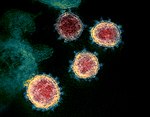 Severe acute respiratory syndrome coronavirus 2 Severe acute respiratory syndrome coronavirus 2 | |||||||||||||||||||||
| Method | ELECTRON MICROSCOPY / single particle reconstruction / cryo EM / Resolution: 3.6 Å | |||||||||||||||||||||
 Authors Authors | Du, J. / Pallesen, J. | |||||||||||||||||||||
| Funding support |  United States, 2items United States, 2items
| |||||||||||||||||||||
 Citation Citation | Journal: Res Sq / Year: 2026 Title: Structure-Guided Design of Therapeutic Antibodies Targeting SARS-CoV-2 Omicron Variants. Authors: Jesper Pallesen / Jianqiu Du / Yuanhan Wu / Sukanya Ghosh / Kelly Bayruns / Roopak Sadeesh / David Weiner Abstract: The ongoing evolution of SARS-CoV-2, particularly the emergence of Omicron subvariants, compromised the effectiveness of many therapeutic antibodies. In this study, we employed a structure-guided ...The ongoing evolution of SARS-CoV-2, particularly the emergence of Omicron subvariants, compromised the effectiveness of many therapeutic antibodies. In this study, we employed a structure-guided computational design strategy to systematically optimize the COV2-2196 antibody for improved neutralization of Omicron variants. Through iterative rounds of computational design and experimental validation, we identified key paratope mutations that restored and enhanced antibody binding and neutralization potency against resistant viral strains. Cryo-EM structural analysis revealed the molecular basis for these improvements, highlighting how targeted modifications can accommodate epitope changes introduced by viral evolution. Our approach demonstrates that effective antibody optimization can be achieved using accessible computational resources, providing a practical framework for rapid therapeutic development. These findings underscore the potential of structure-based design to address challenges posed by viral antigenic drift and support the development of broadly effective antibody therapeutics for emerging infectious diseases. | |||||||||||||||||||||
| History |
|
- Structure visualization
| Structure viewer | Molecule:  MolmilJmol/JSmol MolmilJmol/JSmol |
|---|
- Downloads & links
-Download
| PDBx/mmCIF format | 36bb.cif.gz | 104.8 KB | Display | PDBx/mmCIF format |
|---|---|---|---|---|
| PDB format | pdb36bb.ent.gz | 73.9 KB | Display | PDB format |
| PDBx/mmJSON format | 36bb.json.gz | Tree view | PDBx/mmJSON format | |
| Others |  Other downloads Other downloads |
-Validation report
| Arichive directory | https://data.pdbj.org/pub/pdb/validation_reports/6b/36bbftp://data.pdbj.org/pub/pdb/validation_reports/6b/36bb | HTTPS FTP |
|---|
-Related structure data


-Links
 PDBj
PDBj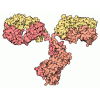
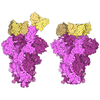
- Assembly
| Deposited unit | 
|
|---|---|
| 1 |
|
-Components
| #1: Antibody | Mass: 52014.645 Da / Num. of mol.: 1 Source method: isolated from a genetically manipulated source Source: (gene. exp.) Homo sapiens (human) / Production host: Homo sapiens (human) |
|---|---|
| #2: Antibody | Mass: 25939.043 Da / Num. of mol.: 1 Source method: isolated from a genetically manipulated source Source: (gene. exp.) Homo sapiens (human) / Production host: Homo sapiens (human) |
| #3: Protein | Mass: 22264.092 Da / Num. of mol.: 1 / Fragment: receptor binding domain Source method: isolated from a genetically manipulated source Source: (gene. exp.) Severe acute respiratory syndrome coronavirus 2Strain: Omicron BA.4 / Production host: Homo sapiens (human) |
| Has protein modification | Y |
-Experimental details
-Experiment
| Experiment | Method: ELECTRON MICROSCOPY |
|---|---|
| EM experiment | Aggregation state: PARTICLE / 3D reconstruction method: single particle reconstruction |
- Sample preparation
| Component | Name: Complex of SARS-CoV-2 Omicron BA.4 spike protein and Ab#10-M30W-S94M IgG Type: COMPLEX / Entity ID: all / Source: RECOMBINANT |
|---|---|
| Source (natural) | Organism: Severe acute respiratory syndrome coronavirus 2 |
| Source (recombinant) | Organism: Homo sapiens (human) |
| Buffer solution | pH: 7.4 |
| Specimen | Embedding applied: NO / Shadowing applied: NO / Staining applied: NO / Vitrification applied: YES |
| Vitrification | Cryogen name: ETHANE |
- Electron microscopy imaging
| Experimental equipment |  Model: Titan Krios / Image courtesy: FEI Company |
|---|---|
| Microscopy | Model: TFS KRIOS |
| Electron gun | Electron source:  FIELD EMISSION GUN / Accelerating voltage: 300 kV / Illumination mode: SPOT SCAN FIELD EMISSION GUN / Accelerating voltage: 300 kV / Illumination mode: SPOT SCAN |
| Electron lens | Mode: BRIGHT FIELD / Nominal defocus max: 2500 nm / Nominal defocus min: 500 nm |
| Image recording | Electron dose: 49.3 e/Å2 / Film or detector model: GATAN K3 (6k x 4k) |
- Processing
| EM software |
| |||||||||
|---|---|---|---|---|---|---|---|---|---|---|
| CTF correction | Type: NONE | |||||||||
| 3D reconstruction | Resolution: 3.6 Å / Resolution method: FSC 0.143 CUT-OFF / Num. of particles: 536554 / Symmetry type: POINT |
