 Movie
Movie Controller

[English] 日本語
 Yorodumi
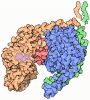
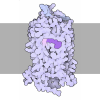
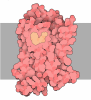
- PDB-25nv: A complex of PTH1R/Gs bound to a PTHrP analogue with five beta-am... -
+ Open data

- Basic information
| Entry | Database: PDB / ID: 25nv | ||||||||||||||||||||||||||||||
|---|---|---|---|---|---|---|---|---|---|---|---|---|---|---|---|---|---|---|---|---|---|---|---|---|---|---|---|---|---|---|---|
| Title | A complex of PTH1R/Gs bound to a PTHrP analogue with five beta-amino acids | ||||||||||||||||||||||||||||||
 Components Components |
| ||||||||||||||||||||||||||||||
 Keywords Keywords | MEMBRANE PROTEIN / GPCR / g protein / agonist / parathyroid | ||||||||||||||||||||||||||||||
| Function / homology |  Function and homology information Function and homology informationparathyroid hormone receptor activity / Class B/2 (Secretin family receptors) / G protein-coupled peptide receptor activity / adenylate cyclase-activating G protein-coupled bile acid receptor signaling pathway / adenylate cyclase-activating serotonin receptor signaling pathway / intracellular transport / peptide hormone binding / positive regulation of inositol phosphate biosynthetic process / regulation of skeletal muscle contraction / hair follicle placode formation ...parathyroid hormone receptor activity / Class B/2 (Secretin family receptors) / G protein-coupled peptide receptor activity / adenylate cyclase-activating G protein-coupled bile acid receptor signaling pathway / adenylate cyclase-activating serotonin receptor signaling pathway / intracellular transport / peptide hormone binding / positive regulation of inositol phosphate biosynthetic process / regulation of skeletal muscle contraction / hair follicle placode formation / developmental growth / PKA activation in glucagon signalling / skeletal system development / renal water homeostasis / D1 dopamine receptor binding / G protein-coupled receptor signaling pathway, coupled to cyclic nucleotide second messenger / vascular endothelial cell response to laminar fluid shear stress / Hedgehog 'off' state / activation of adenylate cyclase activity / adenylate cyclase-activating adrenergic receptor signaling pathway / cellular response to acidic pH / ovarian follicle development / cellular response to glucagon stimulus / intracellular glucose homeostasis / adenylate cyclase activator activity / positive regulation of insulin secretion involved in cellular response to glucose stimulus / positive regulation of insulin secretion / trans-Golgi network membrane / bone development / negative regulation of inflammatory response to antigenic stimulus / response to prostaglandin E / platelet aggregation / cognition / intracellular calcium ion homeostasis / G protein-coupled receptor activity / G-protein beta/gamma-subunit complex binding / adenylate cyclase-modulating G protein-coupled receptor signaling pathway / Olfactory Signaling Pathway / sensory perception of smell / Activation of the phototransduction cascade / phospholipase C-activating G protein-coupled receptor signaling pathway / G protein-coupled acetylcholine receptor signaling pathway / G beta:gamma signalling through PLC beta / Presynaptic function of Kainate receptors / Thromboxane signalling through TP receptor / Activation of G protein gated Potassium channels / Inhibition of voltage gated Ca2+ channels via Gbeta/gamma subunits / G-protein activation / Glucagon signaling in metabolic regulation / G beta:gamma signalling through CDC42 / Prostacyclin signalling through prostacyclin receptor / Synthesis, secretion, and inactivation of Glucagon-like Peptide-1 (GLP-1) / photoreceptor disc membrane / G beta:gamma signalling through BTK / ADP signalling through P2Y purinoceptor 12 / Sensory perception of sweet, bitter, and umami (glutamate) taste / Glucagon-type ligand receptors / Adrenaline,noradrenaline inhibits insulin secretion / Vasopressin regulates renal water homeostasis via Aquaporins / G alpha (z) signalling events / Glucagon-like Peptide-1 (GLP1) regulates insulin secretion / ADP signalling through P2Y purinoceptor 1 / cellular response to catecholamine stimulus / G beta:gamma signalling through PI3Kgamma / ADORA2B mediated anti-inflammatory cytokines production / adenylate cyclase-activating dopamine receptor signaling pathway / heterotrimeric G-protein complex / positive regulation of cold-induced thermogenesis / Cooperation of PDCL (PhLP1) and TRiC/CCT in G-protein beta folding / cellular response to prostaglandin E stimulus / GPER1 signaling / G alpha (12/13) signalling events / Inactivation, recovery and regulation of the phototransduction cascade / G-protein beta-subunit binding / extracellular vesicle / Thrombin signalling through proteinase activated receptors (PARs) / adenylate cyclase-activating G protein-coupled receptor signaling pathway / signaling receptor complex adaptor activity / GTPase binding / G protein activity / Ca2+ pathway / High laminar flow shear stress activates signaling by PIEZO1 and PECAM1:CDH5:KDR in endothelial cells / G alpha (i) signalling events / G alpha (s) signalling events / basolateral plasma membrane / G alpha (q) signalling events / Hydrolases; Acting on acid anhydrides; Acting on GTP to facilitate cellular and subcellular movement / cytoplasmic side of plasma membrane / Ras protein signal transduction / cell surface receptor signaling pathway / signaling receptor complex / Extra-nuclear estrogen signaling / apical plasma membrane / G protein-coupled receptor signaling pathway / lysosomal membrane / GTPase activity / GTP binding / synapse / protein-containing complex binding / signal transduction Similarity search - Function | ||||||||||||||||||||||||||||||
| Biological species |  Homo sapiens (human) Homo sapiens (human)  Lama glama (llama) Lama glama (llama)synthetic construct (others) | ||||||||||||||||||||||||||||||
| Method | ELECTRON MICROSCOPY / single particle reconstruction / cryo EM / Resolution: 3.21 Å | ||||||||||||||||||||||||||||||
 Authors Authors | Cary, B.P. / Wootten, D. / Sexton, P.M. / Gellman, S.H. / Wook, T.K. / Shin, J. / Gerrard, E.J. | ||||||||||||||||||||||||||||||
| Funding support |  Australia, Australia,  United States, 4items United States, 4items
| ||||||||||||||||||||||||||||||
 Citation Citation | Journal: J Am Chem Soc / Year: 2026 Title: Altered Intracellular Trafficking as a Mechanism for Prolonged Duration of G Protein-Coupled Receptor Activation. Authors: Tae Wook Kim / Elliot J Gerrard / Jeeeun Shin / Thomas J Gardella / Denise Wootten / Patrick M Sexton / Brian P Cary / Samuel H Gellman / Abstract: G protein-coupled receptors (GPCRs) mediate information transfer to cells from the surrounding environment. In most cases, signaling is initiated or amplified when the receptor binds to an agonist, ...G protein-coupled receptors (GPCRs) mediate information transfer to cells from the surrounding environment. In most cases, signaling is initiated or amplified when the receptor binds to an agonist, an event that alters the conformational profile of the receptor. Signal transduction results from interaction between the agonist-receptor complex and cytosolic partners such as G proteins, GPCR kinases (GRKs), and β-arrestins. Changes in agonist structure can lead to "signal bias", i.e., changes in the relative strength of signaling involving different partners. Some GPCRs, including those activated by long peptide hormones, continue to signal after internalization. In these cases, changes in agonist structure can lead to changes in the relative extent of signaling from different sites, e.g., cell surface vs endosomes ("location bias"). Many GPCRs are targets of approved drugs or drug candidates, and tuning signal bias and/or location bias is widely considered to be important for optimizing therapeutic profiles. Here we report another mechanism of modulating outcome via agonist modification: alteration of intracellular trafficking. The synthetic peptide agonist designated SPT, which contains five β-amino acid residues, was previously shown to activate the parathyroid hormone receptor-1 (PTH1R) and cause prolonged signaling in mice by an unknown mechanism. The SPT-PTH1R complex continues to stimulate cAMP production after internalization. We now find that the SPT-PTH1R complex impairs the sorting of early endosomes into recycling endosomes relative to the receptor complexed to the drug teriparatide. These findings suggest that altering intracellular GPCR trafficking patterns represents an unappreciated strategy for achieving prolonged action . | ||||||||||||||||||||||||||||||
| History |
|
- Structure visualization
| Structure viewer | Molecule: MolmilJmol/JSmol |
|---|
- Downloads & links
-Download
| PDBx/mmCIF format | 25nv.cif.gz | 224.3 KB | Display | PDBx/mmCIF format |
|---|---|---|---|---|
| PDB format | pdb25nv.ent.gz | Display | PDB format | |
| PDBx/mmJSON format | 25nv.json.gz | Tree view | PDBx/mmJSON format | |
| Others |  Other downloads Other downloads |
-Validation report
| Arichive directory | https://data.pdbj.org/pub/pdb/validation_reports/5n/25nvftp://data.pdbj.org/pub/pdb/validation_reports/5n/25nv | HTTPS FTP |
|---|
-Related structure data
| Related structure data |  80237MC  25nxC M: map data used to model this data C: citing same article ( |
|---|---|
| Similar structure data |

-Links
 PDBj
PDBj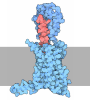


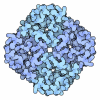
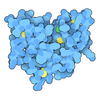

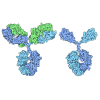
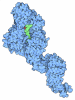
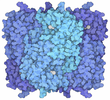
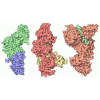
- Assembly
| Deposited unit | 
|
|---|---|
| 1 |
|
-Components
-Guanine nucleotide-binding protein ... , 3 types, 3 molecules ABG
| #1: Protein | Mass: 45699.434 Da / Num. of mol.: 1 Source method: isolated from a genetically manipulated source Source: (gene. exp.) Homo sapiens (human) / Gene: GNAS, GNAS1, GSP / Production host:  Trichoplusia ni (cabbage looper) / References: UniProt: P63092 Trichoplusia ni (cabbage looper) / References: UniProt: P63092 |
|---|---|
| #2: Protein | Mass: 37413.863 Da / Num. of mol.: 1 Source method: isolated from a genetically manipulated source Source: (gene. exp.) Homo sapiens (human) / Gene: GNB1 / Production host: Trichoplusia ni (cabbage looper) / References: UniProt: P62873 |
| #3: Protein | Mass: 6375.332 Da / Num. of mol.: 1 Source method: isolated from a genetically manipulated source Source: (gene. exp.) Homo sapiens (human) / Gene: GNG2 / Production host: Trichoplusia ni (cabbage looper) / References: UniProt: P59768 |
-Antibody / Protein/peptide / Protein / Non-polymers , 4 types, 4 molecules NPR
| #4: Antibody | Mass: 16926.076 Da / Num. of mol.: 1 Source method: isolated from a genetically manipulated source Source: (gene. exp.) Lama glama (llama) / Production host:   Escherichia coli (E. coli) Escherichia coli (E. coli) |
|---|---|
| #5: Protein/peptide | Mass: 4266.924 Da / Num. of mol.: 1 / Source method: obtained synthetically / Source: (synth.) synthetic construct (others) |
| #6: Protein | Mass: 69513.758 Da / Num. of mol.: 1 Source method: isolated from a genetically manipulated source Source: (gene. exp.) Homo sapiens (human) / Gene: PTH1R, PTHR, PTHR1 / Production host: Trichoplusia ni (cabbage looper) / References: UniProt: Q03431 |
| #7: Water | ChemComp-HOH / Mass: 18.015 Da / Num. of mol.: 1 / Source method: isolated from a natural source / Formula: H2O |
-Details
| Has ligand of interest | Y |
|---|---|
| Has protein modification | Y |
-Experimental details
-Experiment
| Experiment | Method: ELECTRON MICROSCOPY |
|---|---|
| EM experiment | Aggregation state: PARTICLE / 3D reconstruction method: single particle reconstruction |
- Sample preparation
| Component | Name: Complex containing PTH1R and Gs heterotrimer / Type: COMPLEX / Entity ID: #1-#6 / Source: RECOMBINANT |
|---|---|
| Molecular weight | Value: 0.15 MDa / Experimental value: NO |
| Source (natural) | Organism: Homo sapiens (human) |
| Source (recombinant) | Organism: Trichoplusia ni (cabbage looper) |
| Buffer solution | pH: 7.4 |
| Specimen | Conc.: 5.25 mg/ml / Embedding applied: NO / Shadowing applied: NO / Staining applied: NO / Vitrification applied: YES |
| Specimen support | Grid material: GOLD / Grid type: Quantifoil R1.2/1.3 |
| Vitrification | Instrument: FEI VITROBOT MARK IV / Cryogen name: ETHANE / Humidity: 96 % / Chamber temperature: 277 K |
- Electron microscopy imaging
| Microscopy | Model: TFS GLACIOS |
|---|---|
| Electron gun | Electron source:  FIELD EMISSION GUN / Accelerating voltage: 200 kV / Illumination mode: FLOOD BEAM FIELD EMISSION GUN / Accelerating voltage: 200 kV / Illumination mode: FLOOD BEAM |
| Electron lens | Mode: BRIGHT FIELD / Nominal defocus max: 1400 nm / Nominal defocus min: 700 nm / C2 aperture diameter: 50 µm |
| Specimen holder | Cryogen: NITROGEN |
| Image recording | Average exposure time: 8.15 sec. / Electron dose: 49.93 e/Å2 / Film or detector model: FEI FALCON IV (4k x 4k) / Num. of grids imaged: 1 / Num. of real images: 4887 |
- Processing
| EM software |
| ||||||||||||||||||||||||||||||||||||
|---|---|---|---|---|---|---|---|---|---|---|---|---|---|---|---|---|---|---|---|---|---|---|---|---|---|---|---|---|---|---|---|---|---|---|---|---|---|
| CTF correction | Type: PHASE FLIPPING AND AMPLITUDE CORRECTION | ||||||||||||||||||||||||||||||||||||
| Particle selection | Num. of particles selected: 2146791 | ||||||||||||||||||||||||||||||||||||
| Symmetry | Point symmetry: C1 (asymmetric) | ||||||||||||||||||||||||||||||||||||
| 3D reconstruction | Resolution: 3.21 Å / Resolution method: FSC 0.143 CUT-OFF / Num. of particles: 320200 / Symmetry type: POINT | ||||||||||||||||||||||||||||||||||||
| Atomic model building | Protocol: FLEXIBLE FIT / Space: REAL | ||||||||||||||||||||||||||||||||||||
| Atomic model building | PDB-ID: 8FLR Accession code: 8FLR / Source name: PDB / Type: experimental model | ||||||||||||||||||||||||||||||||||||
| Refinement | Highest resolution: 3.21 Å Stereochemistry target values: REAL-SPACE (WEIGHTED MAP SUM AT ATOM CENTERS) | ||||||||||||||||||||||||||||||||||||
| Refine LS restraints |
|

