 Movie
Movie Controller


+ Open data

- Basic information
| Entry | Database: PDB / ID: 11cl | |||||||||||||||||||||||||||
|---|---|---|---|---|---|---|---|---|---|---|---|---|---|---|---|---|---|---|---|---|---|---|---|---|---|---|---|---|
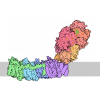
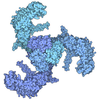
| Title | Structure of human TRPV1 in complex with Asivatrep | |||||||||||||||||||||||||||
 Components Components | Transient receptor potential cation channel subfamily V member 1 | |||||||||||||||||||||||||||
 Keywords Keywords | MEMBRANE PROTEIN / Ion Channel / TRPV1 / Mavatrep / Asivatrep / JNJ-17203212 / CAY10448 / Small Molecule / Pain / Thermosensing / GDN / Antagonist | |||||||||||||||||||||||||||
| Function / homology |  Function and homology information Function and homology informationchemosensory behavior / response to capsazepine / sensory perception of mechanical stimulus / detection of temperature stimulus involved in thermoception / peptide secretion / temperature-gated ion channel activity / detection of chemical stimulus involved in sensory perception of pain / smooth muscle contraction involved in micturition / fever generation / thermoception ...chemosensory behavior / response to capsazepine / sensory perception of mechanical stimulus / detection of temperature stimulus involved in thermoception / peptide secretion / temperature-gated ion channel activity / detection of chemical stimulus involved in sensory perception of pain / smooth muscle contraction involved in micturition / fever generation / thermoception / excitatory extracellular ligand-gated monoatomic ion channel activity / dendritic spine membrane / diet induced thermogenesis / cellular response to alkaloid / TRP channels / intracellularly gated calcium channel activity / cellular response to ATP / detection of temperature stimulus involved in sensory perception of pain / behavioral response to pain / calcium ion import across plasma membrane / voltage-gated calcium channel activity / cellular response to acidic pH / extracellular ligand-gated monoatomic ion channel activity / phosphatidylinositol binding / lipid metabolic process / phosphoprotein binding / GABA-ergic synapse / calcium channel activity / calcium ion transmembrane transport / transmembrane signaling receptor activity / cellular response to heat / sensory perception of taste / protein homotetramerization / calmodulin binding / postsynaptic membrane / cell surface receptor signaling pathway / negative regulation of transcription by RNA polymerase II / ATP binding / membrane / metal ion binding / plasma membrane Similarity search - Function | |||||||||||||||||||||||||||
| Biological species |  Homo sapiens (human) Homo sapiens (human) | |||||||||||||||||||||||||||
| Method | ELECTRON MICROSCOPY / single particle reconstruction / cryo EM / Resolution: 2.1 Å | |||||||||||||||||||||||||||
 Authors Authors | Lopez, K.E. / Van Horn, W.D. | |||||||||||||||||||||||||||
| Funding support |  United States, 3items United States, 3items
| |||||||||||||||||||||||||||
 Citation Citation | Journal: bioRxiv / Year: 2026 Title: TRPV1 antagonism occurs through diverse structural mechanisms. Authors: Kyle E Lopez / Audrey S Paduda / Matthew J Derrick / Wade D Van Horn / Abstract: Transient receptor potential vanilloid 1 (TRPV1) ion channel mediates thermosensation and pain and is a target for non-addictive analgesics; however, clinical candidates have failed due to ...Transient receptor potential vanilloid 1 (TRPV1) ion channel mediates thermosensation and pain and is a target for non-addictive analgesics; however, clinical candidates have failed due to thermoregulatory side effects. Limited structural data for human TRPV1 (hTRPV1) bound to clinically relevant antagonists has constrained mechanistic insight. Using chemoinformatics-informed cryo-EM and BRET assays, we define the structural basis of antagonism across diverse chemotypes, including failed clinical compounds. A structure of hTRPV1 bound to 6-iodo-dihydrocapsaicin shows how a single substitution converts an agonist into an antagonist. Additional structures with Asivatrep, Mavatrep, and JNJ-17203212 reveal vanilloid pocket plasticity and divergent interaction networks, including lipid co-binding. Despite this diversity, antagonists converge on a conserved inhibited state, showing high potency is maintained across flexible binding modes. These findings redefine our understanding of hTRPV1 antagonism and illustrate how chemically diverse ligands stabilize an inhibited state in polymodal ion channels, laying groundwork for next-generation analgesics with improved safety. | |||||||||||||||||||||||||||
| History |
|
- Structure visualization
| Structure viewer | Molecule: MolmilJmol/JSmol |
|---|
- Downloads & links
-Download
| PDBx/mmCIF format | 11cl.cif.gz | 477.3 KB | Display | PDBx/mmCIF format |
|---|---|---|---|---|
| PDB format | pdb11cl.ent.gz | Display | PDB format | |
| PDBx/mmJSON format | 11cl.json.gz | Tree view | PDBx/mmJSON format | |
| Others |  Other downloads Other downloads |
-Validation report
| Arichive directory | https://data.pdbj.org/pub/pdb/validation_reports/1c/11clftp://data.pdbj.org/pub/pdb/validation_reports/1c/11cl | HTTPS FTP |
|---|
-Related structure data
| Related structure data |  75618MC  11cjC  11ckC  11cnC  11coC M: map data used to model this data C: citing same article ( |
|---|---|
| Similar structure data |


-Links
 PDBj
PDBj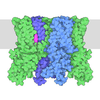
- Assembly
| Deposited unit | 
|
|---|---|
| 1 |
|
-Components
| #1: Protein | Mass: 124281.469 Da / Num. of mol.: 4 Source method: isolated from a genetically manipulated source Source: (gene. exp.) Homo sapiens (human) / Gene: TRPV1, VR1 / Production host: Homo sapiens (human) / References: UniProt: Q8NER1#2: Chemical | ChemComp-A1C8J / ( Mass: 491.475 Da / Num. of mol.: 4 / Source method: obtained synthetically / Formula: C21H22F5N3O3S / Feature type: SUBJECT OF INVESTIGATION #3: Chemical | ChemComp-LFA / 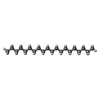  Mass: 282.547 Da / Num. of mol.: 4 / Source method: obtained synthetically / Formula: C20H42 Mass: 282.547 Da / Num. of mol.: 4 / Source method: obtained synthetically / Formula: C20H42#4: Water | ChemComp-HOH / |  Mass: 18.015 Da / Num. of mol.: 16 / Source method: isolated from a natural source / Formula: H2O Mass: 18.015 Da / Num. of mol.: 16 / Source method: isolated from a natural source / Formula: H2OHas ligand of interest | Y | Has protein modification | N | |
|---|
-Experimental details
-Experiment
| Experiment | Method: ELECTRON MICROSCOPY |
|---|---|
| EM experiment | Aggregation state: PARTICLE / 3D reconstruction method: single particle reconstruction |
- Sample preparation
| Component | Name: Tetrameric hTRPV1 in complex with Asivatrep / Type: COMPLEX / Entity ID: #1 / Source: RECOMBINANT | ||||||||||||||||||||
|---|---|---|---|---|---|---|---|---|---|---|---|---|---|---|---|---|---|---|---|---|---|
| Molecular weight | Value: 0.496528 MDa / Experimental value: NO | ||||||||||||||||||||
| Source (natural) | Organism: Homo sapiens (human) | ||||||||||||||||||||
| Source (recombinant) | Organism: Homo sapiens (human) / Cell: HEK293 GnTI- | ||||||||||||||||||||
| Buffer solution | pH: 8 | ||||||||||||||||||||
| Buffer component |
| ||||||||||||||||||||
| Specimen | Conc.: 0.75 mg/ml / Embedding applied: NO / Shadowing applied: NO / Staining applied: NO / Vitrification applied: YES | ||||||||||||||||||||
| Specimen support | Grid material: GOLD / Grid mesh size: 300 divisions/in. / Grid type: UltrAuFoil R1.2/1.3 | ||||||||||||||||||||
| Vitrification | Instrument: FEI VITROBOT MARK IV / Cryogen name: ETHANE / Humidity: 100 % / Chamber temperature: 277 K |
- Electron microscopy imaging
| Experimental equipment |  Model: Titan Krios / Image courtesy: FEI Company |
|---|---|
| Microscopy | Model: TFS KRIOS |
| Electron gun | Electron source:  FIELD EMISSION GUN / Accelerating voltage: 300 kV / Illumination mode: FLOOD BEAM FIELD EMISSION GUN / Accelerating voltage: 300 kV / Illumination mode: FLOOD BEAM |
| Electron lens | Mode: BRIGHT FIELD / Nominal magnification: 165000 X / Nominal defocus max: 2500 nm / Nominal defocus min: 1500 nm / Cs: 2.7 mm |
| Specimen holder | Cryogen: NITROGEN / Specimen holder model: FEI TITAN KRIOS AUTOGRID HOLDER |
| Image recording | Average exposure time: 3.7 sec. / Electron dose: 50 e/Å2 / Film or detector model: TFS FALCON 4i (4k x 4k) / Num. of grids imaged: 1 / Num. of real images: 40605 |
| EM imaging optics | Energyfilter name: TFS Selectris X / Energyfilter slit width: 10 eV |
- Processing
| EM software |
| ||||||||||||||||||||||||||||||||
|---|---|---|---|---|---|---|---|---|---|---|---|---|---|---|---|---|---|---|---|---|---|---|---|---|---|---|---|---|---|---|---|---|---|
| CTF correction | Type: PHASE FLIPPING AND AMPLITUDE CORRECTION | ||||||||||||||||||||||||||||||||
| Particle selection | Num. of particles selected: 4879389 | ||||||||||||||||||||||||||||||||
| Symmetry | Point symmetry: C4 (4 fold cyclic) | ||||||||||||||||||||||||||||||||
| 3D reconstruction | Resolution: 2.1 Å / Resolution method: FSC 0.143 CUT-OFF / Num. of particles: 476551 / Symmetry type: POINT | ||||||||||||||||||||||||||||||||
| Atomic model building | Protocol: RIGID BODY FIT | ||||||||||||||||||||||||||||||||
| Atomic model building | PDB-ID: 11CN Accession code: 11CN Details: Used hTRPV1 in complex with Mavatrep as the starting model. Source name: PDB / Type: experimental model |
