- EMDB-7836: Mammalian 80S ribosome with a double translocated CrPV-IRES, P-si... -
+
Open data
ID or keywords:
Loading...
-
Basic information
Entry
Database: EMDB / ID: EMD-7836
Title
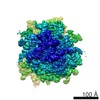
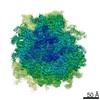
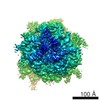
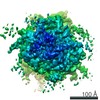
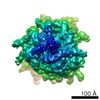
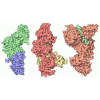
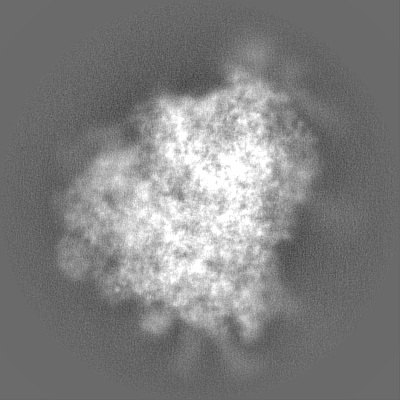
Mammalian 80S ribosome with a double translocated CrPV-IRES, P-sitetRNA and eRF1.
Map data
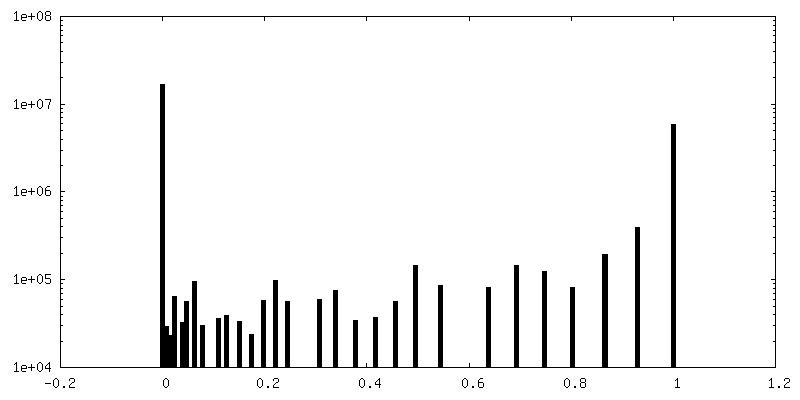
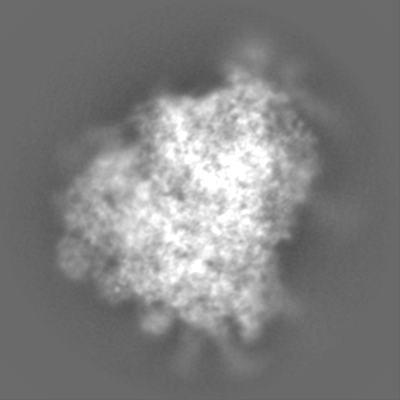
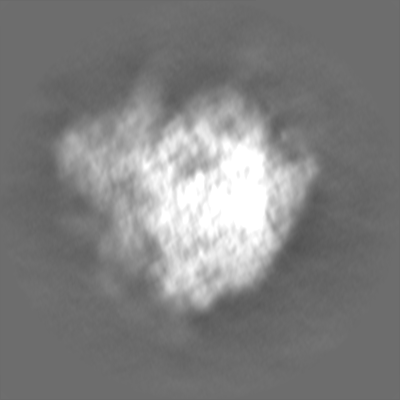
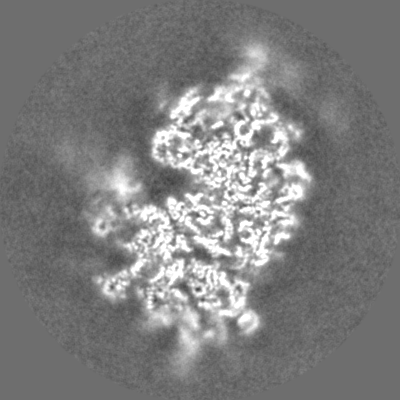
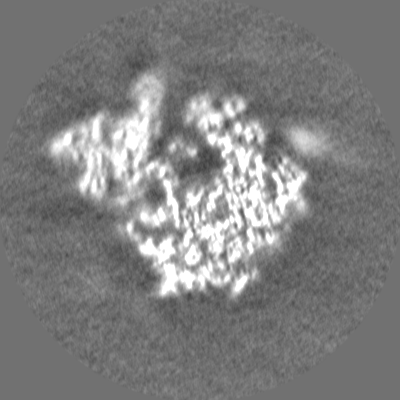
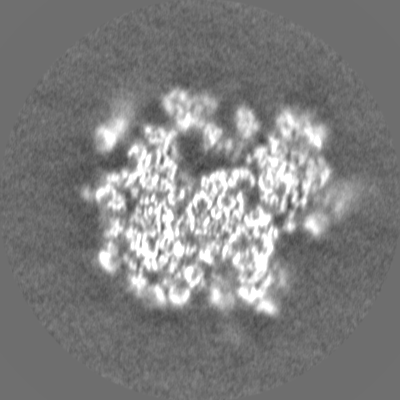
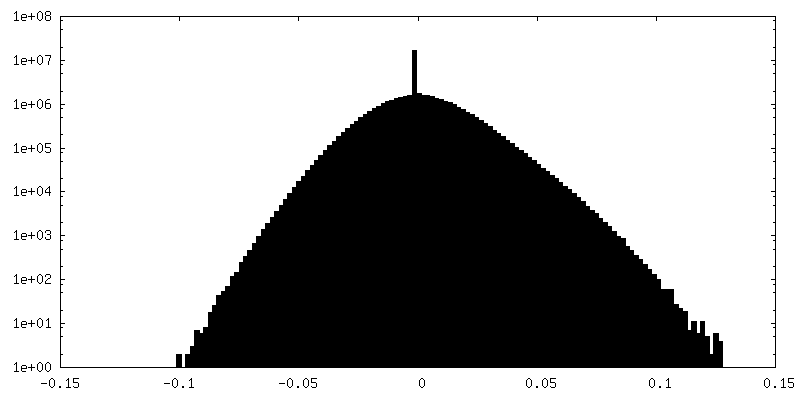
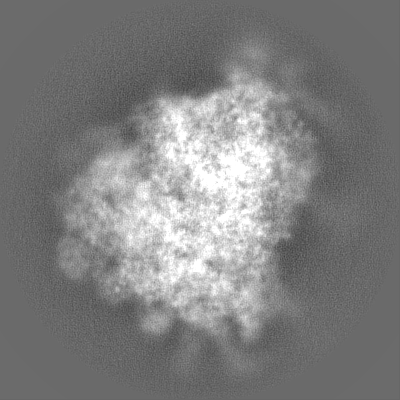
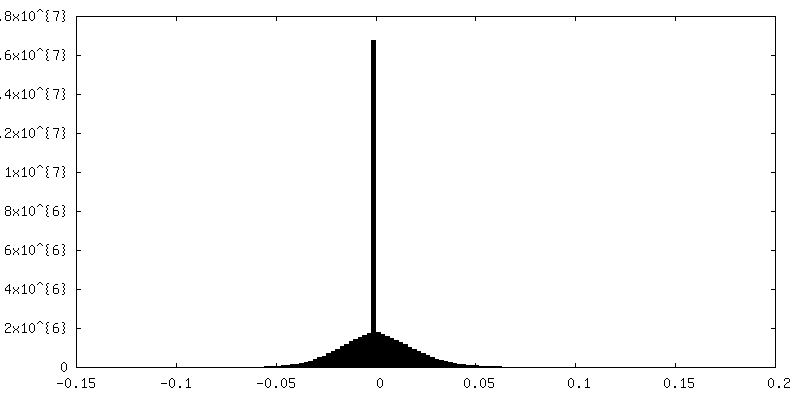
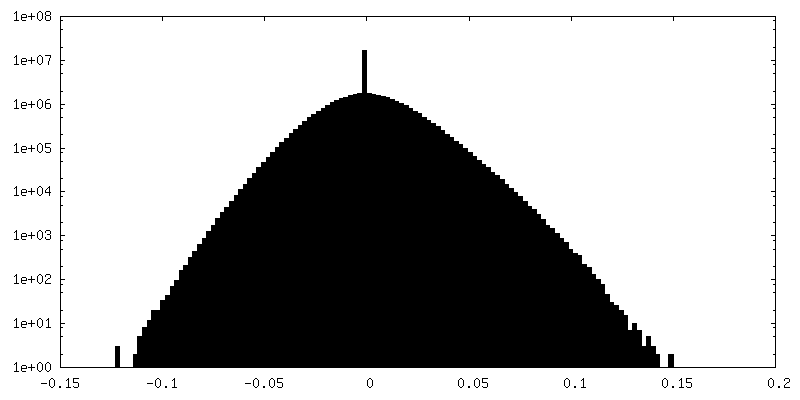
post processed map with Bfactor -30 and low pass filtered to 7A with Chimera
Sample
Complex: Mammalian 80S ribosome in complex with translocated CrPV IRES, P-site tRNA and eEF2
Protein or peptide: x 79 types
RNA: x 6 types
Ligand: x 2 types
Keywords
ribosome / mammalian / CrPV IRES
Function / homology
Function and homology information
Synthesis of diphthamide-EEF2 / translation at postsynapse / response to folic acid / positive regulation of cytoplasmic translation / Uptake and function of diphtheria toxin / lncRNA binding / skeletal muscle cell differentiation / translational elongation / Peptide chain elongation / ubiquitin ligase inhibitor activity ...Synthesis of diphthamide-EEF2 / translation at postsynapse / response to folic acid / positive regulation of cytoplasmic translation / Uptake and function of diphtheria toxin / lncRNA binding / skeletal muscle cell differentiation / translational elongation / Peptide chain elongation / ubiquitin ligase inhibitor activity / glial cell proliferation / translation elongation factor activity / 90S preribosome / positive regulation of signal transduction by p53 class mediator / phagocytic cup / skeletal muscle contraction / gastrulation / cellular response to brain-derived neurotrophic factor stimulus / Protein methylation / translation regulator activity / rough endoplasmic reticulum / ribosomal small subunit export from nucleus / response to ischemia / MDM2/MDM4 family protein binding / response to endoplasmic reticulum stress / positive regulation of apoptotic signaling pathway / DNA-(apurinic or apyrimidinic site) lyase / class I DNA-(apurinic or apyrimidinic site) endonuclease activity / ribosomal large subunit biogenesis / positive regulation of translation / maturation of LSU-rRNA from tricistronic rRNA transcript (SSU-rRNA, 5.8S rRNA, LSU-rRNA) / response to hydrogen peroxide / cytosolic ribosome / maturation of SSU-rRNA / maturation of SSU-rRNA from tricistronic rRNA transcript (SSU-rRNA, 5.8S rRNA, LSU-rRNA) / small-subunit processome / spindle / p53 binding / rRNA processing / actin filament binding / response to estradiol / regulation of translation / rhythmic process / antimicrobial humoral immune response mediated by antimicrobial peptide / large ribosomal subunit / ribosomal small subunit assembly / ribosome binding / ribosomal small subunit biogenesis / 5S rRNA binding / ribosomal large subunit assembly / small ribosomal subunit / small ribosomal subunit rRNA binding / cytosolic small ribosomal subunit / large ribosomal subunit rRNA binding / secretory granule lumen / killing of cells of another organism / defense response to Gram-negative bacterium / cytosolic large ribosomal subunit / ficolin-1-rich granule lumen / response to ethanol / Hydrolases; Acting on acid anhydrides; Acting on GTP to facilitate cellular and subcellular movement / perikaryon / cell differentiation / cytoplasmic translation / tRNA binding / postsynapse / mitochondrial inner membrane / postsynaptic density / rRNA binding / response to xenobiotic stimulus / structural constituent of ribosome / cadherin binding / ribosome / translation / ribonucleoprotein complex / cell division / DNA repair / mRNA binding / GTPase activity / centrosome / apoptotic process / Neutrophil degranulation / nucleolus / synapse / dendrite / protein kinase binding / GTP binding / perinuclear region of cytoplasm / glutamatergic synapse / endoplasmic reticulum / DNA-templated transcription / DNA binding / RNA binding / extracellular exosome / extracellular region / zinc ion binding / membrane / metal ion binding / nucleus / cytosol Similarity search - Function
60s Acidic ribosomal protein / 60S acidic ribosomal protein P0 / : / Elongation Factor G, domain II / Elongation Factor G, domain III / Translation elongation factor EFG/EF2, domain IV / Elongation factor G, domain IV / Elongation factor G, domain IV / Elongation factor G C-terminus / Elongation factor EFG, domain V-like ...60s Acidic ribosomal protein / 60S acidic ribosomal protein P0 / : / Elongation Factor G, domain II / Elongation Factor G, domain III / Translation elongation factor EFG/EF2, domain IV / Elongation factor G, domain IV / Elongation factor G, domain IV / Elongation factor G C-terminus / Elongation factor EFG, domain V-like / Elongation factor G C-terminus / Ribosomal protein L6, N-terminal / Ribosomal protein L6, N-terminal domain / 50S ribosomal protein L10, insertion domain superfamily / Ubiquitin-like protein FUBI / EF-G domain III/V-like / 60S ribosomal protein L10P, insertion domain / Insertion domain in 60S ribosomal protein L10P / Ribosomal protein L30e / Tr-type G domain, conserved site / Ribosomal protein L28e / Translational (tr)-type guanine nucleotide-binding (G) domain signature. / Ribosomal L15/L27a, N-terminal / : / Ribosomal L28e/Mak16 / Ribosomal L28e protein family / Ribosomal protein L23 / Ribosomal protein L2, archaeal-type / Ribosomal protein L1, conserved site / Ribosomal protein L1 signature. / Ribosomal protein L1 / metallochaperone-like domain / TRASH domain / Ribosomal protein L1, 3-layer alpha/beta-sandwich / Translation elongation factor EFTu-like, domain 2 / : / Ribosomal protein S12e signature. / Ribosomal protein L29e / Ribosomal L29e protein family / Ribosomal protein S12e / Ribosomal protein L1-like / Ribosomal protein L1/ribosomal biogenesis protein / Ribosomal protein L1p/L10e family / Small (40S) ribosomal subunit Asc1/RACK1 / Ribosomal protein L27e, conserved site / Ribosomal protein L27e signature. / : / Elongation factor Tu domain 2 / Ribosomal protein L6e signature. / Ribosomal protein S19e, conserved site / Ribosomal protein S19e signature. / Ribosomal protein L10e, conserved site / 40S Ribosomal protein S10 / Ribosomal protein L10e signature. / S27a-like superfamily / Ribosomal protein L44e signature. / Plectin/S10, N-terminal / Ribosomal protein L24e, conserved site / Plectin/S10 domain / Ribosomal protein L24e signature. / Ribosomal protein L5 eukaryotic, C-terminal / Ribosomal L18 C-terminal region / Ribosomal protein L23/L25, N-terminal / Ribosomal protein L23, N-terminal domain / Ribosomal protein L10e / Ribosomal protein L34e, conserved site / Ribosomal protein L34e signature. / Ribosomal protein S30 / Ribosomal protein S30 / Ribosomal protein L36e signature. / Ribosomal protein S10, eukaryotic/archaeal / Ribosomal protein L30e signature 1. / Eukaryotic Ribosomal Protein L27, KOW domain / Ribosomal protein S25 / S25 ribosomal protein / Ribosomal protein L27e / Ribosomal protein L27e superfamily / Ribosomal L27e protein family / Ribosomal Protein L6, KOW domain / : / Ribosomal protein L35Ae, conserved site / Ribosomal protein S8e subdomain, eukaryotes / Ribosomal protein L35Ae signature. / : / Ribosomal protein L44e / : / Ribosomal protein L44 / Ribosomal protein S7e signature. / 60S ribosomal protein L35 / Ribosomal protein S17e, conserved site / Ribosomal protein S17e signature. / Ribosomal protein L6e / Ribosomal protein S27a / Ribosomal protein S27a / Ribosomal protein S27a / Ribosomal protein L7A/L8 / Ribosomal protein L30e signature 2. / Ribosomal protein L30e, conserved site / 60S ribosomal protein L6E / Ribosomal protein L7, eukaryotic Similarity search - Domain/homology
60S acidic ribosomal protein P0 / Ribosomal protein L32 / 60S ribosomal protein L36a-like / Large ribosomal subunit protein eL34 / Large ribosomal subunit protein uL22 / Large ribosomal subunit protein uL16 / Small ribosomal subunit protein uS4 / Large ribosomal subunit protein eL24 / Large ribosomal subunit protein uL23 / Large ribosomal subunit protein eL33 ...60S acidic ribosomal protein P0 / Ribosomal protein L32 / 60S ribosomal protein L36a-like / Large ribosomal subunit protein eL34 / Large ribosomal subunit protein uL22 / Large ribosomal subunit protein uL16 / Small ribosomal subunit protein uS4 / Large ribosomal subunit protein eL24 / Large ribosomal subunit protein uL23 / Large ribosomal subunit protein eL33 / Small ribosomal subunit protein eS12 / Large ribosomal subunit protein eL29 / Small ribosomal subunit protein uS9 / Large ribosomal subunit protein eL31 / Large ribosomal subunit protein eL21 / Large ribosomal subunit protein uL29 / Small ribosomal subunit protein uS10 / Small ribosomal subunit protein RACK1 / Ubiquitin-ribosomal protein eS31 fusion protein / Large ribosomal subunit protein eL6 / Large ribosomal subunit protein uL1 / Large ribosomal subunit protein uL11 / Large ribosomal subunit protein uL15 / Small ribosomal subunit protein uS15 / Large ribosomal subunit protein uL24 / Small ribosomal subunit protein eS1 / Large ribosomal subunit protein eL8 / Large ribosomal subunit protein uL30 / Small ribosomal subunit protein eS7 / Large ribosomal subunit protein uL4 / Large ribosomal subunit protein uL6 / Large ribosomal subunit protein eL43 / Large ribosomal subunit protein uL18 / Large ribosomal subunit protein eL14 / Small ribosomal subunit protein uS12 / Large ribosomal subunit protein eL15 / Small ribosomal subunit protein uS11 / 40S ribosomal protein S24 / Large ribosomal subunit protein uL14 / Ubiquitin-like FUBI-ribosomal protein eS30 fusion protein / Small ribosomal subunit protein eS25 / Large ribosomal subunit protein eL30 / Small ribosomal subunit protein uS7 / Small ribosomal subunit protein uS8 / Small ribosomal subunit protein eS28 / Small ribosomal subunit protein eS8 / Large ribosomal subunit protein uL3 / Small ribosomal subunit protein eS6 / Small ribosomal subunit protein eS19 / Small ribosomal subunit protein uS3 / Small ribosomal subunit protein uS13 / Uncharacterized protein / Small ribosomal subunit protein uS17 / Large ribosomal subunit protein uL2 / Large ribosomal subunit protein eL39 / Large ribosomal subunit protein eL36 / Small ribosomal subunit protein eS17 / Large ribosomal subunit protein uL5 / Large ribosomal subunit protein uL22 / Large ribosomal subunit protein eL27 / Small ribosomal subunit protein eS27 / Small ribosomal subunit protein uS19 / Small ribosomal subunit protein eS10 / Large ribosomal subunit protein eL42 / Large ribosomal subunit protein eL32 / Small ribosomal subunit protein uS11 / Large ribosomal subunit protein eL28 / Large ribosomal subunit protein eL34 / Elongation factor 2 / Large ribosomal subunit protein uL18 / Large ribosomal subunit protein eL14 / Large ribosomal subunit protein eL37 Similarity search - Component
Biological species
Oryctolagus cuniculus (rabbit) / Homo sapiens (human) / Escherichia coli (E. coli) / Cricket paralysis virus
Method
single particle reconstruction / cryo EM / Resolution: 3.2 Å
National Institutes of Health/National Human Genome Research Institute (NIH/NHGRI)
GM097014
United States
Citation
Journal: Elife / Year: 2018 Title: Dual tRNA mimicry in the Cricket Paralysis Virus IRES uncovers an unexpected similarity with the Hepatitis C Virus IRES. Authors: Vera P Pisareva / Andrey V Pisarev / Israel S Fernández / Abstract: Co-opting the cellular machinery for protein production is a compulsory requirement for viruses. The Cricket Paralysis Virus employs an Internal Ribosomal Entry Site (CrPV-IRES) to express its ...Co-opting the cellular machinery for protein production is a compulsory requirement for viruses. The Cricket Paralysis Virus employs an Internal Ribosomal Entry Site (CrPV-IRES) to express its structural genes in the late stage of infection. Ribosome hijacking is achieved by a sophisticated use of molecular mimicry to tRNA and mRNA, employed to manipulate intrinsically dynamic components of the ribosome. Binding and translocation through the ribosome is required for this IRES to initiate translation. We report two structures, solved by single particle electron cryo-microscopy (cryoEM), of a double translocated CrPV-IRES with aminoacyl-tRNA in the peptidyl site (P site) of the ribosome. CrPV-IRES adopts a previously unseen conformation, mimicking the acceptor stem of a canonical E site tRNA. The structures suggest a mechanism for the positioning of the first aminoacyl-tRNA shared with the distantly related Hepatitis C Virus IRES.
History
Deposition
Apr 30, 2018
-
Header (metadata) release
Jun 6, 2018
-
Map release
Jun 6, 2018
-
Update
Dec 25, 2024
-
Current status
Dec 25, 2024
Processing site: RCSB / Status: Released
-
Structure visualization
Movie
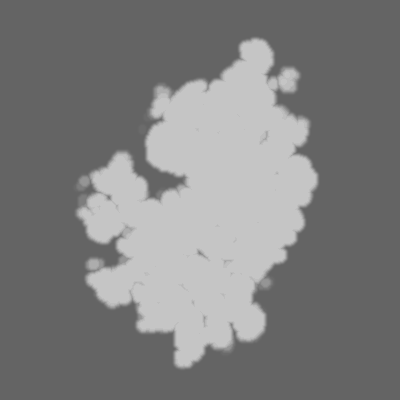
Surface view with section colored by density value
In the structure databanks used in Yorodumi, some data are registered as the other names, "COVID-19 virus" and "2019-nCoV". Here are the details of the virus and the list of structure data.
Jan 31, 2019. EMDB accession codes are about to change! (news from PDBe EMDB page)
EMDB accession codes are about to change! (news from PDBe EMDB page)
The allocation of 4 digits for EMDB accession codes will soon come to an end. Whilst these codes will remain in use, new EMDB accession codes will include an additional digit and will expand incrementally as the available range of codes is exhausted. The current 4-digit format prefixed with “EMD-” (i.e. EMD-XXXX) will advance to a 5-digit format (i.e. EMD-XXXXX), and so on. It is currently estimated that the 4-digit codes will be depleted around Spring 2019, at which point the 5-digit format will come into force.
The EM Navigator/Yorodumi systems omit the EMD- prefix.
Related info.:Q: What is EMD? / ID/Accession-code notation in Yorodumi/EM Navigator
Yorodumi is a browser for structure data from EMDB, PDB, SASBDB, etc.
This page is also the successor to EM Navigator detail page, and also detail information page/front-end page for Omokage search.
The word "yorodu" (or yorozu) is an old Japanese word meaning "ten thousand". "mi" (miru) is to see.
Related info.:EMDB / PDB / SASBDB / Comparison of 3 databanks / Yorodumi Search / Aug 31, 2016. New EM Navigator & Yorodumi / Yorodumi Papers / Jmol/JSmol / Function and homology information / Changes in new EM Navigator and Yorodumi
 Movie
Movie Controller

 Yorodumi
 Open data
 Basic information
 Map data
 Sample
 Keywords
 Function and homology information
 Oryctolagus cuniculus (rabbit) /
  Homo sapiens (human) /
 Escherichia coli (E. coli) /
  Cricket paralysis virus
 Authors
 United States, 1 items
  Citation
 Structure visualization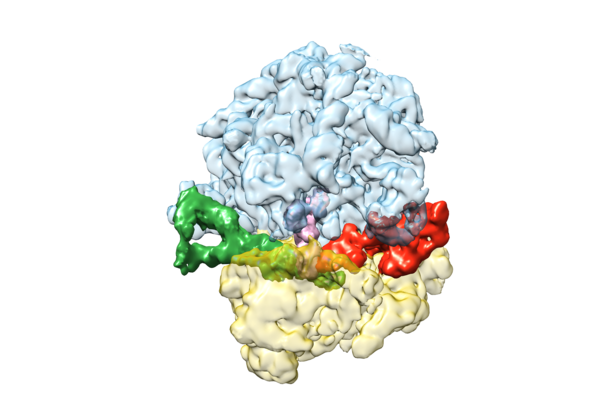
 Downloads & links
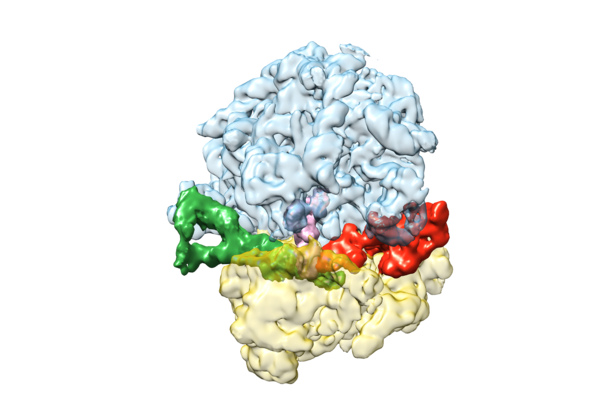 emd_7836.png
 http://ftp.pdbj.org/pub/emdb/structures/EMD-7836
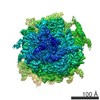


 Z (Sec.)
 Y (Row.)
 X (Col.)











 Sample components
 Processing
 Electron microscopy
 FIELD EMISSION GUN

