[English] 日本語
Yorodumi
- EMDB-77344: Structure of BA.1-S-RBD/2130WT/2196-S93Y -

+
Open data


ID or keywords:

Loading...

-
Basic information

Entry
Database: EMDB / ID: EMD-77344
TitleStructure of BA.1-S-RBD/2130WT/2196-S93Y
Map data
Sample
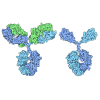
  • Complex: Complex of spike protein of SARS-CoV-2 Omicron BA.1 with 2130WT fab and 2196-S93Y IgG.
    • Complex: Spike protein of SARS-CoV-2 Omicron BA.1 variant
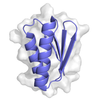
      • Protein or peptide: Spike protein
    • Complex: 2130WT Fab
      • Protein or peptide: 2130WT heavy chain
      • Protein or peptide: 2130WT light chain
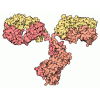
    • Complex: 2196-S93Y IgG
      • Protein or peptide: 2196-S93Y light chain
      • Protein or peptide: 2196-S93Y heavy chain
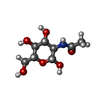
  • Ligand: 2-acetamido-2-deoxy-beta-D-glucopyranose
KeywordsSARS-CoV-2 / VIRAL PROTEIN
Function / homology
Function and homology information


symbiont-mediated disruption of host tissue / Maturation of spike protein / Translation of Structural Proteins / Virion Assembly and Release / host cell surface / host extracellular region / symbiont-mediated-mediated suppression of host tetherin activity / Induction of Cell-Cell Fusion / structural constituent of virion / positive regulation of viral entry into host cell ...symbiont-mediated disruption of host tissue / Maturation of spike protein / Translation of Structural Proteins / Virion Assembly and Release / host cell surface / host extracellular region / symbiont-mediated-mediated suppression of host tetherin activity / Induction of Cell-Cell Fusion / structural constituent of virion / positive regulation of viral entry into host cell / membrane fusion / host cell endoplasmic reticulum-Golgi intermediate compartment membrane / Attachment and Entry / entry receptor-mediated virion attachment to host cell / receptor-mediated virion attachment to host cell / host cell surface receptor binding / symbiont-mediated suppression of host innate immune response / endocytosis involved in viral entry into host cell / receptor ligand activity / fusion of virus membrane with host plasma membrane / fusion of virus membrane with host endosome membrane / viral envelope / symbiont entry into host cell / virion attachment to host cell / host cell plasma membrane / SARS-CoV-2 activates/modulates innate and adaptive immune responses / virion membrane / membrane / identical protein binding / plasma membrane
Similarity search - Function
Spike (S) protein S1 subunit, receptor-binding domain, SARS-CoV-2 / Spike (S) protein S1 subunit, N-terminal domain, SARS-CoV-like / Coronavirus spike glycoprotein S1, C-terminal / Coronavirus spike glycoprotein S1, C-terminal / Spike glycoprotein, N-terminal domain superfamily / Spike S1 subunit, receptor binding domain superfamily, betacoronavirus / Spike glycoprotein, betacoronavirus / Betacoronavirus spike (S) glycoprotein S1 subunit N-terminal (NTD) domain profile. / Spike glycoprotein S1, N-terminal domain, betacoronavirus-like / Betacoronavirus-like spike glycoprotein S1, N-terminal ...Spike (S) protein S1 subunit, receptor-binding domain, SARS-CoV-2 / Spike (S) protein S1 subunit, N-terminal domain, SARS-CoV-like / Coronavirus spike glycoprotein S1, C-terminal / Coronavirus spike glycoprotein S1, C-terminal / Spike glycoprotein, N-terminal domain superfamily / Spike S1 subunit, receptor binding domain superfamily, betacoronavirus / Spike glycoprotein, betacoronavirus / Betacoronavirus spike (S) glycoprotein S1 subunit N-terminal (NTD) domain profile. / Spike glycoprotein S1, N-terminal domain, betacoronavirus-like / Betacoronavirus-like spike glycoprotein S1, N-terminal / Betacoronavirus spike (S) glycoprotein S1 subunit C-terminal (CTD) domain profile. / Spike (S) protein S1 subunit, receptor-binding domain, betacoronavirus / Betacoronavirus spike glycoprotein S1, receptor binding / Spike glycoprotein S2 superfamily, coronavirus / Spike glycoprotein S2, coronavirus, heptad repeat 1 / Spike glycoprotein S2, coronavirus, heptad repeat 2 / Coronavirus spike (S) glycoprotein S2 subunit heptad repeat 1 (HR1) region profile. / Coronavirus spike (S) glycoprotein S2 subunit heptad repeat 2 (HR2) region profile. / Spike glycoprotein S2, coronavirus / Coronavirus spike glycoprotein S2
Similarity search - Domain/homology
Biological speciesSevere acute respiratory syndrome coronavirus / Severe acute respiratory syndrome coronavirus 2 / Homo sapiens (human)
Methodsingle particle reconstruction / cryo EM / Resolution: 3.9 Å
AuthorsDu J / Pallesen J
Funding support United States, 2 items
OrganizationGrant numberCountry
Defense Advanced Research Projects Agency (DARPA) United States
National Institutes of Health/National Institute Of Allergy and Infectious Diseases (NIH/NIAID) United States
CitationJournal: Res Sq / Year: 2026
Title: Structure-Guided Design of Therapeutic Antibodies Targeting SARS-CoV-2 Omicron Variants.
Authors: Jesper Pallesen / Jianqiu Du / Yuanhan Wu / Sukanya Ghosh / Kelly Bayruns / Roopak Sadeesh / David Weiner
Abstract: The ongoing evolution of SARS-CoV-2, particularly the emergence of Omicron subvariants, compromised the effectiveness of many therapeutic antibodies. In this study, we employed a structure-guided ...The ongoing evolution of SARS-CoV-2, particularly the emergence of Omicron subvariants, compromised the effectiveness of many therapeutic antibodies. In this study, we employed a structure-guided computational design strategy to systematically optimize the COV2-2196 antibody for improved neutralization of Omicron variants. Through iterative rounds of computational design and experimental validation, we identified key paratope mutations that restored and enhanced antibody binding and neutralization potency against resistant viral strains. Cryo-EM structural analysis revealed the molecular basis for these improvements, highlighting how targeted modifications can accommodate epitope changes introduced by viral evolution. Our approach demonstrates that effective antibody optimization can be achieved using accessible computational resources, providing a practical framework for rapid therapeutic development. These findings underscore the potential of structure-based design to address challenges posed by viral antigenic drift and support the development of broadly effective antibody therapeutics for emerging infectious diseases.
History
DepositionMay 28, 2026-
Header (metadata) releaseJul 15, 2026-
Map releaseJul 15, 2026-
UpdateJul 15, 2026-
Current statusJul 15, 2026Processing site: RCSB / Status: Released

-
Structure visualization

Supplemental images

Downloads & links

-
Map

FileDownload / File: emd_77344.map.gz / Format: CCP4 / Size: 282.6 MB / Type: IMAGE STORED AS FLOATING POINT NUMBER (4 BYTES)
Projections & slices

Image control

Size
Brightness
Contrast
Others
AxesZ (Sec.)Y (Row.)X (Col.)
1.05 Å/pix.
x 420 pix.
= 442.68 Å
1.05 Å/pix.
x 420 pix.
= 442.68 Å
1.05 Å/pix.
x 420 pix.
= 442.68 Å

Surface

Projections

Slices (1/3)

Slices (1/2)

Slices (2/3)

Images are generated by Spider.

Voxel sizeX=Y=Z: 1.054 Å
Density
Contour LevelBy AUTHOR: 4.87
Minimum - Maximum-0.10614712 - 14.241849
Average (Standard dev.)-0.04349453 (±0.15542607)
SymmetrySpace group: 1
Details

EMDB XML:

Map geometry
Axis orderXYZ
Origin000
Dimensions420420420
Spacing420420420
CellA=B=C: 442.68002 Å
α=β=γ: 90.0 °

-
Supplemental data

-
Half map: #1

Fileemd_77344_half_map_1.map
Projections & Slices
AxesZYX

Projections

Slices (1/2)
Density Histograms

-
Half map: #2

Fileemd_77344_half_map_2.map
Projections & Slices
AxesZYX

Projections

Slices (1/2)
Density Histograms

-
Sample components

+
Entire : Complex of spike protein of SARS-CoV-2 Omicron BA.1 with 2130WT f...

EntireName: Complex of spike protein of SARS-CoV-2 Omicron BA.1 with 2130WT fab and 2196-S93Y IgG.
Components
  • Complex: Complex of spike protein of SARS-CoV-2 Omicron BA.1 with 2130WT fab and 2196-S93Y IgG.
    • Complex: Spike protein of SARS-CoV-2 Omicron BA.1 variant
      • Protein or peptide: Spike protein
    • Complex: 2130WT Fab
      • Protein or peptide: 2130WT heavy chain
      • Protein or peptide: 2130WT light chain
    • Complex: 2196-S93Y IgG
      • Protein or peptide: 2196-S93Y light chain
      • Protein or peptide: 2196-S93Y heavy chain
  • Ligand: 2-acetamido-2-deoxy-beta-D-glucopyranose

+
Supramolecule #1: Complex of spike protein of SARS-CoV-2 Omicron BA.1 with 2130WT f...

SupramoleculeName: Complex of spike protein of SARS-CoV-2 Omicron BA.1 with 2130WT fab and 2196-S93Y IgG.
type: complex / ID: 1 / Parent: 0 / Macromolecule list: #1-#5
Source (natural)Organism: Severe acute respiratory syndrome coronavirus / Strain: Omicron BA.1

+
Supramolecule #2: Spike protein of SARS-CoV-2 Omicron BA.1 variant

SupramoleculeName: Spike protein of SARS-CoV-2 Omicron BA.1 variant / type: complex / ID: 2 / Parent: 1 / Macromolecule list: #3
Source (natural)Organism: Severe acute respiratory syndrome coronavirus 2 / Strain: Omicron BA.1

+
Supramolecule #3: 2130WT Fab

SupramoleculeName: 2130WT Fab / type: complex / ID: 3 / Parent: 1 / Macromolecule list: #1-#2
Source (natural)Organism: Homo sapiens (human)

+
Supramolecule #4: 2196-S93Y IgG

SupramoleculeName: 2196-S93Y IgG / type: complex / ID: 4 / Parent: 1 / Macromolecule list: #4-#5
Source (natural)Organism: Homo sapiens (human)

+
Macromolecule #1: 2130WT heavy chain

MacromoleculeName: 2130WT heavy chain / type: protein_or_peptide / ID: 1 / Number of copies: 1 / Enantiomer: LEVO
Source (natural)Organism: Homo sapiens (human)
Molecular weightTheoretical: 52.514156 KDa
Recombinant expressionOrganism: Homo sapiens (human)
SequenceString: MDWTWRILFL VAAATGTHAE VQLVESGGGL VKPGGSLRLS CAASGFTFRD VWMSWVRQAP GKGLEWVGRI KSKIDGGTTD YAAPVKGRF TISRDDSKNT LYLQMNSLKT EDTAVYYCTT AGSYYYDTVG PGLPEGKFDY WGQGTLVTVS SASTKGPSVF P LAPSSKST ...String:
MDWTWRILFL VAAATGTHAE VQLVESGGGL VKPGGSLRLS CAASGFTFRD VWMSWVRQAP GKGLEWVGRI KSKIDGGTTD YAAPVKGRF TISRDDSKNT LYLQMNSLKT EDTAVYYCTT AGSYYYDTVG PGLPEGKFDY WGQGTLVTVS SASTKGPSVF P LAPSSKST SGGTAALGCL VKDYFPEPVT VSWNSGALTS GVHTFPAVLQ SSGLYSLSSV VTVPSSSLGT QTYICNVNHK PS NTKVDKK VEPKSCDKTH TCPPCPAPEL LGGPSVFLFP PKPKDTLMIS RTPEVTCVVV DVSHEDPEVK FNWYVDGVEV HNA KTKPRE EQYNSTYRVV SVLTVLHQDW LNGKEYKCKV SNKALPAPIE KTISKAKGQP REPQVYTLPP SRDELTKNQV SLTC LVKGF YPSDIAVEWE SNGQPENNYK TTPPVLDSDG SFFLYSKLTV DKSRWQQGNV FSCSVMHEAL HNHYTQKSLS LSPGK

+
Macromolecule #2: 2130WT light chain

MacromoleculeName: 2130WT light chain / type: protein_or_peptide / ID: 2 / Number of copies: 1 / Enantiomer: LEVO
Source (natural)Organism: Homo sapiens (human)
Molecular weightTheoretical: 26.326418 KDa
Recombinant expressionOrganism: Homo sapiens (human)
SequenceString: MVLQTQVFIS LLLWISGAYG DIVMTQSPDS LAVSLGERAT INCKSSQSVL YSSNNKNYLA WYQQKPGQPP KLLMYWASTR ESGVPDRFS GSGSGAEFTL TISSLQAEDV AIYYCQQYYS TLTFGGGTKV EIKRTVAAPS VFIFPPSDEQ LKSGTASVVC L LNNFYPRE ...String:
MVLQTQVFIS LLLWISGAYG DIVMTQSPDS LAVSLGERAT INCKSSQSVL YSSNNKNYLA WYQQKPGQPP KLLMYWASTR ESGVPDRFS GSGSGAEFTL TISSLQAEDV AIYYCQQYYS TLTFGGGTKV EIKRTVAAPS VFIFPPSDEQ LKSGTASVVC L LNNFYPRE AKVQWKVDNA LQSGNSQESV TEQDSKDSTY SLSNTLTLSK ADYEKHKVYA CEVTHQGLSS PVTKSFNRGE C

+
Macromolecule #3: Spike protein

MacromoleculeName: Spike protein / type: protein_or_peptide / ID: 3 / Number of copies: 1 / Enantiomer: LEVO
Source (natural)Organism: Severe acute respiratory syndrome coronavirus 2 / Strain: Omicron BA.1
Molecular weightTheoretical: 25.145273 KDa
Recombinant expressionOrganism: Homo sapiens (human)
SequenceString: PNITNLCPFD EVFNATRFAS VYAWNRKRIS NCVADYSVLY NLAPFFTFKC YGVSPTKLND LCFTNVYADS FVIRGDEVRQ IAPGQTGNI ADYNYKLPDD FTGCVIAWNS NKLDSKVSGN YNYLYRLFRK SNLKPFERDI STEIYQAGNK PCNGVAGFNC Y FPLRSYSF ...String:
PNITNLCPFD EVFNATRFAS VYAWNRKRIS NCVADYSVLY NLAPFFTFKC YGVSPTKLND LCFTNVYADS FVIRGDEVRQ IAPGQTGNI ADYNYKLPDD FTGCVIAWNS NKLDSKVSGN YNYLYRLFRK SNLKPFERDI STEIYQAGNK PCNGVAGFNC Y FPLRSYSF RPTYGVGHQP YRVVVLSFEL LHAPATVCGG GGLVPQQSGG LNDIFEAQKI EWHEG

UniProtKB: Spike glycoprotein

+
Macromolecule #4: 2196-S93Y light chain

MacromoleculeName: 2196-S93Y light chain / type: protein_or_peptide / ID: 4 / Number of copies: 1 / Enantiomer: LEVO
Source (natural)Organism: Homo sapiens (human)
Molecular weightTheoretical: 25.898893 KDa
Recombinant expressionOrganism: Homo sapiens (human)
SequenceString: MVLQTQVFIS LLLWISGAYG EIVLTQSPGT LSLSPGERAT LSCRASQSVS SSYLAWYQQK PGQAPRLLIY GASSRATGIP DRFSGSGSG TDFTLTISRL EPEDFAVYYC QHYGYSRGWT FGQGTKVEIK RTVAAPSVFI FPPSDEQLKS GTASVVCLLN N FYPREAKV ...String:
MVLQTQVFIS LLLWISGAYG EIVLTQSPGT LSLSPGERAT LSCRASQSVS SSYLAWYQQK PGQAPRLLIY GASSRATGIP DRFSGSGSG TDFTLTISRL EPEDFAVYYC QHYGYSRGWT FGQGTKVEIK RTVAAPSVFI FPPSDEQLKS GTASVVCLLN N FYPREAKV QWKVDNALQS GNSQESVTEQ DSKDSTYSLS NTLTLSKADY EKHKVYACEV THQGLSSPVT KSFNRGEC

+
Macromolecule #5: 2196-S93Y heavy chain

MacromoleculeName: 2196-S93Y heavy chain / type: protein_or_peptide / ID: 5 / Number of copies: 1 / Enantiomer: LEVO
Source (natural)Organism: Homo sapiens (human)
Molecular weightTheoretical: 51.845508 KDa
Recombinant expressionOrganism: Homo sapiens (human)
SequenceString: MDWTWRILFL VAAATGTHAQ MQLVQSGPEV KKPGTSVKVS CKASGFTFMS SAVQWVRQAR GQRLEWIGWI VIGSGNTNYA QKFQERVTI TRDMSTSTAY MELSSLRSED TAVYYCAAPY CSSISCNDGF DIWGQGTMVT VSSASTKGPS VFPLAPSSKS T SGGTAALG ...String:
MDWTWRILFL VAAATGTHAQ MQLVQSGPEV KKPGTSVKVS CKASGFTFMS SAVQWVRQAR GQRLEWIGWI VIGSGNTNYA QKFQERVTI TRDMSTSTAY MELSSLRSED TAVYYCAAPY CSSISCNDGF DIWGQGTMVT VSSASTKGPS VFPLAPSSKS T SGGTAALG CLVKDYFPEP VTVSWNSGAL TSGVHTFPAV LQSSGLYSLS SVVTVPSSSL GTQTYICNVN HKPSNTKVDK KV EPKSCDK THTCPPCPAP ELLGGPSVFL FPPKPKDTLM ISRTPEVTCV VVDVSHEDPE VKFNWYVDGV EVHNAKTKPR EEQ YNSTYR VVSVLTVLHQ DWLNGKEYKC KVSNKALPAP IEKTISKAKG QPREPQVYTL PPSRDELTKN QVSLTCLVKG FYPS DIAVE WESNGQPENN YKTTPPVLDS DGSFFLYSKL TVDKSRWQQG NVFSCSVMHE ALHNHYTQKS LSLSPGK

+
Macromolecule #6: 2-acetamido-2-deoxy-beta-D-glucopyranose

MacromoleculeName: 2-acetamido-2-deoxy-beta-D-glucopyranose / type: ligand / ID: 6 / Number of copies: 1 / Formula: NAG
Molecular weightTheoretical: 221.208 Da
Chemical component information

ChemComp-NAG:
2-acetamido-2-deoxy-beta-D-glucopyranose

-
Experimental details

-
Structure determination

Methodcryo EM
Processingsingle particle reconstruction
Aggregation stateparticle

-
Sample preparation

BufferpH: 7.4
VitrificationCryogen name: ETHANE

-
Electron microscopy

MicroscopeTFS KRIOS
Image recordingFilm or detector model: GATAN K3 (6k x 4k) / Average electron dose: 58.6 e/Å2
Electron beamAcceleration voltage: 300 kV / Electron source: FIELD EMISSION GUN
Electron opticsIllumination mode: SPOT SCAN / Imaging mode: BRIGHT FIELD / Nominal defocus max: 2.5 µm / Nominal defocus min: 0.5 µm
Experimental equipment
Model: Titan Krios / Image courtesy: FEI Company

+
Image processing

CTF correctionType: NONE
Startup modelType of model: NONE
Final reconstructionResolution.type: BY AUTHOR / Resolution: 3.9 Å / Resolution method: FSC 0.143 CUT-OFF / Software - Name: cryoSPARC / Number images used: 243248
Initial angle assignmentType: MAXIMUM LIKELIHOOD
Final angle assignmentType: MAXIMUM LIKELIHOOD

+
About Yorodumi

-
News

-
Feb 9, 2022. New format data for meta-information of EMDB entries

New format data for meta-information of EMDB entries

  • Version 3 of the EMDB header file is now the official format.
  • The previous official version 1.9 will be removed from the archive.

Related info.:EMDB header

External links:wwPDB to switch to version 3 of the EMDB data model

-
Aug 12, 2020. Covid-19 info

Covid-19 info

URL: https://pdbj.org/emnavi/covid19.php

New page: Covid-19 featured information page in EM Navigator.

Related info.:Covid-19 info / Mar 5, 2020. Novel coronavirus structure data

+
Mar 5, 2020. Novel coronavirus structure data

Novel coronavirus structure data

Related info.:Yorodumi Speices / Aug 12, 2020. Covid-19 info

External links:COVID-19 featured content - PDBj / Molecule of the Month (242):Coronavirus Proteases

+
Jan 31, 2019. EMDB accession codes are about to change! (news from PDBe EMDB page)

EMDB accession codes are about to change! (news from PDBe EMDB page)

  • The allocation of 4 digits for EMDB accession codes will soon come to an end. Whilst these codes will remain in use, new EMDB accession codes will include an additional digit and will expand incrementally as the available range of codes is exhausted. The current 4-digit format prefixed with “EMD-” (i.e. EMD-XXXX) will advance to a 5-digit format (i.e. EMD-XXXXX), and so on. It is currently estimated that the 4-digit codes will be depleted around Spring 2019, at which point the 5-digit format will come into force.
  • The EM Navigator/Yorodumi systems omit the EMD- prefix.

Related info.:Q: What is EMD? / ID/Accession-code notation in Yorodumi/EM Navigator

External links:EMDB Accession Codes are Changing Soon! / Contact to PDBj

+
Jul 12, 2017. Major update of PDB

Major update of PDB

  • wwPDB released updated PDB data conforming to the new PDBx/mmCIF dictionary.
  • This is a major update changing the version number from 4 to 5, and with Remediation, in which all the entries are updated.
  • In this update, many items about electron microscopy experimental information are reorganized (e.g. em_software).
  • Now, EM Navigator and Yorodumi are based on the updated data.

External links:wwPDB Remediation / Enriched Model Files Conforming to OneDep Data Standards Now Available in the PDB FTP Archive

-
Yorodumi

Thousand views of thousand structures

  • Yorodumi is a browser for structure data from EMDB, PDB, SASBDB, etc.
  • This page is also the successor to EM Navigator detail page, and also detail information page/front-end page for Omokage search.
  • The word "yorodu" (or yorozu) is an old Japanese word meaning "ten thousand". "mi" (miru) is to see.

Related info.:EMDB / PDB / SASBDB / Comparison of 3 databanks / Yorodumi Search / Aug 31, 2016. New EM Navigator & Yorodumi / Yorodumi Papers / Jmol/JSmol / Function and homology information / Changes in new EM Navigator and Yorodumi

Read more