[English] 日本語
Yorodumi
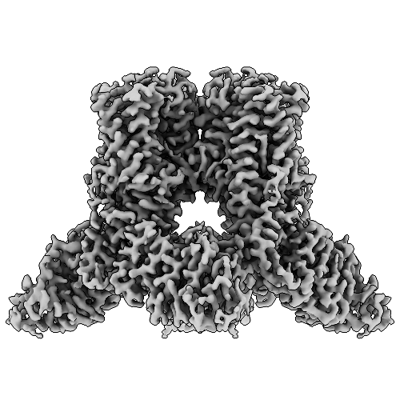
- EMDB-75708: Apo human TRPV2, S651H/T654D/D655N -

+
Open data


ID or keywords:

Loading...

-
Basic information

Entry
Database: EMDB / ID: EMD-75708
TitleApo human TRPV2, S651H/T654D/D655N
Map data
Sample
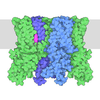
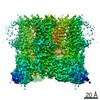
  • Complex: homo tetramer of S651H/T654D/D655N human TRPV2
    • Protein or peptide: Transient receptor potential cation channel subfamily V member 2
  • Ligand: CHOLESTEROL
  • Ligand: 1,2-DIDECANOYL-SN-GLYCERO-3-PHOSPHOETHANOLAMINE
KeywordsTRPV2 / ion channel / TRP channel / MEMBRANE PROTEIN
Function / homology
Function and homology information


monoatomic ion transmembrane transporter activity / growth cone membrane / response to temperature stimulus / sensory perception / positive regulation of calcium ion import / TRP channels / calcium ion import across plasma membrane / positive regulation of axon extension / monoatomic ion channel activity / axonal growth cone ...monoatomic ion transmembrane transporter activity / growth cone membrane / response to temperature stimulus / sensory perception / positive regulation of calcium ion import / TRP channels / calcium ion import across plasma membrane / positive regulation of axon extension / monoatomic ion channel activity / axonal growth cone / monoatomic cation channel activity / calcium ion transmembrane transport / calcium channel activity / melanosome / positive regulation of cold-induced thermogenesis / cell body / cell surface / plasma membrane
Similarity search - Function
Transient receptor potential cation channel subfamily V member 1-4 / Transient receptor potential cation channel subfamily V / Ankyrin repeat profile. / Ankyrin repeats (3 copies) / Ankyrin repeat region circular profile. / ankyrin repeats / Ankyrin repeat / Ankyrin repeat-containing domain superfamily / Ion transport domain / Ion transport protein
Similarity search - Domain/homology
Transient receptor potential cation channel subfamily V member 2
Similarity search - Component
Biological speciesHomo sapiens (human)
Methodsingle particle reconstruction / cryo EM / Resolution: 2.76 Å
AuthorsPumroy RP / Rocereta JA / Moiseenkova-Bell VY
Funding support United States, 1 items
OrganizationGrant numberCountry
National Institutes of Health/National Institute of General Medical Sciences (NIH/NIGMS)R35GM144120 United States
CitationJournal: Nat Commun / Year: 2026
Title: Structural origins of species-specific differences in TRPV2 activation.
Authors: Tabea C Fricke / Ruth A Pumroy / Julia A Rocereta / José J De Jesús-Pérez / George Oprita / Marvin J A Meyer / Christine Herzog / Frank G Echtermeyer / Kerstin Hill / Andreas Leffler / ...Authors: Tabea C Fricke / Ruth A Pumroy / Julia A Rocereta / José J De Jesús-Pérez / George Oprita / Marvin J A Meyer / Christine Herzog / Frank G Echtermeyer / Kerstin Hill / Andreas Leffler / Vera Y Moiseenkova-Bell /
Abstract: Transient receptor potential vanilloid 2 (TRPV2) is a broadly expressed ion channel implicated in diverse physiological and pathological processes. Despite strong conservation, human TRPV2 (hTRPV2) ...Transient receptor potential vanilloid 2 (TRPV2) is a broadly expressed ion channel implicated in diverse physiological and pathological processes. Despite strong conservation, human TRPV2 (hTRPV2) displays markedly reduced sensitivity to stimuli such as 2-aminoethoxydiphenyl borate (2-APB) and heat compared to rodent orthologs. Here we combine electrophysiology and cryo electron microscopy to define the basis of this species-dependent divergence. The structure of hTRPV2 is remarkably different at the voltage sensor-like domain (VSLD) compared to rodent channels and functional analyses show a graded activity profile between human, mouse and rat TRPV2 to a broad range of chemical and physical stimuli. Three residues located between S6 and the TRP domain tune this functional difference, as reciprocal substitutions exchange current phenotypes. hTRPV2 structures of this mutant reveal coupling between the mutation site and the VSLD as well as an additional binding site for 2-APB. Together, these findings define structural determinants of species-specific TRPV2 function.
History
DepositionFeb 25, 2026-
Header (metadata) releaseSep 2, 2026-
Map releaseSep 2, 2026-
UpdateSep 2, 2026-
Current statusSep 2, 2026Processing site: RCSB / Status: Released

-
Structure visualization

Supplemental images

Downloads & links

-
Map

FileDownload / File: emd_75708.map.gz / Format: CCP4 / Size: 125 MB / Type: IMAGE STORED AS FLOATING POINT NUMBER (4 BYTES)
Projections & slices

Image control

Size
Brightness
Contrast
Others
AxesZ (Sec.)Y (Row.)X (Col.)
0.89 Å/pix.
x 320 pix.
= 283.84 Å
0.89 Å/pix.
x 320 pix.
= 283.84 Å
0.89 Å/pix.
x 320 pix.
= 283.84 Å

Surface

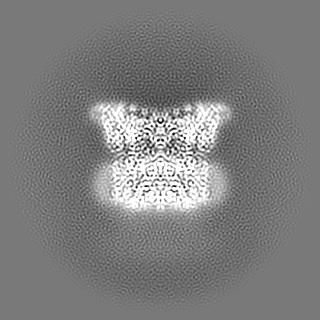
Projections

Slices (1/3)

Slices (1/2)

Slices (2/3)

Images are generated by Spider.

Voxel sizeX=Y=Z: 0.887 Å
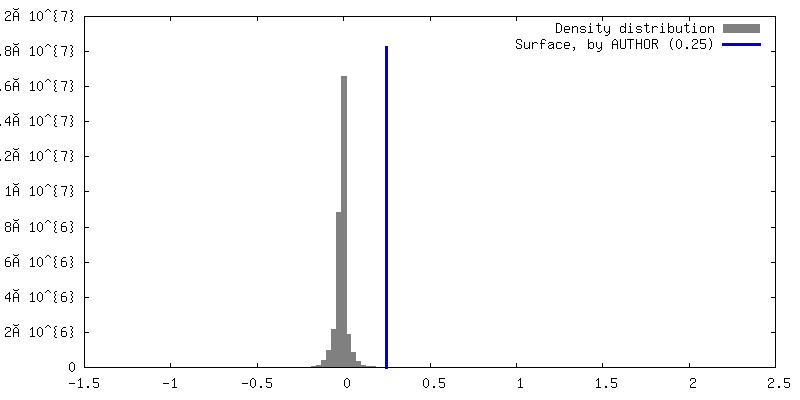
Density
Contour LevelBy AUTHOR: 0.25
Minimum - Maximum-1.4525506 - 2.164348
Average (Standard dev.)0.0013247229 (±0.061148785)
SymmetrySpace group: 1
Details

EMDB XML:

Map geometry
Axis orderXYZ
Origin000
Dimensions320320320
Spacing320320320
CellA=B=C: 283.84 Å
α=β=γ: 90.0 °

-
Supplemental data

-
Half map: #2

Fileemd_75708_half_map_1.map
Projections & Slices
AxesZYX

Projections

Slices (1/2)
Density Histograms

-
Half map: #1

Fileemd_75708_half_map_2.map
Projections & Slices
AxesZYX

Projections

Slices (1/2)
Density Histograms

-
Sample components

-
Entire : homo tetramer of S651H/T654D/D655N human TRPV2

EntireName: homo tetramer of S651H/T654D/D655N human TRPV2
Components
  • Complex: homo tetramer of S651H/T654D/D655N human TRPV2
    • Protein or peptide: Transient receptor potential cation channel subfamily V member 2
  • Ligand: CHOLESTEROL
  • Ligand: 1,2-DIDECANOYL-SN-GLYCERO-3-PHOSPHOETHANOLAMINE

-
Supramolecule #1: homo tetramer of S651H/T654D/D655N human TRPV2

SupramoleculeName: homo tetramer of S651H/T654D/D655N human TRPV2 / type: complex / ID: 1 / Parent: 0 / Macromolecule list: #1
Source (natural)Organism: Homo sapiens (human)

-
Macromolecule #1: Transient receptor potential cation channel subfamily V member 2

MacromoleculeName: Transient receptor potential cation channel subfamily V member 2
type: protein_or_peptide / ID: 1 / Number of copies: 4 / Enantiomer: LEVO
Source (natural)Organism: Homo sapiens (human)
Molecular weightTheoretical: 87.011844 KDa
Recombinant expressionOrganism: Homo sapiens (human)
SequenceString: MTSPSSSPVF RLETLDGGQE DGSEADRGKL DFGSGLPPME SQFQGEDRKF APQIRVNLNY RKGTGASQPD PNRFDRDRLF NAVSRGVPE DLAGLPEYLS KTSKYLTDSE YTEGSTGKTC LMKAVLNLKD GVNACILPLL QIDRDSGNPQ PLVNAQCTDD Y YRGHSALH ...String:
MTSPSSSPVF RLETLDGGQE DGSEADRGKL DFGSGLPPME SQFQGEDRKF APQIRVNLNY RKGTGASQPD PNRFDRDRLF NAVSRGVPE DLAGLPEYLS KTSKYLTDSE YTEGSTGKTC LMKAVLNLKD GVNACILPLL QIDRDSGNPQ PLVNAQCTDD Y YRGHSALH IAIEKRSLQC VKLLVENGAN VHARACGRFF QKGQGTCFYF GELPLSLAAC TKQWDVVSYL LENPHQPASL QA TDSQGNT VLHALVMISD NSAENIALVT SMYDGLLQAG ARLCPTVQLE DIRNLQDLTP LKLAAKEGKI EIFRHILQRE FSG LSHLSR KFTEWCYGPV RVSLYDLASV DSCEENSVLE IIAFHCKSPH RHRMVVLEPL NKLLQAKWDL LIPKFFLNFL CNLI YMFIF TAVAYHQPTL KKQAAPHLKA EVGNSMLLTG HILILLGGIY LLVGQLWYFW RRHVFIWISF IDSYFEILFL FQALL TVVS QVLCFLAIEW YLPLLVSALV LGWLNLLYYT RGFQHTGIYS VMIQKVILRD LLRFLLIYLV FLFGFAVALV SLSQEA WRP EAPTGPNATE SVQPMEGQED EGNGAQYRGI LEASLELFKF TIGMGELAFQ EQLHFRGMVL LLLLAYVLLT YILLLNM LI ALMSETVNHV ADNSWSIWKL QKAISVLEME NGYWWCRKKQ RAGVMLTVGT KPDGSPDERW CFRVEEVNWA SWEQTLPT L CEDPSGAGVP RTLENPVLAS PPKEDEDGAS EENYVPVQLL QSNTETSQVA PA

UniProtKB: Transient receptor potential cation channel subfamily V member 2

-
Macromolecule #2: CHOLESTEROL

MacromoleculeName: CHOLESTEROL / type: ligand / ID: 2 / Number of copies: 4 / Formula: CLR
Molecular weightTheoretical: 386.654 Da
Chemical component information

ChemComp-CLR:
CHOLESTEROL

-
Macromolecule #3: 1,2-DIDECANOYL-SN-GLYCERO-3-PHOSPHOETHANOLAMINE

MacromoleculeName: 1,2-DIDECANOYL-SN-GLYCERO-3-PHOSPHOETHANOLAMINE / type: ligand / ID: 3 / Number of copies: 4 / Formula: PEX
Molecular weightTheoretical: 522.632 Da
Chemical component information

ChemComp-PEX:
1,2-DIDECANOYL-SN-GLYCERO-3-PHOSPHOETHANOLAMINE

-
Experimental details

-
Structure determination

Methodcryo EM
Processingsingle particle reconstruction
Aggregation stateparticle

-
Sample preparation

BufferpH: 8
VitrificationCryogen name: ETHANE

-
Electron microscopy

MicroscopeTFS GLACIOS
Image recordingFilm or detector model: FEI FALCON IV (4k x 4k) / Average electron dose: 40.0 e/Å2
Electron beamAcceleration voltage: 200 kV / Electron source: FIELD EMISSION GUN
Electron opticsIllumination mode: FLOOD BEAM / Imaging mode: BRIGHT FIELD / Nominal defocus max: 2.0 µm / Nominal defocus min: 0.8 µm

+
Image processing

CTF correctionType: PHASE FLIPPING AND AMPLITUDE CORRECTION
Startup modelType of model: EMDB MAP
EMDB ID:
Final reconstructionApplied symmetry - Point group: C4 (4 fold cyclic) / Resolution.type: BY AUTHOR / Resolution: 2.76 Å / Resolution method: FSC 0.143 CUT-OFF / Software - Name: cryoSPARC / Number images used: 64150
Initial angle assignmentType: MAXIMUM LIKELIHOOD
Final angle assignmentType: MAXIMUM LIKELIHOOD
FSC plot (resolution estimation)

+
About Yorodumi

-
News

-
Feb 9, 2022. New format data for meta-information of EMDB entries

New format data for meta-information of EMDB entries

  • Version 3 of the EMDB header file is now the official format.
  • The previous official version 1.9 will be removed from the archive.

Related info.:EMDB header

External links:wwPDB to switch to version 3 of the EMDB data model

-
Aug 12, 2020. Covid-19 info

Covid-19 info

URL: https://pdbj.org/emnavi/covid19.php

New page: Covid-19 featured information page in EM Navigator.

Related info.:Covid-19 info / Mar 5, 2020. Novel coronavirus structure data

+
Mar 5, 2020. Novel coronavirus structure data

Novel coronavirus structure data

Related info.:Yorodumi Speices / Aug 12, 2020. Covid-19 info

External links:COVID-19 featured content - PDBj / Molecule of the Month (242):Coronavirus Proteases

+
Jan 31, 2019. EMDB accession codes are about to change! (news from PDBe EMDB page)

EMDB accession codes are about to change! (news from PDBe EMDB page)

  • The allocation of 4 digits for EMDB accession codes will soon come to an end. Whilst these codes will remain in use, new EMDB accession codes will include an additional digit and will expand incrementally as the available range of codes is exhausted. The current 4-digit format prefixed with “EMD-” (i.e. EMD-XXXX) will advance to a 5-digit format (i.e. EMD-XXXXX), and so on. It is currently estimated that the 4-digit codes will be depleted around Spring 2019, at which point the 5-digit format will come into force.
  • The EM Navigator/Yorodumi systems omit the EMD- prefix.

Related info.:Q: What is EMD? / ID/Accession-code notation in Yorodumi/EM Navigator

External links:EMDB Accession Codes are Changing Soon! / Contact to PDBj

+
Jul 12, 2017. Major update of PDB

Major update of PDB

  • wwPDB released updated PDB data conforming to the new PDBx/mmCIF dictionary.
  • This is a major update changing the version number from 4 to 5, and with Remediation, in which all the entries are updated.
  • In this update, many items about electron microscopy experimental information are reorganized (e.g. em_software).
  • Now, EM Navigator and Yorodumi are based on the updated data.

External links:wwPDB Remediation / Enriched Model Files Conforming to OneDep Data Standards Now Available in the PDB FTP Archive

-
Yorodumi

Thousand views of thousand structures

  • Yorodumi is a browser for structure data from EMDB, PDB, SASBDB, etc.
  • This page is also the successor to EM Navigator detail page, and also detail information page/front-end page for Omokage search.
  • The word "yorodu" (or yorozu) is an old Japanese word meaning "ten thousand". "mi" (miru) is to see.

Related info.:EMDB / PDB / SASBDB / Comparison of 3 databanks / Yorodumi Search / Aug 31, 2016. New EM Navigator & Yorodumi / Yorodumi Papers / Jmol/JSmol / Function and homology information / Changes in new EM Navigator and Yorodumi

Read more