National Institutes of Health/National Center for Complementary and Integrative Health (NIH/NCCIH)
P01CA066996
United States
National Institutes of Health/National Center for Complementary and Integrative Health (NIH/NCCIH)
R01CA262188
United States
National Institutes of Health/National Center for Complementary and Integrative Health (NIH/NCCIH)
R01CA214608
United States
National Institutes of Health/National Center for Complementary and Integrative Health (NIH/NCCIH)
R01CA218278
United States
Citation
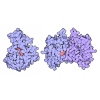
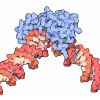
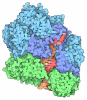
Journal: Science / Year: 2026 Title: Degron-independent recruitment of KAT2A expands the target space of CRBN molecular glues. Authors: Samuel Ojeda / Meng Wang / Kheewoong Baek / Wallace Bourgeois / Alba Sommerschield / Hong Yue / Rebecca J Metivier / Panos Karagiannis / Talya S Levitz / Yuan Xiong / Katherine A Donovan / ...Authors: Samuel Ojeda / Meng Wang / Kheewoong Baek / Wallace Bourgeois / Alba Sommerschield / Hong Yue / Rebecca J Metivier / Panos Karagiannis / Talya S Levitz / Yuan Xiong / Katherine A Donovan / Scott A Armstrong / Eric S Fischer / Abstract: Lysine acetyltransferases (KATs) cooperate with oncogenes such as c-Myc, estrogen receptor, and lysine methyltransferase 2A (KMT2A) fusions to sustain malignant programs. Targeting of KAT proteins ...Lysine acetyltransferases (KATs) cooperate with oncogenes such as c-Myc, estrogen receptor, and lysine methyltransferase 2A (KMT2A) fusions to sustain malignant programs. Targeting of KAT proteins has shown clinical efficacy; however, achieving homolog selectivity for most KATs remains a major challenge. By extending cereblon (CRBN)-based molecular glues beyond the canonical degron space, we developed an exquisitely selective degrader of KAT2A. Cryo-electron microscopy revealed that CRBN recruits KAT2A independently of a degron; instead, the molecular glue engages a surface-exposed tyrosine, mimicking antibody-like molecular recognition. Selective KAT2A degradation leads to potent ablation of histone H3 lysine 9 acetylation (H3K9Ac), antiproliferative effects in acute myeloid leukemia cell lines, and in vivo efficacy in a patient-derived xenograft model, establishing KAT2A as a targetable vulnerability to treat a wide range of malignancies. More generally, degron-independent recruitment extends the CRBN-targetable proteome.
Name: DNA damage-binding protein 1 / type: protein_or_peptide / ID: 3 Details: N terminal His tagged DDB1dB,N terminal His tagged DDB1dB Number of copies: 1 / Enantiomer: LEVO
Name: (3S)-3-[4-({6-(3-tert-butyl-2-oxoimidazolidin-1-yl)-1-[(2S)-oxan-2-yl]-1H-imidazo[4,5-c]pyridin-4-yl}amino)-1-oxo-1,3-dihydro-2H-isoindol-2-yl]piperidine-2,6-dione type: ligand / ID: 5 / Number of copies: 1 / Formula: A1C5C
Molecular weight
Theoretical: 600.668 Da
-
Experimental details
-
Structure determination
Method
cryo EM
Processing
single particle reconstruction
Aggregation state
particle
-
Sample preparation
Buffer
pH: 7.4 Component:
Concentration
Formula
Name
30.0 mM
C8H18N2O4S
HEPES
150.0 mM
NaCl
Sodium chloride
Details: 30 mM HEPES/NaOH pH7.4, 150 mM NaCl.
Grid
Model: Quantifoil R0.6/1 / Material: GOLD / Support film - Material: GOLD / Support film - topology: HOLEY
Vitrification
Cryogen name: ETHANE / Chamber humidity: 90 % / Chamber temperature: 283 K / Instrument: LEICA EM GP Details: Grids were vitrified using a Leica EM GP plunge freezer operated at 90% humidity and 10C. Grids were first pre-incubated with 4uL of 10uM CRBN-agnostic IKZF1_140-196_Q146A,G151N for 1 minute ...Details: Grids were vitrified using a Leica EM GP plunge freezer operated at 90% humidity and 10C. Grids were first pre-incubated with 4uL of 10uM CRBN-agnostic IKZF1_140-196_Q146A,G151N for 1 minute and then back-blotted for 4s. Afterwards, 4uL of mixture was applied to the grids, followed by blotting for 4s and plunging into liquid ethane at -181 C..
-
Electron microscopy
Microscope
TFS KRIOS
Details
The grid was imaged at a 30-degree tilt
Image recording
Film or detector model: TFS FALCON 4i (4k x 4k) / Number grids imaged: 1 / Number real images: 9381 / Average electron dose: 55.8 e/Å2 / Details: The grid was imaged at a 30-degree tilt
Electron beam
Acceleration voltage: 300 kV / Electron source: FIELD EMISSION GUN
In the structure databanks used in Yorodumi, some data are registered as the other names, "COVID-19 virus" and "2019-nCoV". Here are the details of the virus and the list of structure data.
Jan 31, 2019. EMDB accession codes are about to change! (news from PDBe EMDB page)
EMDB accession codes are about to change! (news from PDBe EMDB page)
The allocation of 4 digits for EMDB accession codes will soon come to an end. Whilst these codes will remain in use, new EMDB accession codes will include an additional digit and will expand incrementally as the available range of codes is exhausted. The current 4-digit format prefixed with “EMD-” (i.e. EMD-XXXX) will advance to a 5-digit format (i.e. EMD-XXXXX), and so on. It is currently estimated that the 4-digit codes will be depleted around Spring 2019, at which point the 5-digit format will come into force.
The EM Navigator/Yorodumi systems omit the EMD- prefix.
Related info.:Q: What is EMD? / ID/Accession-code notation in Yorodumi/EM Navigator
Yorodumi is a browser for structure data from EMDB, PDB, SASBDB, etc.
This page is also the successor to EM Navigator detail page, and also detail information page/front-end page for Omokage search.
The word "yorodu" (or yorozu) is an old Japanese word meaning "ten thousand". "mi" (miru) is to see.
Related info.:EMDB / PDB / SASBDB / Comparison of 3 databanks / Yorodumi Search / Aug 31, 2016. New EM Navigator & Yorodumi / Yorodumi Papers / Jmol/JSmol / Function and homology information / Changes in new EM Navigator and Yorodumi
 Movie
Movie Controller


 Open data
 Basic information
 Map data
 Sample
 Keywords
 Function and homology information
 Homo sapiens (human)
 Authors
 United States, 4 items
  Citation
 Structure visualization
 Downloads & links
 emd_75101.png
 http://ftp.pdbj.org/pub/emdb/structures/EMD-75101


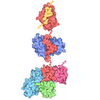
 Z (Sec.)
 Y (Row.)
 X (Col.)


 Sample components
 Escherichia coli (E. coli)
 Trichoplusia ni (cabbage looper)
 Processing
 Electron microscopy
 FIELD EMISSION GUN

