National Institutes of Health/National Heart, Lung, and Blood Institute (NIH/NHLBI)
DP2-HL163810
United States
American Heart Association
847236
United States
Welch Foundation
I-2121-20220331
United States
Citation
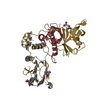
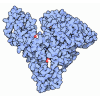
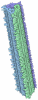
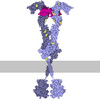
Journal: Commun Biol / Year: 2026 Title: Amyloid fibril polymorphism in the heart and liver of a patient with polyneuropathic ATTRv-V122Δ amyloidosis. Authors: Yasmin Ahmed / Binh An Nguyen / Candace Kelly / Shumaila Afrin / Virender Singh / Bret M Evers / John M Shelton / Christian Lopez Escobar / Preeti Singh / Rose Pedretti / Lanie Wang / Parker ...Authors: Yasmin Ahmed / Binh An Nguyen / Candace Kelly / Shumaila Afrin / Virender Singh / Bret M Evers / John M Shelton / Christian Lopez Escobar / Preeti Singh / Rose Pedretti / Lanie Wang / Parker Bassett / Maria Del Carmen Fernandez-Ramirez / Maja Pekala / Andrew Lemoff / Barbara Kluve-Beckerman / Lorena Saelices / Abstract: ATTR amyloidosis is a phenotypically heterogeneous disease characterized by the pathological deposition of transthyretin in the form of amyloid fibrils into various organs. ATTR amyloidosis may ...ATTR amyloidosis is a phenotypically heterogeneous disease characterized by the pathological deposition of transthyretin in the form of amyloid fibrils into various organs. ATTR amyloidosis may result from mutations in variant (ATTRv) amyloidosis, or aging in wild-type (ATTRwt) amyloidosis. ATTRwt generally manifests as cardiomyopathy, whereas ATTRv may present as polyneuropathy, cardiomyopathy, or mixed, in combination with many other symptoms deriving from multisystem organ involvement. Over 220 different mutational variants of transthyretin have been identified, many of them being linked to specific disease symptoms. Yet, the role of these mutations in explaining differential disease manifestations remains unclear. Using cryo-electron microscopy, here we structurally characterized fibrils from the heart and the liver of an ATTRv patient carrying the V122∆ mutation, which is predominantly associated with polyneuropathy. Our results show that these fibrils are polymorphic, presenting as both single and double filaments. Our study alludes to a structural connection contributing to phenotypic variation in ATTR amyloidosis, as polymorphism in ATTR fibrils may manifest in patients with predominantly polyneuropathic phenotypes.
Model: Quantifoil R1.2/1.3 / Material: COPPER / Mesh: 300 / Support film - Material: CARBON / Support film - topology: HOLEY / Pretreatment - Type: GLOW DISCHARGE / Pretreatment - Time: 30 sec. / Pretreatment - Atmosphere: AIR
Vitrification
Cryogen name: ETHANE / Chamber humidity: 100 % / Chamber temperature: 298 K / Instrument: FEI VITROBOT MARK IV
Details
fibrils were extracted from cardiac tissue using a water-based extraction method.
-
Electron microscopy
Microscope
TFS KRIOS
Image recording
Film or detector model: FEI FALCON IV (4k x 4k) / Number grids imaged: 1 / Number real images: 4366 / Average exposure time: 2.06 sec. / Average electron dose: 50.0 e/Å2
Electron beam
Acceleration voltage: 300 kV / Electron source: FIELD EMISSION GUN
In the structure databanks used in Yorodumi, some data are registered as the other names, "COVID-19 virus" and "2019-nCoV". Here are the details of the virus and the list of structure data.
Jan 31, 2019. EMDB accession codes are about to change! (news from PDBe EMDB page)
EMDB accession codes are about to change! (news from PDBe EMDB page)
The allocation of 4 digits for EMDB accession codes will soon come to an end. Whilst these codes will remain in use, new EMDB accession codes will include an additional digit and will expand incrementally as the available range of codes is exhausted. The current 4-digit format prefixed with “EMD-” (i.e. EMD-XXXX) will advance to a 5-digit format (i.e. EMD-XXXXX), and so on. It is currently estimated that the 4-digit codes will be depleted around Spring 2019, at which point the 5-digit format will come into force.
The EM Navigator/Yorodumi systems omit the EMD- prefix.
Related info.:Q: What is EMD? / ID/Accession-code notation in Yorodumi/EM Navigator
Yorodumi is a browser for structure data from EMDB, PDB, SASBDB, etc.
This page is also the successor to EM Navigator detail page, and also detail information page/front-end page for Omokage search.
The word "yorodu" (or yorozu) is an old Japanese word meaning "ten thousand". "mi" (miru) is to see.
Related info.:EMDB / PDB / SASBDB / Comparison of 3 databanks / Yorodumi Search / Aug 31, 2016. New EM Navigator & Yorodumi / Yorodumi Papers / Jmol/JSmol / Function and homology information / Changes in new EM Navigator and Yorodumi
 Movie
Movie Controller

 Yorodumi
 Open data
 Basic information
 Map data
 Sample
 Keywords
 Function and homology information
 Homo sapiens (human)
 Authors
 United States, 3 items
  Citation
 Structure visualization
 Downloads & links
 emd_74399.png
 http://ftp.pdbj.org/pub/emdb/structures/EMD-74399


 Z (Sec.)
 Y (Row.)
 X (Col.)


 Sample components
 Processing
 Electron microscopy
 FIELD EMISSION GUN