 Movie
Movie Controller


+ Open data

- Basic information
| Entry |  | |||||||||
|---|---|---|---|---|---|---|---|---|---|---|
| Title | Structure of GPR61 bound to inverse agonist compound 15 | |||||||||
 Map data Map data | ||||||||||
 Sample Sample |
| |||||||||
 Keywords Keywords | GPCR / GPR61 / orphan receptor / inverse agonist / SIGNALING PROTEIN | |||||||||
| Function / homology |  Function and homology information Function and homology informationligand-independent adenylate cyclase-activating G protein-coupled receptor signaling pathway / arrestin family protein binding / electron transport chain / G protein-coupled receptor activity / electron transfer activity / periplasmic space / signaling receptor complex / endosome / endosome membrane / iron ion binding ...ligand-independent adenylate cyclase-activating G protein-coupled receptor signaling pathway / arrestin family protein binding / electron transport chain / G protein-coupled receptor activity / electron transfer activity / periplasmic space / signaling receptor complex / endosome / endosome membrane / iron ion binding / heme binding / plasma membrane Similarity search - Function | |||||||||
| Biological species |  Homo sapiens (human) / Homo sapiens (human) /   Lama glama (llama) Lama glama (llama) | |||||||||
| Method | single particle reconstruction / cryo EM / Resolution: 3.08 Å | |||||||||
 Authors Authors | Lees JA / Dias JM / Han S | |||||||||
| Funding support | 1 items
| |||||||||
 Citation Citation | Journal: J Med Chem / Year: 2026 Title: Discovery of Potent and Brain-Penetrant Inverse Agonists for GPR61, an Orphan G Protein-Coupled Receptor. Authors: Ethan L Fisher / Anne-Marie Dechert Schmitt / Jamison B Tuttle / Ray Unwalla / Gabrielle H Lovett / Bethany L Kormos / Karen J Coffman / Dahui Zhou / Michael Moran / Jade Williams / Jun Xiao ...Authors: Ethan L Fisher / Anne-Marie Dechert Schmitt / Jamison B Tuttle / Ray Unwalla / Gabrielle H Lovett / Bethany L Kormos / Karen J Coffman / Dahui Zhou / Michael Moran / Jade Williams / Jun Xiao / Erik A LaChapelle / Jean-Philippe Fortin / Abdul Q Sheikh / Kimberly A Stevens / Jimmy X Kong / Emily A G Hughes / Ryan M Esquejo / Stephanie Joaquim / Nalissa L Amar / Danielle Archambault / Jeonifer Garren / Danna Breen / Srinath Jagarlapudi / Robert Dullea / Rebecca E O'Connor / Erika Koslov-Davino / Ernesto Callegari / João M Dias / Joshua A Lees / Kris Borzilleri / Seungil Han / Jonathan Brooks / Felix F Vajdos / Ashish Goyal / Lei Zhang / Yuan Zhang /  Abstract: GPR61 is a class A orphan G protein-coupled receptor (GPCR) that is predominantly expressed in the pituitary gland and appetite-regulating centers of the brain. Genome-wide association analysis, ...GPR61 is a class A orphan G protein-coupled receptor (GPCR) that is predominantly expressed in the pituitary gland and appetite-regulating centers of the brain. Genome-wide association analysis, epigenetic analysis, and animal model data have suggested that GPR61 could be a potential therapeutic target for appetite and body weight modulation. Herein, we describe our medicinal chemistry efforts in discovering a class of potent, selective, and brain-penetrant GPR61 inverse agonists. The cryogenic electron microscopy structure of GPR61 bound to compound shows that this class of inverse agonists binds to an induced, intracellular, allosteric pocket and abolishes GPR61 constitutive activity by disrupting its interactions with G protein, representing a novel mode of action of GPCR inverse agonism. | |||||||||
| History |
|
- Structure visualization
| Supplemental images |
|---|

- Downloads & links
-EMDB archive
| Map data | emd_72906.map.gz | 56.2 MB | EMDB map data format | |
|---|---|---|---|---|
| Header (meta data) | emd-72906-v30.xmlemd-72906.xml | 24.4 KB 24.4 KB | Display Display | EMDB header |
| FSC (resolution estimation) | emd_72906_fsc.xml | 8.2 KB | Display | FSC data file |
| Images |  emd_72906.png emd_72906.png | 105.4 KB | ||
| Filedesc metadata | emd-72906.cif.gz | 7.4 KB | ||
| Others | emd_72906_half_map_1.map.gzemd_72906_half_map_2.map.gz | 55.3 MB 55.3 MB | ||
| Archive directory |  http://ftp.pdbj.org/pub/emdb/structures/EMD-72906ftp://ftp.pdbj.org/pub/emdb/structures/EMD-72906 http://ftp.pdbj.org/pub/emdb/structures/EMD-72906ftp://ftp.pdbj.org/pub/emdb/structures/EMD-72906 | HTTPS FTP |
-Related structure data
| Related structure data |  9yfuMC M: atomic model generated by this map C: citing same article ( |
|---|---|
| Similar structure data |
-Links
| EMDB pages | EMDB (EBI/PDBe) / EMDataResource |
|---|---|
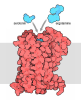
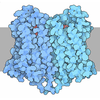
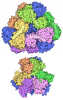
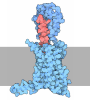
| Related items in Molecule of the Month |
-Map
| File | Download / File: emd_72906.map.gz / Format: CCP4 / Size: 59.6 MB / Type: IMAGE STORED AS FLOATING POINT NUMBER (4 BYTES) | ||||||||||||||||||||||||||||||||||||
|---|---|---|---|---|---|---|---|---|---|---|---|---|---|---|---|---|---|---|---|---|---|---|---|---|---|---|---|---|---|---|---|---|---|---|---|---|---|
| Projections & slices | Image control
Images are generated by Spider. | ||||||||||||||||||||||||||||||||||||
| Voxel size | X=Y=Z: 1.18 Å | ||||||||||||||||||||||||||||||||||||
| Density |
| ||||||||||||||||||||||||||||||||||||
| Symmetry | Space group: 1 | ||||||||||||||||||||||||||||||||||||
| Details | EMDB XML:
|
 Z (Sec.)
 Y (Row.)
 X (Col.)


-Supplemental data
-Half map: #1
| File | emd_72906_half_map_1.map | ||||||||||||
|---|---|---|---|---|---|---|---|---|---|---|---|---|---|
| Projections & Slices |
| ||||||||||||
| Density Histograms |


-Half map: #2
| File | emd_72906_half_map_2.map | ||||||||||||
|---|---|---|---|---|---|---|---|---|---|---|---|---|---|
| Projections & Slices |
| ||||||||||||
| Density Histograms |


- Sample components
-Entire : Complex of GPR61 ICL3 BRIL fusion with Fab24 BAK5 and Fab hinge-b...
| Entire | Name: Complex of GPR61 ICL3 BRIL fusion with Fab24 BAK5 and Fab hinge-binding nanobody bound to inverse agonist compound 15 |
|---|---|
| Components |
|
-Supramolecule #1: Complex of GPR61 ICL3 BRIL fusion with Fab24 BAK5 and Fab hinge-b...
| Supramolecule | Name: Complex of GPR61 ICL3 BRIL fusion with Fab24 BAK5 and Fab hinge-binding nanobody bound to inverse agonist compound 15 type: complex / ID: 1 / Parent: 0 / Macromolecule list: #1-#4 |
|---|---|
| Source (natural) | Organism: Homo sapiens (human) |
-Macromolecule #1: G-protein coupled receptor 61,Soluble cytochrome b562
| Macromolecule | Name: G-protein coupled receptor 61,Soluble cytochrome b562 / type: protein_or_peptide / ID: 1 / Number of copies: 1 / Enantiomer: LEVO |
|---|---|
| Source (natural) | Organism: Homo sapiens (human) |
| Molecular weight | Theoretical: 59.860707 KDa |
| Recombinant expression | Organism:   Spodoptera frugiperda (fall armyworm) Spodoptera frugiperda (fall armyworm) |
| Sequence | String: YPYDVPDYAE SSPIPQSSGN SSTLGRVPQT PGPSTASGVP EVGLRDVASE SVALFFMLLL DLTAVAGNAA VMAVIAKTPA LRKFVFVFH LCLVDLLAAL TLMPLAMLSS SALFDHALFG EVACRLYLFL SVCFVSLAIL SVSAINVERY YYVVHPMRYE V RMTLGLVA ...String: YPYDVPDYAE SSPIPQSSGN SSTLGRVPQT PGPSTASGVP EVGLRDVASE SVALFFMLLL DLTAVAGNAA VMAVIAKTPA LRKFVFVFH LCLVDLLAAL TLMPLAMLSS SALFDHALFG EVACRLYLFL SVCFVSLAIL SVSAINVERY YYVVHPMRYE V RMTLGLVA SVLVGVWVKA LAMASVPVLG RVSWEEGAPS VPPGCSLQWS HSAYCQLFVV VFAVLYFLLP LLLILVVYCS MF RARRQLA DLEDNWETLN DNLKVIEKAD NAAQVKDALT KMRAAALDAQ KATPPKLEDK SPDSPEMKDF RHGFDILVGQ IDD ALKLAN EGKVKEAQAA AEQLKTTRNA YIQKYLERAR STLQKEVKAA VVLLAVGGQF LLCWLPYFSF HLYVALSAQP ISTG QVESV VTWIGYFCFT SNPFFYGCLN RQIRGELSKQ FVCFFKPAPE EELRLPSREG SIEENFLQFL QGTGCPSESW VSRPL PSPK QEPPAVDFRI PGQIAEETSE FLEQQLTSDI IMSDSYLRPA ASPRLESGSD YKDDDDAK UniProtKB: G protein-coupled receptor 61, Soluble cytochrome b562, G protein-coupled receptor 61 |
-Macromolecule #2: Fab24 BAK5 heavy chain
| Macromolecule | Name: Fab24 BAK5 heavy chain / type: protein_or_peptide / ID: 2 / Number of copies: 1 / Enantiomer: LEVO |
|---|---|
| Source (natural) | Organism: Homo sapiens (human) |
| Molecular weight | Theoretical: 24.021787 KDa |
| Recombinant expression | Organism: Spodoptera frugiperda (fall armyworm) |
| Sequence | String: EVQLVESGGG LVQPGGSLRL SCAASGFNVR SFSIHWVRQA PGKGLEWVAY ISSSSGSTSY ADSVKGRFTI SADTSKNTAY LQMNSLRAE DTAVYYCARW GYWPGEPWWK AFDYWGQGTL VTVSSASTKG PSVFPLAPSS KSTSGGTAAL GCLVKDYFPE P VTVSWNSG ...String: EVQLVESGGG LVQPGGSLRL SCAASGFNVR SFSIHWVRQA PGKGLEWVAY ISSSSGSTSY ADSVKGRFTI SADTSKNTAY LQMNSLRAE DTAVYYCARW GYWPGEPWWK AFDYWGQGTL VTVSSASTKG PSVFPLAPSS KSTSGGTAAL GCLVKDYFPE P VTVSWNSG ALTSGVHTFP AVLQSSGLYS LSSVVTVPSS SLGTQTYICN VNHKPSNTKV DKKVEPKS |
-Macromolecule #3: Hinge-binding nanobody
| Macromolecule | Name: Hinge-binding nanobody / type: protein_or_peptide / ID: 3 / Number of copies: 1 / Enantiomer: LEVO |
|---|---|
| Source (natural) | Organism: Lama glama (llama) |
| Molecular weight | Theoretical: 14.957326 KDa |
| Recombinant expression | Organism: Spodoptera frugiperda (fall armyworm) |
| Sequence | String: HHHHHHGENL YFQGSQVQLQ ESGGGLVQPG GSLRLSCAAS GRTISRYAMS WFRQAPGKER EFVAVARRSG DGAFYADSVQ GRFTVSRDD AKTVYLQMNS LKPEDTAVYY CAIDSDTFYS GSYDYWGQGT QVTVSS |
-Macromolecule #4: Fab24 BAK5 light chain
| Macromolecule | Name: Fab24 BAK5 light chain / type: protein_or_peptide / ID: 4 / Number of copies: 1 / Enantiomer: LEVO |
|---|---|
| Source (natural) | Organism: Homo sapiens (human) |
| Molecular weight | Theoretical: 28.884561 KDa |
| Recombinant expression | Organism: Spodoptera frugiperda (fall armyworm) |
| Sequence | String: MKKNIAFLLA SMFVFSIATN AYASDIQMTQ SPSSLSASVG DRVTITCRAS QSVSSAVAWY QQKPGKAPKL LIYSASSLYS GVPSRFSGS RSGTDFTLTI SSLQPEDFAT YYCQQYLYYS LVTFGQGTKV EIKRTVAAPS VFIFPPSDSQ LKSGTASVVC L LNNFYPRE ...String: MKKNIAFLLA SMFVFSIATN AYASDIQMTQ SPSSLSASVG DRVTITCRAS QSVSSAVAWY QQKPGKAPKL LIYSASSLYS GVPSRFSGS RSGTDFTLTI SSLQPEDFAT YYCQQYLYYS LVTFGQGTKV EIKRTVAAPS VFIFPPSDSQ LKSGTASVVC L LNNFYPRE AKVQWKVDNA LQSGNSQESV TEQDSKDSTY SLSSTLTLSK ADYEKHKVYA CEVTHQGLSS PVTKSFNRGE MK KNIAFLL ASMFVFSIAT NAYAEIS |
-Macromolecule #5: N-(5-chloro-4,6-dimethylpyrimidin-2-yl)-6-{[(3,5-difluoropyridin-...
| Macromolecule | Name: N-(5-chloro-4,6-dimethylpyrimidin-2-yl)-6-{[(3,5-difluoropyridin-4-yl)methyl]amino}-2-methylpyridine-3-sulfonamide type: ligand / ID: 5 / Number of copies: 1 / Formula: A1CWB |
|---|---|
| Molecular weight | Theoretical: 454.881 Da |
-Macromolecule #6: water
| Macromolecule | Name: water / type: ligand / ID: 6 / Number of copies: 1 / Formula: HOH |
|---|---|
| Molecular weight | Theoretical: 18.015 Da |
| Chemical component information | 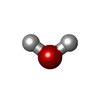 ChemComp-HOH: |
-Experimental details
-Structure determination
| Method | cryo EM |
|---|---|
 Processing Processing | single particle reconstruction |
| Aggregation state | particle |
-Sample preparation
| Buffer | pH: 7.5 |
|---|---|
| Grid | Model: Quantifoil R1.2/1.3 / Material: GOLD / Mesh: 200 / Support film - Material: CARBON / Support film - topology: HOLEY ARRAY / Pretreatment - Type: GLOW DISCHARGE / Pretreatment - Time: 30 sec. |
| Vitrification | Cryogen name: ETHANE / Chamber humidity: 100 % / Chamber temperature: 277 K / Instrument: FEI VITROBOT MARK IV |
- Electron microscopy
| Microscope | TFS KRIOS |
|---|---|
| Image recording | Film or detector model: FEI FALCON IV (4k x 4k) / Average electron dose: 50.0 e/Å2 |
| Electron beam | Acceleration voltage: 300 kV / Electron source:  FIELD EMISSION GUN FIELD EMISSION GUN |
| Electron optics | Illumination mode: FLOOD BEAM / Imaging mode: BRIGHT FIELD / Nominal defocus max: 2.4 µm / Nominal defocus min: 0.6 µm |
| Sample stage | Specimen holder model: FEI TITAN KRIOS AUTOGRID HOLDER / Cooling holder cryogen: NITROGEN |
| Experimental equipment |  Model: Titan Krios / Image courtesy: FEI Company |

